Gochizan Rengeji Temple (Kyoto Prefecture) Complete Guide | History, Cucumber Sealing, and the Charm of the Five Wisdom Buddhas
Located in Omuro, Ukyo-ku, Kyoto City, Gochizan Rengeji Temple is a special head temple of the Omuro branch of Shingon Buddhism, standing next to the World Heritage site, Ninna-ji Temple. With a long history dating back to the Heian period, it is a renowned temple known for its secret ritual “cucumber sealing” associated with Kobo Daishi Kukai and its large stone statue of the Five Wisdom Buddhas, attracting many visitors. This article comprehensively introduces information you should know before visiting Gochizan Rengeji Temple, including its history, highlights, annual events, and access methods.
What is Gochizan Rengeji Temple?
Gochizan Rengeji Temple is an ancient temple that has preserved and passed down its Buddhist teachings for nearly a thousand years as a special head temple of the Omuro branch of Shingon Buddhism. It is also designated as the 15th temple of the Kinki Thirty-Six Fudo Myoo Pilgrimage and serves as a training ground for Shingon Esoteric Buddhism.
The temple’s name, “Gochizan,” represents the five wisdoms of Esoteric Buddhism (Wisdom of the Dharma Realm, Wisdom of the Great Mirror, Wisdom of Equality, Wisdom of Subtle Observation, and Wisdom of Accomplishment), and is derived from the Five Wisdom Buddhas enshrined on the temple grounds. Furthermore, important Buddhist statues of Shingon Esoteric Buddhism, including the principal image of Amida Buddha and the Five Wisdom Fudo Myoo, are enshrined here.
Location in Omuro, Ukyo-ku, Kyoto City
Gochizan Rengeji Temple is located at 20 Omuro Ouchi, Ukyo-ku, Kyoto City, just west of the World Heritage site, Ninna-ji Temple. This area is known as “Omuro” and is a prestigious area where temples associated with the Imperial family are concentrated.
Located along the Kinukake-no-michi scenic road connecting three World Heritage sites—Kinkaku-ji, Ryoan-ji, and Ninna-ji—Gochizan Renge-ji Temple is easily accessible as part of a Kyoto sightseeing trip. However, perhaps because it’s overshadowed by the World Heritage site Ninna-ji, it’s also known as a relatively quiet hidden gem for worship.
History of Gochizan Renge-ji Temple
Established in the Heian Period
The history of Gochizan Renge-ji Temple dates back to 1057 (Tenki 5). It is said to have begun when Fujiwara no Yasumoto, at the request of Emperor Go-Reizei, enshrined a statue of Fudo Myoo (Acala). Initially called “Rengeho-ji,” it was a prestigious temple, comparable in status to an imperial temple of Emperor Go-Reizei.
Fujiwara no Yasumoto was a nobleman in the mid-Heian period, and during this time in Kyoto, the construction of temples by the imperial family and nobility was flourishing. Renge-ji Temple was born within this historical context as an imperial temple.
Edo Period Restoration and the Sculpture of the Five Wisdom Buddhas
Throughout its long history, Rengeji Temple experienced periods of decline due to wars and fires. However, in 1641 (Kanei 18), momentum for the restoration of Rengeji Temple grew, and it is believed that at this time, the sculpture of the Five Wisdom Buddhas was commissioned, replacing the Five Wisdom Fudo Myoo statue.
This restoration project laid the foundation for the present-day Gochizan Rengeji Temple. In particular, the stone statues of the Five Wisdom Buddhas became a symbol of the temple and are the origin of the mountain name “Gochizan” (Five Wisdom Mountain).
Showa Era Relocation and Current Location
In 1928 (Showa 3), Rengeji Temple relocated to its current location in Omuro-Ouchi. This relocation brought it to its current location next to Ninna-ji Temple, and it has continued to uphold its religious traditions as a special head temple of the Omuro branch of Shingon Buddhism to this day.
Even after its relocation, it continues to serve as the 15th temple of the Kinki Thirty-Six Fudo Myoo Pilgrimage, occupying an important position as a center of local faith and a training ground for Shingon Esoteric Buddhism.
Highlights of Gochizan Rengeji Temple
Main Hall and Principal Image: Amida Buddha
The main hall of Rengeji Temple houses the principal image, a statue of Amida Buddha. Amida Buddha is worshipped as the lord of the Western Pure Land and a Buddha who saves people, and has been enshrined as the principal image at Rengeji Temple since its construction in the Heian period.
The main hall is enveloped in a tranquil atmosphere, allowing visitors to quietly offer their prayers. As befits a Shingon Buddhist temple, it is a space that evokes the solemnity of Esoteric Buddhism.
Fudo Hall and Five Wisdom Fudo Myoo
The Fudo Hall on the temple grounds enshrines the Five Wisdom Fudo Myoo. Fudo Myoo is an important deity in Shingon Esoteric Buddhism, worshipped as a being who severs worldly desires and guides people to the right path.
The Five Wisdom Fudo Myoo consists of five statues of Fudo Myoo representing five wisdoms: the central Fudo (an incarnation of Dainichi Nyorai), the eastern Gosanze Myoo, the southern Gundari Myoo, the western Daiitoku Myoo, and the northern Kongo Yaksha Myoo.
A Goma fire ritual is held at the Fudo Hall on the 28th of every month, and visitors can participate. The Goma ritual, which burns away worldly desires with fire, is an important practice in Shingon Esoteric Buddhism.
Stone Five Wisdom Buddha Statues
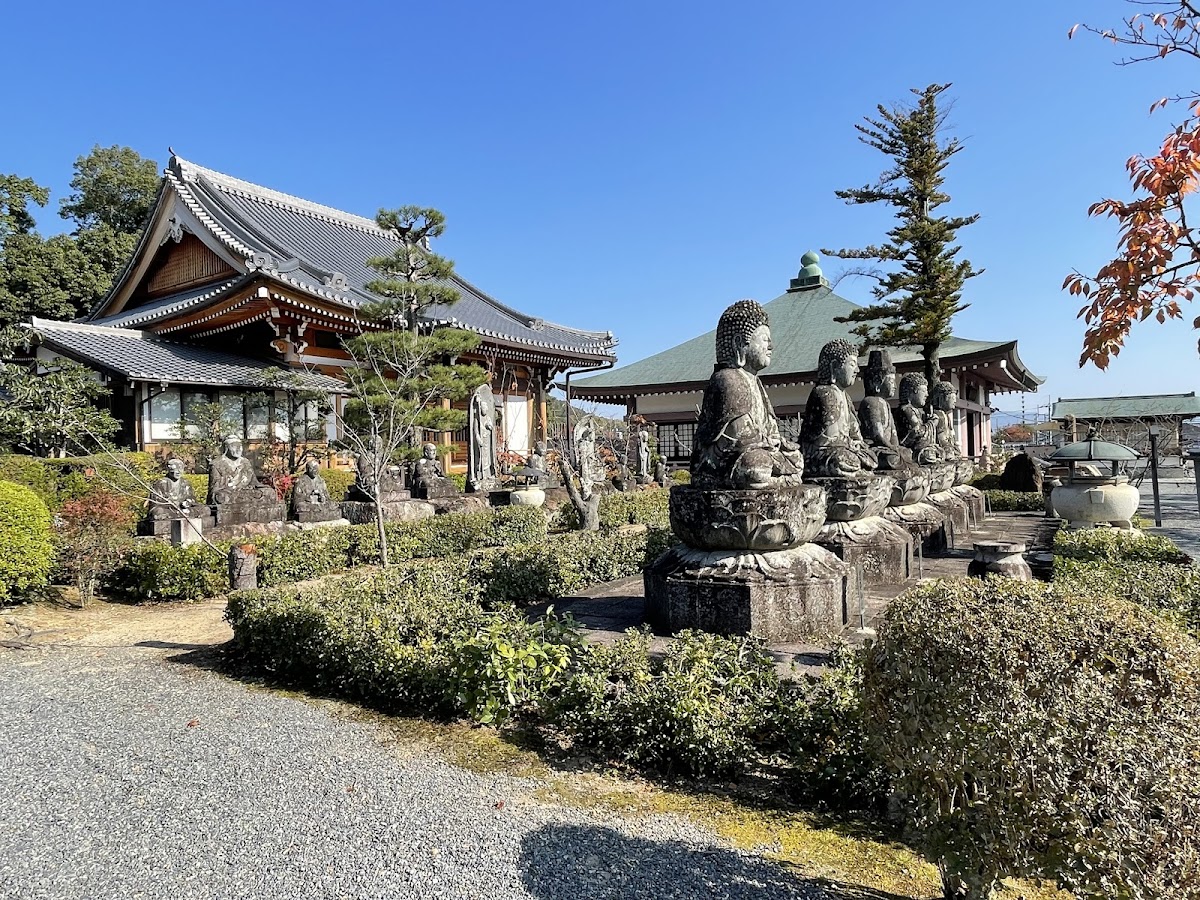
A representative cultural asset of Gochi-zan Renge-ji Temple is the Jōroku-sized stone statue of the Five Wisdom Buddhas, enshrined in the temple grounds. Jōroku refers to a Buddha statue with a height of 16 shaku (approximately 4.8 meters), and its immense size overwhelms visitors. The Five Wisdom Buddhas are five Buddhas in Esoteric Buddhism that symbolize the five wisdoms. They consist of five deities: Dainichi Nyorai (Vairocana Buddha) at the center, Akshobhya Buddha (Eastern), Ratnasambhava Buddha (Southern), Amitabha Buddha (Western), and Amoghasiddhi Buddha (Northern). These stone Buddhas are believed to be Edo period sculptures, and their exquisite carvings and solemn atmosphere captivate visitors.
Because the Five Wisdom Buddhas are enshrined outdoors, they display different expressions amidst the changing seasons. Visitors can enjoy the different charms of each season: cherry blossoms in spring, fresh greenery in summer, autumn leaves in fall, and snowscapes in winter.
The Secret Ritual of “Cucumber Sealing” Associated with Kobo Daishi
What is Cucumber Sealing?
One of the most distinctive features of Gochizan Rengeji Temple is the secret ritual of “Cucumber Sealing,” associated with the founder of the sect, Kobo Daishi Kukai. This is a type of incantation and prayer ritual passed down in Shingon Esoteric Buddhism, and has been believed since ancient times as a method of prayer to seal away illness and bad luck.
In the cucumber ritual, a piece of paper inscribed with the name, age, and illness of the person receiving the prayer is sealed inside a cucumber, and a monk performs an incantation and prayer while chanting a mantra. Afterward, the sealed cucumber is buried in the soil, and it is believed that the illness and misfortune return to the earth, restoring health.
History and Origin of Cucumber Ritual
The origin of the cucumber ritual is said to lie in the esoteric Buddhist practices brought to Japan from Tang China by Kobo Daishi Kukai. Kukai was a monk who introduced Shingon Esoteric Buddhism to Japan in the early Heian period and brought many incantation and prayer rituals to the country.
There are various theories as to why cucumbers are used, but it is believed that because cucumbers contain a lot of water and have a cooling effect on the body, they are used to absorb and seal away the heat of illness. Furthermore, cucumbers are considered suitable for this ritual due to their rapid growth and easy decomposition by the soil.
Timing and Participation of the Cucumber Ceremony
At Gochizan Rengeji Temple, the Cucumber Ceremony is performed annually, primarily around the Day of the Ox in summer. This period is the hottest time of the year, making it a time when people are prone to illness, so the ceremony also includes prayers for good health.
Visitors must register in advance and receive blessings and prayers from monks in the main hall or Fudo Hall on the day of the ceremony. The prayer fee is determined by the temple; it is recommended to inquire directly for details.
The Cucumber Ceremony can be performed not only for recovery from illness, but also for various other wishes, such as improved health, protection from evil, and severing bad relationships. In recent years, it has become a summer tradition in Kyoto, attracting many visitors not only from the local area but also from far away.
The 15th Temple of the Kinki Thirty-Six Fudo Myoo Pilgrimage
Gochizan Rengeji Temple is designated as the 15th temple of the Kinki Thirty-Six Fudo Myoo Pilgrimage. The Kinki Thirty-Six Fudo Myoo Pilgrimage is a pilgrimage visiting 36 temples dedicated to Fudo Myoo scattered throughout the Kinki region (Osaka, Kyoto, Hyogo, Nara, Wakayama, and Shiga prefectures).
Pilgrimage is an important form of faith in Japanese Buddhist culture, where pilgrims accumulate merit and purify their minds and bodies by visiting each temple. Rengeji Temple accepts pilgrims for offering temple seals and sutra copying, and is visited by many pilgrims.
Fudo Myoo is one of the most important Myoo in Shingon Esoteric Buddhism, depicted with a sword of wisdom that cuts through worldly desires, a lasso that binds evil, and flames behind him. The Five Wisdom Fudo Myoo at Rengeji Temple is a crucial point of reference for pilgrims on this sacred site, attracting many worshippers.
Annual Events and Ceremonies
Goma Ritual on the 28th of Every Month
At Gochizan Rengeji Temple, a Goma ritual is held in the Fudo Hall on the 28th of every month. The Goma ritual is an important Shingon Esoteric Buddhism practice where a fire is lit and wooden prayer sticks are burned to burn away worldly desires.
During the Goma ritual, worshippers write their wishes on wooden prayer sticks, which are then read aloud by the monks as they throw them into the fire, praying for the fulfillment of their wishes. The sight of the flames rising is magnificent, offering a valuable opportunity to experience the mystical nature of Shingon Esoteric Buddhism.
General worshippers can also participate in the Goma ritual, and prayer sticks can be requested on the day of the ceremony. Various wishes can be made, such as prayers for good health, family safety, business prosperity, and academic success.
Summer Doyo-no-Ushi Day “Cucumber Sealing” Ceremony
As mentioned above, the “Cucumber Sealing” ceremony, a secret ritual associated with Kobo Daishi, is performed around the summer Doyo-no-Ushi Day. This period sees many worshippers and is one of the most important annual events at Rengeji Temple.
Other Annual Events
As a Shingon Buddhist temple, Rengeji Temple holds various ceremonies and events throughout the year. Traditional Buddhist events such as the New Year’s Shusho-e, the spring and autumn Higan-e, and the Obon Urabon-e are strictly observed.
Furthermore, a Daishi-ko (a memorial service for Kobo Daishi) may be held on the 21st of each month, which is the anniversary of Kobo Daishi’s death. These events may be open to general worshippers as well as local parishioners, so it is recommended to inquire with the temple in advance.
Access and Visiting Information
Location and Contact Information
Location: 20 Omuro-Ouchi, Ukyo-ku, Kyoto City, Kyoto Prefecture 616-8092
Telephone: Direct inquiries to the temple can be made via the official website or by telephone. It is recommended to check in advance regarding visiting hours, memorial service dates, and details of the cucumber ritual.
Access by Public Transportation
Using Keifuku Electric Railway (Arashiyama Line):
- Get off at Omuro-Ninnaji Station on the Keifuku Electric Railway Kitano Line, approximately 2 minutes on foot.
- Head towards Ninnaji Temple from the station; Rengeji Temple is located west of Ninnaji Temple.
Using JR:
- Get off at Hanazono Station on the JR Sagano Line, approximately 15 minutes on foot, or approximately 5 minutes by car.
- Taxis are also convenient.
Using City Bus:
- Get off at the Omuro-Ninnaji bus stop on the Kyoto City Bus, approximately 2 minutes on foot.
- From Kyoto Station, City Bus Route 26 is convenient.
Access by Car
Meishin Expressway:
- Approximately 30 minutes from Kyoto Minami IC.
- Head north on Nishioji Street from National Route 1, then onto Kinukake-no-michi.
Parking:
- It is recommended to check in advance whether there is a dedicated parking lot for the temple.
- Nearby Ninna-ji Temple has a paid parking lot, and it is also possible to access the temple on foot from there.
Visiting Hours and Admission Fees
Visiting hours and admission fees may vary depending on the season and events. It is recommended to check the latest information on the official website or by phone before visiting.
Generally, temples are open for viewing during the daytime, and may be closed in the early morning or after evening. Also, viewing may be restricted during religious services and events, so please be aware of this.
Nearby Tourist Attractions
Ninna-ji Temple (World Heritage Site)
Located immediately east of Gochi-zan Renge-ji Temple, Ninna-ji Temple is the head temple of the Omuro branch of Shingon Buddhism and a renowned temple registered as a World Heritage Site. Founded in 888 by Emperor Uda, it boasts a prestigious history as a temple associated with the Imperial family.
Ninna-ji Temple is famous for its “Omuro cherry blossoms,” and in spring, late-blooming cherry blossoms adorn the temple grounds. Furthermore, there are many sights to see, including the National Treasure Golden Hall and the Important Cultural Property Five-Storied Pagoda. Visiting Rengeji Temple along with Rengeji Temple will allow you to gain a deeper understanding of the Shingon Esoteric Buddhism culture of the Omuro area.
Ryoanji Temple (World Heritage Site)
Located approximately 1.5 km east of Rengeji Temple, Ryoanji Temple is a Rinzai Zen temple world-famous for its rock garden. The dry landscape garden, with its simple yet profound beauty created by the arrangement of 15 stones, captivates many tourists.
Kinkakuji Temple (World Heritage Site)
Further east from Ryoanji Temple lies Kinkakuji Temple (Rokuonji Temple), famous for its golden reliquary hall. Built by Ashikaga Yoshimitsu, the third shogun of the Muromachi shogunate, this temple is one of Kyoto’s most representative tourist attractions.
The “Kinukake-no-michi” road, connecting these three World Heritage Sites, is a popular Kyoto sightseeing route. Rengeji Temple, located along this route, is a hidden gem recommended for those who wish to visit at a leisurely pace.
Points to Note When Visiting Gochizan Rengeji Temple
Quiet Worship Environment
Despite being located next to the World Heritage site of Ninna-ji Temple, Rengeji Temple maintains a relatively quiet environment for worship, with fewer tourists. It is an ideal temple for those who wish to escape the hustle and bustle and quietly contemplate the Buddha.
Regarding Photography
Photography is generally permitted on the temple grounds, but there may be restrictions on photographing the interior of the main hall or the Buddha statues. Please check with the temple staff before taking photos and observe proper etiquette.
The stone statues of the Five Wisdom Buddhas are particularly popular as a spot for taking beautiful photos harmonizing with the changing seasons.
Regarding Goshuin (Temple Seals)
Gochizan Rengeji Temple offers Goshuin to visitors. They also offer Goshuin as a pilgrimage site for the 36 Fudo Myoo temples of the Kinki region, making it a valuable item for those on a pilgrimage.
Goshuin are a token of respect and a testament to your visit. Bring your Goshuincho (stamp book) and make your request respectfully.
Etiquette for Visiting Temples
When visiting a temple, please observe the following basic manners:
- Bow when passing through the temple gate
- Walk quietly within the temple grounds and do not speak loudly
- Remove your hat in the main hall and Fudo Hall
- Do not touch Buddhist statues or religious implements
- Take photographs only in designated areas
- Take your trash with you
Summary
Gochizan Rengeji Temple is a special head temple of the Omuro branch of the Shingon sect, with a history of nearly a thousand years since its establishment in the Heian period. It is a venerable temple built by Fujiwara no Yasumoto at the request of Emperor Go-Reizei, and is also known as the 15th temple of the Kinki Thirty-Six Fudo Myoo Pilgrimage.
The Jōroku stone statues of the Five Wisdom Buddhas enshrined within the temple grounds exude an awe-inspiring presence, and the Five Wisdom Fudo Myoo in the Fudo Hall attracts many worshippers. The Goma ritual held on the 28th of each month and the “Cucumber Sealing” ceremony, a secret ritual associated with Kobo Daishi and performed on the summer Doyo-no-Ushi Day, are precious events that preserve the traditions of Shingon Esoteric Buddhism.
Despite its location next to the World Heritage site Ninna-ji Temple, it maintains a relatively quiet environment for worship, making it an ideal temple for those who wish to escape the hustle and bustle of Kyoto and offer prayers in peace. When sightseeing along Kinukake-no-michi, be sure to visit Gochizan Renge-ji Temple and experience its history, traditions, and tranquil atmosphere.
With its profound teachings of Shingon Esoteric Buddhism and numerous secret rituals inherited from Kobo Daishi Kukai, Gochizan Renge-ji Temple is a precious place that teaches us, living in the modern age, the depth of Buddhist culture and the power of prayer.