Fukutoku-ji Temple (Ukyo-ku, Kyoto Prefecture) Complete Guide: 1300 Years of History and the Charm of Kasumi Cherry Blossoms
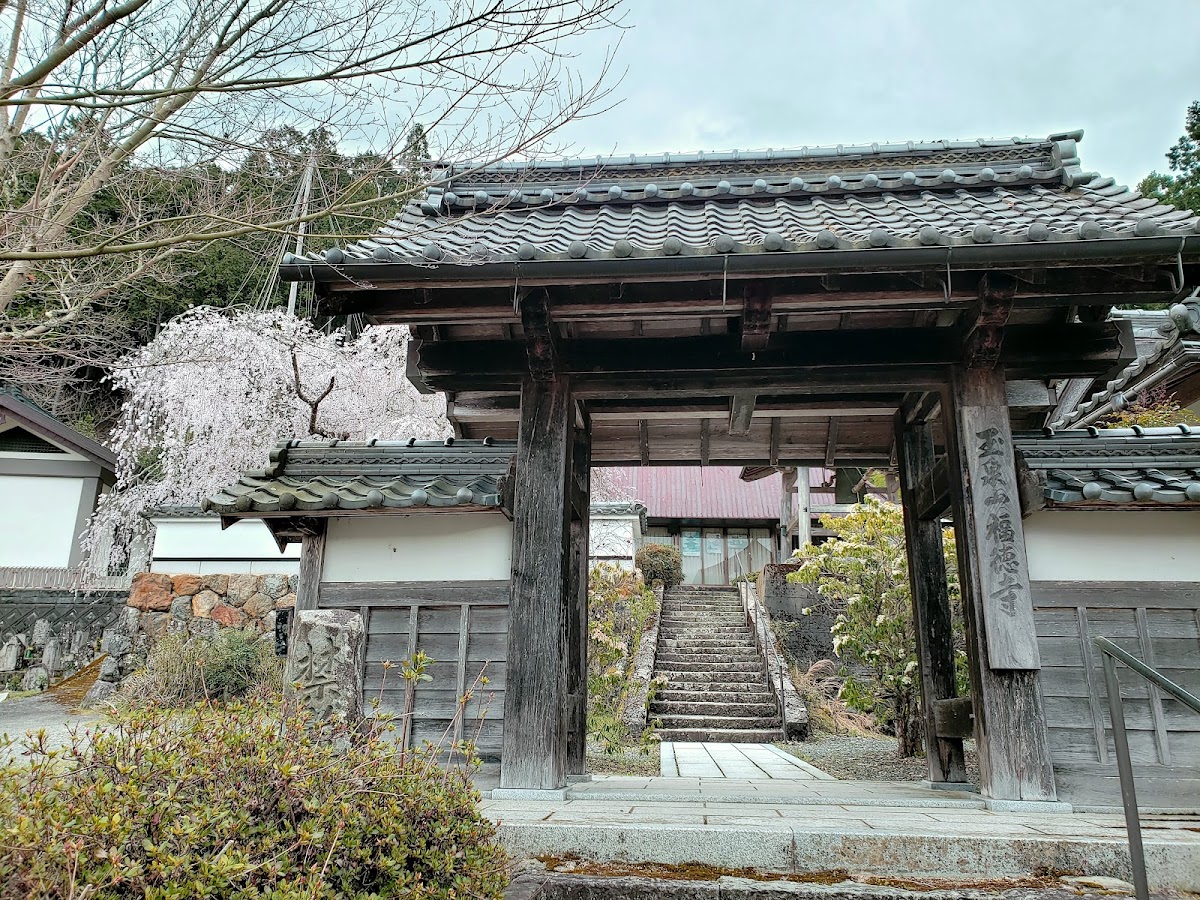
Fukutoku-ji Temple, located in Keihoku Shimonaka-cho, Ukyo-ku, Kyoto City, is an ancient Soto Zen temple with a history of over 1300 years. Formerly known as Yugedera, this temple boasts a turbulent history, from its founding by Gyoki Bodhisattva to its destruction by Akechi Mitsuhide and its restoration during the Edo period. Even today, it continues to captivate visitors with its nationally designated Important Cultural Property and its 400-year-old weeping cherry tree, “Kasumi Cherry Blossoms.”
History of Fukutoku-ji Temple: From Wado 4 to the Present
Founding in the Nara Period and the Flourishing Yugedera Temple
Fukutoku-ji Temple’s founding dates back to Wado 4 (711), the early Nara period. According to temple tradition, it was founded by the monk Gyoki at the request of Emperor Shomu, and was initially known as “Yuge-dera,” a temple of the Hosso sect.
As a temple commissioned by Emperor Shomu, it boasted a considerable scale in its heyday, with a seven-story pagoda built on its grounds. It is believed to have attracted many worshippers as a center of Buddhist culture in the Keihoku region.
Destruction by Akechi Mitsuhide and the Tragedy of the Sengoku Period
The greatest turning point in the history of Fukutoku-ji Temple occurred in 1579 (Tensho 7). In that year, when Akechi Mitsuhide was constructing Shuzan Castle, Fukutoku-ji Temple was demolished to procure building materials.
Shuzan Castle was a mountain castle built by Mitsuhide after his pacification of Tanba Province, and played an important role as a base for controlling the Keihoku region. However, a temple with nearly 1300 years of history was sacrificed for its construction. This demolition caused Fukutoku-ji Temple to temporarily disappear from the historical stage.
Restoration in the Edo Period and Conversion to the Soto Zen School
After some time had passed since its destruction, Fukutoku-ji Temple was restored during the Edo period. The main hall and other major buildings visible today were rebuilt during this period.
Upon its reconstruction, Fukutoku-ji Temple was reborn as a Soto Zen temple. It adopted the mountain name and temple name Gyokusenzan Fukutoku-ji, and began a new history as a Zen temple. The reconstruction during the Edo period shaped the temple’s current tranquil Zen atmosphere.
National Important Cultural Property: Buddhist Statues from the Heian Period
Wooden Seated Statue of Yakushi Nyorai
Fukutoku-ji Temple’s greatest treasure is the wooden seated statue of Yakushi Nyorai, designated as a National Important Cultural Property. Created during the Fujiwara period (late Heian period), this statue is characterized by its elegant form and serene expression.
Yakushi Nyorai is a deity revered by people praying for healing from illness and longevity, and has been a spiritual anchor for the people of this region since the time when Fukutoku-ji Temple flourished as Yuge-dera Temple. Even during the destruction carried out by Akechi Mitsuhide, these Buddhist statues escaped destruction and have been carefully preserved to this day.
Standing Statues of Jikokuten and Zochoten
Along with the seated statue of Yakushi Nyorai, the standing statues of Jikokuten and Zochoten are designated as Important Cultural Properties. These are two of the Four Heavenly Kings and are also works from the Fujiwara period.
Jikokuten is a deity of the heavens who guards the east, and Zochoten guards the south. Their powerful forms and exquisite carving techniques convey the high level of skill of Buddhist sculptors from the Heian period. These Buddhist statues are housed in a storage facility and can be viewed by prior reservation.
How to View and Reservations
The group of Buddhist statues designated as Important Cultural Properties are housed in a storage facility, and prior reservation is required for viewing. While you can freely visit the temple grounds, if you wish to tour the storage facility, it is recommended that you contact us by phone (075-854-0971) in advance. Regarding admission fees, a fee may be required for tours of the storage facilities, so it’s best to confirm when making a reservation. Opportunities to view these valuable cultural artifacts up close are limited, so those interested in history and Buddhist statues are highly encouraged to make a reservation and visit.
Kasumi Cherry Blossom: The Symbol of Fukutoku-ji Temple
400-Year-Old Edo Higan Weeping Cherry Tree
An indispensable part of discussing Fukutoku-ji Temple is the “Kasumi Cherry Blossom” that blooms profusely within the temple grounds. Planted in the garden to the left of the main hall, this weeping cherry tree is an Edo Higan variety, approximately 400 years old, with a trunk circumference of about 2.5 meters and a height of about 8 meters.
The nickname “Kasumi Cherry Blossom” comes from the way it covers the entire temple grounds like a mist when in full bloom. Characterized by its single, pale pink petals, its ephemeral beauty creates an atmosphere befitting its reputation as a “hidden temple of cherry blossoms.”
Best Viewing Time and Viewing Tips
The best time to see the Kasumi cherry blossoms is usually around mid-April. Because they bloom slightly later than the cherry blossoms in central Kyoto, they can be enjoyed even after the city’s blossoms have fallen.
The highlight is the harmonious scenery created by the Kasumi cherry blossoms, the main hall, the temple grounds, the stone walls, and the white walls. Especially when in full bloom, the cherry branches spread out to envelop the main hall, creating a fantastical space that feels like being under a canopy of cherry blossoms.
The Keihoku area is far from central Kyoto, so there are relatively few tourists, making it a great place to enjoy the cherry blossoms in a quiet environment. It’s also ideal for photography, and many photography enthusiasts visit this spot.
Another Nameless Single Cherry Tree
In addition to the Kasumi cherry blossoms, there is also a nameless single cherry tree on the grounds of Fukutoku-ji Temple. While not as well-known as the Kasumi cherry blossoms, its solitary beauty quietly captivates visitors.
The contrasting expressions of the two cherry trees add even richer color to spring at Fukutoku-ji Temple.
Highlights and Features of the Temple Grounds
Main Hall and Zen Temple Atmosphere
The main hall, rebuilt during the Edo period, exhibits a simple and tranquil appearance typical of a Soto Zen temple. Inside, a statue of Hotei (the god of happiness) is enshrined, warmly welcoming visitors.
Upon entering the main hall, a quiet space unfolds, offering a respite from the hustle and bustle of the city and allowing one to find peace of mind. A dignified atmosphere characteristic of Zen temples permeates the air, creating an ideal environment for Zen meditation and contemplation.
Garden and Temple Grounds Scenery
The garden surrounding the main hall displays different expressions throughout the seasons. From the spring cherry blossoms to the fresh greenery, autumn leaves, and snowscapes, each season offers its own unique beauty.
Traditional temple architectural elements such as stone walls and white walls harmonize with the natural landscape, creating a serene beauty unique to Japanese gardens. Even just strolling through the temple grounds will provide a soul-cleansing experience.
Kitakusa Saigoku Thirty-Three Kannon Pilgrimage Site
Fukutoku-ji Temple is one of the 33 temples of the Kitakusa Saigoku Thirty-Three Kannon Pilgrimage. This pilgrimage route, centered on the Keihoku region, is a pilgrimage route of Kannon worship and plays an important role in preserving the region’s religious culture.
For pilgrims, Fukutoku-ji Temple is not merely a transit point, but is positioned as an important temple with a long history and valuable cultural assets.
Access Information and Visiting Tips
Location and Basic Information
Address: 15 Teranoshita, Shimonaka-cho, Keihoku, Ukyo-ku, Kyoto City, Kyoto Prefecture 601-0533
Phone: 075-854-0971
Visiting Hours: Grounds are freely accessible (reservations required for viewing the treasure house)
Admission Fee: Grounds are free (please check for treasure house viewing fees)
Closed: Open daily
Access by Public Transportation
Visiting Fukutoku-ji Temple from central Kyoto by public transportation takes some time.
- From JR Kyoto Station or a JR Bus “Takao/Keihoku Line” bus stop, take the JR West Japan Bus “Takao/Keihoku Line”.
- Get off at the last stop, “Shuzan”.
- Transfer to the Keihoku Furusato Bus.
- Get off at the nearest bus stop and walk.
The journey takes approximately 1 hour and 30 minutes from the Kyoto Station area. Since bus services are limited, it is recommended to check the timetable in advance.
Access by Private Car
For sightseeing in the Keihoku area, using a private car is convenient due to limited public transportation options.
From central Kyoto City, head north on National Route 162 (Shuzan Kaido) to enter the Keihoku area. The journey takes approximately 1 hour from the Kyoto Station area.
Regarding parking, there may be spaces for visitors on the temple grounds, but it is recommended to check details in advance.
Best Time to Visit
The best time to visit Fukutoku-ji Temple is undoubtedly mid-April, when the cherry blossoms are in full bloom. However, since the number of visitors increases during this time, early mornings on weekdays are recommended if you are seeking a quiet environment.
Even outside of cherry blossom season, each season has its own charm: the fresh greenery of May, the autumn leaves of November, and the snowy landscapes of winter. Especially during times when there are fewer tourists, you can experience the true tranquility of a Zen temple.
Nearby Tourist Attractions
Joshoko-ji Temple
Located relatively close to Fukutoku-ji Temple, Joshoko-ji Temple is a Rinzai Zen temple founded by Emperor Kogon. It is famous for its Kujuzakura cherry tree, designated as a national natural monument, and many tourists visit it along with Fukutoku-ji Temple during cherry blossom season.
Chudo-ji Temple
Chudo-ji Temple is also one of the important temples in the Keihoku area. As an ancient temple where you can feel the history of the region, it can be included in a Keihoku temple tour along with Fukutoku-ji Temple.
The Townscape of Shuzan
Shuzan is the central area of the Keihoku region, and its townscape retains the atmosphere of a former castle town. The site of Shuzan Castle, built by Akechi Mitsuhide, is also located here, making it ideal for historical walks.
Points to Note When Visiting Fukutoku-ji Temple
Maintaining Tranquility
Fukutoku-ji Temple is an active Zen temple and a place of training. When visiting, please pray quietly and be considerate of other visitors and temple staff.
Photography Etiquette
When taking photographs, especially during cherry blossom season, please be careful not to disturb other visitors. Also, please obtain permission beforehand if you plan to photograph inside the main hall or the storage rooms.
Season and Clothing
The Keihoku region is at a higher elevation than central Kyoto, and temperatures are lower. Especially if visiting in early spring, late autumn, or winter, it is recommended to prepare warm clothing.
The Charm of Fukutoku-ji Temple: Why You Should Visit
Fukutoku-ji Temple is located about an hour from central Kyoto, but its charm more than makes up for the distance.
Firstly, despite its history of over 1300 years, it has a dramatic history of destruction and reconstruction by Akechi Mitsuhide. This historical background gives the temple a deep narrative.
Secondly, it houses a collection of Heian period Buddhist statues designated as important national cultural properties. These statues are a valuable cultural heritage that conveys the high level of Buddhist culture in the Keihoku region.
Thirdly, it offers a breathtaking view created by a 400-year-old Kasumizakura cherry tree. Known as a “hidden cherry blossom temple,” it is a little-known cherry blossom viewing spot where you can appreciate the beautiful blossoms in a tranquil environment.
Fourthly, it has a simple atmosphere that hasn’t been commercialized for tourism. Unlike the famous temples in central Kyoto, it maintains an ideal space for those seeking tranquility and peace.
Summary: Experiencing the Harmony of History and Nature at Fukutoku-ji Temple
Fukutoku-ji Temple, located in Keihoku Shimonaka-cho, Ukyo-ku, Kyoto City, is an ancient temple with a history spanning over 1300 years since its founding in 711 AD. Despite its turbulent history—founded by Gyoki, flourishing as an imperial temple under Emperor Shomu, being destroyed by Akechi Mitsuhide, and then re-established as a Soto Zen temple during the Edo period—it stands quietly today.
The wooden seated statue of Yakushi Nyorai, the standing statues of Jikokuten and Zochoten, designated as important national cultural properties, preserve the finest Buddhist art of the Heian period, while the 400-year-old Kasumizakura cherry tree adorns the temple grounds with a fantastical beauty in spring.
Although its location in the Keihoku area, away from central Kyoto, requires some time to access, the tranquility and peaceful atmosphere it maintains offer visitors deep healing and inspiration.
For history buffs, Buddhist statue enthusiasts, cherry blossom lovers, and anyone seeking tranquility away from the hustle and bustle of the city, Fukutoku-ji Temple is a hidden gem in Kyoto. Be sure to visit this ancient temple and experience the space imbued with 1300 years of history.