Complete Guide to Nenbutsu-shu Sanbozan Muryoju-ji Temple (Ukyo-ku, Kyoto Prefecture): History, Highlights, and Access Information
Located in the Arashiyama area of Ukyo-ku, Kyoto City, Kyoto Prefecture, lies an important base for Nenbutsu-shu Sanbozan Muryoju-ji Temple. This religious facility is known as the birthplace of Nenbutsu-shu, which also boasts the magnificent head temple “Butsukyo no Odo” in Kato City, Hyogo Prefecture, and is attracting attention as a new facet of Buddhist culture in Kyoto.
This article provides a comprehensive guide to Nenbutsu-shu Sanbozan Muryoju-ji Temple’s facilities in Kyoto, including its historical background, doctrinal characteristics, highlights, and detailed access information for those planning a visit.
About Nenbutsu-shu Sanbozan Muryoju-ji Temple
Overview as a Religious Corporation
Nenbutsu-shu Sanbozan Muryoju-ji Temple is a new religious organization positioned as an independent religious corporation within the Pure Land Buddhist school. Based on the philosophy of “practicing true Buddhism,” it develops its own unique religious activities while inheriting the traditional teachings of Buddhism in the modern age.
An independent religious corporation refers to a religious organization that operates independently and does not belong to any existing Buddhist sect. Nenbutsu-shu is characterized by its unique doctrinal system and organizational structure, while being connected to the lineage of the Pure Land school.
Relationship between the Head Temple and the Kyoto Branch Temple
The head temple of Nenbutsu-shu, “Butsukyo no Odo,” is a magnificent building constructed in Kato City, Hyogo Prefecture. On the other hand, the facilities located in Arashiyama Yamanoshita-cho and Arashiyama Higashi Ichikawa-cho in Nishikyo-ku, Kyoto City, are designated as “Kyoto Special Head Temple” and “Kyoto Branch Temple,” and hold historical significance as the birthplace of the Nenbutsu sect.
The Kyoto facilities hold special meaning as the historical starting point of the Nenbutsu sect and are positioned as places that represent the origin of the faith. This characteristic as the birthplace shapes the uniqueness of the Nenbutsu sect facilities in Kyoto.
Locations of Nenbutsu Sect Facilities in Kyoto
Multiple Locations in Ukyo-ku and Nishikyo-ku
Nenbutsu sect facilities exist in multiple locations in Kyoto. The following are some of the main locations:
Kyoto Branch Temple (Nishikyo Ward)
- Location: Arashiyama Higashi Ichikawa-cho, Nishikyo Ward, Kyoto City, Kyoto Prefecture
- Postal Code: 〒616-0015
- Nature: The birthplace of the Nenbutsu sect, a special head temple in Kyoto
Other Related Facilities
- There is also a facility named Muryoju-ji in Kita Ward, Kyoto City (〒603-8861)
- Information on related facilities is also available around Narutaki in Ukyo Ward
Geographical Characteristics of the Arashiyama Area
The Arashiyama area, where the Kyoto Branch Temple is located, is a representative tourist destination of Kyoto, attracting many worshippers and tourists from both Japan and abroad. It is home to many famous places symbolizing traditional Japanese beauty, such as Togetsukyo Bridge, Tenryu-ji Temple, and the Bamboo Grove Path, and the Nenbutsu sect facilities are situated within this historically and culturally rich environment.
The natural environment of Arashiyama has been valued since ancient times as a place for Buddhist practice. The reason why the Nembutsu sect chose this location as its birthplace is thought to be due to the spiritual foundation of Kyoto’s Arashiyama.
Doctrines and Practices of the Nembutsu Sect
The Pursuit of “True Buddhism”
The Nembutsu sect advocates “practicing true Buddhism.” This philosophy reflects a return to the essential teachings of Buddhism and an emphasis on practice that is not bound by formalities.
While connected to the lineage of the Pure Land sect, it has established its own unique system of practice centered on the practice of chanting the Buddha’s name, aiming for comprehensive Buddhist practice with faith in Amida Buddha at its core.
The Vision of “The Dawn of Spiritual Civilization”
The head temple, the Buddhist King’s Hall, is said to have been built with the hope of becoming “a beacon of hope announcing the dawn of spiritual civilization.” This philosophy aims to reaffirm the importance of spiritual and religious values in modern society, where material civilization has developed to a high degree.
The activities of the Nenbutsu sect are not merely religious rituals, but aim to be a spiritual pillar that addresses the spiritual problems of modern people.
Highlights of the Nenbutsu Sect Kyoto Branch Temple
Magnificent Japanese Garden
One of the major features of the Nenbutsu sect’s Kyoto facility is its meticulously constructed Japanese garden. This garden is composed of the following elements:
Landscape of Kitayama Cedar
- Over 1,000 Kitayama cedars, symbolizing Kyoto’s “Northern Peak,” are arranged here.
- A landscape reflecting Kyoto’s traditional forestry culture.
Collection of Precious Woods and Stones
- Over 100 precious Japanese cypress trees collected from all over Japan.
- Carefully selected precious stones are placed throughout the garden.
- Inheriting the traditional beauty of Japanese gardens into the modern age.
Flowers of the Four Seasons
A particularly magnificent landscape unfolds in spring:
- 7,000 varieties of cherry blossoms, including Oshima cherry, Higan cherry, double-flowered cherry, and peony cherry.
- 200,000 azaleas, including Kirishima azalea, Kurume azalea, and Hirado azalea.
- A sea of vibrant colors painted across the garden.
This garden leaves a deep impression on visitors as a space that fuses the historical significance of being the birthplace of the Nenbutsu sect with modern landscape gardening techniques.
Architecture and Religious Spaces
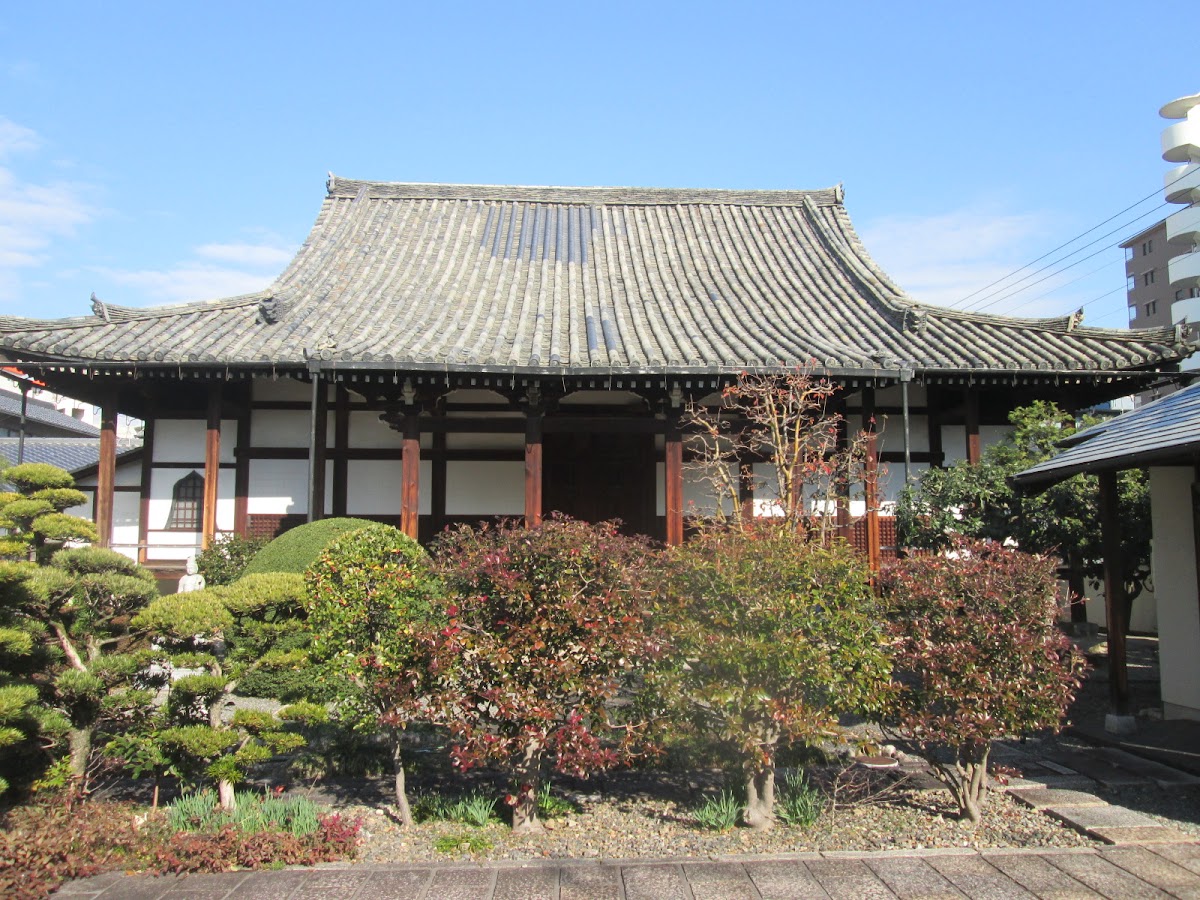
The facilities of the Nenbutsu sect follow traditional Buddhist architectural styles while incorporating modern elements. While not as large as the main temple’s Buddhist King’s Hall, the Kyoto branch temple also possesses a solemnity befitting a religious institution.
Within the temple grounds, buildings with diverse functions are arranged, including spaces for worship, facilities for spiritual practice, and plazas where believers gather.
Access Information and Surrounding Environment
Access by Public Transportation
The following methods are available to access Nenbutsu-shu Kyoto Branch Temple:
By Train
The nearest station varies depending on the situation, but the general routes are:
- Walking or taking a bus from JR Sagano Line “Saga-Arashiyama Station”
- Walking or taking a bus from Keifuku Electric Railway Arashiyama Line “Arashiyama Station”
- Walking or taking a bus from Hankyu Arashiyama Line “Arashiyama Station”
For facilities around Narutaki:
- The nearest station is Keifuku Electric Railway Kitano Line “Narutaki Station”
- It is recommended to check the walking route from the station in advance.
By Bus
Several Kyoto City Bus routes cover the Arashiyama area. It is recommended to check the latest information regarding specific bus stops and routes before your visit.
Access by Car
The Arashiyama area is expected to be crowded during the tourist season. If visiting by car, please note the following:
- It is essential to check the availability and conditions of parking in advance.
- It is especially crowded during the spring cherry blossom season and the autumn foliage season.
- Using public transportation is recommended if possible.
Nearby Tourist Attractions
Near the Nenbutsu-shu Kyoto Branch Temple, there are many of Kyoto’s most famous tourist attractions:
Arashiyama Area
- Togetsukyo Bridge: An iconic landmark of Arashiyama
- Tenryu-ji Temple: A renowned Rinzai Zen temple registered as a World Heritage Site
- Bamboo Grove Path: A representative landscape of Arashiyama
- Nonomiya Shrine: Popular as a shrine for matchmaking
Narutaki Area
- Access to Takao and Jingoji Temple is also possible
- Natural scenery as a production area for Kitayama cedar
Planning a sightseeing route that combines these nearby spots will allow for a more fulfilling visit to Kyoto.
Precautions When Visiting/Viewing
Manners for Religious Sites
Nenbutsu-shu Sanbozan Muryoju-ji Temple is a religious site and a place of worship. It is important to observe the following manners when visiting:
Basic Worship Manners
- Maintain silence and be considerate of other worshippers.
- Check in advance or follow on-site instructions regarding photography.
- Choose attire appropriate for a religious site.
- Show particular respect if religious ceremonies are taking place.
Regarding Visiting/Viewing
Nenbutsu-shu facilities may differ in nature from typical tourist temples. It is strongly recommended to check official information in advance regarding visiting/viewing availability, times, and conditions.
In particular, viewing the Japanese garden may be limited by season and conditions, so gathering the latest information is essential when planning your visit.
Contact Information
For detailed information regarding visits and the latest status, it is recommended to check the official Nenbutsu-shu website or contact them directly. The following points, in particular, should be confirmed in advance:
- Visiting hours and days
- Whether there is an admission fee and the amount
- Whether reservations are required for group visits
- Dates of special religious events
- Whether photography is permitted and the conditions for doing so
Nenbutsu-shu and Kyoto’s Buddhist Culture
The Position of New Religions in Kyoto
Kyoto, as the center of Japanese Buddhism, has been home to a concentration of head temples and important temples of various sects since ancient times. Within this context, new religious groups like Nenbutsu-shu occupy a unique position, embodying both tradition and innovation.
The activities of Nenbutsu-shu, which develop modern religious practices within the traditional religious environment of the ancient capital of Kyoto, can be considered an example of the diversity of Kyoto’s religious culture.
The Lineage of Pure Land Buddhism
The Jodo-mon sect, to which Nenbutsu-shu belongs, traces its roots back to the Pure Land faith that flourished from the late Heian period to the Kamakura period. The Nembutsu sect can be positioned within the tradition of various Pure Land Buddhist sects that developed in Kyoto, such as the Jodo sect founded by Honen Shonin and the Jodo Shinshu sect founded by Shinran Shonin.
While inheriting the core elements of faith in Amida Buddha and the practice of chanting the Buddha’s name, the Nembutsu sect has established its own unique religious identity by adding modern interpretations and practices.
Relationship with the Head Temple “Bukkyo no Odo”
A Magnificent Facility in Kato City, Hyogo Prefecture
Bukkyo no Odo, the head temple of the Nembutsu sect, is a large-scale religious facility built in Kato City, Hyogo Prefecture. Its magnificent scale and exquisite architecture are known to embody the ideals of the Nembutsu sect.
The head temple is composed of a unique group of buildings incorporating Buddhist architectural styles from around the world, expressing the universality and diversity of Buddhism. The vast grounds include chapels, training facilities, and gardens, creating a space that embodies the vision of “the dawn of spiritual civilization.” ### The Role of the Kyoto Branch Temple
While the head temple is the current center of the Nenbutsu sect, the Kyoto branch temple holds historical significance as the “place of origin.” These two locations, while having different meanings for the Nenbutsu sect, complement each other.
The Kyoto branch temple is a pilgrimage site of special significance for believers, as it represents the historical roots of the Nenbutsu sect. Furthermore, its location in Kyoto, a center of Buddhist culture, symbolizes the continuity of the Nenbutsu sect with the traditions of Japanese Buddhism.
Other Temples in Kyoto with “Muryoju” or “Muryoju” in Their Names
Meaning and Origin of the Name
“Muryoju” (無量寿) is a Chinese translation of the Sanskrit word “Amitayus,” meaning “infinite life.” This is another name for Amida Buddha and is widely used as the name of Pure Land Buddhist temples.
Besides the Nenbutsu-shu Sanbozan Muryoju-ji Temple, there are other temples in Kyoto that bear the name “Muryoju.”
Muryoju-san Komyoji Kyoto Main Temple Rurikoin
Located in Kamitakano Higashiyama, Sakyo-ku, Kyoto City, Rurikoin is known as the Kyoto main temple of Muryoju-san Komyoji Temple. Situated in Yase at the foot of Mount Hiei, it is particularly famous for its “floor maple” and “floor green” scenery, where the beautiful autumn leaves and fresh greenery are reflected on the floor, especially during the special viewing periods in spring and autumn.
Although this temple belongs to a different lineage than the Nenbutsu-shu, its sharing of the name “Muryoju” demonstrates the spread of Pure Land Buddhism.
Best Season to Visit
Spring Cherry Blossoms and Azaleas
The gardens of the Nenbutsu-shu Kyoto branch temple are at their most magnificent in spring. The sight of 7,000 cherry trees of various varieties blooming simultaneously, followed by 200,000 azaleas in vibrant colors, is truly breathtaking.
Cherry Blossom Viewing Season
- Late March to mid-April (blooming time varies depending on the variety)
- Starting with Higan cherry blossoms, followed by Oshima cherry blossoms, double-flowered cherry blossoms, and peony cherry blossoms
Azalea Viewing Season
- Late April to mid-May
- Many varieties including Kirishima azaleas, Kurume azaleas, and Hirado azaleas
Other Seasons
Early Summer to Summer
- A season of beautiful fresh green leaves from Kitayama cedars
- A lush, green garden landscape
Autumn
- Autumn foliage season (Arashiyama as a whole becomes a tourist season and crowded)
- A landscape of colorful trees in the garden
Winter
- The charm of Kitayama cedars amidst a snowy landscape
- A tranquil atmosphere for worship
The garden, which shows different expressions with each season, offers a completely different experience depending on when you visit. However, it is necessary to check in advance whether or not visits are possible and the conditions for doing so, regardless of the season.
Summary: The Charm of Nenbutsu-shu Sanbozan Muryoju-ji Temple
Nenbutsu-shu Sanbozan Muryoju-ji Temple’s facilities in Kyoto are a unique space where the modernity of a new religion intersects with the tradition of Kyoto, an ancient capital.
Key Points
- Historical Significance: As the birthplace of the Nenbutsu sect, it holds significant religious importance.
- Magnificent Garden: A landscape woven from Kitayama cedar, famous trees, famous stones, and tens of thousands of cherry and azalea trees.
- Attractive Location: Located in Arashiyama, one of Kyoto’s representative tourist areas.
- Religious Practice: Unique doctrines and practices pursuing “true Buddhism.”
- Relationship with the Head Temple: The Buddhist King’s Hall in Hyogo Prefecture and the Kyoto branch temple complement each other.
When planning a visit, it is important to understand the nature of the religious facility, observe appropriate manners, and check the latest information in advance. As a part of Kyoto’s rich Buddhist culture, Sanbozan Muryoju-ji Temple of the Nenbutsu sect can be said to possess unique value.
The garden, harmoniously integrated with the natural beauty of Arashiyama, the philosophy of pursuing spiritual civilization, and the historical significance of Kyoto itself, create a space that will leave a deep impression on visitors. When visiting Kyoto, paying attention not only to traditional temples but also to modern religious facilities like this will allow you to understand Kyoto’s multifaceted religious culture.