Complete Guide to Kugikiri Jizo (Ishizo-ji Temple) | A Hidden Gem in Kyoto: A Temple Filled with Miraculous Powers to Relieve Suffering and Votive Tablets
Located along Senbon-dori in Kamigyo-ku, Kyoto City, Kugikiri Jizo (Ishizo-ji Temple) is a Jodo sect temple that has long attracted the faith of ordinary people for its miraculous power to “remove suffering,” which is said to alleviate physical and mental pain. The approximately 1,000 nails and votive tablets depicting nail pullers that cover the walls of the main hall create an overwhelming sight unlike anything seen in other temples, astonishing visitors.
This temple, said to have been founded by Kobo Daishi Kukai, still has a mysterious tale of miraculous powers from the Muromachi period that is passed down to this day. This article comprehensively introduces everything you need to know before visiting, from the history of Kugikiri Jizo and its unique form of worship to the highlights of the temple grounds and access methods.
What is the Nail-Removing Jizo (Shakuzoji Temple)?
Formal Name and Common Name
Shakuzoji Temple, officially known as “Ietakayama Komyohenjoin Shakuzoji,” is a Jodo sect temple with the mountain name Ietakayama and the temple name Komyohenjoin. However, it is affectionately known locally as “Kuginuki Jizo” or “Kuginuki-san,” and the common name is overwhelmingly more widely known than the formal name.
The principal image is Jizo Bodhisattva, and due to the belief that this Jizo removes people’s suffering, it was called “Kunuki Jizo” (Suffering-Removing Jizo), which later evolved into the name “Kuginuki Jizo” (Nail-Removing Jizo).
Location and Characteristics of the Temple Grounds
Located on Senbon-dori, Kamitachiuri-agaru, Kamigyo-ku, Kyoto City, the temple grounds are relatively small, facing Senbon-dori, but their unique form of worship and visual impact attract many visitors. Upon entering the temple grounds, the first thing that catches the eye is the large monument of a nail puller, donated by the painter Insho Domoto.
The sight of votive tablets covering the outer wall of the main hall is breathtaking. These uniquely shaped tablets, adorned with two eight-inch nails and a nail puller, continue to be donated by people whose wishes have been granted.
History of the Nail Puller Jizo
Founding and Connection to Kobo Daishi Kukai
According to temple tradition, Ishizo-ji Temple was founded in 819 (Kōnin 10) by Kobo Daishi Kukai as a Shingon Buddhist temple. A legend remains that Kukai himself carved a Jizo Bodhisattva statue from a stone he brought back from Tang China, and this stone statue of Jizo Bodhisattva is currently enshrined as the principal image in the Jizo Hall.
A well associated with Kukai also remains on the temple grounds, and the temple has developed as a unique sacred site where Kobo Daishi worship and Jizo worship are fused.
Conversion to the Jodo Sect and the Abbot Chogen
Originally a Shingon Buddhist temple, it was rebuilt as a Jodo (Pure Land) temple during the Kamakura period by the abbot Shunjobo Chogen, known for his reconstruction of Todai-ji Temple. Abbot Chogen was a high-ranking priest who completed the reconstruction of the Great Buddha Hall of Todai-ji Temple in 1195, and is considered the restorer of Sekizo-ji Temple.
This conversion created a unique religious space where elements of Shingon Esoteric Buddhism and the Pure Land Buddhist practice of nembutsu (recitation of Amida Buddha’s name) coexisted.
Miraculous Tales of the Muromachi Period and the Origin of the “Nail-Removing Jizo”
The name “Nail-Removing Jizo” became widespread due to a mysterious incident that occurred around 1556, at the end of the Muromachi period.
A merchant named Kinokuniya Dorin experienced severe pain in both hands, and despite trying various treatments, his condition did not improve. Unable to bear his suffering any longer, Dorin prayed for seven days to the Jizo Bodhisattva at Sekizo-ji Temple, a temple renowned for its miraculous powers.
On the night of the final day of his prayers, Jizo Bodhisattva appeared to him in a dream and told him, “The pain in your hands is retribution for the nails you hammered in out of hatred in a past life,” and then pulled out two eight-inch nails from his hands. When he awoke, miraculously, the pain in his hands had completely disappeared.
As a token of his gratitude, Dorin attached the two eight-inch nails and the nail puller to a board and dedicated it to the temple. This story became famous, and the “Kunuki Jizo” (Suffering Removal Jizo) came to be known as the “Kuginuki Jizo” (Nail Pulling Jizo), and its worship spread widely among ordinary people as a Jizo who removes physical and mental pain and suffering.
Faith and Benefits of Kuginuki Jizo
From “Suffering Removal” to “Nail Pulling”
The Jizo Bodhisattva at Sekizo-ji Temple was originally worshipped as “Kunuki Jizo” (Suffering Removal Jizo), a Buddha who removes all kinds of suffering. Because the word “kunuki” sounds similar to “kuginuki” (nail puller), the name “Kuginuki Jizo” (Nail Puller Jizo) became established through a miraculous tale from the Muromachi period.
This wordplay-like coincidence, combined with the easily recognizable image of “pulling out nails,” created a form of worship that was widely accepted among ordinary people.
Main Benefits
It is believed that praying to Kuginuki Jizo brings the following benefits:
- Healing from Illness: Especially chronic pain and unexplained physical ailments
- Removal of Mental Suffering: Freedom from mental worries and stress
- Resolution of Karma: Resolution of bad ties and grudges from past lives
- Joint Pain and Neuralgia: Relief of pain such as lower back pain, stiff shoulders, and rheumatism
- Protection from Various Misfortunes: Protection from various difficulties in daily life
Prayers for physical pain are particularly numerous, and even today, people suffering from lower back pain and joint pain visit from all over the country.
Unique Custom of Votive Tablet Offering
The most distinctive feature of the Kugikiri Jizo is the uniquely shaped votive tablets offered by people whose wishes have been granted. Each tablet has two eight-inch nails and a nail puller attached, a tradition modeled after the story of Kinokuniya Dorin from the Muromachi period.
Worshippers offer these tablets when their wishes are fulfilled. The approximately 1,000 votive tablets covering the outer wall of the main hall tell the story of people’s faith accumulated over many years, creating an overwhelming spectacle unlike anything seen at other temples.
The tablets bear the names and addresses of the donors, as well as accounts of the suffering they were freed from; reading them reveals a variety of life stories.
Highlights of the Temple Grounds
Main Hall and Jizo Hall
At the heart of the temple grounds is the Jizo Hall, which houses the principal image, a stone statue of Jizo Bodhisattva. This Jizo statue, said to have been carved by Kobo Daishi Kukai himself from a stone he brought back from Tang China, welcomes visitors with a serene expression.
Inside the hall, you can pray directly to the Jizo Bodhisattva. Many visitors come with knee pain, back pain, or emotional troubles, quietly offering their prayers.
The Wall of Nail-Pulling Ema
The approximately 1,000 ema (votive tablets) covering the outer wall of the main hall are arguably the main reason to visit Sekizo-ji Temple. The sight of these unique ema, each adorned with two eight-inch nails and a nail puller, densely packed together is truly impressive.
Ema from various eras, from old to new, are mixed together, some dating back several decades. Looking at the ema, one can feel the suffering people have endured throughout the ages and the joy they have found in overcoming it.
The Giant Nail Puller Donated by Artist Insho Domoto
Upon entering the temple grounds, you’ll immediately notice a large nail puller monument, donated by the renowned Japanese painter Insho Domoto. This colossal nail puller, several meters tall, is a symbol of Sekizo-ji Temple, and many visitors take commemorative photos there.
Important Cultural Property: Stone Amida Triad
Behind the Jizo Hall is the stone Amida Triad, designated as an Important Cultural Property. The triad, with a seated Amida Buddha in the center and Kannon Bodhisattva and Seishi Bodhisattva on either side, is estimated to date from the late Heian period to the Kamakura period.
The simple yet powerful form, characteristic of stone Buddhas, possesses a different charm from wooden Buddhas, making it a must-see cultural asset for those interested in Buddhist art. While it can usually be viewed from behind the Jizo Hall, access may be restricted for preservation purposes.
A Well Associated with Kobo Daishi
Within the temple grounds remains a well said to have been dug by Kobo Daishi Kukai. Many legends remain about Kukai digging wells in various locations, and the well at Ishizoji Temple is one of them. It still holds water without drying up, preserving the legacy of the Kobo Daishi faith.
How to Visit and Etiquette
Basic Flow of Visiting
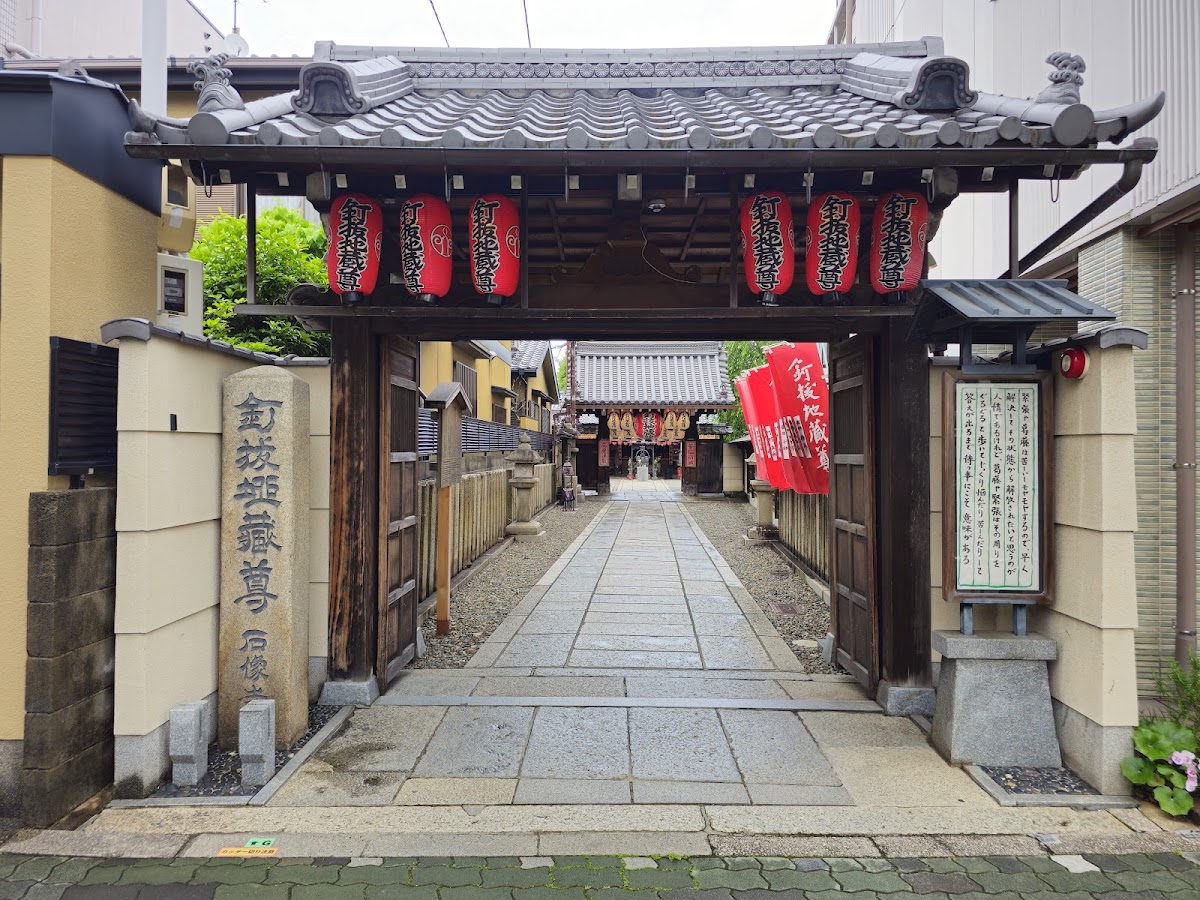
- Passing Through the Temple Gate: Enter the temple grounds through the temple gate facing Senbon Street.
- Purifying at the Water Basin: Purify your hands and mouth before praying.
- Visiting the Main Hall (Jizo Hall): Pray to Jizo Bodhisattva and ask for liberation from suffering.
- Viewing the Wall of Ema (Votive Tablets): Gaze at the votive tablets and feel the history of people’s faith.
- Viewing the Stone Amida Triad: If time permits, also view the stone Buddha statue, a designated Important Cultural Property.
How to Offer an Ema
When your wish is granted, you will offer an ema with a nail and nail puller attached. Ema can be obtained at the temple office. When offering, write down what kind of suffering you were liberated from and offer it with gratitude.
Mindset for Prayer
Praying to the Kugikiri Jizo is not simply about having pain and suffering removed, but also an opportunity to reflect on one’s own karma and past actions. As seen in the miraculous tales of the Muromachi period, the Buddhist concept of cause and effect—that present suffering is a result of past actions—is the underlying principle.
It is important to face yourself with a sincere heart and earnestly pray for liberation from suffering.
Visiting Information
Visiting Hours and Admission Fee
- Visiting Hours: 8:00 AM to 4:30 PM (may vary depending on the season)
- Admission Fee: Free (donations welcome)
- Holidays: Open all year round (however, visits may be closed for religious services, etc.)
While entry to the temple grounds is free, a donation box is provided; please feel free to make a donation.
Annual Events
Sekizo-ji Temple holds various religious services and events throughout the year.
- Jizo Bon Festival (August 23rd & 24th): A festival day for Jizo Bodhisattva, attracting a particularly large number of visitors.
- First three days of the New Year: Bustling with visitors for the first shrine visit of the year.
- Spring and Autumn Equinox Festivals: Memorial services for ancestors are held.
Especially during the Jizo Bon Festival, many visitors come not only from the local area but also from far away, making the temple grounds extremely lively.
Access Methods
Access by Public Transportation
Using City Buses
The most convenient way to access the temple is by using Kyoto City Buses.
- From Kyoto Station: Take City Bus Route 206 (bound for Senbon-dori Kitaoji Bus Terminal) or Route 50, get off at the “Senbon Kamitachiuri” bus stop, and walk for about 1 minute.
- From Shijo Kawaramachi: Take City Bus Route 46 or 59, get off at the “Senbon Kamitachiuri” bus stop, and walk for about 1 minute.
- From Kitaoji Bus Terminal: Take City Bus Route 206 (bound for Kyoto Station), get off at the “Senbon Kamitachiuri” bus stop, and walk for about 1 minute.
The Senbon Kamitachiuri bus stop is located along Senbon-dori, and it’s about a 1-minute walk from the bus stop to the main gate of Sekizo-ji Temple.
By Train
- Approximately 15-minute walk from JR Sagano Line “Enmachi Station”
- Approximately 20-minute walk from Kyoto Municipal Subway Karasuma Line “Imadegawa Station,” or transfer to a city bus.
Since it’s a bit of a distance from the nearest train station, using the city bus is convenient.
Access by Car
- Approximately 30 minutes from the Kyoto Minami IC exit of the Meishin Expressway
- Approximately 25 minutes from the Kamitoba Exit of the Hanshin Expressway Route 8 Kyoto Line
Senbon-dori is a major road running north-south and is relatively easy to find.
Parking Information
Sekizo-ji Temple does not have its own parking lot. We recommend using nearby coin-operated parking lots or public transportation. There are several coin-operated parking lots along Senbon-dori, but if your visit is short, using the city bus is convenient.
Nearby Tourist Attractions
Kitano Tenmangu Shrine
Located approximately 15 minutes on foot from Sekizo-ji Temple, Kitano Tenmangu Shrine is the head shrine of all Tenmangu shrines nationwide, dedicated to Sugawara no Michizane, the god of learning. It is also known as a famous spot for plum blossoms and autumn leaves, and many stalls line the grounds on the 25th of each month, the day of the Tenjin-san festival.
Senbon Shakado (Daihoonji Temple)
Located about a 10-minute walk from Sekizo-ji Temple, Senbon Shakado is known for its main hall (a National Treasure), the oldest wooden building in Kyoto City. It is also famous for the Okame legend and is believed to bring good fortune in matchmaking and marital harmony.
Seimei Shrine
Seimei Shrine, dedicated to Abe no Seimei, an Onmyoji (diviner) of the Heian period, is about a 15-minute walk from Sekizo-ji Temple. Known for its blessings of protection against evil and misfortune, it has recently become popular among younger generations due to its appearance in movies and novels.
Hirano Shrine
Hirano Shrine, known as a famous cherry blossom viewing spot, is about a 20-minute walk from Sekizo-ji Temple. Approximately 400 cherry trees of about 60 varieties are planted there, and it is bustling with many cherry blossom viewers in the spring.
Gourmet Information Around Kuginuki Jizo
Long-Established Japanese Confectionery Shops
Around Senbon-dori Street, there are many long-established Japanese confectionery shops typical of Kyoto. On your way back from your visit to the temple, we recommend buying some seasonal Japanese sweets.
Machiya Cafes
In Kamigyo Ward, there’s an increasing number of cafes housed in renovated old townhouses. Around Sekizo-ji Temple, you’ll find several establishments where you can enjoy lunch or sweets in a relaxed atmosphere.
Local Restaurants
There are also many local restaurants that haven’t been commercialized for tourists, offering Kyoto home cooking at reasonable prices.
Local Restaurants ## Visitor Voices and Reviews
Impressive Scene of Ema (Votive Tablets)
“The sight of the nail-pulling ema filling the main hall was breathtaking. Each one contained people’s wishes and gratitude, and I felt the long history.” (Woman in her 50s)
Quiet and Peaceful Space
“There wasn’t the crowds you’d find at a famous tourist spot, so I was able to pray at my own pace. I liked the atmosphere of a temple loved by the locals.” (Man in his 30s)
Experience of Relief from Lower Back Pain
“I prayed for relief from lower back pain that I’d been suffering from for many years. It might just be my imagination, but I feel like the pain has gradually eased since my visit.” (Woman in her 60s)
Easy Access
“It was easy to access, just one city bus ride away, and right next to the bus stop. The grounds are small, but the sights are condensed.” (Woman in her 40s)
Points to Note When Visiting Kugikiri Jizo
Regarding Photography
Photography of the grounds and ema is generally permitted, but please be considerate of the interior of the main hall and other visitors. Especially since votive tablets may contain personal information, avoid taking close-up photos.
Clothing and Belongings
There are no specific dress code requirements, but modest attire appropriate for visiting a temple is desirable. In summer, take precautions against the sun, and in winter, take precautions against the cold.
Check Visiting Hours
Visiting hours may change due to religious services or events. If you are visiting from afar, it is recommended to check by phone in advance.
Small Temple Grounds
The temple grounds are relatively small, so the visit takes about 15-30 minutes. Even including time to carefully look at the votive tablets and quietly offer prayers, one hour should be sufficient.
Summary: The Charm of Kugikiri Jizo
Kugikiri Jizo (Sekizo-ji Temple) is a place of worship deeply rooted in the local community, distinct from Kyoto’s famous tourist spots. The history of this temple, said to have been founded by Kobo Daishi Kukai, the mysterious tales of miraculous events from the Muromachi period, and the fervent faith of ordinary people that continues to this day are all expressed in the visually overwhelming form of approximately 1,000 votive tablets depicting nail-pulling.
Everyone experiences physical and mental pain and suffering at some point in their lives. Even in modern times, with its advanced medicine, many people still suffer from unexplained pain and emotional distress. The Nail-Pulling Jizo has been a spiritual haven for the people of Kyoto for over 800 years, offering comfort and a place to pray for liberation from suffering.
Nearly nestled along Senbon-dori, a main thoroughfare for Kyoto residents, this small temple maintains its unpretentious simplicity while leaving a deep impression on visitors. It may lack the splendor of Kinkaku-ji or Kiyomizu-dera, but the deeply rooted faith of the people is truly alive here.
When visiting Kyoto, be sure to visit not only famous tourist spots, but also these community-based temples. Kugikiri Jizo is a hidden gem of a temple where you can experience Kyoto’s profound religious culture and the forms of prayer that have continued through the ages.
If you are suffering from physical or mental pain, or if you wish to be freed from the suffering of life, please visit Kugikiri Jizo and quietly offer your prayers. The Jizo Bodhisattva, with a history of over a thousand years, will surely be there to comfort you in your suffering.