Complete Guide to Kōshōji Temple (Kamigyō-ku, Kyoto Prefecture) | History and Highlights of Oribe-dera Temple, Associated with Furuta Oribe
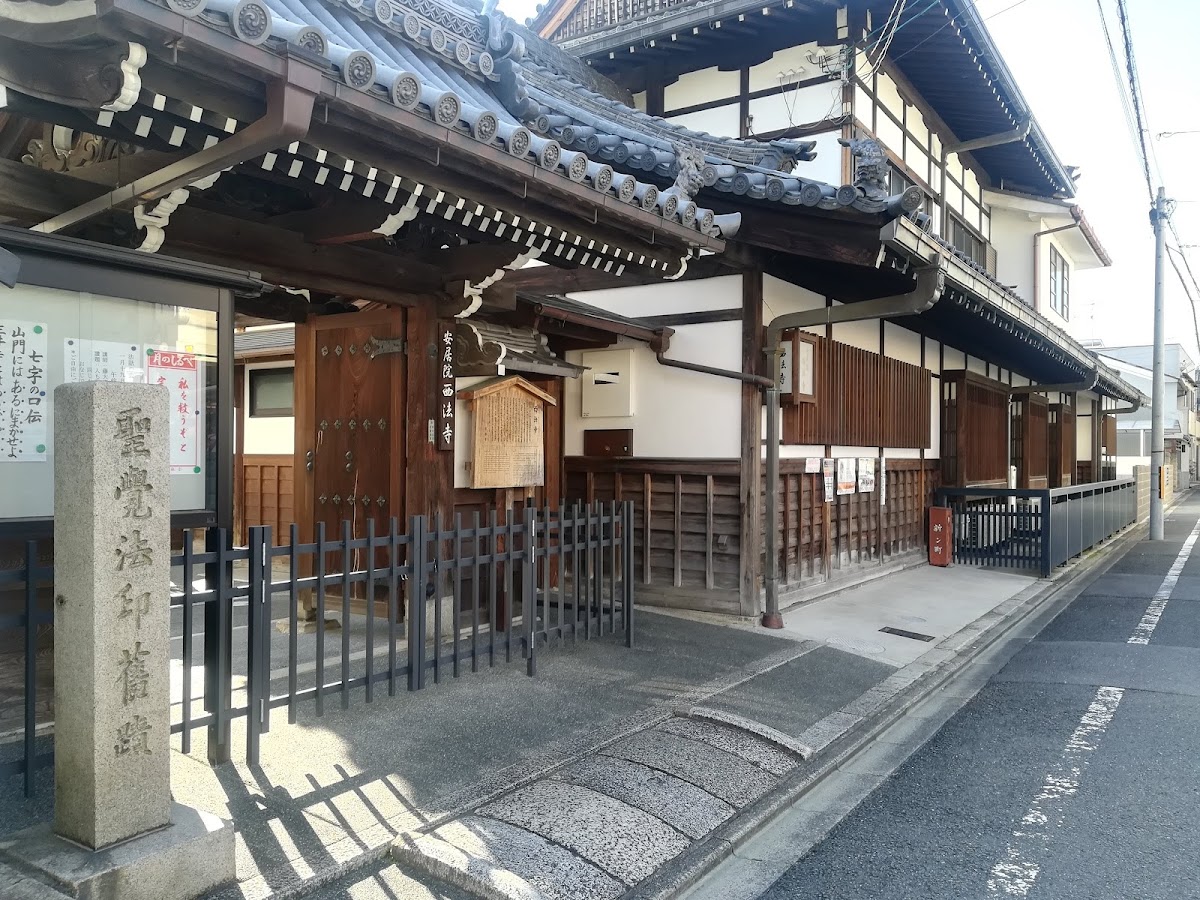
Located in Horikawa-dori Teranouchi, Kamigyo-ku, Kyoto City, Kōshōji Temple is the head temple of the Kōshōji branch of the Rinzai school of Zen Buddhism, founded by Furuta Oribe, a renowned Sengoku period warlord and tea master. Affectionately known as “Oribe-dera,” this temple boasts a unique history, blending early Edo period Buddhist culture with the spirit of the tea ceremony.
This article provides a comprehensive overview of Kōshōji Temple, including its detailed history, highlights within the grounds, cultural assets, and modern temple activities, offering a complete and fascinating look at this precious temple.
Basic Information about Kōshōji Temple
Official Name: Entsūzan Kōshōji
Sect: Head Temple of the Kōshōji Branch of the Rinzai School
Mountain Name: Entsūzan
Principal Image: Shakyamuni Buddha
Founded: Keichō 8 (1603)
Founder: Kiin Enni
Founder of the Temple: Furuta Oribe
Alternate Name: Oribe-dera
Location: 647 Kamitenjin-chō, 2-chome, Horikawa-dori Teranouchi-agaru, Kamigyo-ku, Kyoto City
Kōshōji Temple is characterized by its status as the sole head temple of the Kōshōji Branch of the Rinzai School, forming its own distinct sect. While there is another temple with the same name in Uji City, Kyoto Prefecture, it belongs to the Sōtō Zen school and is a completely separate temple; therefore, care should be taken not to confuse them.
History of Kōshō-ji Temple
Founding History and Furuta Oribe
Kōshō-ji Temple was founded in 1603, the very year the Edo Shogunate was established. Its founder, Furuta Oribe (1544-1615), was a Sengoku period warlord who served Oda Nobunaga and Toyotomi Hideyoshi, and a prominent disciple of Sen no Rikyū, leaving a significant mark on the world of the tea ceremony.
After Rikyū’s death, Furuta Oribe established his own unique aesthetic, “Oribe style,” within the world of the tea ceremony. Oribe ware, characterized by its distorted shapes and bold patterns, conveys his innovative aesthetic sense to this day. It was Oribe who invited the monk Kyoō Enji to be the founding abbot and established Kōshō-ji Temple as his family temple.
Kyoō Enji and the Establishment of the Kōshōji Branch of the Rinzai School
The founding abbot, Kyoō Enji (dates of birth and death unknown), was a high-ranking priest of the Rinzai school and a deeply revered figure of Furuta Oribe. At Oribe’s earnest request, Kyoō Enji became the founding abbot of Kōshōji Temple, where he developed his own unique style of Zen.
From the beginning, Kōshōji Temple was positioned as a branch of the Rinzai school and trained many disciples throughout the Edo period. After the changes in religious policy during the Meiji era, it eventually formed an independent sect, the Kōshōji branch of the Rinzai school. Even today, it continues to uphold its traditions as the head temple of the Kōshōji branch in Kamigyo-ku, Kyoto City.
The End of Furuta Oribe and Kōshōji Temple
Furuta Oribe was suspected of colluding with the Toyotomi side during the Summer Siege of Osaka in 1615 and was ordered to commit seppuku (ritual suicide) by Tokugawa Ieyasu. He was 72 years old. After Oribe’s death, his remains were buried at Kōshō-ji Temple, where he rests alongside his wife.
Kōshō-ji Temple came to be known as “Oribe-dera” (Oribe Temple) because it houses the graves of Furuta Oribe and his wife. The spirit of Oribe, an innovator of the tea ceremony and a pioneer of aesthetic sensibility, still lives on in this temple.
From the Edo Period to the Present
Throughout the Edo period, Kōshō-ji Temple functioned as an important temple of the Rinzai sect. It enjoyed good relations with the shogunate and developed into a temple with many parishioners. Records indicate that the temple grounds were larger than they are today, with multiple buildings standing side by side.
Kōshō-ji Temple suffered considerable damage from the anti-Buddhist movement after the Meiji Restoration and from the bombing during the Showa era. However, the main hall and other major buildings were preserved, and it continues to function as a place of worship to this day.
As times have changed from the Showa to the Heisei and Reiwa eras, Kōshōji Temple has maintained its role as a traditional Zen temple while also engaging in activities that re-examine the significance of Buddhism in modern society.
Highlights of the Temple Grounds
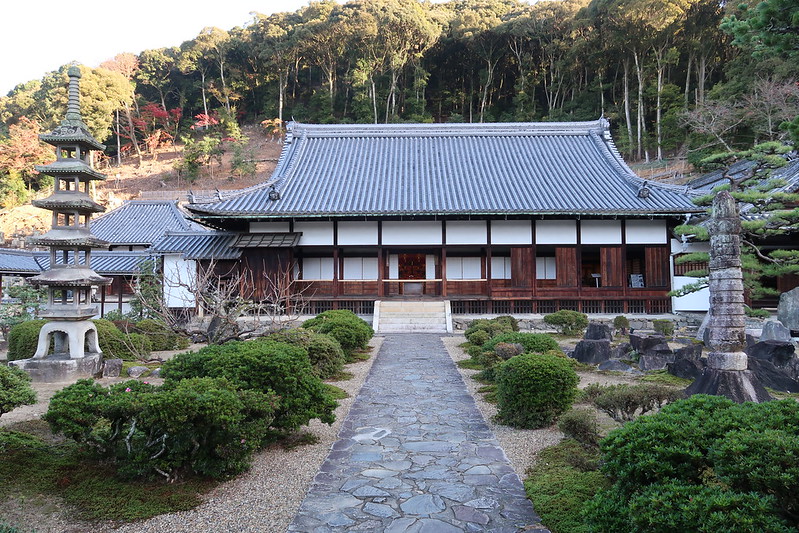
Main Hall
Kōshōji Temple’s main hall is a stately building that retains the characteristics of Zen Buddhist architecture from the Edo period. Inside, the principal image, a statue of Shakyamuni Buddha, is enshrined, and daily religious services are performed. The inner sanctuary of the main hall has a simple yet solemn atmosphere characteristic of Rinzai Zen temples and is used for Zen meditation and Dharma talks.
The ceiling and pillars of the hall are adorned with intricate carvings and paintings by Edo period craftsmen, demonstrating the high level of Buddhist art at that time.
Graves of Furuta Oribe and his wife
Within the temple grounds are the graves of Furuta Oribe, the temple’s founder, and his wife. This burial site is the main reason why Kōshōji Temple is called “Oribe Temple,” and it is an important spot visited by tea ceremony practitioners and history enthusiasts.
The tombstone retains the style of the early Edo period, quietly reflecting on Oribe’s turbulent life. Fresh flowers are always placed at the grave, indicating that he is still revered by many.
Garden
Within the grounds of Kōshō-ji Temple is a Japanese garden with elements of a pond-centered strolling garden. This garden is believed to have been created during the Edo period, and is characterized by stone arrangements and plantings that express the spirit of Zen.
At the center of the garden is a pond, and visitors can enjoy various landscapes as they stroll around it. It displays beauty in every season: cherry blossoms in spring, fresh greenery in early summer, and autumn leaves in fall. Especially during the autumn foliage season, the zelkova and maple trees on the temple grounds change color, allowing visitors to enjoy a beautiful view in a tranquil atmosphere.
Tea Room
As befits a temple founded by the tea master Furuta Oribe, Kōshō-ji Temple also has a tea room. This tea room reflects Oribe’s aesthetic preferences and is a valuable space for those involved in the tea ceremony. While usually closed to the public, it is sometimes used for special tea ceremonies and events. From the tea room, you can enjoy views of the garden, offering a space where the spirits of Zen and tea are intertwined.
The Zelkova Tree: A Tree of Pride for the Ward Residents
Within the grounds of Kōshō-ji Temple stands a magnificent zelkova tree, designated as the “Tree of Pride for the Residents” of Kamigyo Ward, Kyoto City. This giant tree, estimated to be several hundred years old, is a living witness that has watched over the long history of Kōshō-ji Temple.
Its majestic presence, exceeding 20 meters in height, makes it a landmark on the temple grounds, leaving a deep impression on visitors. In the season of fresh green leaves, it thrives, and in autumn, its golden foliage is breathtaking.
Cultural Properties and Collections
The Complete Buddhist Canon
Kōshō-ji Temple houses the Complete Buddhist Canon (a total collection of Buddhist scriptures) compiled during the Edo period. The Complete Buddhist Canon encompasses Buddhist scriptures, monastic rules, and treatises, and is one of the most important documents for Buddhist temples.
The complete Buddhist canon held by Kōshō-ji Temple is an Edo period printed edition, making it a valuable resource for understanding the publishing techniques and the level of Buddhist studies at the time. It is carefully preserved and currently under investigation by researchers.
Materials Related to Furuta Oribe
Kōshō-ji Temple also possesses materials and artifacts related to its founder, Furuta Oribe. These are usually not on public display, but they are important historical materials for understanding Oribe’s activities in the tea ceremony and his role as a Sengoku period warlord.
These include some tea utensils believed to have been used by Oribe, as well as letters, and are attracting attention in the study of tea ceremony history.
Temple Treasures and Artworks
In addition, Kōshō-ji Temple houses Buddhist paintings, calligraphy, and crafts from the Edo to Meiji periods. These are not regularly on public display, but are exhibited on special occasions.
In particular, the calligraphy by Zen monks from the Edo period is highly regarded as an excellent work of art expressing the spirituality of the Rinzai school of Zen Buddhism.
Activities of Kōshōji Temple in the Modern Era
“To Live a Better Life” – Modern Buddhist Practice
Kōshōji Temple actively pursues the role of temples in modern society, based on the philosophy of “learning and practicing Buddhism to live a better life.” It emphasizes functioning not merely as a tourist destination or cultural property, but as a living place of faith.
Regular Zen meditation sessions and Dharma talks are held, providing opportunities for the general public to experience the teachings of Zen. Activities exploring how Buddhist wisdom can address the worries and anxieties faced by modern people have gained support from many participants.
Zen Meditation Sessions and Training Experiences
Kōshōji Temple regularly holds Zen meditation sessions. Instruction is provided carefully, starting with the proper way to practice Zen meditation, making it accessible even for beginners. Zen meditation in the tranquil main hall offers a precious time to escape the hustle and bustle of daily life and confront oneself.
Furthermore, training experiences with overnight stays are offered to those who wish to experience the world of Zen more deeply. A day beginning with early morning prayers is an extraordinary experience for modern people, yet it offers a profound insight into something essential.
Dharma Talks and Buddhist Lectures
Regular Dharma talks by the head priest are held, explaining Buddhist teachings in an accessible and modern context. This is a valuable opportunity to learn about Buddhist philosophy, often perceived as difficult, in a way that is relevant to daily life.
Furthermore, courses are offered that systematically teach the fundamentals of Buddhism, creating an environment where those interested can gradually deepen their understanding of Buddhism.
Engagement with the Community
Kōshōji Temple plays an important role in the local community of Kamigyo Ward, Kyoto City. As a place that conveys the history of the region and as a spiritual haven for residents, the temple strives for open management that is accessible to the community.
It has been selected as one of Kamigyo Ward’s “100 Historic Sites” and is cherished as a historical and cultural asset of the region. The temple actively participates in local festivals and events, strengthening its ties with the community.
Access and Visiting Information
Location
647 Kamitenjin-cho, 2-chome, Horikawa-dori Teranouchi-agaru, Kamigyo-ku, Kyoto City, Kyoto Prefecture 602-8305
Access Methods
By City Bus:
- Get off at “Horikawa Teranouchi” bus stop (Kyoto City Bus), approximately 3 minutes on foot
- Get off at “Tenjin Park-mae” bus stop (Kyoto City Bus), approximately 5 minutes on foot
By Subway:
- Get off at “Kuramaguchi Station” on the Kyoto Municipal Subway Karasuma Line, approximately 15 minutes on foot
Access from Kyoto Station:
- Take City Bus Route 9 (bound for Nishigamo Shako-mae) from the Kyoto Station Bus Terminal, get off at “Horikawa Teranouchi” bus stop
- Travel time: approximately 30 minutes
Visiting Information
Visiting Hours: Grounds are freely accessible (subject to change due to events, etc.)
Admission Fee: Grounds are free (separate fees may apply during special viewings)
Parking: Limited parking spaces are available for visitors (advance confirmation recommended).
*If you wish to participate in Zen meditation sessions or Dharma talks, please contact the temple in advance.
*Special viewings of cultural properties and interiors are usually not open to the public; advance confirmation is required.
Nearby Tourist Attractions
Around Kōshōji Temple, there are many spots where you can experience the history of Kyoto:
- Daitoku-ji Temple: The head temple of the Rinzai sect’s Daitoku-ji branch, a temple deeply connected to the tea ceremony (approx. 15-minute walk)
- Imamiya Shrine: A shrine known for the legend of a wealthy marriage (approx. 10-minute walk)
- Funaoka-yama: A historical viewpoint in Kyoto (approx. 10-minute walk)
- Kitano Tenmangu Shrine: A famous shrine dedicated to the god of learning (approx. 20-minute walk)
Kōshōji Temple and Furuta Oribe – A Fusion of Tea Ceremony and Zen
Oribe’s Tea Ceremony Philosophy
Furuta Oribe’s tea ceremony, while inheriting the “wabi-cha” of his teacher Sen no Rikyū, developed a more free and creative aesthetic. His aesthetic, known as “Oribe’s preference,” actively incorporated distortion and imbalance, emphasizing the vitality found in imperfection rather than the tension inherent in perfection.
This innovative aesthetic resonates deeply with Zen philosophies such as “non-reliance on words” (the transmission of truth without words or writing) and “ordinary mind is the way” (the everyday mind is the path to enlightenment). Oribe’s philosophy of the unity of tea and Zen is reflected in the founding of Kōshō-ji Temple.
The Spirit of Oribe at Kōshō-ji Temple
Walking through the grounds of Kōshō-ji Temple, one can feel Oribe’s aesthetic sensibility in its simple beauty, devoid of excessive ornamentation. The arrangement of stones and plants in the garden exhibits a calculated beauty of imbalance, and the tea room’s design reveals Oribe’s playful spirit.
The “unconventional” beauty that Oribe sought was an expression of a free spirit unbound by preconceived notions. It also resonates with the Zen concepts of “mindlessness” and “freedom.” Kōshō-ji Temple is a rare space where the spirits of tea ceremony and Zen are fused.
Annual Events at Kōshōji Temple
Kōshōji Temple holds various Buddhist events throughout the year:
- New Year’s Prayer Service (January): A Buddhist service praying for peace in the new year
- Spring Equinox Service (March): A memorial service for ancestors
- Flower Festival (April): A celebration of the birth of Buddha
- Obon Festival (August): A memorial service for ancestors during the Obon festival
- Autumn Equinox Service (September): A memorial service for ancestors in autumn
- Founder’s Memorial Service (Dates vary by year): A memorial service commemorating the founder, Kyoō Enji
- Furuta Oribe Memorial Service (Dates vary by year): A memorial service for the founder, Furuta Oribe
- New Year’s Eve Bell Ringing (December 31st): Ringing of the bell to ring in the new year
Some of these events are open to general visitors as well as temple parishioners. Please contact the temple directly for details.
Points to Note When Visiting Kōshōji Temple
Recommended Time to Visit
Kōshōji Temple offers beautiful scenery throughout the four seasons, but the best times to visit are:
- Spring (Late March to Early April): Cherry blossom season. The cherry blossoms in the temple grounds are in full bloom.
- Early Summer (May to June): The fresh greenery is vibrant, and the zelkova trees in the temple grounds display their beautiful green leaves.
- Autumn (Mid to Late November): Autumn foliage season. The autumn colors of the zelkova and maple trees are magnificent.
Visiting Etiquette
Kōshōji Temple is a religious facility that is still active today. Please note the following points when visiting:
- Maintain silence and avoid disturbing other worshippers or practitioners.
- Take photographs only in designated areas; refrain from taking pictures inside the main hall or in restricted areas.
- Refrain from eating or drinking on the temple grounds except in designated areas.
- Do not touch the buildings or cultural artifacts.
- Choose appropriate attire for a temple, avoiding revealing clothing.
To Learn More About Kōshōji Temple
For those who wish to gain a deeper understanding of Kōshōji Temple’s history and culture:
- Participate in regularly held Zen meditation sessions or Dharma talks.
- Contact in advance to request special viewings or detailed explanations.
- Read books about Furuta Oribe and the Rinzai school of Zen Buddhism beforehand.
- Visit related temples and shrines in the surrounding area (such as Daitokuji Temple).
By making these preparations, you can have a deeper cultural experience that goes beyond mere sightseeing.
The Two Kōshōji Temples in Kyoto – The Difference Between Kamigyo Ward and Uji City
There are two temples named “Kōshōji” in Kyoto. This article introduces two different temples: Kōshōji in Kamigyo Ward and Kōshōji in Uji City. These are completely separate temples, and care should be taken not to confuse them.
Kōshōji in Kamigyo Ward:
- Sect: Rinzai Zen Kōshōji Branch Head Temple
- Founded: 1603 (Early Edo Period)
- Founder: Furuta Oribe
- Alternate Name: Oribe-dera
- Characteristics: Deeply connected to the tea ceremony
Kōshōji in Uji City:
- Sect: Sōtō Zen
- Founded: 1233 (Kamakura Period, moved to current location in 1648)
- Founder: Dōgen Zenji
- Characteristics: Famous for Kotozaka, a temple associated with Dōgen Zenji
Both temples are pronounced “Kōshōji” and are important Zen temples in Kyoto, but their sects and histories are completely different. When visiting, be sure to carefully check the location to avoid going to the wrong temple.
Summary
Kōshō-ji Temple, located in Kamigyo-ku, Kyoto City, is a precious temple with a history of over 400 years, serving as the head temple of the Kōshō-ji branch of the Rinzai school of Zen Buddhism, founded by the tea master Furuta Oribe. Affectionately known as “Oribe-dera,” this temple preserves a unique culture that blends the spirit of tea ceremony and Zen.
Founded in the year the Edo Shogunate was established, the temple has maintained its lineage, founded by Kyoō Enji, through turbulent history. The temple grounds contain the graves of Furuta Oribe and his wife, making it an important pilgrimage site for tea ceremony practitioners and history enthusiasts.
Even today, Kōshō-ji Temple is not merely a historical building; it continues to convey the teachings of Zen to people through Zen meditation sessions and Dharma talks, based on the philosophy of “learning and practicing Buddhism to live a better life.” Its commitment to preserving tradition while pursuing the role of Buddhism in modern society resonates with many.
When visiting Kyoto, why not visit not only famous tourist temples, but also historical and spiritually rich temples like Kōshō-ji? Spending time in the tranquil temple grounds, contemplating the world of tea and Zen unity that Furuta Oribe sought, will surely be a memorable experience.