Daishoji Temple (Kamigyo Ward, Kyoto Prefecture) | A Complete Guide to the History and Highlights of the Imperial Temple Built on the Site of the Flower Palace
Located along Karasuma Street in Kamigyo Ward, Kyoto City, and adjacent to Doshisha University’s Imadegawa Campus, Daishoji Temple is a prestigious nunnery built on the site of the Muromachi Shogunate’s “Flower Palace.” Because 24 imperial princesses served as its abbess, it is also known as “Otera Gosho” (Imperial Temple Palace) and is known as a special temple with deep ties to the Imperial family.
Basic Information about Daishoji Temple
Official Name: Gakushozan Daishoji
Sect: Rinzai Zen Sect (Independent)
Mountain Name: Gakushozan
Principal Image: Shakyamuni Buddha
Location: 109-1 Gosho Hachiman-cho, Karasuma-dori Kamitachiuri-sagaru, Kamigyo-ku, Kyoto City, Kyoto Prefecture
Founded: 1382 (Kowa 2 / Eitoku 2)
Founder: Ashikaga Yoshimitsu
Alternate Name: Gotera Gosho
Visiting Hours: Normally closed (Open only during special viewing periods)
Located in a quiet area of Kamigyo-ku, approximately a 5-minute walk north from the Karasuma Imadegawa intersection, it is close to the Kyoto Imperial Palace and Shokokuji Temple.
The History of Daishoji Temple | A 600-Year Story Beginning with Ashikaga Yoshimitsu
The Origins of the Temple and Okamatsu-dono
The history of Daishoji Temple dates back to 1382 (Kowa 2 / Eitoku 2). It began when Ashikaga Yoshimitsu, the third shogun of the Muromachi shogunate, built “Okamatsu-dono” within the Muromachi Palace (Hana no Gosho) for Muso Enni.
Muso Enni was a princess of Emperor Go-Kogon and a high-ranking priest who received deep devotion from Yoshimitsu. Yoshimitsu built Okamatsu-dono in a corner of his own residence, Muromachi-tei, and welcomed Enni there. After Muso Enni’s death, this Okamatsu-dono was converted into a temple, which became the origin of Daishoji Temple.
Relationship with Hana no Gosho
The Muromachi Palace, built by Ashikaga Yoshimitsu, was known as “Hana no Gosho” (Flower Palace) due to its splendor. Daishoji Temple occupies a portion of the former site of the Hana no Gosho (Flower Palace), and remains an important historical site that evokes the splendor of the Muromachi Shogunate.
It has also been selected as one of Kamigyo Ward’s 100 Historic Sites, and is positioned as an indispensable place when discussing Kyoto’s history.
History of War and Relocation
Since its founding, Daishoji Temple has suffered numerous wars. In particular, it suffered significant damage during the Onin-Bunmei War (1467-1477), forcing the temple to relocate. Afterward, repeated wars caused the temple to move from place to place.
In 1697 (Genroku 10), it finally returned to its current location in Gosho Hachiman-cho, Kamigyo Ward, and has since continued to uphold its tradition as a nunnery. Following this reconstruction during the Genroku period, Daishoji Temple entered a period of stability and its ties with the Imperial Family strengthened.
Changes Since the Meiji Restoration
After the Meiji Restoration, while many monzeki temples (temples headed by imperial family members) were forced to undergo significant changes, Daishoji Temple survived through inheritance by the court nobility. Although it belonged to the Shokokuji branch of the Rinzai school, it is now an independent temple of the Rinzai school.
The record of 24 imperial princesses serving as abbesses is a valuable historical fact that speaks to its deep connection with the Imperial family.
Status as an Imperial Temple/Imperial Palace | The Pinnacle of Monzeki Nunneries
What is a Monzeki Nunnery?
A Monzeki nunnery refers to a high-status nunnery where princesses of the Imperial family or regent families serve as abbesses. While there are several Monzeki nunneries in Kyoto, such as Hokyoji and Donkain, Daishoji Temple is known for its particularly strong ties to the Imperial family.
The alternative name “Imperial Temple/Imperial Palace” indicates that, despite being a temple, it possesses a status comparable to that of an imperial palace, signifying its special existence distinct from ordinary temples.
Relationship between Successive Abbots and the Imperial Family
At Daishoji Temple, since its founding by Muso Enni, 24 generations of imperial princesses served as abbots. This is an extremely rare example in the history of Japanese Buddhism and a valuable historical record that conveys the faith of the imperial family and the tradition of nunneries.
Each imperial princess devoted herself to Buddhist practice and worked diligently to maintain and develop the temple, upholding its status as an imperial temple and residence.
Architecture of Daishoji Temple | Registered Tangible Cultural Property Palace
Characteristics of the Daishoji Palace Palace
The central building of Daishoji Temple is the “Daishoji Palace Palace.” This palace is designated as a nationally registered tangible cultural property (building) and preserves a typical form of palace architecture for nunneries in the early modern period.
Structure: Located in the center of the temple grounds and facing south, the building consists of a hip-and-gable roofed west wing and a gable-roofed east wing extending to the east.
Architectural Style: A traditional Japanese building, a single-story wooden structure with a tiled roof, possessing the elegance and formality characteristic of a nunnery.
Interior Structure of the Palace
The interior of the palace has a complex structure with rooms connected by corridors, combining the functions of a living space for a nunnery with a ceremonial space to maintain formality.
Based on the architectural style after its reconstruction during the Genroku period, it has undergone later restorations and additions to reach its current form, making it a valuable building that allows us to understand the changes in architectural technology from the Edo period to the modern era.
Value as a Registered Tangible Cultural Property
While there are many registered tangible cultural properties in Kyoto Prefecture, the Daishoji Palace holds a particularly important position as a palace building for a nunnery. Detailed information is also available on the Cultural Heritage Online website, making it an important subject for architectural history and cultural property research.
Highlights of Daishoji
Location as the Site of the Flower Palace
One of the greatest highlights of Daishoji is its location itself. Located on the site of the Hana no Gosho, the administrative center and residence of the Muromachi Shogunate built by Ashikaga Yoshimitsu, Daishoji Temple evokes the splendor of the Muromachi period.
The area around present-day Karasuma-dori and Imadegawa is considered to be the site of the Hana no Gosho, and Daishoji Temple occupies its core. Doshisha University’s Imadegawa Campus is also part of the Hana no Gosho site, making this entire area historically significant.
A Dignified Gate and Grounds
Although the temple is usually closed to the public, the gate facing Karasuma-dori conveys its high status as an imperial temple. The tranquil grounds offer a special space that allows you to forget the hustle and bustle of the city.
The Beauty of Palace Architecture
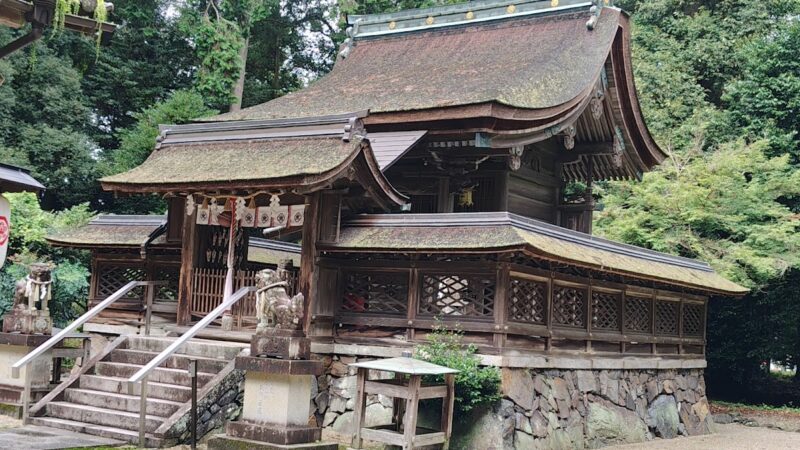
During special viewings, you can visit the Daishoji Imperial Palace, a registered tangible cultural property. You can enjoy the finest examples of early modern temple architecture, from the architectural beauty combining hip-and-gable roofs and gable roofs, to the arrangement of rooms connected by corridors, and the elegant spatial composition unique to a nunnery.
Visiting Information | Special Openings of Normally Closed Temples
About Normally Closed Temples
Daishoji Temple is, in principle, a temple that is not open to the public. This is to preserve its status and tradition as a nunnery, and it does not accept daily visitors. Therefore, it is a “hidden temple of Kyoto” and a longed-for object for many Kyoto enthusiasts.
Opportunities for Special Openings
There are occasions for special viewings several times a year. The main opportunities for openings are as follows:
- Kyoto Winter Travel Campaign: Daishoji Temple may be included in the winter special opening program organized by the Kyoto City Tourism Association.
- Kyoto Prefecture Registered Cultural Property Owners Association Related Events: It may be opened as part of a public viewing project for registered tangible cultural properties.
- Other Cultural Property Special Openings: Special opening programs held irregularly. Information on special public viewings can be found on the websites of the Kyoto City Tourism Association and the Kyoto Registered Cultural Properties Association (Kyoto Prefecture Association of Registered Cultural Property Owners).
Notes on Visiting
Even during special public viewings, photography is generally prohibited and restricted areas are in place. Please respect the status of this nunnery and observe proper etiquette during your visit.
Access Information
Access by Public Transportation
By Subway:
- Get off at Imadegawa Station on the Kyoto Municipal Subway Karasuma Line, and walk north from Exit 1 for about 5 minutes.
- Head north on Karasuma Street, and it’s just past the Karasuma Kamitachiuri intersection.
By Bus:
- Get off at the Karasuma Imadegawa bus stop (Kyoto City Bus), and walk for about 5 minutes.
- Get off at the Karasuma Kamitachiuri bus stop (Kyoto City Bus), and walk for about 2 minutes.
Major Nearby Spots
The area around Daishoji Temple is home to many of Kyoto’s most representative historical sites:
- Doshisha University Imadegawa Campus: Adjacent (part of the former site of the Hana no Gosho Palace)
- Kyoto Imperial Palace: About 10 minutes on foot
- Shokokuji Temple: About 7 minutes on foot (the head temple of the Shokokuji branch of the Rinzai school of Buddhism)
- Hokyoji Temple: About 15 minutes on foot (also a nunnery)
- Former Kyoto Prefectural Government Building: Approximately 12 minutes on foot (Important Cultural Property)
It is recommended to visit this in conjunction with a historical walk in the Kamigyo Ward area.
Related Kyoto Historical Spots to Daishoji Temple
Relationship with Shokokuji Temple
Daishoji Temple once belonged to the Shokokuji branch of the Rinzai school of Zen Buddhism. Shokokuji Temple is the head temple of the Rinzai school, founded by Ashikaga Yoshimitsu, and has deep historical ties to Daishoji Temple. Visiting both temples will allow you to gain a deeper understanding of Kyoto during the time of Ashikaga Yoshimitsu.
Other Nunneries
Besides Daishoji Temple, there are several other nunneries in Kyoto:
- Hokyoji Temple (Kamigyo Ward): A nunnery known as the “Temple of Dolls”
- Donkain Temple (Kamigyo Ward): Founded by a princess of Emperor Go-Mizunoo
- Reikanji Temple (Sakyo Ward): Known as a famous spot for camellias
Visiting these temples together will allow you to gain a deeper understanding of Kyoto’s nunnery culture.
Kyoto in the Muromachi Period
Taking advantage of its location on the former site of the Hana no Gosho (Flower Palace), a historical walk to learn about Kyoto in the Muromachi period is highly recommended. The area from Kamigyo Ward to Nakagyo Ward is dotted with historical sites related to the Muromachi Shogunate, allowing you to imagine what the capital looked like at that time.
Points to Note When Visiting Daishoji Temple
Gathering Information Beforehand
As it is a temple not open to the public, be sure to check the public opening information before visiting. It is important to check the special opening schedule on the Kyoto City Tourism Association’s official website and the Kyoto Tobunkai’s website.
Combining with Surrounding Area Exploration
Even if visiting Daishoji Temple alone is difficult, there are many other attractions in the surrounding Kamigyo Ward area. Combining it with visits to the Kyoto Imperial Palace, Shokokuji Temple, and Doshisha University campus will allow you to enjoy a fulfilling Kyoto sightseeing experience.
Understanding the Historical Background
Before visiting Daishoji Temple, studying about Ashikaga Yoshimitsu and the Muromachi Shogunate, the system of nunneries, and the history of the Hana no Gosho will lead to a deeper understanding and appreciation. Online resources such as the Kyoto Encyclopedia are also helpful.
Value of Daishoji Temple as a Cultural Property
Important as a Building
The Daishoji Imperial Palace, a nationally registered tangible cultural property, stands as a typical example of early modern nunnery temple architecture. Its wooden single-story structure, traditional tiled roofing techniques, and complex configuration combining hip-and-gable and gable roofs make it an important historical document in architecture.
Historical Value
With its location on the site of the former Hana no Gosho (Flower Palace), its founding by Ashikaga Yoshimitsu, its history of 24 generations of imperial princesses as abbots, and its status as an imperial temple and palace, Daishoji Temple possesses multifaceted historical value. Its long history, spanning from the Muromachi period to the present day, is extremely important as a cultural heritage of Kyoto.
Cultural Significance
With its unique system as a nunnery temple, its relationship with the imperial family and Buddhism, and the history of women and Buddhism, Daishoji Temple offers many insights for considering Japanese cultural history.
The History of Kamigyo Ward, Kyoto City, and Daishoji Temple
One of Kamigyo Ward’s Top 100 Historic Sites
Daishoji Temple has been selected as one of Kamigyo Ward’s Top 100 Historic Sites, and is positioned as an important historical heritage site in the region. Kamigyo Ward, centered around the Kyoto Imperial Palace, is an area where numerous historical buildings and temples and shrines are concentrated, and Daishoji Temple is one of the most important spots among them.
The Place Name “Gosho Hachimancho”
The place name “Gosho Hachimancho,” where Daishoji Temple is located, itself tells the history of this area. Its proximity to the Imperial Palace and its location as the site of the former Hana no Gosho (Flower Palace) give it historical significance.
Cultural Properties of Kamigyo Ward
Besides Daishoji Temple, Kamigyo Ward, along with other wards such as Kita Ward, Sakyo Ward, Nakagyo Ward, Higashiyama Ward, Shimogyo Ward, and Ukyo Ward, is particularly rich in cultural properties within Kyoto City. This area, densely packed with temples, shrines, and historical buildings, is one of the central areas for Kyoto tourism.
Summary | The Quiet Charm of the Imperial Temple
Daishoji Temple, a prestigious nunnery built on the site of Ashikaga Yoshimitsu’s Hana no Gosho (Flower Palace), boasts a history of over 600 years. With 24 generations of imperial princesses as its abbesses, its nickname “Otera Gosho” (Imperial Temple Palace), and its palace architecture designated as a Registered Tangible Cultural Property, it is a temple with many appealing features.
Because it is usually closed to the public, special viewing opportunities attract many visitors. When visiting the Karasuma-Imadegawa area in Kamigyo Ward, Kyoto City, keeping in mind the existence of this historic temple on the site of the Hana no Gosho will enhance your Kyoto experience.
The splendor of the Muromachi period, its deep connection to the Imperial family, its tradition as a nunnery, and the elegant architectural beauty of the early modern period—Daishoji Temple quietly conveys all of these, a hidden treasure of Kyoto. Check the information on special viewings and, if you have the opportunity, be sure to visit. You will surely feel the prestige and historical weight of this Imperial Temple Palace.