Shakubuji Temple (Hyogo Prefecture) Complete Guide | History, Important Cultural Properties, Goshuin (Temple Seal), and Access Information
About Shakubuji Temple
Shakubuji Temple is an ancient Shingon Buddhist temple located in Kamikage, Ogo-cho, Kita-ku, Kobe City, Hyogo Prefecture. Its mountain name is Ganreisan, and it is known as a tranquil temple nestled in a peaceful rural area on the northern side of the Rokko Mountains. It is said to have been founded in 651 AD by the hermit Hodo at the request of Emperor Kotoku, boasting a history of over 1300 years.
The principal image is a Jizo Bodhisattva known as Enmei Jizo, and it is also revered as the seventh temple (Yakushi Nyorai) on the Kobe Thirteen Buddha Pilgrimage. Within the temple grounds are a three-story pagoda and a Yakushi-do (Medicine Buddha Hall), both designated as important national cultural properties. These are valuable cultural heritage sites that preserve the architectural style of the Muromachi period, attracting many worshippers and history enthusiasts.
Located in the mountains, far from the hustle and bustle of Kobe city, Ishimine-ji Temple offers a tranquil environment for worship, which is a major attraction. Especially during the autumn foliage season, visitors can enjoy the beautiful scenery harmonizing with the surrounding nature.
History of Ishimine-ji Temple
Founding and the Legend of Hodo Sennin
The history of Ishimine-ji Temple dates back to 651 AD (Hakuchi 2). According to temple tradition, it was founded as an imperial prayer temple by the 36th Emperor Kotoku, by the legendary monk Hodo Sennin, who is said to have flown in from India. Hodo Sennin is a figure who appears in the founding legends of many temples in Hyogo Prefecture and is believed to have played a significant role in the development of Buddhist culture in the Harima and Settsu regions.
In its early days, Ishimine-ji Temple enshrined Enmei Jizo as its principal image and flourished as a center of local faith. This Jizo Bodhisattva is believed to have miraculous powers for longevity, safe childbirth, and fertility, and has attracted the faith of many people since ancient times.
Development from the Nara to Heian Periods
It is said that in 747 (Tenpyo 19), the renowned monk Gyoki Bodhisattva visited this temple and built the Yakushi-do (Medicine Buddha Hall). Gyoki was a high-ranking monk who was also involved in the construction of the Great Buddha of Todai-ji Temple and is known for his travels throughout Japan, where he dedicated himself to temple construction and social work. With the construction of the Yakushi-do by Gyoki, Ishimine-ji Temple developed as a center for Yakushi worship in addition to Jizo worship.
Furthermore, it is said that in 823 (Kōnin 14), a three-story pagoda was built at the request of Emperor Saga, the 52nd emperor. This established Ishimine-ji Temple’s status as a prestigious temple that received imperial orders twice.
Transition from the Medieval to the Early Modern Period
From the Heian period to the Kamakura period, Ishimine-ji Temple flourished as a training ground for Shingon Esoteric Buddhism. However, like many other temples, it is believed that during the turbulent Sengoku period, it experienced periods of decline due to warfare and other factors.
The current three-story pagoda was rebuilt in the mid-Muromachi period (around 1393-1466) and is considered a masterpiece showcasing the pinnacle of architectural technology of the time. The Yakushi-do (Medicine Buddha Hall) is also a valuable structure that preserves the style of the Muromachi period.
During the Edo period, it was revived as an influential temple in the region and has survived the effects of the anti-Buddhist movement of the Meiji era to the present day. In the early Showa period, the three-story pagoda and the Yakushi-do were designated as important national cultural properties, officially recognizing their cultural value.
Temple Grounds and Main Buildings
Main Hall
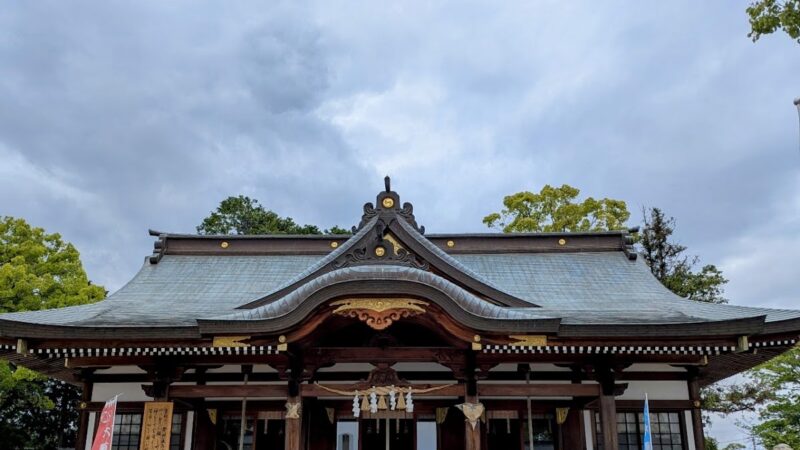
The main hall of Ishimine-ji Temple is located in the center of the temple grounds, at the top of the approach path. It houses the principal image, the Enmei Jizo Bodhisattva, and is the center of faith where daily services and religious ceremonies are held. The interior of the hall is enveloped in a solemn atmosphere, providing a space where one can find peace of mind by quietly offering prayers.
From the main hall, you can overlook the entire temple grounds and enjoy the beautiful scenery in harmony with the surrounding mountains. Visiting in the tranquil atmosphere of early morning is especially meaningful.
Three-Storied Pagoda (Nationally Designated Important Cultural Property)
The three-storied pagoda of Ishimine-ji Temple is a magnificent structure towering to the east of the main hall. It is believed to have been built in the mid-Muromachi period (around 1393-1466) and was designated a National Important Cultural Property on March 26, 1915.
Architectural Features:
- Style: Three-bay, three-storied pagoda
- Roof: Copper plate roofing in the style of cypress bark shingles (originally cedar shingles)
- Height: Approximately 20 meters
- Structure: Eclectic style incorporating elements of Zen Buddhism while being based on Japanese style
The three-storied pagoda possesses beautifully balanced proportions and is a valuable historical structure demonstrating the high level of architectural technology of the Muromachi period. From the first to the third story, the tapering rate of each story (the rate at which the story becomes smaller as it rises) is exquisite, combining stability and elegance.
The finial (the decorative element at the top of the pagoda) is also perfectly preserved, conveying almost its original appearance. Its towering presence in the mountains is breathtaking, and the vermilion body of the pagoda, contrasting with the surrounding greenery, is an iconic landscape of Ishimine-ji Temple.
Yakushi-do Hall (Nationally Designated Important Cultural Property)
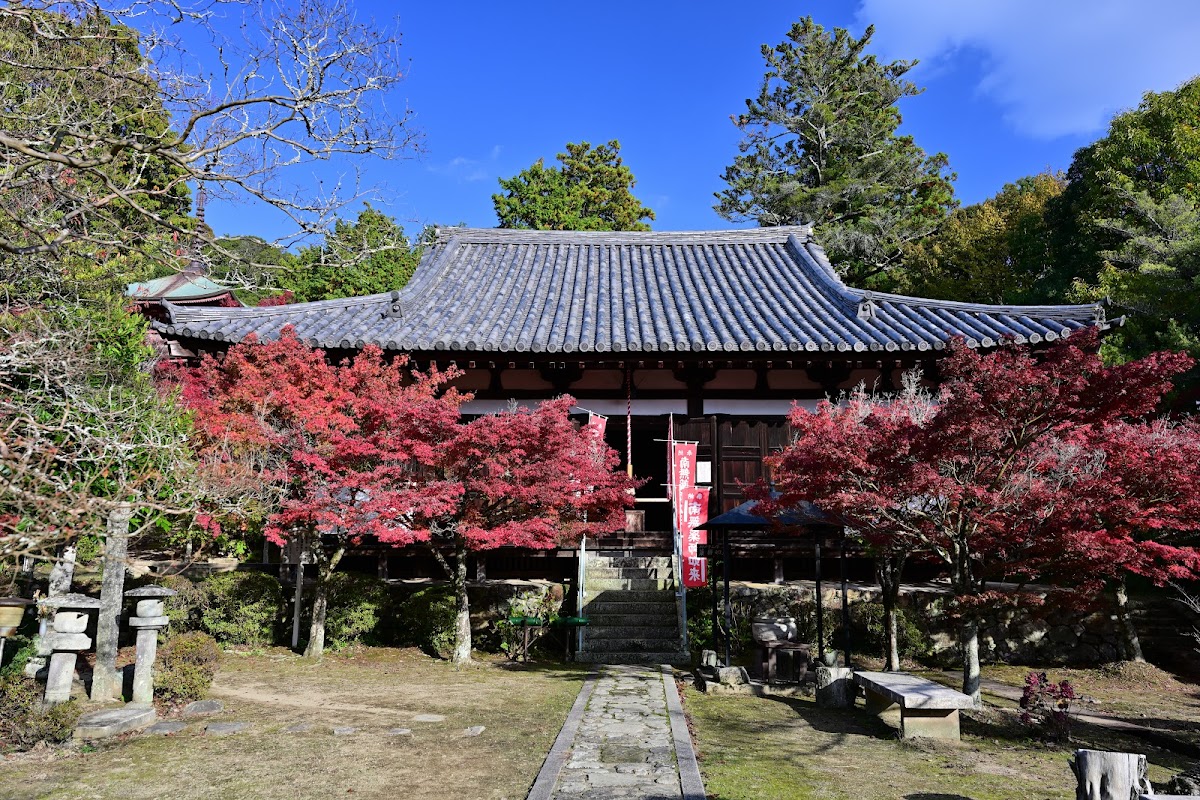
The Yakushi-do Hall, along with the three-story pagoda, is a valuable building designated as a National Important Cultural Property. It strongly retains the architectural style of the Muromachi period, conveying the characteristics of Buddhist temple architecture from that era.
Inside the hall, a statue of Yakushi Nyorai (Medicine Buddha) is enshrined, and worshippers visit to pray for healing from illness and longevity. As the seventh temple of the Kobe Thirteen Buddha Pilgrimage, this Yakushi-do Hall, enshrining Yakushi Nyorai, is the center of the pilgrimage.
While the architectural style is based on traditional Japanese architecture, the details reflect the characteristics of the era, giving it significant architectural historical value. In particular, the bracket systems (the combination of structural members supporting the eaves) and the carvings demonstrate the high level of craftsmanship of the Muromachi period.
Other Temple Buildings and Grounds
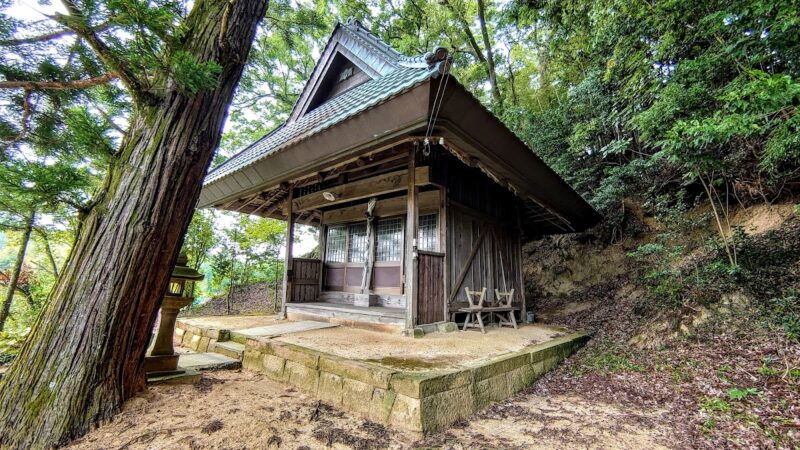
Besides the main hall, three-story pagoda, and Yakushi-do hall, Ishimine-ji Temple also contains other buildings such as a bell tower and a priest’s quarters. The entire grounds are situated on a mountain slope, and the layout involves ascending the approach path and visiting the buildings one after another.
The temple grounds are surrounded by a rich natural environment, displaying different expressions throughout the seasons. You can enjoy the beauty of cherry blossoms in spring, fresh greenery in early summer, and autumn leaves in fall.
Cultural Properties and Important Art Objects
Nationally Designated Important Cultural Properties
Ishimine-ji Temple possesses the following two nationally designated Important Cultural Properties:
- Ishimine-ji Temple Three-Storied Pagoda (Designated March 26, 1915)
- Constructed in the mid-Muromachi period
- Three-bay, three-storied pagoda with a copper-plated roof in the style of tochigi shingles
- Highly regarded as a representative example of Muromachi architecture
- Ishimine-ji Temple Yakushi-do Hall
- Conveys the architectural style of the Muromachi period
- A valuable surviving example of Buddhist temple architecture
These Important Cultural Properties are not merely old, but are also protected at the national level as valuable cultural heritage that conveys the architectural techniques and aesthetic sensibilities of the time.
Buddhist Statues and Paintings
Ishimine-ji Temple houses several Buddhist statues, including the principal image, Enmei Jizo Bodhisattva, and Yakushi Nyorai. These statues are not only objects of worship but also works of art historical value.
In particular, the principal image, Jizo Bodhisattva, is believed to have miraculous powers for longevity, safe childbirth, and fertility, and has attracted the faith of many people since ancient times. It is a hidden Buddha and is not usually on public display, but it may be possible to view it on special occasions.
Goshuin (Temple Seal) Information
Types and Characteristics of Goshuin
At Ishimine-ji Temple, goshuin are given as proof of worship. The goshuin feature calligraphy and a red seal of “Yakushi Nyorai” (Medicine Buddha) and “Iwamine-san” (Iwamine Mountain), and you can also receive a goshuin as the seventh temple on the Kobe Thirteen Buddha Pilgrimage.
Features of the Goshuin (Temple Seal):
- Ink calligraphy of “Yakushi Nyorai” or “Enmei Jizo” in the center
- Inscription of the temple’s mountain name, “Iwamine-san”
- Seal of “Kobe Thirteen Buddha Pilgrimage, No. 7”
- Temple seal and date
Where and How to Obtain the Goshuin
The Goshuin of Ishimine-ji Temple is usually given out at the temple office, but the priest may be absent. In that case, a pre-printed Goshuin may be available.
How to Obtain:
- Direct issuance at the temple office (when the head priest is present)
- Pre-printed Goshuin (may be available in a white wooden box at the temple office)
- Alternatively, you can contact the nearby Chikurin-ji Temple to obtain one.
Those wishing to obtain a Goshuin are advised to confirm by phone in advance. Furthermore, it is important to understand the true meaning of the Goshuin – that it is proof of worship, not a stamp rally – and to respectfully worship before receiving it.
About the Kobe Thirteen Buddha Pilgrimage
Ishimine-ji Temple is the seventh temple on the Kobe Thirteen Buddha Pilgrimage, and enshrines Yakushi Nyorai (Medicine Buddha). The Kobe Thirteen Buddha Pilgrimage is a pilgrimage to 13 temples within Kobe City, based on the belief in the Thirteen Buddhas.
What is the Thirteen Buddha Belief?
The Thirteen Buddhas are 13 Buddhas and Bodhisattvas who preside over memorial services from the seventh day after death to the 33rd anniversary. This belief is for praying for the repose of the deceased and for finding peace of mind for the bereaved. The Yakushi Nyorai at Ishimine-ji Temple is positioned as the Buddha who presides over the seventh anniversary.
Many pilgrims visit this pilgrimage site, believing it to be a way to honor their ancestors and cultivate their own spirit. You can visit historical temples in Kobe City while collecting temple stamps at each site.
Annual Events and Memorial Services
Sekihōji Temple holds various memorial services and events throughout the year. The main annual events include:
- New Year’s Day to the 3rd: New Year’s visit to the temple, Shushō-e (New Year’s service)
- Spring: Spring equinox service, Hana Matsuri (Buddha’s birthday celebration)
- Summer: Obon (Buddha’s festival)
- Autumn: Autumn equinox service
- Other: Monthly memorial services, Jizō Bodhisattva festival, etc.
During special memorial services, Buddhist statues that are usually not open to the public may be displayed. Please contact the temple directly for detailed dates.
Nearby Attractions and Tourist Spots
Chikurinji Temple
Nearby to Sekihōji Temple is Chikurinji Temple, also said to have been founded by the hermit Hōdō. Chikurinji Temple is also a historical temple, and many people visit it along with Sekihōji Temple. Since the two temples cooperate in issuing Goshuin (temple stamps), a course visiting both temples is recommended.
The Satoyama Landscape of Ogo
Ogo-cho, Kita-ku, Kobe City, where Ishimine-ji Temple is located, is situated at the northernmost tip of Kobe City and is an area with a peaceful satoyama (rural landscape). Terraced rice paddies and rural scenery remain, offering a completely different atmosphere from the urban areas of Kobe.
You can enjoy the rural scenery of each season: preparations for rice planting in spring, green rice fields in summer, and golden rice stalks in autumn. It is also a suitable area to visit by car or bicycle.
Hiking Courses
The area around Ishimine-ji Temple is located on the north side of the Rokko Mountains, and hiking courses are well-maintained. Visiting the temple while walking through nature will refresh both your mind and body. However, appropriate equipment and preparation are necessary when walking on mountain trails.
Transportation Access
Access by Public Transportation
Because Ishimine-ji Temple is located in the mountains, access by public transportation takes some time. The following are the main access methods:
Train and Bus Combination:
- Route from Sanda Station on the Fukuchiyama Line/Kobe Electric Railway
- Get off at Sanda Station on the JR Fukuchiyama Line or Kobe Electric Railway
- Take the Shinki Bus bound for “Ogo”
- Get off at “Nose Bus Stop” (approximately 30 minutes)
- Approximately 30 minutes on foot from the bus stop (approximately 2 km, uphill)
- Route from Gosha Station on the Kobe Electric Railway
- Get off at Gosha Station on the Kobe Electric Railway Ao Line
- Approximately 1 hour on foot from the station (approximately 4 km)
- Taking a taxi is recommended (approximately 10 minutes)
Walking Route from the Bus Stop:
From Nose Bus Stop to Ishimineji Temple, it is approximately a 30-minute walk, including a mountain path. The path is paved, but there are ups and downs, so comfortable walking shoes are recommended. Signposts are installed, so you’re unlikely to get lost, but if you’re unsure, we recommend using a map app.
Access by Car and Parking
Access by Car:
- From Kobe:
- Approximately 15 minutes from the “Karato-Higashi” Interchange on the Hanshin Expressway Route 7 Kita-Kobe Line
- Head north on National Route 428 towards Ogo
- From Osaka/Sanda:
- Approximately 20 minutes from the “Kobe-Sanda” Interchange on the Chugoku Expressway
- Head towards Ogo via Prefectural Road 38
Parking Information:
Ishimine-ji Temple has a free parking lot for visitors. However, the number of parking spaces is limited, so be aware of congestion on holidays and during peak seasons such as autumn foliage season. It’s a few minutes’ walk from the parking lot to the temple grounds.
When searching with a car navigation system, please search for “Ishimine-ji Temple” or the address “110-1 Kamikage, Ogo-cho, Kita-ku, Kobe City, Hyogo Prefecture”.
Important Notes Regarding Access
- Limited Public Transportation: Shinki Bus services are limited, so please check the timetable in advance.
- Long Walking Distance: It’s a 30-minute walk from the bus stop, and there are uphill sections, so those with mobility issues are advised to take a taxi.
- Snowfall in Winter: Snowfall and icy roads are possible in winter, so please check the weather before visiting.
- Opening Hours: The temple office’s opening hours are irregular, so those wishing to receive a Goshuin (temple stamp) are advised to contact the temple in advance.
Guidelines and Manners for Visiting
Basic Manners for Visiting
When visiting Ishimine-ji Temple, please observe the following basic manners:
- Dress Code: Avoid revealing clothing and dress appropriately. Comfortable walking shoes are essential as you will be walking on mountain paths.
- Photography: Photography is generally permitted within the temple grounds, but photography inside halls and of Buddha statues may be prohibited. Please check if you are unsure.
- Silence: The temple grounds are a place of training and prayer. Please refrain from loud conversations and noise.
- Smoking and Eating: Please refrain from smoking and eating outside of designated areas.
- Trash: Please take your trash with you.
Etiquette for Visiting the Temple
- Bow at the Temple Gate: Before entering the temple grounds, bow at the temple gate.
- Purification at the Water Basin: If there is a water basin, purify your hands and mouth.
- Worship at the Main Hall:
- Quietly place your offering in the offering box.
- Join your hands in prayer and bow.
- Pray sincerely.
- Bow and leave.
- Other Halls: Similarly, join your hands in prayer and bow in front of the Yakushi Hall and the three-story pagoda.
Summary of the Charms and Highlights of Ishimine-ji Temple
The greatest charm of Ishimine-ji Temple lies in its prestigious status as an ancient temple with a history of over 1300 years, and its possession of valuable cultural heritage—the three-story pagoda and Yakushi-do hall, both designated as important national cultural properties. These structures, which preserve the architectural style of the Muromachi period, hold high value from both an architectural and art historical perspective.
Furthermore, its location in the mountains, far from the city center of Kobe, is another unique charm of Ishimine-ji Temple. In a tranquil environment, one can quietly worship and connect with nature and history. The beauty of nature throughout the seasons also captivates visitors.
As the seventh temple on the Kobe Thirteen Buddha Pilgrimage, it continues to serve as a place of faith, attracting many visitors as part of their pilgrimage.
It is a temple worth visiting for a variety of purposes, including history enthusiasts, architecture fans, those interested in Buddhist art, those seeking a peaceful place to calm their minds, and those undertaking pilgrimages.
Basic Information
Temple Name: Ganreisan Shakubuji
Location: 110-1, Kamikage, Ogo-cho, Kita-ku, Kobe City, Hyogo Prefecture 651-1623
Sect: Shingon Buddhism (Koyasan Shingon Buddhism)
Principal Image: Jizo Bodhisattva (Enmei Jizo)
Founder: Hodo Sennin
Founded: Hakuchi 2 (651)
Pilgrimage Site: Kobe Thirteen Buddhas Pilgrimage Sites, No. 7 (Yakushi Nyorai)
Cultural Properties: Three-Storied Pagoda (National Important Cultural Property), Yakushi-do Hall (National Important Cultural Property)
Phone: 078-958-0822
Visiting Hours: Grounds are freely accessible (Temple office hours are irregular)
Admission Fee: Free
Parking: Yes (Free, limited number of spaces)
Official Website: None (See Kobe City Tourism website for information)
Summary
Ishimine-ji Temple is an ancient Shingon Buddhist temple with over 1300 years of history, nestled in the mountains of Kita-ku, Kobe City, Hyogo Prefecture. Founded by the hermit Hodo, it holds the prestige of being an imperial temple of Emperor Kotoku, and possesses valuable cultural heritage, including a three-story pagoda and Yakushi-do hall, both designated as important national cultural properties. It is a temple of high historical and cultural value.
Ishimine-ji Temple’s greatest appeal lies in its tranquil environment, away from the hustle and bustle of Kobe city, where one can appreciate the architectural beauty of the Muromachi period and offer a peaceful place to worship. It is also known as the seventh temple on the Kobe Thirteen Buddhas Pilgrimage, attracting many visitors as part of their pilgrimage.
While access is somewhat inconvenient, this allows for a truly peaceful and serene experience away from the noise and hustle and bustle. This temple is highly recommended for those interested in history and architecture, and for those seeking a quiet and peaceful place to find peace of mind.
Ishimine-ji Temple offers a chance to experience the beauty of nature throughout the seasons, as well as the faith and culture that has been passed down for over a thousand years. When you visit Kobe, why not extend your trip a little and visit this historic temple?