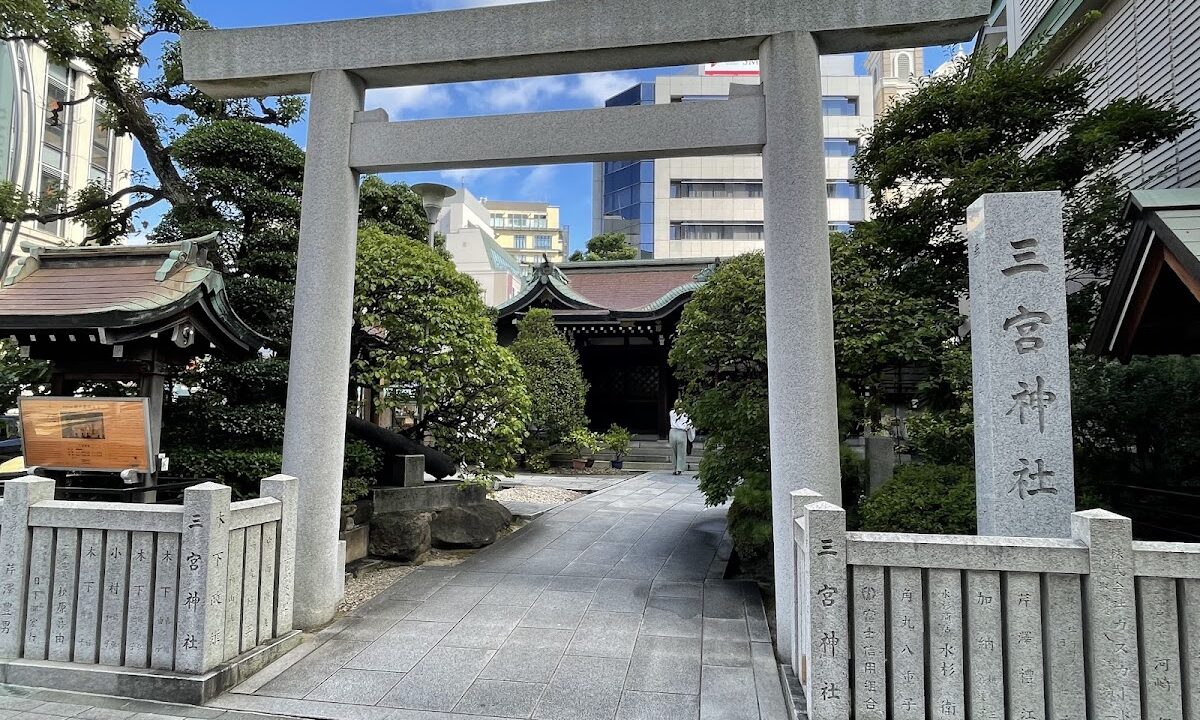
Complete Guide to Sannomiya Shrine (Matsuo Sannomiya Shrine) | History, Goshuin (Shrine Seal), Access, and Highlights Explained in Detail
What is Sannomiya Shrine (Matsuo Sannomiya Shrine)?
Sannomiya Shrine (Matsuo Sannomiya Shrine) is an auxiliary shrine of Matsuo Taisha, located in Nishikyogoku Kitaura-cho, Ukyo-ku, Kyoto City. Its official name is “Matsuo Sannomiya Shrine,” and it is also known locally as “Kawakatsuji Sannomiya Shrine.” It is located west of Kyoto Municipal Nishikyogoku Junior High School, approximately a 7-minute walk from Hankyu Nishikyogoku Station.
It holds a particularly important position among the auxiliary and subordinate shrines of Matsuo Taisha, and plays a crucial role in Kyoto’s festival culture as one of the temporary resting places for the portable shrine during the Matsuo Festival. While the shrine grounds are not particularly large, it has long been deeply revered by the local people as the tutelary deity of this region.
History and Origins of Sannomiya Shrine
Founding and Ancient History
Sannomiya Shrine is said to have been founded during the Taihō era (701-704), making it an ancient shrine with a history of over 1300 years. This period coincides with the time just before the relocation of the capital to Heijō-kyō, and the time when shrine rituals in the Kyoto Basin were being established.
Initially, Tamayorihime-no-Mikoto was enshrined as the main deity. Tamayorihime-no-Mikoto is considered the mother goddess of Ōyamakui-no-Kami, the main deity of Matsuo Taisha Shrine, and has been revered as a goddess of water and agriculture. Later, Ōyamatsumi-no-Kami and Sakatoke-no-Kami were enshrined together, and it is said that the shrine came to be called “Sannomiya-sha” (Three Shrines) because it enshrined three deities.
Relationship with Kawakatsuji Temple
The area where Sannomiya Shrine is located was formerly called Kawakatsuji Village. This place name is believed to originate from Hata no Kawakatsu, who was active from the Asuka period to the Nara period. Hata no Kawakatsu is known as a close confidant of Prince Shotoku, and the Hata clan had deep ties to Matsuo Taisha Shrine.
Although the temple Kawakatsu-ji no longer exists, the name remains as evidence of a temple associated with Hata no Kawakatsu in this area, and Sannomiya Shrine is also known as “Kawakatsu-ji Sannomiya Shrine.” This designation reflects the history of the shrine as a local tutelary deity, coexisting with Buddhist temples and attracting worshippers.
Relationship with Matsuo Taisha Shrine
Sannomiya Shrine has maintained strong ties with Matsuo Taisha Shrine as an outlying subsidiary shrine. Matsuo Taisha Shrine has been revered as the guardian deity of the western Kyoto Basin since before the relocation of the capital to Heian-kyo, and is particularly revered nationwide as the god of brewing.
Sannomiya Shrine is one of the important subsidiary shrines that constitute the sacred area of Matsuo Taisha Shrine, and is an indispensable presence, especially in the Matsuo Festival. Within the ritual system of Matsuo Taisha Shrine, Sannomiya Shrine has functioned as a center of local faith.
Deities and Benefits
Main Deity
The main deity of Sannomiya Shrine is Tamayorihime-no-Mikoto. Tamayorihime-no-Mikoto is an important goddess in Japanese mythology, especially known as the goddess of water and matchmaking. She is considered the mother goddess of Oyamakui-no-Kami, the deity of Matsuo Taisha Shrine, and is believed to possess the characteristics of a miko (shrine maiden) who harbors a divine spirit.
Enshrined Deities
In addition to Tamayorihime-no-Mikoto, Oyamatsumi-no-Kami and Sakatoke-no-Kami are enshrined together.
Oyamatsumi-no-Kami is considered the supreme deity of mountain gods and is believed to bring benefits such as protection of forests, industrial development, and long-lasting military fortune.
Sakatoke-no-Kami is literally the god of sake brewing, and is related to the fact that Matsuo Taisha Shrine is revered nationwide as the god of brewing. This deity is worshipped not only for the brewing industry but also for bringing prosperity to commerce and industry in general. ### Benefits
The following benefits are believed to be offered at Sannomiya Shrine:
- Matchmaking and Successful Relationships: Due to the divine virtues of Tamayorihime-no-Mikoto
- Family Safety: Due to its role as a local guardian deity
- Business Prosperity: Due to the divine virtues of the Sake-Toke-no-Kami (God of Sake)
- Protection of the Brewing Industry: Due to its characteristics as a shrine of the Matsuo Taisha lineage
- Abundant Harvest: Due to its role as a god of agriculture
- Protection from Evil: Due to its role as a guardian deity of the region
Matsuo Festival and the Otabisho (Temporary Shrine)
About the Matsuo Festival
Sannomiya Shrine attracts the most attention during the Matsuo Festival, held every spring. The Matsuo Festival is the annual festival of Matsuo Taisha and one of Kyoto’s important festivals, centering on the Shinko-sai (procession of the deity) and Kanko-sai (return procession).
The Matsuo Festival is a traditional festival that has continued since the Heian period. In the past, it held a status comparable to the “Three Great Imperial Festivals,” alongside the Kamo Festival (Aoi Festival) and the Iwashimizu Festival. Even today, it remains one of the largest festivals in western Kyoto, attracting many worshippers and tourists.
Role as a Temporary Shrine
During the Matsuo Festival, the portable shrine of Matsuo Taisha Shrine parades through the parish area. During this time, Sannomiya Shrine becomes one of the important temporary shrines, and the shrine is stationed there from the Shinko-sai (procession) to the Kanko-sai (return procession).
An temporary shrine is a place where the portable shrine temporarily stays away from the main shrine. It symbolizes the deity inspecting the parish area and protecting the land. During the period the portable shrine is housed at Sannomiya Shrine, the shrine grounds take on a special sacredness, and local people visit to pay their respects.
Highlights of the Festival
During the Matsuo Festival, you can see the following sights at Sannomiya Shrine:
- Procession of the Portable Shrine: The elaborately decorated portable shrine enters the shrine grounds.
- Shinto Rituals: Rituals are performed at the temporary shrine.
- Local Festival Events: Various offerings are made by the parishioners.
- Lantern Lights: The shrine grounds are illuminated with lanterns at night.
Highlights of the Shrine Grounds
Shrine Buildings
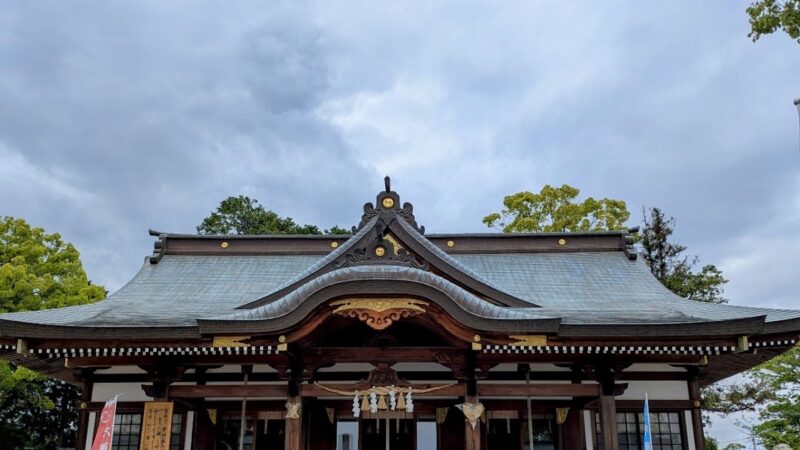
Sannomiya Shrine’s buildings, though not large in scale, are beautifully maintained and well-preserved. The main hall, facing south, maintains the traditional style of shrine architecture, creating a tranquil atmosphere.
The worship hall is a space for worshippers to offer prayers and serves as a venue for various religious activities, from daily visits to Shinto rituals during festivals.
Torii Gate and Plaque
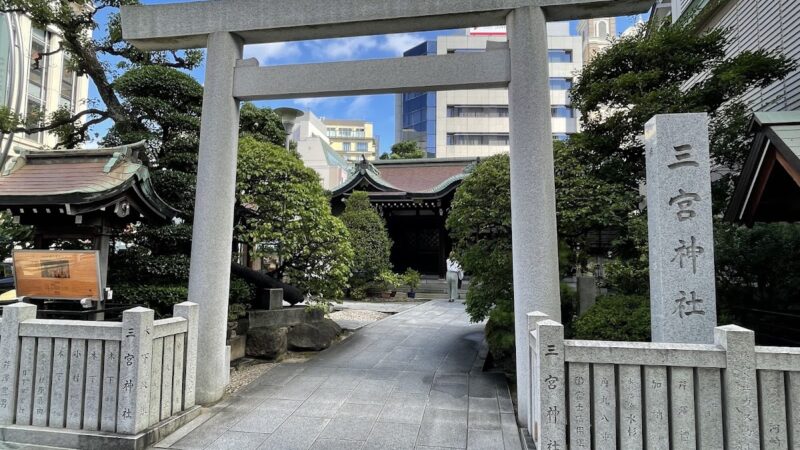
A torii gate stands at the entrance to the shrine grounds, bearing a plaque that reads “Matsuo Sannomiya Shrine.” This plaque indicates the official name of the shrine and serves as an important sign welcoming visitors. Passing through the torii gate marks the crossing of the boundary from everyday life into the sacred realm.
Atmosphere of the Shrine Grounds
Despite being located in an urban area, the grounds of Sannomiya Shrine exude a tranquil atmosphere. Although surrounded by residential areas, entering the shrine grounds creates a surprisingly peaceful ambiance. Trees are strategically placed, allowing visitors to appreciate the changing seasons.
Especially in the early morning and evening, there are fewer visitors, making it a time for peaceful worship. Local residents can be seen stopping by during their daily walks to offer prayers, demonstrating the shrine’s deep roots in the community as a local guardian deity.
Goshuin (Shrine Seal) Information
Issuance of Goshuin
Regarding the goshuin of Sannomiya Shrine, since it is an outlying subsidiary shrine of Matsuo Taisha, it is generally handled at the Matsuo Taisha shrine office. However, it is recommended to check with Matsuo Taisha in advance for details on issuance.
During special periods such as the Matsuo Festival, goshuin may also be issued at Sannomiya Shrine, so those visiting during festivals should check.
Goshuincho (Shrine Seal Book)
For those visiting shrines of the Matsuo Taisha lineage, using a goshuincho issued at Matsuo Taisha is one option. Matsuo Taisha offers several beautifully designed goshuincho, making them a nice memento of your visit to the subsidiary shrines.
Access and Transportation Information
Location
Address: 16 Nishikyogoku Kitaura-cho, Ukyo-ku, Kyoto City, Kyoto Prefecture
Access by Train
Approximately 7 minutes on foot from Nishikyogoku Station on the Hankyu Kyoto Line
Nishikyogoku Station is one of the main stations in western Kyoto City, and is accessible in about 10 minutes from Kyoto Kawaramachi Station. Exit the station and head west. After passing through the residential area, you will arrive at Sannomiya Shrine.
The directions are relatively easy to follow, and locals will kindly guide you if you ask. Using Kyoto Municipal Nishikyogoku Junior High School as a landmark will make it easier to find.
Access by Bus
If using Kyoto City Buses, you can access the shrine on foot from the nearest bus stop. However, access by train is often more convenient.
Access by Car and Parking
Sannomiya Shrine does not have its own parking lot. If you are visiting by car, please consider using a nearby coin parking lot or parking at Matsuo Taisha Shrine’s parking lot and walking.
While there is some distance between Matsuo Taisha Shrine and Sannomiya Shrine, visiting both together is efficient.
Etiquette and Manners for Visiting a Shrine
Basic Etiquette for Visiting a Shrine
Visiting Sannomiya Shrine follows the same etiquette as visiting any other shrine:
- Bow before the Torii Gate: Bow lightly before entering the sacred area.
- Purify yourself at the Water Basin: If there is a water basin, purify your hands and mouth.
- Worship in front of the Main Hall: Worship using the two bows, two claps, and one bow method.
- Bow upon leaving: When leaving the shrine grounds, turn around and bow.
Points to Note During Your Visit
- Walk quietly within the shrine grounds and refrain from loud conversations.
- Take photographs only in designated areas.
- Entry into the shrine building is prohibited.
- Always take your trash with you.
- Respect that this is a place of worship for the local community.
Nearby Attractions
Matsuo Taisha Shrine
If you visit Sannomiya Shrine, be sure to also visit its main shrine, Matsuo Taisha Shrine. Matsuo Taisha Shrine is one of Kyoto’s oldest shrines and is nationally famous as the god of brewing. Its vast grounds offer many sights to see, and the gardens are particularly noteworthy.
It’s easily accessible from Matsuo Taisha Station on the Hankyu Arashiyama Line, just a few minutes by train from Sannomiya Shrine.
Nishikyogoku Sports Park
Near Nishikyogoku Station is Nishikyogoku Sports Park, a major sports facility in Kyoto City. It includes an athletics stadium, baseball field, and hosts various sporting events. It’s also a park suitable for strolling.
Katsura Imperial Villa
A short trip away is Katsura Imperial Villa, considered one of the finest examples of Japanese gardens. Reservations are required, but it’s a well-rewarded site.
Difference between Sannomiya Shrine and Kobe’s Sannomiya Shrine
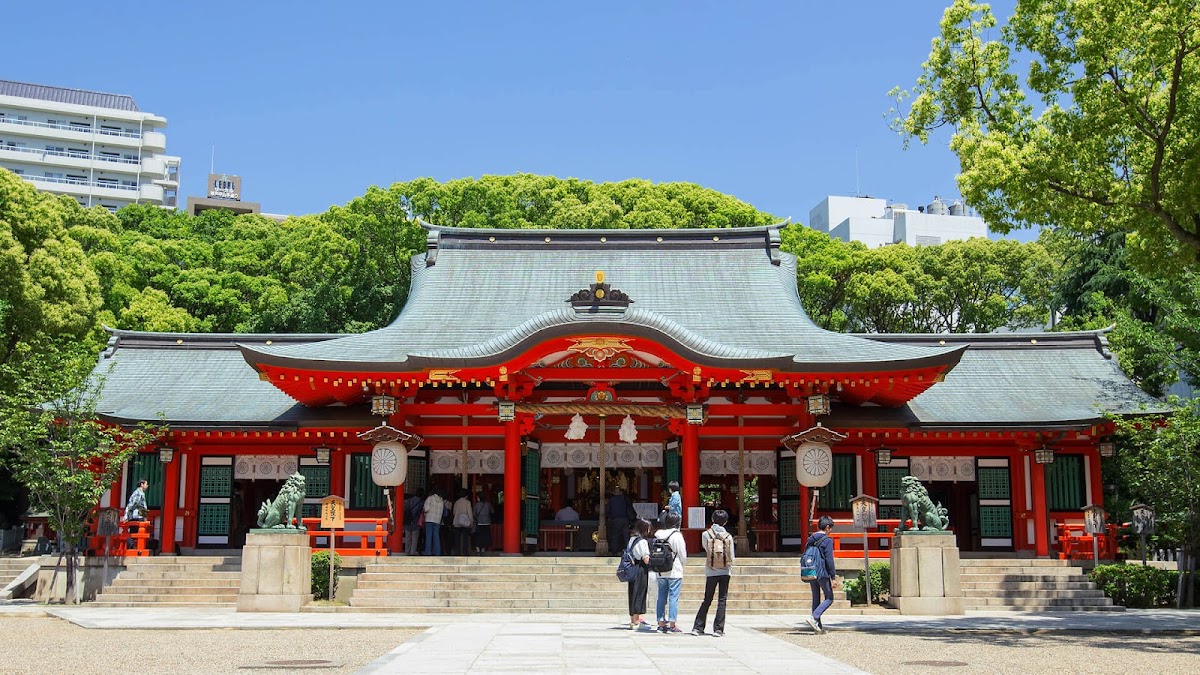
Searching for “Sannomiya Shrine” often brings up results for the Sannomiya Shrine in Chuo Ward, Kobe City. These two shrines are completely different, so be careful not to confuse them.
Sannomiya Shrine in Kobe
Sannomiya Shrine in Kobe is the third of the eight shrines dedicated to the eight descendants of Ikuta Shrine, and enshrines Takitsuhime-no-Mikoto. It is known as the shrine that gave its name to the Sannomiya district of Kobe, and is historically famous as the site of the Kobe Incident during the Meiji Restoration.
It is located at 2-4-4 Sannomiya-cho, Chuo-ku, Kobe City, Hyogo Prefecture, and is accessible from JR/Hanshin Motomachi Station and the Kyukyoryuchi-Daimaru-mae subway station.
Sannomiya Shrine in Kyoto (Matsuo Sannomiya Shrine)
On the other hand, the Sannomiya Shrine (Matsuo Sannomiya Shrine) introduced in this article is an outlying subsidiary shrine of Matsuo Taisha, located in Ukyo-ku, Kyoto City. Its main deity is Tamayorihime-no-Mikoto, and its history and enshrined deity are completely different from those of the Sannomiya Shrine in Kobe.
Although both shrines share the name “Sannomiya Shrine,” it’s important to understand that they are separate shrines with their own unique histories and beliefs.
Annual Events
Matsuo Festival (Procession and Return)
The most important annual event for Sannomiya Shrine is the Matsuo Festival of Matsuo Taisha Shrine. Held annually from late April to early May, Sannomiya Shrine plays a crucial role as a temporary shrine during the procession (Oide) and return (Okaeri).
Other Events
As the local tutelary shrine, various rituals are performed throughout the year. For detailed schedules, it’s best to inquire with Matsuo Taisha Shrine.
Best Time and Season for Visiting
Recommended Time
While Sannomiya Shrine is open year-round, the following times are particularly recommended:
- Spring (during the Matsuo Festival): Experience the special atmosphere of the shrine as a temporary resting place for the deity.
- New Year’s Visit: Offer prayers for the New Year together with local residents.
- Autumn: Enjoy the pleasant weather and a peaceful visit.
Visiting Hours
The shrine grounds are generally open all day, but visiting during daylight hours is recommended. Early mornings and evenings are especially quiet, allowing for a more relaxed visit.
Summary
Sannomiya Shrine (Matsuo Sannomiya Shrine) is a historic subsidiary shrine of Matsuo Taisha, founded during the Taiho era. With Tamayorihime-no-Mikoto as its main deity, and enshrining Oyamatsumi-no-Kami and Sakatoke-no-Kami, it has long been revered as the local tutelary deity.
This shrine plays a vital role as the temporary resting place for the Matsuo Festival, and is enveloped in a special sacredness from the Shinko-sai (procession of the deity) to the Kanko-sai (return procession). Despite being located in an urban area, it maintains a tranquil atmosphere and serves as a place of daily prayer for the local people.
It’s easily accessible, about a 7-minute walk from Hankyu Nishikyogoku Station, and is recommended to visit in conjunction with a visit to Matsuo Taisha Shrine. As a valuable shrine where you can experience Kyoto’s history and religious culture, we highly recommend you visit it at least once.
Please note that this is a different shrine from Sannomiya Shrine in Kobe, so please check the location before visiting. We hope you can find peace of mind in the quiet grounds and feel the atmosphere of this long-standing place of worship.