Honenji Temple (Kashihara City, Nara Prefecture) Complete Guide | History, Highlights, Goshuin (Temple Seal), and Access Information
Located in Minamiura-cho, Kashihara City, Nara Prefecture, Honenji Temple is an ancient Jodo sect temple nestled at the southern foot of Mount Kagu, one of the three mountains of Yamato. Known as the tenth of the 25 sacred sites of Honen Shonin, it is a temple with a rich history dating back to the Kamakura period, boasting cultural assets and beautiful gardens, making it popular with many visitors and history enthusiasts.
This article will comprehensively introduce the charms of Honenji Temple, from its founding to the present day, highlights within the temple grounds, valuable cultural assets, annual events, goshuin information, and access methods.
History and Origins of Honenji Temple
Circumstances of Founding and Connection to Honen Shonin
The origins of Honenji Temple date back to the early Kamakura period. Officially known as “Kaguyama Shorin-in Honenji,” this temple has deep ties to Honen Shonin, the founder of the Jodo sect of Buddhism.
In March of Genkyu 2 (1205), Honen Shonin, on his return from a pilgrimage to Mount Koya, visited Tachibana-dera Temple, known as the birthplace of Prince Shotoku. It is said that he sought lodging for the night at a hermitage called Shorin-in in this area, where he preached the teachings of reciting the Buddha’s name and attaining rebirth in paradise to the villagers, marking the beginning of Honenji Temple.
There is also a record dating it to the spring of Kenkyu 2 (1191), suggesting that Honen Shonin stopped by during his studies in Nara. In any case, it is certain that Honen Shonin established Shorin-in as a training ground for spreading the teachings of the Buddha’s name and enlightened the villagers in this area.
From Shorin-in to Honen-ji
Initially, the temple was called “Shorin-in,” but after Honen Shonin stayed there and preached about attaining rebirth through chanting the Buddha’s name, the temple name “Honen-ji” was later added. Located at the southern end of Mount Kagu, its official name became “Kagu-san Shorin-in Honen-ji,” which it remains to this day.
As the tenth temple of the 25 sacred sites of Honen Shonin, it has long been considered one of the important centers of Jodo (Pure Land) Buddhism. The temple’s hymn is said to be, “If I strive to reach paradise and leave quickly, I will surely arrive there at the end of my life.”
History from the Kamakura Period Onward
Honen-ji developed as a center for chanting the Buddha’s name throughout the Kamakura period. In particular, its connections to the eminent monk Chogen Shonin, who contributed greatly to the reconstruction of Todai-ji Temple, and Kumagai Naozane (Rensho Hoshi), a warrior who became a monk, are well-documented, making it an important temple that illustrates the spread of Jodo Buddhism during the Kamakura period.
During the Edo period, it was developed as a Jodo sect temple, and many of the temple buildings seen today were constructed during this time. Despite being affected by the anti-Buddhist movement after the Meiji Restoration, it survived as a center of local faith and continues to uphold its religious traditions to this day.
Highlights of the Temple Grounds and Temple Building Layout
Main Gate and Grounds Layout
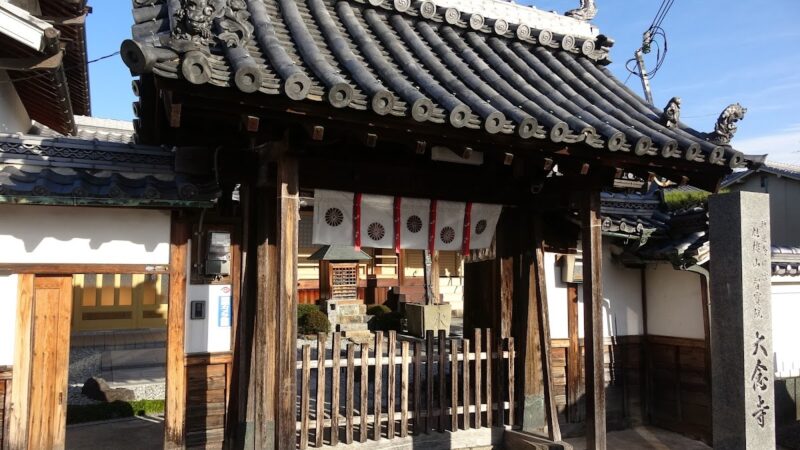
Honenji Temple’s grounds are vast, and upon passing through the main gate, one is greeted by the neatly arranged temple buildings. The grounds include the main hall, bell tower, guest hall, priest’s quarters, and cemetery, creating a spatial configuration that reflects the dignity of a Jodo sect temple.
The main gate welcomes visitors as the face of the temple, and upon passing through it, one is enveloped in a tranquil atmosphere. The grounds are meticulously maintained, allowing visitors to enjoy the beauty of nature throughout the seasons.
Main Hall and Principal Image
The main hall is the central building of Honenji Temple, and the standing statue of Amida Buddha, the principal image, is enshrined in the inner sanctuary. This standing Amida Buddha statue is also known as the “Floating Foot Buddha” and is recognized as a Buddhist statue with a special history.
According to tradition, this Amida Buddha statue was the personal devotional image of the monk Chogen, who dedicated himself to the reconstruction of Todai-ji Temple. Chogen was a high-ranking monk who worked tirelessly for the reconstruction of Todai-ji while chanting “Namu Amida Butsu,” and the fact that his personal devotional image is preserved at this temple speaks to the historical importance of Honen-ji Temple.
This statue, said to be the work of the sculptor Tori Busshi, possesses a unique aesthetic beauty and is affectionately known by its distinctive name, “Floating Foot.”
Guest Hall and Famous Garden
One of the great attractions of Honen-ji Temple is the beautiful garden facing the guest hall. The borrowed landscape garden, with Mount Kaguyama as its backdrop, is known as a rare and famous garden in this region.
The garden is designed to utilize the natural terrain, incorporating the greenery of Mount Kaguyama as borrowed scenery to create a landscape with depth and a sense of the seasons. The view from the guest hall is particularly beautiful, and the time spent quietly gazing at the garden provides deep peace to visitors.
The garden, which displays different expressions in each season, allows visitors to enjoy different beauty in each season: the fresh greenery of spring, the deep green of summer, the autumn leaves, and the silence of winter.
Bell Tower and Bell
A bell tower has also been built on the temple grounds, and a temple bell hangs from it. The sound of the bell, which marks the daily life of the temple, resonates in the surrounding area and is integrated into the lives of the local people.
The architectural style of the bell tower is also a highlight, and it retains many characteristics of temple architecture from the Edo period.
Cultural Properties and Treasures of Honenji Temple
Standing Amida Buddha Statue (Floating Foot Buddha)
As mentioned above, the most important cultural property owned by Honenji Temple is the standing Amida Buddha statue. This Buddha statue, known by the unique name “Ukiashi no Nyorai” (Floating Foot Buddha), is said to have been the personal devotional image of the monk Chogen.
Attributed to the sculptor Tori Busshi, this statue is a valuable example of Kamakura period Buddhist sculpture. The fact that this statue, which Chogen kept close and worshipped, is now preserved in a temple associated with Honen Shonin, is an interesting historical witness to the spread of Pure Land Buddhism during the Kamakura period and the interactions among high-ranking monks.
Other Temple Treasures
Honen-ji Temple also houses other materials related to Honen Shonin and temple treasures that have been preserved and passed down by successive chief priests. These are usually not open to the public, but may be displayed on special occasions.
Annual Events and Memorial Services
As a Jodo sect temple, Honen-ji Temple holds various memorial services throughout the year.
Honen Shonin Memorial Service (January 24th)
This is an important memorial service commemorating the death anniversary of Honen Shonin, the founder of the Jodo sect. Held on January 24th, this service commemorates the virtues of Honen Shonin and serves as an opportunity to reaffirm the teachings of Nembutsu.
Spring Equinox Memorial Service (Beginning of Equinox in March)
This memorial service is held during the Equinox period, centered around the spring equinox. Many parishioners participate in this service, which focuses on ancestral veneration and prayers for rebirth in paradise.
Segaki Memorial Service (August 6th)
As an important summer service, the Segaki Memorial Service is held on August 6th. This service commemorates spirits suffering in the realm of hungry ghosts and comforts the spirits of ancestors.
Autumn Equinox Memorial Service (Beginning of Equinox in September)
A memorial service is also held during the Equinox period, centered around the autumn equinox, and, like the spring service, focuses on ancestral veneration.
These services are central to the religious lives of the local people and are important events that mark the changing seasons.
About the 25 Sacred Sites of Honen Shonin
Significance of the Pilgrimage
Honenji Temple is the tenth temple on the 25 sacred sites of Honen Shonin, making it an important base for the pilgrimage. The 25 sacred sites of Honen Shonin are a pilgrimage to places associated with Honen Shonin, the founder of the Jodo sect of Buddhism.
This pilgrimage, tracing Honen Shonin’s footsteps and encountering the teachings of Nembutsu, is a valuable opportunity for many believers to deepen their faith.
Waka Poem
The waka poem of Honenji Temple is “If I strive to reach paradise and leave quickly, I will arrive there at the end of my life.” This poem succinctly expresses the teachings of rebirth in paradise through Nembutsu, and sings of the desire to be reborn in the Pure Land.
Information on Goshuin (Temple Seals)
About the Issuance of Goshuin
Goshuin (temple seals) can be obtained at Honenji Temple. The Goshuin (temple stamp) of Honenji Temple, the tenth of the 25 sacred sites associated with Honen Shonin, is a precious memento for those undertaking the pilgrimage.
The Goshuin features calligraphy of “Shorin-in” and “Honenji” along with the temple’s official seal. Those without a Goshuincho (stamp book) can receive a paper stamp.
Notes on Receiving the Goshuin
Since the head priest of Honenji Temple may be absent, it is recommended to contact the temple in advance if you wish to receive a Goshuin. Especially if you are traveling from afar, making a reservation is advisable to ensure you receive the stamp.
Admission is free, but a donation is required for the Goshuin. Please offer an amount that follows the general customary practice.
Access Information and Visiting Guide
Location
Address: 908 Minamiura-cho, Kashihara City, Nara Prefecture
Access by Train
The Kintetsu Line is the most convenient way to reach Honenji Temple. It is accessible from several stations, but the distance and travel time vary.
From Kintetsu Osaka Line “Miminashi Station”
- Approximately 30 minutes on foot (approx. 1.8 km)
- This is the closest station, but walking takes some time.
From Kintetsu Kashihara Line/Yoshino Line “Kashiharajingu-mae Station”
- Approximately 10 minutes by car/taxi
- Taxis are available from the station.
From Kintetsu Osaka Line “Yamato-Yagi Station”
- Approximately 15 minutes by car/taxi
- Convenient access from major stations.
From Kintetsu Kashihara Line “Unebi-Goryomae Station”
- Approximately 10 minutes by car/taxi
Access by Car
Access by private car is also possible. Free parking is available, so you can visit by car with peace of mind.
If using a car navigation system, please search for “908 Minamiura-cho, Kashihara City, Nara Prefecture” or “Honenji Temple”. It is located on the south side of Mt. Kaguyama, so using Mt. Kaguyama as a landmark will make it easier to find.
Notes for Visitors
- Visiting Hours: Daytime hours are recommended.
- Admission Fee: Free
- Advance Reservation: Since the head priest may be absent, advance contact is recommended for those who wish to guarantee a visit.
- Parking: Free parking available.
- Photography: Photography is permitted within the temple grounds, but permission may be required for photography inside the main hall, etc.
Nearby Tourist Attractions
The area surrounding Honenji Temple boasts numerous tourist attractions, including the Yamato Sanzan (Mt. Kaguyama, Mt. Unebiyama, and Mt. Miminashiyama), Kashihara Shrine, and historical sites in the Asuka region. You can enjoy the history and nature of Nara Prefecture in conjunction with your visit to Honenji Temple.
Mt. Kaguyama, in particular, is a famous mountain mentioned in the Manyoshu (an ancient collection of Japanese poetry), and its beautiful form can be seen from the gardens of Honenji Temple. If you have time, a visit combining a stroll around Mt. Kaguyama is highly recommended.
Historical Figures Associated with Honenji Temple
Honen Shonin (1133-1212)
Honen Shonin, the founder of the Jodo sect, was a highly esteemed monk who was active from the late Heian period to the early Kamakura period. He preached the doctrine of exclusive recitation of the Buddha’s name, stating that anyone could attain rebirth in paradise by chanting “Namu Amida Butsu,” and saved many people.
Throughout his life, Honen Shonin traveled to various regions, spreading the teachings of recitation. Honenji Temple is one of the temples he visited during his travels and which served as a training ground for the propagation of the Nembutsu.
Chogen Shonin (1121-1206)
Chogen Shonin, who dedicated himself to the reconstruction of Todaiji Temple, was a highly esteemed monk who lived around the same time as Honen Shonin. He is known for accomplishing the great task of rebuilding Todaiji Temple, which had been destroyed in the Heike’s burning of Nara.
The tradition that the standing Amida Buddha statue at Honenji Temple was the personal devotional image of the monk Chogen is valuable evidence of the interaction between the two monks and the spread of Pure Land Buddhism at that time.
Kumagai Naozane (Rensho Hoshi, 1141-1208)
Kumagai Naozane, a warrior known from the Tale of the Heike, became a monk after feeling the impermanence of life following his defeat of Taira no Atsumori at the Battle of Ichinotani, and took the name Rensho Hoshi. The connection between Naozane, who became a follower of Honen Shonin and a Nembutsu practitioner, and Honenji Temple is also recorded, illustrating the nature of faith in the Kamakura period, specifically the transformation from samurai to Nembutsu practitioner.
Pure Land Buddhism and Nembutsu Faith
The Teachings of Honen Shonin
The foundation of the Pure Land Buddhism, founded by Honen Shonin, is “exclusive Nembutsu practice.” The teaching that anyone can attain rebirth in the Pure Land by believing in Amida Buddha’s original vow and chanting “Namu Amida Butsu” represented a shift from Buddhism centered on the aristocracy to Buddhism open to ordinary people.
Honenji Temple has preserved the teachings of this Nembutsu practice from the Kamakura period to the present day.
Significance in Modern Times
Even in modern society, the teachings of Nembutsu provide solace to many people. In our increasingly complex society, the teaching that one can attain inner peace by simply chanting “Namu Amida Butsu” holds timeless and universal value.
Visiting Honenji Temple offers a valuable opportunity to experience these teachings of Nembutsu.
Points to Consider When Visiting Honenji Temple
Best Time to Visit
Honenji Temple is open for visits throughout the year, but there are particularly recommended times.
Spring (Late March – May)
- The garden is at its most beautiful with its fresh greenery.
- The time of the Spring Equinox memorial service has a special atmosphere.
Autumn (October – November)
- The autumn leaves are beautiful, and the garden with Mount Kagu in the background offers a spectacular view.
- The quiet period after the Autumn Equinox memorial service is also recommended.
Winter (December – February)
- You can visit the temple at your leisure in a tranquil atmosphere.
- The memorial service for Honen Shonin on January 24th is an important ceremony.
Estimated Time Required for Visiting
If you plan to stroll around the temple grounds and admire the garden, allow 30 minutes to 1 hour. If you plan to receive a temple stamp or have the opportunity to speak with the head priest, it is recommended to allow even more time.
Manners and Mindset
Please observe basic temple etiquette.
- Bow at the main gate before entering.
- Walk quietly within the temple grounds.
- Perform a prayer with clasped hands in the main hall.
- Take photographs with moderation.
- Take your trash with you.
- Don’t forget to greet the head priest and temple staff.
Summary
Honenji Temple in Kashihara City, Nara Prefecture, is an ancient temple with over 800 years of history, associated with Honen Shonin and the Jodo sect. It boasts a privileged location at the southern foot of Mt. Kagu, a standing statue of Amida Buddha said to be the personal devotional image of Shogen Shonin, and a beautiful garden that incorporates Mt. Kagu as a borrowed landscape, among many other attractions.
As the tenth temple of the 25 sacred sites of Honen Shonin, it is an important base for pilgrimage, and various religious services are held throughout the year.
If you wish to experience the history and culture of Nara Prefecture and the teachings of Nembutsu, please visit Honenji Temple. In the tranquil temple grounds, you can find peace of mind, and while gazing at the beautiful gardens, reflecting on the teachings of rebirth through chanting the Buddha’s name as expounded by Honen Shonin will surely bring you deep solace.
To ensure a more fulfilling visit, please contact the temple in advance. Combine this with a tour of the Yamato Sanzan mountains and historical sites in Asuka, and enjoy a journey to experience the profound history and culture of Nara Prefecture.