Nitsukoji Temple (Kashihara City, Nara Prefecture) Complete Guide | History and Present State of a Temple Founded by Prince Shotoku
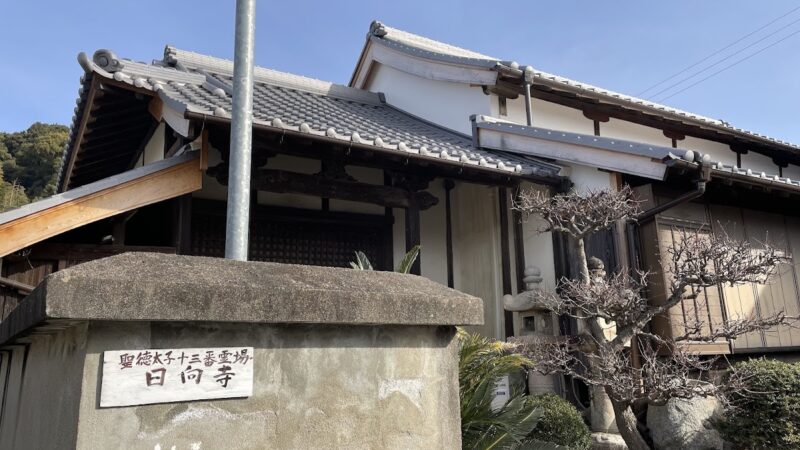
Located in Minamiura-cho, Kashihara City, Nara Prefecture, Nitsukoji Temple is one of the temples said to have been founded by Prince Shotoku, a great statesman of the Asuka period. Although only a small, uninhabited hall remains today, it is designated as a historical and cultural resource of Nara Prefecture due to its high historical value as recorded in the “Biography of Prince Shotoku.”
This article comprehensively explains information about Nitsukoji Temple, from its historical background to its current state, access methods, and surrounding cultural properties.
Basic Information about Hinata-ji Temple
Location and Access
Location: 54 Minamiura-cho, Kashihara City, Nara Prefecture
Sect: Jodo-shu (Pure Land Buddhism)
Classification: Historical Site (Temple Site or Former Precinct)
Pilgrimage Site: 13th Site of the Prince Shotoku Historical Sites Pilgrimage
Hinata-ji Temple is located in Minamiura-cho, Kashihara City, an area rich in Asuka period history. Kashihara City has a total of 114 temples, and Hinata-ji Temple is known as one of the oldest temples among them.
Current Situation
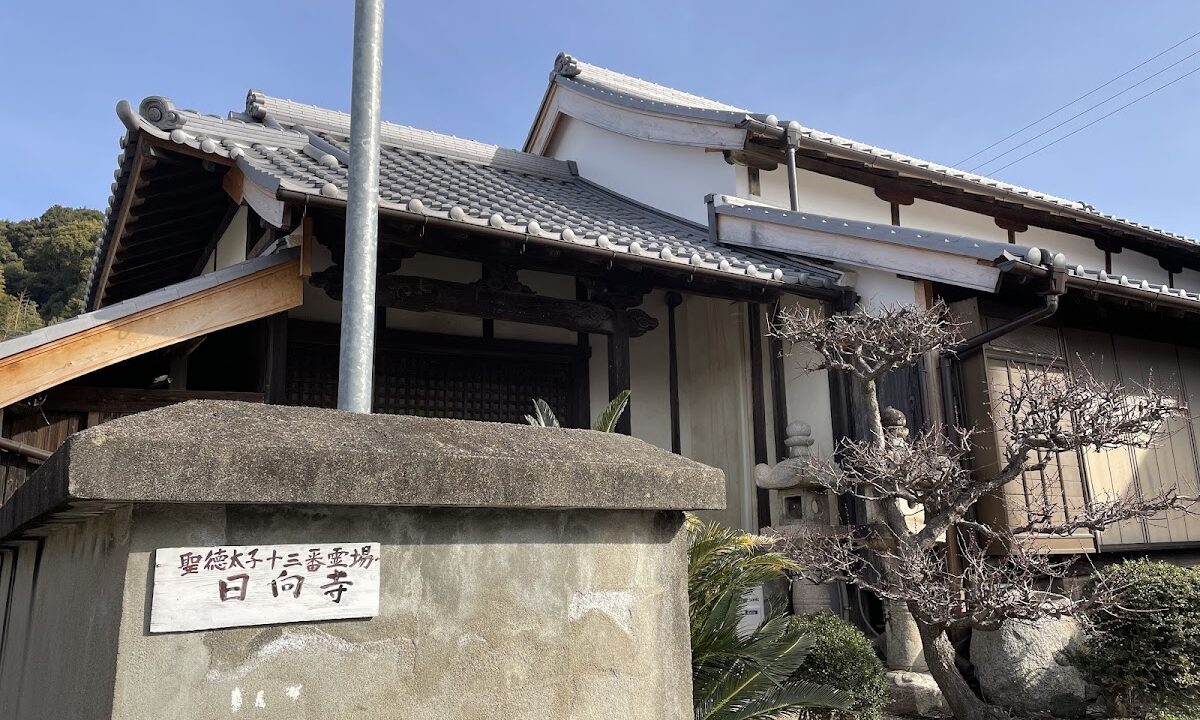
Currently, Hinata-ji Temple is uninhabited, with only a small hall remaining. While the former grand temple complex is gone, making it difficult to imagine its former appearance, its historical value as a temple founded by Prince Shotoku remains unchanged, and it is registered in Nara Prefecture’s historical and cultural resource database, “Ikasu Nara.”
History of Hyuga-ji Temple
History as a Temple Founded by Prince Shotoku
The founding of Hyuga-ji Temple is recorded in the “Biography of Prince Shotoku,” in the entry for the 29th year of Empress Suiko’s reign (621 AD). According to this document, Hyuga-ji Temple is listed as one of the temples founded by Prince Shotoku and was an important center for the flourishing of Buddhism during the Asuka period.
As regent to Empress Suiko, Prince Shotoku promoted political reforms centered on Buddhism and built many temples. While Horyu-ji Temple and Shitenno-ji Temple are famous, Hyuga-ji Temple is also thought to have been built as part of these reforms.
Hyuga-ji Temple in the Asuka and Nara Periods
From the Asuka period to the Nara period, the area around Hyuga-ji Temple was one of the centers of Buddhist culture. Of particular note is the description in the Muromachi period document “Seiyo-sho.” This document mentions Hyuga-ji Temple when describing the location of Daikan-daiji Temple, stating, “It is located in front of Mount Kagu and in front of Hyuga-ji Temple.”
This indicates that Hyuga-ji Temple functioned as an important landmark in the region at the time. Daikan-ji Temple was the largest official temple in Fujiwara-kyo, and the fact that Hyuga-ji Temple was used as a reference point to indicate its location speaks to the temple’s importance.
Changes from the Medieval Period Onward
The local history book “Yamato-shi,” compiled during the Edo period, contains the description, “The abandoned Hyuga-ji Temple is located in Minamiura Village, and it is said to have been built during the reign of Empress Suiko.” This record confirms that Hyuga-ji Temple had already been abandoned by the Edo period.
The fact that the tradition of “being built during the reign of Empress Suiko” is explicitly stated indicates that the recognition of Hyuga-ji Temple as a temple built by Prince Shotoku was maintained even during the Edo period. Even after its abandonment, its historical value was passed down to the local people.
Hyuga-ji Temple in Modern Times
Since the Meiji era, Hyuga-ji Temple has continued to exist as a Jodo sect temple, but due to factors such as depopulation and a decrease in parishioners, it is currently uninhabited. However, its value as the 13th sacred site of the Prince Shotoku Pilgrimage and as a historical and cultural resource of Nara Prefecture continues to be recognized.
Managed by local residents and volunteers, the small temple hall continues to quietly tell its history.
Cultural Value of Hyugaji Temple
Significance as a Temple Founded by Prince Shotoku
The greatest cultural value of Hyugaji Temple lies in the fact that it is explicitly mentioned in the “Biography of Prince Shotoku” as one of the temples founded by Prince Shotoku. Prince Shotoku is an extremely important figure in the history of Japanese Buddhism, and there are many temples throughout the country that are said to have been founded by him, but only a limited number are explicitly mentioned in historical documents.
Hyugaji Temple is one of these precious temples and has important historical value for studying the spread of Buddhism and the reality of temple construction during the Asuka period.
Position in Ancient Temple Research
Although archaeological excavations have been limited, the Hyugaji Temple site is an important case study for considering the location and layout of ancient temples. The relative location of Hyugaji Temple, in particular, provides a clue to understanding the temple layout in Fujiwara-kyo.
Its location at the foot of Mount Kaguyama is also an interesting element when considering the philosophy behind temple site selection in ancient times. Temples in the Asuka period were not merely religious facilities, but were strategically placed as locations with political and cultural significance.
Designation as a Nara Prefecture Historical and Cultural Resource
Hyugaji Temple is registered in the Nara Prefecture Historical and Cultural Resource Database “Ikasu Nara” and is protected under the category of “archaeological site (temple/shrine site or former precincts).” This means that it is officially recognized as one of Nara Prefecture’s proud historical and cultural heritage sites.
Currently, its value as a historical site is emphasized more than its value as a building, and the possibility of future research remains.
About the Prince Shotoku Sacred Sites
Overview of the Sacred Sites
The Prince Shotoku Sacred Sites are pilgrimage routes visiting temples and historical sites associated with Prince Shotoku. Hinata-ji Temple is designated as the 13th temple on the pilgrimage route and is a place visited by pilgrims who worship Prince Shotoku.
The worship of Prince Shotoku underwent a unique development in the history of Japanese Buddhism, and many sacred sites were formed from the medieval period onward. Hinata-ji Temple is one such site, and has a history of being an object of worship.
Significance of Pilgrimage
Visiting the sacred sites associated with Prince Shotoku is not merely sightseeing, but a spiritual journey tracing the origins of Japanese Buddhist culture. Even a small, uninhabited temple like Hinata-ji Temple can offer a deeper understanding and emotional experience by learning about its historical background.
Historical and Cultural Resources Around Hinata-ji Temple
Historical Background of Kashihara City
Kashihara City is home to Kashihara Shrine, considered the birthplace of Japan, and is a region with numerous Asuka period ruins. Important historical sites, including the Fujiwara-kyo ruins, are concentrated here, making it the political and cultural center of ancient Japan.
The area around Minamiura-cho, where Hinata-ji Temple is located, also has a rich historical background, with numerous temple ruins and ancient burial mounds scattered throughout the area.
Nearby Major Temples and Historical Sites
Daikan-ji Temple Ruins: The site of the largest official temple in Fujiwara-kyo, located near Hinata-ji Temple. It is now maintained as a historical park.
Hon-Yakushi-ji Temple Ruins: The site of Yakushi-ji Temple during the Fujiwara-kyo period. It is designated as a Special Historic Site.
Kashihara Shrine: A shrine dedicated to Emperor Jimmu, the first emperor of Japan. It was founded during the Meiji era.
Fujiwara Palace Ruins: The site of the palace in Fujiwara-kyo, the capital from 694 to 710. It is a National Special Historic Site.
Visiting these historical sites together will allow for a more comprehensive understanding of the history of the Asuka and Nara periods.
Relationship with Mount Kaguyama
As evidenced by the fact that the location of Hinata-ji Temple is described as “in front of Mount Kaguyama,” this temple has a deep connection with Mount Amakaguyama. Mount Kaguyama is known as one of the three sacred mountains of Yamato and is a sacred mountain frequently mentioned in the Manyoshu (an ancient collection of Japanese poetry).
In ancient times, the establishment of a temple at the foot of Mount Kaguyama is thought to have held significant meaning, representing the fusion of Buddhism and Shintoism.
Access to Hinata-ji Temple
Access by Public Transportation
Nearest Stations: Kintetsu Osaka Line “Miminashi Station” or Kintetsu Kashihara Line “Kashiharajingu-mae Station”
It is approximately a 20-minute walk from Miminashi Station and approximately a 25-minute walk from Kashiharajingu-mae Station. Bus services are limited, so walking or taking a taxi is recommended.
Access by Car
Nearest Interchange: Approximately 10 minutes from the Kashihara-Kita Interchange on the Keina-Wa Expressway.
There is no designated parking area, so please avoid street parking and use nearby public parking lots or parking lots at tourist facilities within walking distance.
Notes for Visitors
Hinata-ji Temple is an uninhabited temple, and there are no set visiting hours or entrance fees. Worship is conducted from outside the main hall. As it is located in a quiet residential area, please be considerate of nearby residents when visiting.
Regarding Goshuin (temple stamps), these may be available at the Shotoku Taishi Historical Sites Office or nearby managing temples, so it is recommended to check in advance.
Kashihara City Tourist Information
Attractions of Kashihara City
Kashihara City is a treasure trove for ancient history enthusiasts. It is home to a concentration of important historical sites from the Asuka to Nara periods, offering so many sights that it’s impossible to see them all in a single day.
When visiting Hinata-ji Temple, we highly recommend also exploring the surrounding historical sites. The Fujiwara Palace ruins, Daikan-ji Temple ruins, and Hon-Yakushi-ji Temple ruins are all within walking distance, allowing you to stroll and imagine the ancient capital.
Seasonal Highlights
Spring: The rapeseed blossoms and cherry blossoms at the Fujiwara Palace ruins are beautiful.
Summer: The water hyacinths at Hon-Yakushi-ji Temple ruins are in full bloom.
Autumn: Cosmos flowers adorn the Fujiwara Palace ruins, creating a harmonious blend of ancient romance and natural beauty.
Winter: Enjoy a peaceful atmosphere as you explore the historical sites in tranquility.
Contact Information
For inquiries regarding Hinata-ji Temple and tourism in Kashihara City, please contact the following:
Kashihara City, Charm Creation Department, Tourism Policy Division
Phone Number: 0744-21-1115
Business Hours: Weekdays 8:30 AM – 5:15 PM (excluding Saturdays, Sundays, and public holidays)
The official Kashihara City website is regularly updated with tourism and event information, so we recommend checking it before your visit.
Current Status and Challenges of Hyugaji Temple Research
Status of Academic Research
Academic research on Hyugaji Temple has mainly been conducted in the field of documentary history. Based on historical documents such as the *Shotoku Taishi Denreki* and *Yamato-shi*, studies have been conducted on the temple’s founding period and scale.
However, archaeological excavations have not been sufficiently conducted, and many aspects of the temple’s specific appearance, such as the layout of the temple buildings and their scale, remain unclear.
Future Challenges
To clarify the historical value of Hyugaji Temple, the following challenges exist:
- Implementation of Archaeological Investigations: Excavation surveys to clarify the extent of the temple grounds and the layout of the temple buildings.
- Re-examination of Historical Documents: Discovery of new historical materials and reinterpretation of existing ones.
- Clarification of Relationships with Surrounding Temples: Research on historical relationships with surrounding temples such as Daikandaiji Temple.
- Balancing Preservation and Utilization: Balancing preservation as a historical site with utilization as a tourist resource.
By addressing these issues, it is expected that the historical value of Hyugaji Temple will become clearer and our understanding of Buddhist culture in the Asuka period will deepen.
Summary
Hyugaji Temple, located in Minamiura-cho, Kashihara City, Nara Prefecture, is currently an uninhabited temple with only a small hall remaining. However, as a temple established by Prince Shotoku as recorded in the “Biography of Prince Shotoku,” it holds significant historical value.
With a history of over 1400 years since the Asuka period, its location relative to Daikandaiji Temple suggests that it was an important temple in ancient times. Currently protected as a historical and cultural resource of Nara Prefecture, it is the 13th pilgrimage site of the Prince Shotoku Historical Sites, and is an object of faith and historical research.
When visiting Kashihara City, in addition to major historical sites such as the Fujiwara Palace ruins and the Daikan-ji Temple ruins, please also visit quiet historical sites like Hinata-ji Temple. While not flashy, it is a place where ancient history truly breathes, and you can touch upon the origins of Japanese Buddhist culture.
Nara Prefecture is working to protect and utilize such historical and cultural resources through the “Ikasu Nara” project. Hinata-ji Temple is one such example, a valuable cultural heritage that will be passed down to future generations.