
Complete Guide to Ichinomiya Shrine (Niihama City, Ehime Prefecture) | History, Goshuin (Shrine Seals), and the Sacred Site of the Niihama Taiko Festival
Ichinomiya Shrine, located in Ichinomiya-cho, Niihama City, Ehime Prefecture, is a historic shrine that has been deeply revered since ancient times as the Ichinomiya (first shrine) of Niihama County. Its majestic grounds, adorned with a grove of camphor trees designated as a national natural monument, and its role as the stage for the climactic Miyairi (procession into the shrine) of the Niihama Taiko Festival, convey the deep-rooted faith of the region.
This article comprehensively introduces information you should know before visiting Ichinomiya Shrine, including its history, enshrined deities, highlights of the grounds, festivals, cultural properties, and goshuin information.
Basic Information and Access to Ichinomiya Shrine
Location and Contact Information
Address: 1-3-1 Ichinomiya-cho, Niihama City, Ehime Prefecture 792-0025
Phone: 0897-32-2054
Visiting Hours: Grounds are freely accessible (Shrine office is open from 8:00 to 17:00)
Parking: Available (Free)
Access Methods
Access by Train: Approximately 20 minutes on foot from JR Yosan Line “Niihama Station,” or approximately 5 minutes by bus, getting off at “Ichinomiya Shrine Mae” bus stop.
Access by Car: Approximately 10 minutes from Matsuyama Expressway “Niihama IC.” It is conveniently located near Niihama City Hall and in the city center, making it easily accessible.
History of Ichinomiya Shrine | A Thousand Years as the Ichinomiya of Niihama District
Founding and Ancient Beliefs
The origins of Ichinomiya Shrine are ancient, and it is said that it has existed since ancient times as a shrine dedicated to Oyamatsumi-no-kami. Oyamatsumi-no-kami is widely worshipped as the god of mountains and the sea, and has been particularly revered in the Seto Inland Sea region.
Invitation in 709 AD and Establishment of Ichinomiya Status
In August of 709 AD (Wado 2), it is said that Oikazuchi-no-kami and Takaokami-no-kami were invited from Oyamazumi Shrine on Omishima Island. This invitation established the shrine’s status as the Ichinomiya of Niihama District, and the name “Ichinomiya Shrine” originates from this.
Ichinomiya refers to the shrine with the highest rank in each province and district under the Ritsuryo system, and it has received special reverence from the imperial court and local residents as a guardian deity of the region. ### As an Imperial Prayer Site of Emperor Saga
During the Kōnin era (810-824) in the early Heian period, this shrine was designated as an Imperial Prayer Site of Emperor Saga. An Imperial Prayer Site is a temple or shrine that receives prayers from the emperor, indicating that this shrine was recognized as an important site for national-level rituals.
From the Medieval to the Early Modern Period
During the medieval period, the shrine received reverence from local samurai and feudal lords, and the construction and repair of the shrine buildings were repeatedly carried out. During the Genna era (1615-1624), a large-scale construction of the shrine buildings took place, forming the foundation of the current shrine structure.
Development Since the Modern Era
Under the Meiji era’s shrine ranking system, it was ranked as a prefectural shrine, establishing its position as a representative shrine of the Niihama region. Even after the war, it continues to attract unwavering devotion as the local guardian deity and as the central stage for the Niihama Taiko Festival.
Deities Enshrined | A Shrine Protected by Four Gods
Ichinomiya Shrine enshrines four deities, each possessing different divine virtues.
Main Deity
Oyamatsumi-no-kami
Known as the god of mountains and the sea, this deity is revered for land development, safe voyages, and lasting military fortune. This deity enjoys particularly strong devotion in the Seto Inland Sea region, playing a key role in the religious sphere with Oyamazumi Shrine on Omishima Island as its head shrine.
Oikazuchi-no-kami
The god who controls thunder, this deity is revered for rainmaking, abundant harvests, and protection against evil. This deity has been especially important and revered in the Niihama region, where agriculture flourished.
Takaokami-no-kami
A dragon god who controls water, this deity is the guardian of rainfall, flood control, and agriculture. In Niihama, a region situated between mountainous areas and the Seto Inland Sea, this shrine plays a vital role as a place of worship for the blessings of water and protection from disasters.
Enshrined Deities
Takeminakata-no-kami
A god of martial prowess, known as the enshrined deity of Suwa Grand Shrine. He is believed to bestow blessings of good fortune and prosperity, and is thought to have a deep connection to the competition of taiko drum floats in the Niihama Taiko Festival.
Highlights of the Shrine Grounds | Cultural Assets and Nature Adorning the Sacred Space
Nationally Designated Natural Monument Camphor Tree Grove
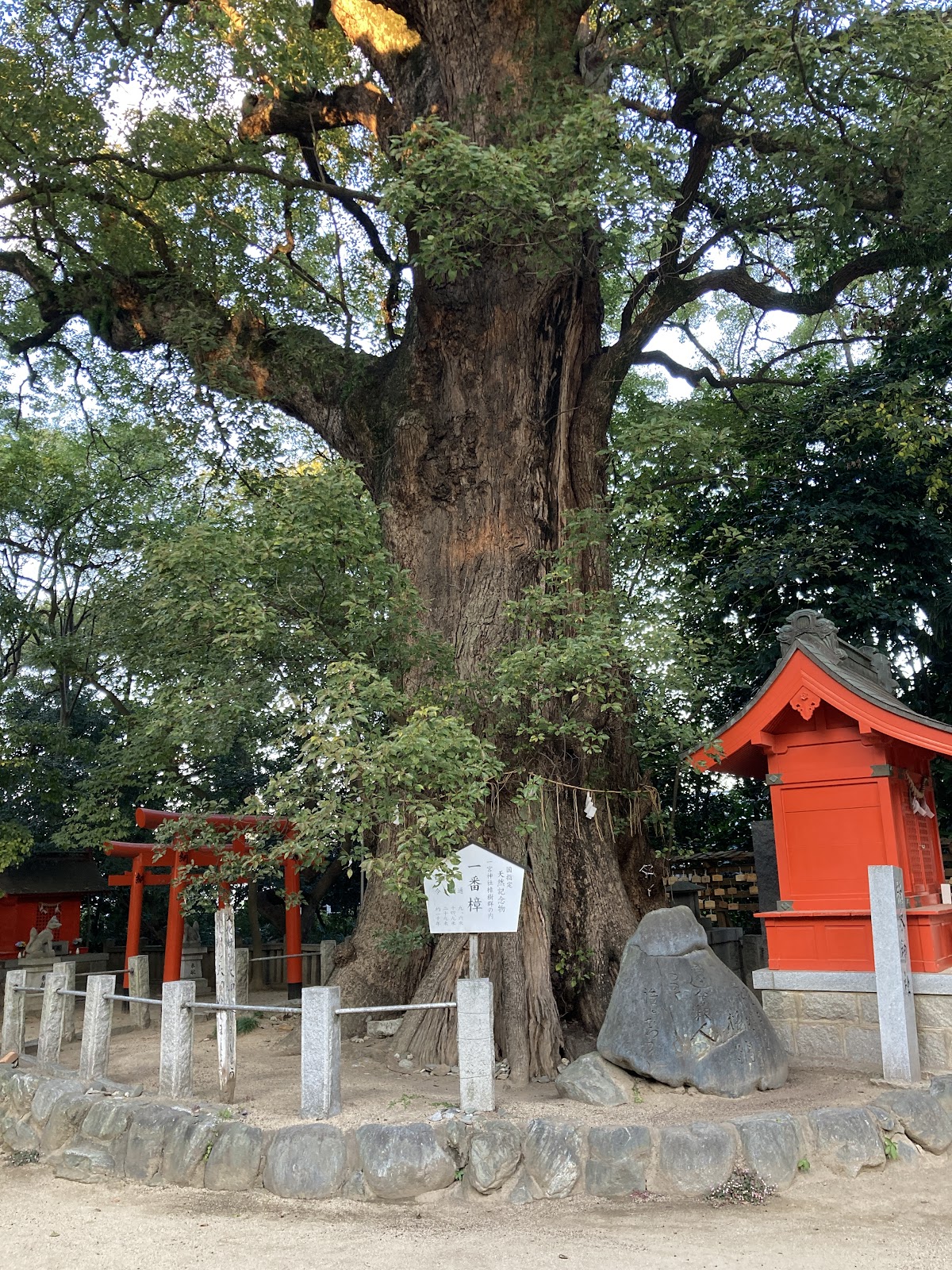
An essential part of discussing Ichinomiya Shrine is the camphor tree grove, designated as a national natural monument. From the entrance to the main approach to the back of the shrine building, the entire grounds are covered with gigantic camphor trees, creating a sacred atmosphere.
The towering camphor trees on both sides of the approach are particularly impressive, welcoming visitors with their estimated age of several hundred years. These camphor trees are not merely trees; they have been carefully protected since ancient times as sacred trees inhabited by gods.
The Legend of the First Camphor Tree and Kojoro Tanuki
The largest camphor tree on the shrine grounds is called “Ichiban Kusunoki” (First Camphor Tree), and at its base is a small shrine dedicated to “Kojoro Tanuki.” Kojoro Tanuki is a tanuki (raccoon dog) said to have lived at the base of Ichiban Kusunoki, and appears in local folklore and legends.
According to legend, Kojoro Tanuki did not cause trouble for people; rather, she was cherished as a guardian of the shrine. Even today, worshippers visit the small shrine dedicated to the tanuki, praying for business prosperity and family safety.
Zuishinmon Gate
The Zuishinmon Gate, guarding the entrance to the shrine grounds, is a structure of great significance in the Niihama Taiko Festival. In the Kawanishi district, it is a tradition for the taiko drum float to always pass through this Zuishinmon gate during its procession into the shrine grounds, creating a climactic moment in the festival.
Main Shrine and Worship Hall
The current main shrine is based on a structure built during the Genna era (1615-1624), and has undergone repeated restorations from the Edo period to the modern era. The main shrine is built in the nagare-zukuri style, and together with the worship hall, it forms a magnificent shrine building.
The area surrounding the shrine is also surrounded by giant camphor trees, and the grounds, bathed in dappled sunlight, offer a beautiful landscape throughout the seasons.
Site of Jinguji Temple
The site of Jinguji Temple remains within the shrine grounds. During the era of syncretism of Shinto and Buddhism, there were temples attached to shrines (Jinguji), where Shinto and Buddhism were worshipped together. Although Jinguji temples were abolished with the Meiji-era separation of Shinto and Buddhism, their traces remain on the grounds, telling the story of the former form of worship.
Festivals | Niihama Taiko Festival and Annual Shinto Rituals
Niihama Taiko Festival (October 16th-18th)
The Niihama Taiko Festival is an essential part of any discussion of Ichinomiya Shrine. This festival is considered one of the three major festivals of Shikoku and is the largest festival event in Niihama City, held annually in mid-October.
Kawanishi District’s Procession to the Shrine
On October 18th, the final day of the Niihama Taiko Festival, 12 taiko floats from the Kawanishi district gather at Ichinomiya Shrine for a magnificent procession to the shrine. The sight of these floats, weighing approximately 2.5 tons, being carried through the Zuishinmon gate and into the shrine grounds is breathtaking, attracting many spectators.
The taiko floats are massive, approximately 5.5 meters tall and weighing 2.5 tons, adorned with luxurious curtains and lanterns embroidered with gold and silver threads. The “Kakikurabe,” a competition where participants carry the taiko drum floats, is known as the highlight of the festival.
Main Festival Events of the Year
New Year’s Day Festival (January 1st)
A festival to celebrate the New Year and pray for peace throughout the year. It is bustling with many visitors making their first shrine visit of the year.
Setsubun Festival (February 3rd)
Bean-throwing ceremonies are held, and prayers are offered for warding off evil and inviting good fortune.
Spring Grand Festival (April)
A grand spring festival praying for a bountiful harvest and the prosperity of the region.
Summer Purification Ceremony (June 30th)
A Shinto ritual to purify oneself of sins and impurities accumulated over the past six months and pray for good health for the remaining half of the year. A ritual of passing through a ring of reeds is performed.
Autumn Grand Festival (October)
A grand autumn festival held in conjunction with the Niihama Taiko Festival, and the most important festival of the year.
Year-End Grand Purification Ceremony (December 31st)
This is a Shinto ritual to purify and cleanse away the sins and impurities accumulated throughout the year.
Goshuin (Shrine Seal) and Gift Information
Goshuin
Ichinomiya Shrine offers Goshuin. The shrine office is open from 8:00 AM to 5:00 PM. The Goshuin features the calligraphy of “Ichinomiya Shrine” and the shrine’s seal, and is a popular memento for many visitors.
During the Niihama Taiko Festival, special Goshuin may be offered.
Amulets and Gifts
Ichinomiya Shrine offers various amulets and gifts.
- Traffic Safety Amulet
- Protection from Evil Amulet
- Academic Success Amulet
- Safe Childbirth Amulet
- Business Prosperity Amulet
- Family Safety Amulet
Gifts related to the Niihama Taiko Festival are also popular.
Benefits of Visiting the Shrine
The main benefits bestowed by the deities enshrined at Ichinomiya Shrine are as follows:
- National Development and Industrial Advancement (Oyamatsumi-no-kami)
- Safe Navigation and Traffic Safety (Oyamatsumi-no-kami)
- Long-lasting Military Fortune and Good Luck in Competition (Oyamatsumi-no-kami and Takeminakata-no-kami)
- Abundant Harvests and Agricultural Protection (O-Ikazuchi-no-kami and Takaokami-no-kami)
- Rainmaking and Flood Control (O-Ikazuchi-no-kami and Takaokami-no-kami)
- Protection from Evil and Good Fortune (Four Deities)
Since Niihama City is an industrial city that developed through copper mining and refining, many visitors come to pray for industrial development and business prosperity.
Nearby Tourist Spots
Around Niihama City Hall
Ichinomiya Shrine is located in the city center, close to Niihama City Hall. The surrounding area has many shopping streets, cafes, and restaurants, making it suitable for a stroll after visiting the shrine.
Minepia Besshi
This theme park allows you to learn about the history of the Besshi Copper Mine, which is indispensable when talking about the history of Niihama City. It is located about 20 minutes by car from Ichinomiya Shrine.
Besshi Copper Mine Memorial Museum
This facility exhibits the history of the Besshi Copper Mine, the birthplace of the Sumitomo Group, and allows you to learn about the industrial history of Niihama.
Points to Note and Manners When Visiting the Shrine
Proper Way to Visit the Shrine
- Bow before passing through the torii gate
- Purify your body and mind at the water basin
- Bow twice, clap twice, and bow once in front of the main hall
- Be quiet within the shrine grounds
- Treat the large camphor tree with respect as it is a sacred tree
Regarding Photography
Photography is generally permitted within the shrine grounds, but consideration should be given to avoiding disturbing festivals or other visitors. Photography inside the main shrine may be prohibited, so please check with the shrine office.
Visiting during the Niihama Taiko Festival
During the Taiko Festival, especially during the time of the procession to the shrine on the final day, it becomes extremely crowded. If you wish to visit at a leisurely pace, we recommend visiting early in the morning or outside of the festival period.
Cultural Properties of Ichinomiya Shrine
Nationally Designated Natural Monument
Camphor Tree Grove
Designated as a national natural monument in 1936. The grove of giant camphor trees covering the entire shrine grounds is protected as a valuable natural heritage site from an academic perspective.
Prefectural and City Designated Cultural Properties
Ichinomiya Shrine also preserves other valuable cultural properties that convey the history of the region, playing an important role in the historical research of Niihama City.
Summary | A Sacred Site Where the History and Faith of Niihama Breathe Life
Located in Ichinomiya-cho, Niihama City, Ehime Prefecture, Ichinomiya Shrine, as the Ichinomiya (first shrine) of Niihama County with a history of over a thousand years, continues to be the center of local faith. A sacred space created by a grove of camphor trees designated as a national natural monument, this shrine, the stage for the climactic Miyairi procession of the Niihama Taiko Festival, is still steeped in history and tradition.
Protected by four deities—Oyamatsumi-no-kami, Oikazuchi-no-kami, Takaokami-no-kami, and Takeminakata-no-kami—this shrine bestows various blessings, including industrial development, abundant harvests, and protection from misfortune and good fortune. When visiting Niihama City, be sure to pay your respects at Ichinomiya Shrine and experience the solemn atmosphere surrounded by giant camphor trees.
Especially during the Niihama Taiko Festival, you can witness a moving spectacle where the energy of the community and traditional culture come together. Spend a peaceful time at Ichinomiya Shrine, where history, nature, and culture harmonize.


