Complete Guide to Yomochi Shrine (Okinawa Prefecture) | A Sacred Site for Industrial Development Dedicated to Three Benefactors
Yomochi Shrine, located within Ogiyama Park in Naha City, Okinawa Prefecture, is a shrine dedicated to three benefactors who contributed to the industrial development of Okinawa. The name “Yomochi” has a profound meaning in the ancient Okinawan language: “to support and maintain a prosperous and peaceful era.” As a shrine for industrial development and social reform, it is widely revered, particularly in the agriculture, forestry, sugar, and education sectors.
This article will introduce the charm of Yomochi Shrine in its entirety, from its history and the achievements of the three benefactors enshrined there, to how to worship and access information.
History and Origins of Yomochi Shrine
Founding History
Yomochi Shrine was founded in 1937 (Showa 12). In the early Showa period, a plan to construct a shrine was launched based on the principle of “building a shrine to enshrine the benefactors of Okinawa’s industries, so that their blessings may extend to future generations.” This plan was promoted primarily by those involved in Okinawa’s industrial sector, particularly the sugar and agricultural industries. It was decided to enshrine three great figures who contributed to Okinawa’s prosperity from the Ryukyu Kingdom era to the modern period, as “Okinawa’s saviors.”
At the time of its founding, it held the status of a local shrine and played an important role as a spiritual pillar for the people of Okinawa Prefecture. As a shrine under the umbrella of the Association of Shinto Shrines, it is one of the centers of Shinto faith in Okinawa.
History of War and Reconstruction
Yomochi Shrine suffered significant damage during the Battle of Okinawa in the Pacific War. The original shrine building was destroyed and burned down by the war. While the shrine’s facilities suffered immense damage from this war, faith in the enshrined deities continued uninterrupted.
After the war, it underwent various transformations to reach its current form. A notable feature is the unique arrangement where the shrine building and the sacred object are housed separately. While there is a shrine building for worship within Ogiyama Park, the sacred object is enshrined within the grounds of Naminoue Shrine. This is due to various circumstances during the post-war reconstruction process, but this unusual arrangement is an important element in telling the history of Yomochi Shrine.
Current Yomochi Shrine
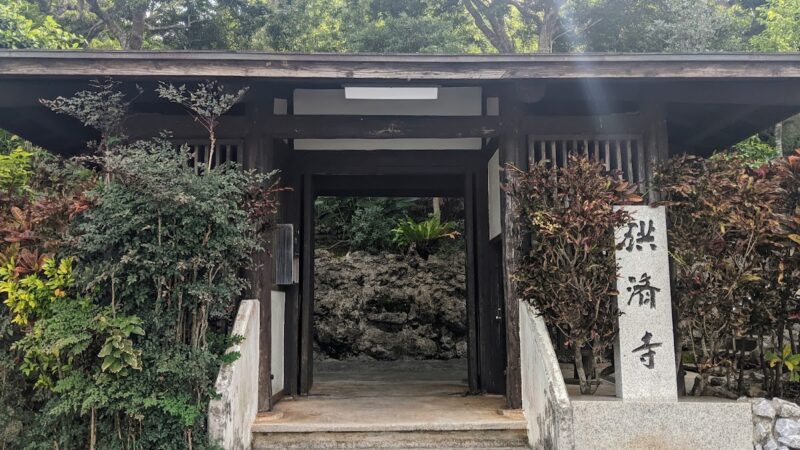
Currently, a magnificent stone torii gate stands next to the Prefectural Martial Arts Hall within Ogiyama Park. This torii gate is a splendid structure symbolizing post-war reconstruction and welcomes worshippers. Climbing the stone steps, a quiet space surrounded by subtropical trees unfolds, creating a sacred atmosphere despite being in an urban area.
The shrine building is a wooden structure that is regularly maintained. Despite being located in Ogiyama Park, a place of relaxation for citizens, it maintains the solemn atmosphere of a shrine.
Deities Enshrined: Three Benefactors of Okinawa
Yomochi Shrine enshrines three benefactors who brought prosperity to Ryukyu (Okinawa). Each of these individuals is a historical figure who made a significant contribution to the industrial development of Okinawa.
Noguni Sokan
Noguni Sokan was a figure from the Ryukyu Kingdom era and is known as the benefactor who introduced sweet potatoes to Ryukyu. In 1605, Noguni Sokan, aboard a tribute ship bound for China (Ming Dynasty), obtained sweet potato seedlings in Fujian Province and brought them back to Ryukyu.
The introduction of sweet potatoes dramatically improved Ryukyu’s food situation. Sweet potatoes, resistant to typhoons and droughts, could be cultivated even in poor soil and were extremely effective as a famine countermeasure. Thanks to Noguni Sokan’s efforts, many people were saved from starvation, and he greatly contributed to the population growth and social stability of Okinawa.
A monument honoring Noguni Sokan stands in Noguni, Kadena Town, his birthplace, and his achievements are still celebrated today. Sweet potatoes are deeply rooted in Okinawan food culture and continue to be cultivated as an important agricultural product even today.
Gima Shinjo
Gima Shinjo was a technological innovator who was active in the Ryukyu Kingdom in the early 17th century. His greatest achievements were the improvement and dissemination of sugarcane refining technology, and the introduction of cotton cultivation and weaving techniques.
When Gima Shinjo returned from China (Ming Dynasty) in 1623, he brought back sugar refining technology, dramatically increasing sugar production in Ryukyu. He made it possible to produce refined sugar in Ryukyu, where only raw sugar had previously been produced. This technological innovation made sugar a major export product of the Ryukyu Kingdom and a vital industry supporting the kingdom’s finances.
Furthermore, the introduction of cotton cultivation and weaving techniques is also an important achievement of Gima Shinjo. He popularized more comfortable cotton clothing in Ryukyu, where hemp and banana fiber cloth had previously been the mainstream, contributing to an improvement in people’s living standards.
Gima Masatsune’s achievements extended beyond industry to include the training of engineers and the dissemination of knowledge, and he is highly regarded as a figure who laid the foundation for the industrial development of Ryukyu.
Sai On
Sai On was one of the most important politicians and scholars in the Ryukyu Kingdom of the 18th century. Born in 1682, he served as a Sanshikan (the highest administrative official of the Ryukyu Kingdom) during the reign of King Sho Kei.
Sai On’s greatest achievements were comprehensive national land development and forestry reform. He authored many policy books, including the “Eight Books on Forestry,” and implemented comprehensive national policies such as forest protection, water management, and agricultural promotion. His forest protection policies, in particular, were groundbreaking, preventing the degradation of forests due to indiscriminate logging and achieving water resource conservation and soil preservation.
Sai On also made significant contributions to education. He established the Meirindo and promoted Confucian education, dedicating himself to human resource development. His educational philosophy aimed not merely at acquiring academic knowledge, but at cultivating individuals who possessed practical knowledge and a strong moral character.
Cai Wen’s policies laid the foundation for the sustainable development of the Ryukyu Kingdom, and their influence continues to this day in Okinawa. His thoughts and achievements, as a model of social reform and industrial development, are deeply intertwined with the philosophy of Yomochi Shrine.
The Meaning of “Yomochi” and the Shrine’s Philosophy
The word “Yomochi,” pronounced “Yumuchi” in Old Okinawan, carries the profound meaning of “supporting and maintaining a prosperous and peaceful era.” This word embodies the philosophy of sustainably supporting not only economic prosperity, but also social peace and stability, and the happiness of the people.
This philosophy, embodied in the name of Yomochi Shrine, expresses the very achievements of the three benefactors enshrined there. The introduction of sweet potatoes by Sokan Noguni, the sugar refining technology and cotton cultivation by Masatsune Gima, and the comprehensive land development by Sai On were not merely temporary successes, but rather laid the foundation for Okinawa’s prosperity that continues to support generations to come.
The concept of “Yomochi” (世持) holds significant meaning even in modern society. Contemporary challenges such as sustainable development, responsibility to future generations, and social harmony are precisely the spirit of “Yomochi.” Yomochi Shrine, as a place embodying this ancient yet ever-relevant ideal, offers profound insights to modern worshippers.
Faith and Reverence at Yomochi Shrine
As a Shrine for Industrial Promotion
Since its founding, Yomochi Shrine has held a special position as a shrine for industrial promotion. It has been particularly revered by those in the sugar and agriculture/forestry industries, and has been cherished as a place to pray for the development and prosperity of these industries.
Okinawa’s core industries, sugarcane cultivation and sugar refining, are directly linked to the achievements of Masatsune Gima. Furthermore, in agriculture and forestry as a whole, the introduction of sweet potatoes by General Manager Noguni and the forestry policy reforms of Cai Wen continue to have an impact. For those involved in these industries, Yomochi Shrine is a sacred place to reaffirm the origins of their work and offer gratitude to their predecessors.
Connection with the Educational World
Yomochi Shrine is also revered by the educational world. In particular, Cai Wen’s educational philosophy and contributions to human resource development serve as important guidelines for those involved in education. Many worshippers visit the shrine to pray for the advancement of learning, the success of human resource development, and the prosperity of educational businesses.
In the history of education in Okinawa, Cai Wen’s establishment of the Meirindo and the promotion of Confucian education were groundbreaking events. In carrying on that spirit, Yomochi Shrine also has an aspect as a sacred place for education.
As a Shrine for Social Reform
Another important aspect of Yomochi Shrine is its character as a shrine for “social reform.” It attracts the faith of people who wish for social reform, the realization of justice, and the construction of a better society.
The three benefactors did not merely pursue their own self-interest, but dedicated themselves to the happiness and development of society as a whole. This altruistic spirit and commitment to social contribution is the very essence of the ideal of “social reform.” Even in modern society, Yomochi Shrine can serve as a spiritual pillar for those grappling with issues such as social justice, fairness, and sustainability.
Annual Festival and Regular Events
Yomochi Shrine Thanksgiving Festival
The most important festival at Yomochi Shrine is the Yomochi Shrine Thanksgiving Festival (Annual Grand Festival), held annually on October 10th. This festival takes place in the shrine building at Ogiyama Park, where a solemn ceremony is held to express gratitude to the three benefactors and to pray for the prosperity of Okinawa.
Many worshippers, primarily from the sugar industry, agriculture and forestry, and education sectors, visit the Grand Festival. The Shinto rituals follow traditional Shinto practices, including the recitation of prayers and the offering of sacred branches. Attendees commemorate the achievements of the three benefactors and use this as an opportunity to reaffirm their responsibilities in the modern age.
Other Festivals
Besides the annual grand festival, various festivals are held throughout the year at Yomochi Shrine. Traditional Shinto festivals such as the New Year’s Day Festival and the Spring and Autumn Prayer Festivals are observed.
In addition, special prayers from individuals and groups are accepted at any time, and people visit the shrine with various wishes, such as business prosperity, family safety, and academic success.
How to Visit and Manners
Procedure for Visiting
Visiting Yomochi Shrine follows the general etiquette for visiting a shrine.
- Passing Through the Torii Gate: The entrance is a magnificent stone torii gate located next to the Prefectural Martial Arts Hall in Okuyama Park. Bow when passing through the torii gate.
- Walking Along the Path: The path is considered the path of the gods, so avoid walking in the center. Climbing the stone steps, you’ll find yourself in a tranquil space surrounded by subtropical trees.
- Purifying at the Water Basin: If there is a water basin, purify your hands and mouth.
- Worship at the Main Hall: Worship in front of the main hall using the two bows, two claps, and one bow ritual. Place your offering, ring the bell if present, bow deeply twice, clap twice, silently recite your wish, and finally bow deeply once.
- Respect for the Deity: While the deity of Yomochi Shrine is enshrined within the grounds of Naminoue Shrine, worshipping at the shrine in Ogiyama Park fully conveys respect for the three benefactors.
Points to Note During Worship
Since Yomochi Shrine is located within the public space of Ogiyama Park, consideration for your surroundings is necessary during worship. Because there are people using the sports facilities and strolling through the park, quiet and reverent worship is expected.
The area around the shrine is covered with subtropical trees, so it’s a good idea to take precautions against insects, especially during the summer. Also, since there are stone steps, we recommend wearing comfortable shoes for your visit.
Access to Yomochi Shrine
Location
Address: 900-0026 Okinawa Prefecture, Naha City, Ogiyama-cho, within Ogiyama Park
Yomochi Shrine is located within Ogiyama Park, close to the center of Naha City, making it very convenient to access.
Access by Public Transportation
Okinawa Urban Monorail (Yui Rail)
The nearest station is “Ogiyama Park Station,” approximately a 6-minute walk from the station. After exiting the ticket gate, head towards Ogiyama Park and aim for the Okinawa Prefectural Martial Arts Hall; you will see the stone torii gate of Yomochi Shrine next to it.
Other accessible stations:
- Tsubogawa Station: Approximately 8 minutes on foot (480m)
- Asahibashi Station: Approximately 15 minutes on foot (920m)
The Yui Rail offers direct access from Naha Airport, making it easily accessible for tourists. Ogiyama Park Station is approximately 10 minutes from Naha Airport.
Access by Car
Ogiyama Park has multiple parking lots. While you can use the parking lots for park users, it may be crowded on days with sporting events, so using public transportation is recommended.
If using a navigation system, setting “Ogiyama Park” or “Okinawa Prefectural Budokan” as your destination is convenient.
Nearby Facilities
Ogiyama Park, where Yomochi Shrine is located, has the following facilities:
- Okinawa Prefectural Budokan
- Okinawa Cellular Stadium Naha (Baseball Stadium)
- Ogiyama Athletic Stadium
- Okinawa Prefectural Ogiyama General Sports Park
The park may become crowded on days with events at these facilities. Furthermore, there is another shrine called Okimiya within the park, and many people visit both.
Relationship with Naminoue Shrine
The sacred object of Yomochi Shrine is enshrined within the grounds of Naminoue Shrine in Wakasa, Naha City. Naminoue Shrine is one of the eight Ryukyu shrines and is known as the most prestigious shrine in Okinawa Prefecture.
Why are the sacred objects separate?
The reason why the shrine building and the sacred object of Yomochi Shrine are separate is related to the damage caused by the Battle of Okinawa and the post-war reconstruction process. After the original shrine building was destroyed by fire, the sacred object underwent various changes before being enshrined within the grounds of Naminoue Shrine.
This unique arrangement is an important element that tells the story of Okinawa’s war history and reconstruction. At the same time, it also demonstrates a deep connection with Naminoue Shrine, a representative shrine of Okinawa.
Visiting Both Shrines
Visitors seeking deeper faith may choose to visit both the main shrine building of Yomochi Shrine in Ogiyama Park and the sacred object within the grounds of Naminoue Shrine. Naminoue Shrine is approximately 15 minutes by car or 30 minutes on foot and via the Yui Rail from Ogiyama Park.
Naminoue Shrine itself is a representative tourist spot in Okinawa, and its beautiful shrine building perched on a cliff and the ocean view stretching out below are a must-see. A pilgrimage course visiting both Yomochi Shrine and Naminoue Shrine will be a valuable opportunity to gain a deeper understanding of Okinawa’s history and faith.
Highlights of Yomochi Shrine
Magnificent Stone Torii Gate
The most impressive structure at Yomochi Shrine is the magnificent stone torii gate standing next to the Prefectural Martial Arts Hall. This torii gate is a heavy, imposing structure symbolizing post-war reconstruction, and is remarkably large and impressive compared to the size of the shrine building.
The texture of the stone and its dignified presence seem to express respect for the three benefactors and a wish for Okinawa’s recovery. Many visitors take commemorative photos in front of this torii gate.
Shrine Grounds Surrounded by Subtropical Trees
Passing through the torii gate and ascending the stone steps, a tranquil space surrounded by subtropical trees unfolds. Banyan trees, coral trees, and Garcinia subelliptica, native to Okinawa, surround the shrine, creating a naturally rich environment despite its urban location.
This lush green environment seems to convey the spirit of Cai Wen’s forestry reforms to the present day. The wind blowing through the trees, the birdsong, and the contrast of light and shadow created by the dappled sunlight offer visitors tranquility and healing.
Wooden Shrine
At the back of the shrine grounds stands a wooden shrine. Though not large in scale, the meticulously maintained shrine exudes a simple yet sacred atmosphere.
In front of the shrine is a small plaza where you can quietly offer your prayers. Away from the hustle and bustle of the city, in a space where time seems to stand still, the time spent offering gratitude to the three benefactors and making your own wishes is a precious and calming experience.
Significance of Visiting Yomochi Shrine
Learning about Okinawa’s History
Visiting Yomochi Shrine is an opportunity to deeply understand Okinawa’s history. The history of industrial development from the Ryukyu Kingdom era to the modern era, the efforts and wisdom of our ancestors, and the history of war and reconstruction are all condensed within this shrine.
By learning about the achievements of the three benefactors, you can realize that modern Okinawa is built upon the efforts of many ancestors. Understanding the origins of industries such as sweet potatoes, sugar, and forestry also deepens your understanding of Okinawan culture.
Gratitude to Our Ancestors
Yomochi Shrine is a place to express gratitude to our ancestors. The prosperity and peace we enjoy today are the result of the dedicated efforts of people in the past. In Okinawa in particular, the wisdom and courage of our ancestors, who overcame a harsh natural environment, limited resources, and historical difficulties, form the foundation of our current prosperity.
Visiting Yomochi Shrine is an opportunity to express gratitude to these ancestors and renew our commitment to passing on their spirit to future generations.
Implications for the Modern Age
The philosophy of Yomochi Shrine offers many insights for modern society. Contemporary challenges such as sustainable development, technological innovation, the importance of education, environmental protection, and social contribution are essentially the same as those addressed by the three benefactors.
The concept of “Yomochi,” that is, the philosophy of “supporting and upholding a prosperous and peaceful era,” resonates with the spirit of the modern SDGs (Sustainable Development Goals). Yomochi Shrine, as a place that conveys ancient yet new, universal values, continues to send important messages to us today.
Nearby Tourist Attractions
When visiting Yomochi Shrine, we recommend also visiting nearby tourist attractions.
Okimiya Shrine
Located within the same Ogiyama Park, Okimiya Shrine is a historical shrine originating from Tentoyama Utaki. While not included in the Eight Ryukyu Shrines, it is deeply revered by the local people. It’s just a few minutes’ walk from Yomochi Shrine, and many people visit both.
Naminoue Shrine
As mentioned above, Naminoue Shrine, where the deity of Yomochi Shrine is enshrined, is a representative shrine of Okinawa. Its beautiful shrine building perched on a cliff, the blue sea stretching out below, and its status as the foremost of the Eight Ryukyu Shrines are well worth seeing.
Kokusai Street
Located about 10 minutes by car or 15 minutes by Yui Rail from Ogiyama Park, Kokusai Street is the heart of Okinawan tourism. The approximately 1.6km street is lined with souvenir shops, restaurants, hotels, and more, allowing you to experience the vibrant energy of Okinawa.
Shuri Castle Park
Shuri Castle, the royal castle of the Ryukyu Kingdom, was the center of the era when the three benefactors enshrined at Yomochi Shrine were active. Although the main hall and other structures were destroyed in a 2019 fire, reconstruction work is underway, and the surrounding historical sites and exhibition facilities are open to visitors. It is worth visiting these sites in conjunction with a visit to Yomochi Shrine to understand its historical context.
Visitor Feedback and Reputation
Visitors to Yomochi Shrine have shared a variety of impressions.
Many visitors commented, “Despite its location within Ogiyama Park, surrounded by sports facilities, I felt a quiet and sacred atmosphere upon entering the shrine grounds.” The shrine’s ability to maintain its solemnity despite its seemingly ordinary location in an urban park is highly appreciated.
Some visitors also praised the historical learning aspect, stating, “It was a good opportunity to learn about Okinawan history. Learning about the achievements of the three benefactors deepened my understanding of Okinawan industry and culture.”
On the other hand, some visitors noted that “the shrine buildings were somewhat small, and the maintenance was a concern,” and that “the explanation that the deity resides at Naminoue Shrine was unclear.” These are due to the shrine’s unique historical circumstances, and explanations may be necessary for first-time visitors.
Many visitors commented on the striking contrast with the magnificent stone torii gate, suggesting that the torii’s presence as a symbol of post-war reconstruction remains etched in their memories.
Summary: Universal Values Conveyed by Yomochi Shrine
Yomochi Shrine was founded in 1937 to enshrine three benefactors who contributed to Okinawa’s industrial development. These three great figures—Noguni Sokan, Gima Masatsune, and Sai On—dedicated themselves to the prosperity of Okinawa and the happiness of its people in their respective eras.
The name “Yomochi” embodies the philosophy of “supporting and maintaining a prosperous and peaceful era,” which holds significant meaning even in modern society. This shrine embodies universal values such as sustainable development, responsibility to future generations, and social contribution.
Having gone through destruction by war and post-war reconstruction, the shrine now has a unique structure with the main hall located within Ogiyama Park and the sacred object within the grounds of Naminoue Shrine. However, the faith and reverence for the three benefactors continue to be passed down unchanged.
Located in a convenient location easily accessible from the heart of Naha City, yet surrounded by subtropical trees, the tranquil grounds offer visitors an opportunity for healing and learning. When you visit Okinawa, be sure to stop by Yomochi Shrine, reflect on the achievements of our ancestors, and experience the spirit of “Yomochi.”
For everyone, not just those in the sugar, agriculture, and education industries, Yomochi Shrine will be a valuable place to understand Okinawa’s history and culture and to contemplate a sustainable future.