Shiratori Hachimangu Shrine (Suo-Oshima Town, Yamaguchi Prefecture) Complete Guide | The Charm of the Floating Torii Gate and Goshuin Stamps
Shiratori Hachimangu Shrine, located in Doi Fishing Port in Suo-Oshima Town, Oshima District, Yamaguchi Prefecture, is a shrine known for its beautiful torii gate standing on the sea. With a history of over 1000 years, it remains a deeply revered local tutelary deity. This article provides a detailed introduction to Shiratori Hachimangu Shrine, including its history, highlights, goshuin stamps, and access information.
History and Origins of Shiratori Hachimangu Shrine
Origin of Founding
Shiratori Hachimangu Shrine is said to have been founded over 1000 years ago by inviting (receiving a divided spirit from) Iwashimizu Hachimangu Shrine in Yamashiro Province (present-day Kyoto Prefecture). Iwashimizu Hachimangu Shrine is one of Japan’s three great Hachiman shrines, alongside Usa Jingu and Tsurugaoka Hachimangu, and is a prestigious shrine that inherits a venerable divine spirit.
Since its founding, it has been revered by the local residents as the tutelary deity of the Nagahama, Hinokuma, and Doi areas of Suo-Oshima Island. Due to its location facing the sea, it is particularly revered by those involved in fishing and those praying for safe voyages.
Current Shrine Building
The current worship hall was built in 1916 (Taisho 5), making it a building with over 100 years of history. Located in the heart of Doi Fishing Port, it exudes a sacred atmosphere that is one with the sea.
About the Enshrined Deities
Shiratori Hachimangu Shrine enshrines the following four deities:
Main Deity
Hondawake-no-Mikoto
The divine spirit of Emperor Ojin, and the central figure of Hachiman. These deities are worshipped as gods of military fortune, national protection, and industrial development.
Tarashinakatsuhiko-no-Mikoto
The divine spirit of Emperor Chuai. He is the father of Emperor Ojin.
Okinagatarashihime-no-Mikoto
The divine spirit of Empress Jingu. She is the mother of Emperor Ojin and is revered as the goddess of safe childbirth, child-rearing, and safe voyages.
Yamato Takeru-no-Mikoto
A heroic god in Japanese mythology, known as the god of martial prowess and pioneering. He is deeply connected to the legend of the white swan, and this is believed to be related to the shrine’s name, “Shiratori” (white swan).
These deities are believed to bring a wide range of blessings, including military fortune, safe voyages, family safety, and prosperity of descendants.
Highlights of Shiratori Hachimangu Shrine
A Mysterious Torii Gate Standing on the Sea
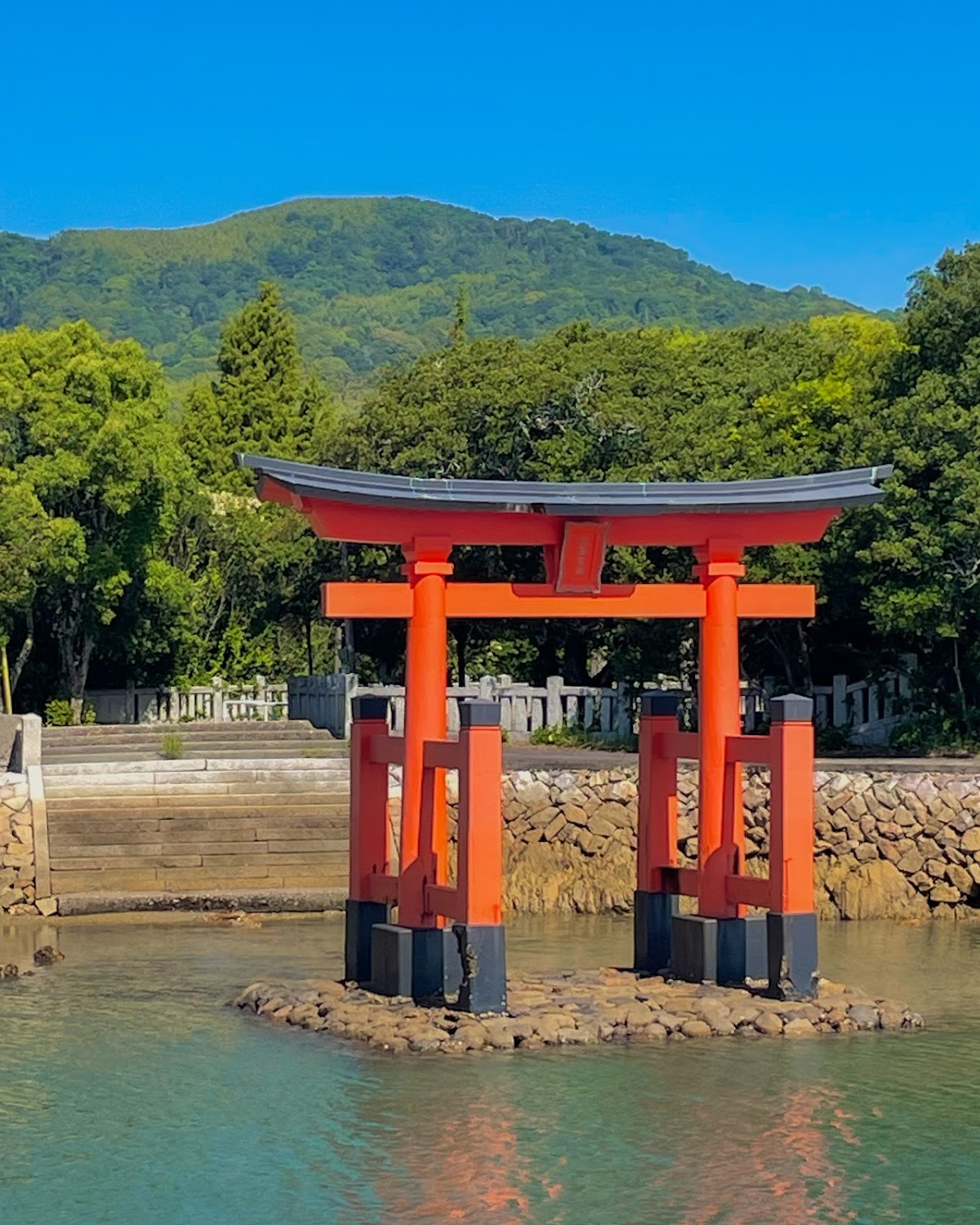
The most striking feature of Shiratori Hachimangu Shrine is its beautiful Ryobu-style torii gate, standing on the sea at Doi Fishing Port. This torii gate, whose appearance changes with the ebb and flow of the tide, creates a fantastical scene, as if floating on the sea.
The lintel of the torii gate bears the inscription “Shiratori Sansha,” a collective name for Shiratori Hachimangu Shrine and the two shrines located to its left and right: Ebisu Shrine and Doi Shrine.
At high tide, the reflection of the torii gate on the sea surface is beautiful, while at low tide, the entire gate can be seen up close. Because it offers different views depending on the time of day, it’s a popular spot for photography enthusiasts.
Composition of Shiratori Sansha
The following three shrines are worshipped together, centered around Shiratori Hachimangu Shrine:
Shiratori Hachimangu Shrine (Center)
This is the central shrine, enshrining four deities as its principal deities.
Ebisu Shrine
This shrine enshrines Ebisu (Ebisu-sama), the god of business prosperity, maritime safety, and abundant catches.
Doi Shrine
This shrine has been worshipped since ancient times as the guardian deity of the region.
The way these three shrines work together to protect the region is characteristic of the religious culture of Suo-Oshima.
Atmosphere of the Shrine Grounds
Despite its location in the heart of Doi Fishing Port, the shrine grounds are enveloped in a tranquil atmosphere. While offering an open environment where visitors can feel the sea breeze, a sacred atmosphere is maintained.
The worship hall, built during the Taisho era, exudes the dignified style of a aged wooden building. Simple yet meticulously maintained, it reflects the deep faith of the local people.
Goshuin (Shrine Seal) Information
Seasonal Limited Edition Goshuin
Shiratori Hachimangu Shrine is known for its charming seasonal goshuin designs. This shrine is popular among goshuin (shrine stamp) collectors, as it offers special goshuin stamps themed around the four seasons and events.
You can receive different goshuin stamps depending on the time of year you visit: designs featuring cherry blossoms and fresh greenery in spring, the sea and summer festivals in summer, autumn leaves and harvest in autumn, and snowscapes and New Year’s in winter.
Goshuin Reception
Goshuin stamps are available at the Shiratori Hachimangu Shrine office.
Address: 2063 Hinomaehama, Suo-Oshima-cho, Oshima-gun, Yamaguchi Prefecture
Phone Number: 0820-73-0058
It is recommended to call ahead to confirm before visiting. Especially if you wish to obtain a seasonal goshuin stamp, it is best to inquire in advance.
About Goshuin Notebooks
Original goshuin notebooks may be available; please inquire at the shrine office. These goshuin notebooks, with their unique Shiratori Hachimangu designs, make a memorable souvenir of your visit.
Annual Events and Festivals
Major Festivals
Shiratori Hachimangu Shrine holds various festivals throughout the year. The Autumn Grand Festival, in particular, is an important local event and attracts many worshippers.
Annual Grand Festival
This is the most important festival, held every autumn. Traditional Shinto rituals, such as the portable shrine procession and Kagura (sacred dance) performances, are performed.
New Year’s Visit
Many worshippers visit the shrine in the new year to pray for peace and prosperity throughout the year.
Summer Festival
This is a beloved summer tradition in the region.
Information Dissemination via Official Social Media
Shiratori Hachimangu Shrine uses its official X (formerly Twitter) account (@shiratori_hachi) to share information about the various attractions of the seasons and festivals. Checking before your visit will allow you to find out the latest event information and the state of the shrine grounds.
Access and Transportation Information
Location
Address: 2066 Hinomae, Suo-Oshima-cho, Oshima-gun, Yamaguchi Prefecture (Main Shrine)
Shrine Office: 2063 Hinomaehama, Suo-Oshima-cho, Oshima-gun, Yamaguchi Prefecture
Access by Public Transportation
By Bus
Use the Bocho Bus.
- Nearest bus stop: “Hinomae” or “Doiguchi”
- Approximately 3 minutes on foot from Hinomae bus stop
- Approximately 4 minutes on foot from Doiguchi bus stop
Access will involve bus transfers from major cities in Yamaguchi Prefecture. Since the number of buses is limited, it is recommended to check the timetable in advance.
Access by Car
From Yamaguchi Area
From Kuga IC on the Sanyo Expressway, take National Route 437 and Prefectural Route 60 to Suo-Oshima. Cross the Oshima Bridge and head east on the island.
From Hiroshima
Take the Sanyo Expressway to the Otake Interchange, then take National Route 2 and Prefectural Route 60.
Car Navigation Settings
Search using the phone number “0820-73-0058” or the address.
Parking
There is parking space around Doi Fishing Port, but it is limited, so congestion is expected during festivals and other events. Please park respectfully and avoid obstructing users of the fishing port.
Nearby Tourist Attractions
Battleship Mutsu Memorial Museum
Located about 15 minutes by car from Shiratori Hachimangu Shrine, this museum displays artifacts from the battleship Mutsu. You can learn about the history of the battleship Mutsu, which sank off the coast of Suo-Oshima in 1943. The museum displays salvaged main guns, the bridge, and other artifacts, making it a must-see spot for anyone interested in naval history.
Nagisa Aquarium (Japan’s Oldest Aquarium)
A small aquarium located in Suo-Oshima Town, it primarily exhibits marine life from the Seto Inland Sea. Despite its small size, it’s a valuable facility for learning about the local marine ecosystem. Recommended for families.
Suo-Oshima Coastline
Suo-Oshima is a beautiful island often called the “Hawaii of the Seto Inland Sea.” Its clear waters, white sandy beaches, and warm climate make it ideal for swimming and marine sports.
Roadside Station Southern Seto Towa
A roadside station where you can purchase Suo-Oshima’s local products and fresh seafood. Perfect for souvenirs such as mandarin orange juice, jam, and dried fish.
Manners and Points for Visiting a Shrine
Etiquette for Visiting a Shrine
- Bow Before Passing Through the Torii Gate
After paying your respects to the torii gate in the sea from afar, bow before passing through the torii gate within the shrine grounds.
- Purifying at the Water Basin
Purify your left hand, then your right hand, and rinse your mouth.
- Worship at the Main Hall
Worship using the two bows, two claps, and one bow ritual.
Precautions for Photography
The torii gate in the sea is an excellent photo spot, but please note the following:
- When taking photos within the fishing port, be considerate of the work of fishermen.
- Do not enter restricted areas.
- Remember to be considerate of other worshippers.
- Ensure the safety of those around you when using a tripod.
Recommended Visiting Times
Early Morning
The torii gate illuminated by the morning sun is beautiful, allowing for a peaceful visit.
Evening
The contrast between the sea and the torii gate, bathed in the setting sun, is fantastic.
High Tide/Low Tide
Enjoy different scenery depending on the tide. It is recommended to check the tide table in advance.
Summary of the Charms of Shiratori Hachimangu Shrine
Shiratori Hachimangu Shrine is a venerable shrine with a history of over 1000 years, yet it captivates visitors with its unique scenery of a torii gate floating on the sea.
Historical Value
It boasts a prestigious history, having been established through the enshrinement of a deity from Iwashimizu Hachimangu Shrine, and has long been worshipped as the local tutelary deity.
Beauty of the Scenery
The torii gate on the sea displays different appearances at high and low tide, creating a beautiful landscape in harmony with the calm waters of the Seto Inland Sea.
Charm of the Goshuin (Shrine Seal)
The charming designs of the goshuin, which change with the seasons, are one of the reasons why visitors want to return again and again.
Connection to the Community
Together with Ebisu Shrine and Doi Shrine, it plays a central role in the local community as one of the three Shiratori shrines.
Attire and Items to Bring When Visiting
Attire
There are no specific dress code requirements, but clean clothing appropriate for visiting a shrine is desirable. Due to its location by the sea, please note the following points.
- Be careful as it can be windy, so make sure your hat doesn’t blow away.
- In summer, the sun is strong, so a hat or parasol is useful.
- In winter, the sea breeze is cold, so take precautions against the cold.
What to Bring
- Goshuincho: If you wish to receive a Goshuin (temple/shrine stamp).
- Camera: For taking pictures of the beautiful scenery.
- Cash: For Goshuin and offerings (bring small change).
- Drinks: Especially in summer, to prevent heatstroke.
About Suo-Oshima
Suo-Oshima (Yashirojima), where Shiratori Hachimangu Shrine is located, is the third largest island in Yamaguchi Prefecture and is connected to Honshu by the Oshima Bridge.
Features
- Known as the “Hawaii of the Seto Inland Sea” due to its warm climate
- A major producer of mandarin oranges, one of the prefecture’s leading production areas
- Has a history of Hawaiian immigration and maintains ongoing ties with Hawaii
- Beautiful coastline and abundant nature
- Abundant fresh seafood
The entire island is enveloped in a tranquil atmosphere, allowing you to spend your time at a leisurely pace. Visiting Shiratori Hachimangu Shrine and enjoying sightseeing around the island is highly recommended.
Summary
Shiratori Hachimangu Shrine in Suo-Oshima Town, Yamaguchi Prefecture, is a historic shrine with a mystical torii gate standing in the sea and a history spanning over 1000 years. It enshrines four deities invited from Iwashimizu Hachimangu Shrine and is still deeply revered as the local tutelary deity.
With its beautiful goshuin (shrine stamps) that change with the seasons, the sea torii gate that changes its appearance with the tides, and its unique form of worship as one of the three Shiratori shrines, it is a shrine with many attractions. When visiting Suo-Oshima, be sure to pay your respects at Shiratori Hachimangu Shrine and experience the beautiful scenery of the Seto Inland Sea and the atmosphere of this historic shrine.
Visiting nearby tourist attractions such as the Battleship Mutsu Memorial Museum and Nagisa Aquarium in conjunction with Shiratori Hachimangu Shrine will allow you to enjoy a more fulfilling Suo-Oshima sightseeing experience. Spend some peaceful time at Shiratori Hachimangu Shrine, where the sea, history, and faith are intertwined.