Complete Guide to Toshunji Kannon-do (Yamaguchi Prefecture) | A Thorough Explanation of the History and Highlights of this Important Cultural Property
Toshunji Temple stands quietly within its grounds, near Koyama Park in the heart of Yamaguchi City, Yamaguchi Prefecture. The Kannon-do (Kannon Hall) within its grounds is a nationally designated Important Cultural Property that preserves a valuable architectural style from the Muromachi period. This article will introduce the charm of this precious cultural property in its entirety, from its historical background and architectural features to information on visiting.
What is Toshunji Kannon-do?
Toshunji Kannon-do is a Buddhist hall located within the grounds of Toshunji Temple, a Rinzai sect Kenninji school temple located in Mizunoue-cho, Yamaguchi City, Yamaguchi Prefecture. It was designated a national Important Cultural Property on August 13, 1917 (Taisho 6), and is known as a valuable building that strongly retains the architectural style of the mid-Muromachi period (around 1430).
Basic Information
- Location: Mizunoue-cho, Yamaguchi City, Yamaguchi Prefecture (Kanda-cho 1-80)
- Sect: Rinzai Zen Kenninji School
- Cultural Property Designation: Nationally Designated Important Cultural Property (Designated August 13, 1917)
- Construction Period: Mid-Muromachi period (circa 1430)
- Pilgrimage Site: 16th temple of the Chugoku Kannon Pilgrimage
- Access: Approximately 15 minutes on foot from Kami-Yamaguchi Station on the JR Yamaguchi Line
History of Toshunji Temple and the Origin of the Kannon Hall
From Kokuseiji Temple to Toshunji Temple
Originally, another temple stood on the site where Toshunji Temple now stands. It was “Kokuseiji Temple,” built in 1404 (Oei 11) by Ouchi Morimi, the 10th head of the Ouchi clan, to pray for peace throughout the land and prosperity for his family. Kokusei-ji Temple flourished as the family temple of Ouchi Morimi, but its history underwent a dramatic transformation with the fall of the Ouchi clan.
Founded as the Family Temple of Mori Motonari
In 1560, when Mori Motonari, a warlord who became the ruler of the Chugoku region, died, his grandson, Mori Terumoto, founded Toshun-ji Temple within the castle grounds of Yoshida in Aki Province (present-day Aki-Takata City, Hiroshima Prefecture) to mourn his grandfather. This was in the spring of 1573. The temple’s name derives from Motonari’s posthumous Buddhist name, “Toshun-ji-dono.”
Toshun-ji Temple followed a remarkable fate due to the relocation of the Mori family’s base. After the Battle of Sekigahara, when the Mori family was transferred from Hiroshima to Hagi, Toshun-ji Temple also moved to Hagi. Then, from the end of the Edo period to the beginning of the Meiji era, it was moved to its current location in Yamaguchi City. This site was once the location of Kokusei-ji Temple, and it has become a place where history intersects once again.
History of the Relocation of the Kannon-do Hall
The Kannon-do Hall, currently standing within the grounds of Toshun-ji Temple, was not originally located here. This building was constructed as the main hall of Kannon-ji Temple, which was located in Kamiuno Reiryu. Built around 1430 during the mid-Muromachi period, this Kannon-do Hall was relocated to the grounds of Toshun-ji Temple in 1915 (Taisho 4).
While there are various theories regarding the circumstances of the relocation, it is believed that it was moved to Toshun-ji Temple to preserve the valuable building following the abandonment of Kannon-ji Temple. This relocation ensured that a valuable architectural style from the Muromachi period was preserved to the present day.
Architectural Features and Highlights of the Kannon-do Hall
Details of the Architectural Style
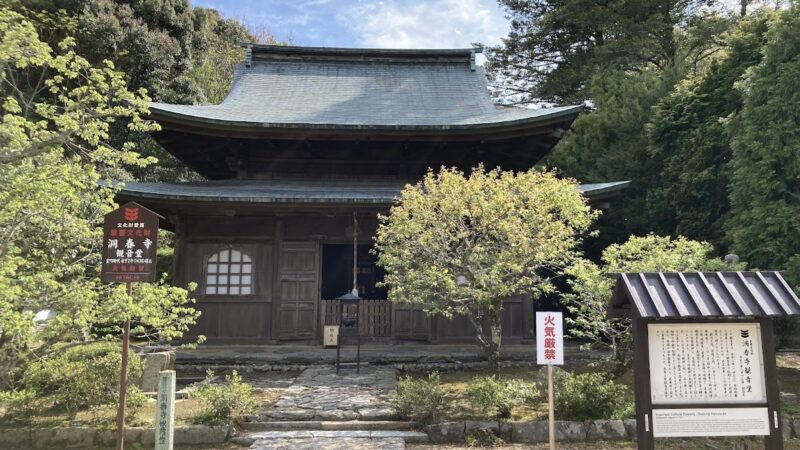
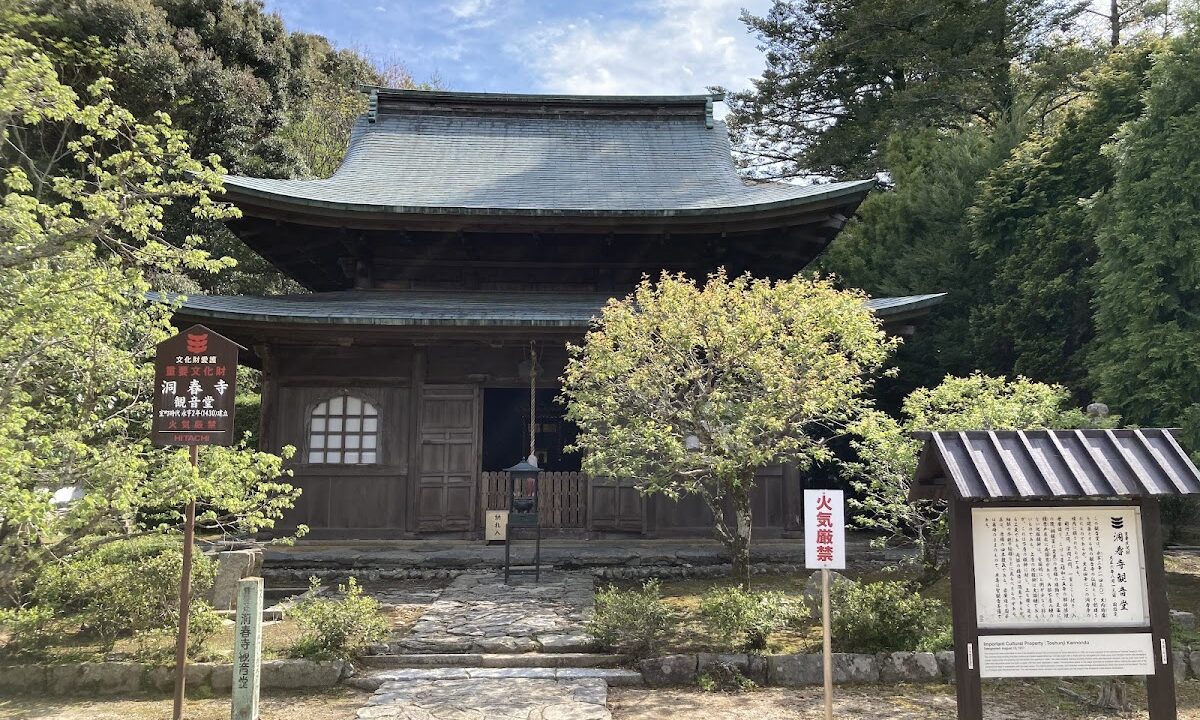
The Kannon-do Hall of Toshun-ji Temple possesses the characteristics of a typical Zen Buddhist temple from the mid-Muromachi period.
Architectural Structure:
- Scale: Three bays in length, three bays in width
- Roof: Hip-and-gable roof with a single-story mokoshi (skirt roof)
- Roofing Material: Currently copper sheeting (estimated to have been cypress bark roofing at the time of construction)
- Style: Eclectic style based on Zen Buddhist style (Tang style)
The scale of three bays in length and three bays in width means that there are three bays between columns on both the front and sides. It is a compact building with beautifully balanced proportions.
The Beauty of the Mokoshi
One of the major features of the Kannon-do is its single-story mokoshi. A mokoshi is a canopy-like structure attached to the outer perimeter of a building, protecting it from wind and rain while also giving the exterior a sense of gravitas and elegance.
In Muromachi period Buddhist temple architecture, buildings with a mokoshi (a type of roofed veranda) indicated high status. The mokoshi of the Kannon-do Hall at Toshun-ji Temple balances the overall structure, creating a serene and dignified appearance.
Vividly Colored Decorations and Sculptures
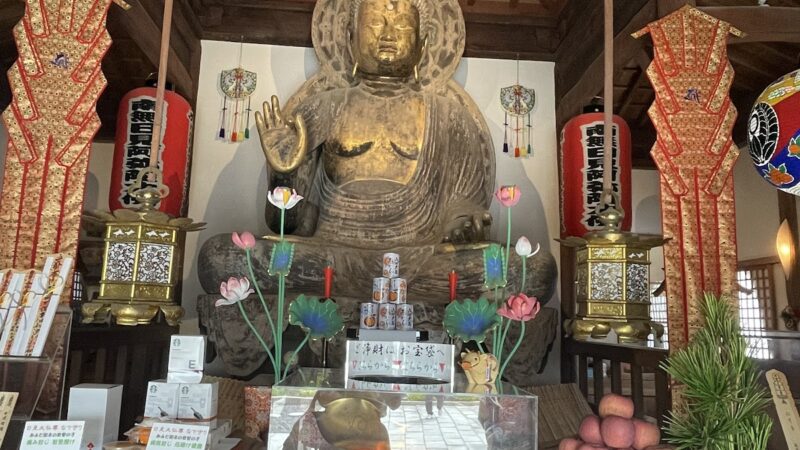
Some vividly colored decorations from the Muromachi period remain inside the Kannon-do Hall. Particularly noteworthy are the intricate carvings featuring lotus flowers. These decorations are valuable historical artifacts that convey the advanced techniques and aesthetic sensibilities of the time.
Vividly colored decoration refers to a decorative technique using vibrant colors such as red, blue, green, and gold. Although some parts are faded now, the vibrant colors must have captivated visitors when the hall was first built.
Characteristics of Zen Buddhist Architecture
The Kannon-do Hall exhibits many characteristics of Zen Buddhist (Tang-style) architecture.
- Tsumegumi: A complex bracket system densely assembled on top of pillars.
- Kato-mado: A distinctive window with a flame-shaped or petal-shaped top.
- Sankarado: A door with a lattice-like frame.
- Sori no Koyou na Yonae: A roof with elegant, curving lines.
These elements represent a refinement of the Zen Buddhist architectural style introduced from China, showcasing the pinnacle of Muromachi period architectural technology.
Toshunji Temple Gate Also a National Important Cultural Property
Along with the Kannon-do Hall, the gate of Toshunji Temple is also designated as a National Important Cultural Property. This gate is an extremely valuable structure, being one of the few four-legged gates from the Muromachi period in Japan.
Features of the Temple Gate
- Style: Four-legged gate
- Roof: Gable roof, cypress bark roofing
- Construction Period: Muromachi period (around the 15th century)
- Designation as Important Cultural Property: August 13, 1917 (Taisho 6)
A four-legged gate is a type of gate with two main pillars flanked by two supporting pillars on either side. Its simple yet dignified appearance gives it a style befitting a Zen Buddhist temple gate. The cypress bark roof requires periodic re-roofing, but it is maintained using traditional techniques.
Harmony between the Temple Gate and the Kannon Hall
Within the grounds of Toshunji Temple, two important cultural properties—the temple gate from the Muromachi period and the Kannon Hall—form a harmonious landscape. Passing through the temple gate and proceeding through the tranquil grounds, the Kannon Hall comes into view—this spatial arrangement evokes a profound sense of spirituality in visitors.
The Relationship Between Mori Motonari and Toshunji Temple
The Protagonist of the “Three Arrows Lesson”
Mori Motonari (1497-1571) was a renowned general of the Sengoku period who unified the Chugoku region. The “Three Arrows Lesson,” known for the anecdote of the three arrows, is famous as a teaching he instilled in his three sons the importance of unity. Motonari was not only an excellent strategist but also demonstrated skill in managing his domain, laying the foundation for the Mori family’s prosperity.
The Role as a Family Temple
After Motonari’s death, Toshunji Temple, founded by his grandson Mori Terumoto to commemorate his grandfather, held special significance for the Mori family. The fact that Toshunji Temple moved with the Mori family each time they relocated their base from Hiroshima to Hagi and then to Yamaguchi speaks volumes about the temple’s importance to the Mori family.
Currently, Toshunji Temple houses the memorial tablet of Mori Motonari and preserves various items related to the Mori family. From the late Edo period to the Meiji era, when Yamaguchi City became the base of the Choshu Domain (Mori family), Toshunji Temple continued to serve as a spiritual pillar for the Mori family.
Nearby Tourist Attractions
When visiting Toshunji Kannon-do, we recommend also visiting the nearby historical sites.
Koyama Park and Rurikoji Five-Storied Pagoda
Koyama Park, located about a 5-minute walk from Toshunji Temple, is a representative tourist attraction in Yamaguchi City. Within the park stands the National Treasure, the Rurikoji Five-Storied Pagoda. This pagoda, built in the mid-Muromachi period (1442), is known for its elegant appearance and is sometimes counted as one of Japan’s three most famous pagodas. The Kannon-do Hall and the Rurikoji Five-Storied Pagoda are roughly from the same period, and comparing them allows one to appreciate the diversity of architectural techniques during the Muromachi period.
Historical Sites Related to the Ouchi Clan
Numerous historical sites related to the Ouchi clan, who once ruled this area, remain in Yamaguchi City.
- Ouchi Clan Residence Site (Ryufuku-ji Temple): A temple built on the site of the Ouchi clan’s residence.
- Tsukiyama Site: The site of the Ouchi clan’s garden.
- Ryoun-ji Temple Site: The site of Ouchi Yoshitaka’s family temple.
Since Kokusei-ji Temple, which once stood on the site of Toshun-ji Temple, was also the family temple of Ouchi Morimi, visiting these historical sites allows one to feel the historical connection between the two prominent families, the Ouchi and the Mori clans.
Cultural Facilities Around the Yamaguchi Prefectural Government Office
The Yamaguchi Prefectural Government Office is within walking distance of Toshun-ji Temple, and many cultural facilities are concentrated in the surrounding area.
- Yamaguchi Prefectural Museum of Art: Exhibits art works related to Yamaguchi Prefecture.
- Yamaguchi Prefectural Library: Has a rich collection of local history materials.
- Yamaguchi City Historical and Folk Museum: A facility where you can learn about the history of Yamaguchi.
Visiting these facilities to gain some background knowledge before visiting Toshunji Temple will lead to a deeper understanding.
Visiting and Sightseeing Information
Access Methods
Public Transportation:
- Approximately 15 minutes on foot from JR Yamaguchi Line “Kami-Yamaguchi Station”
- Approximately 20 minutes on foot from JR Yamaguchi Line “Yamaguchi Station,” or by bus
- Take a bus from Yamaguchi Station and get off at “Kencho-mae” bus stop, then approximately 5 minutes on foot
By Car:
- Approximately 15 minutes from Chugoku Expressway “Ogori IC”
- Approximately 10 minutes from Yamaguchi-Ube Road “Yamaguchi-Minami IC”
- Parking: Parking spaces for visitors are available on the temple grounds (limited number of spaces)
Visiting Hours and Fees
- Visiting Hours: Temple grounds are freely accessible (advance contact is recommended for viewing the interior of the Kannon Hall)
- Admission Fee: Free to enter the temple grounds (donations are accepted for viewing the interior)
- Closed Days: None in particular (may be closed for religious services, etc.)
Precautions When Visiting
- Maintain Silence: This temple still functions as a place of worship. Please pray quietly.
- Photography: Photography is generally permitted on the temple grounds, but permission is required for photography inside the main hall.
- Cultural Property Protection: Please be careful not to touch the buildings or sculptures.
- Dress Code: There are no strict regulations, but appropriate attire for visiting a temple is desirable.
About Goshuin (Temple Seals)
Dōshunji Temple offers Goshuin. You can also receive a Goshuin as the 16th temple on the Chūgoku Kannon Pilgrimage. If you wish to receive a Goshuin, please bring your Goshuincho (stamp book) and speak to someone at the main hall or the temple’s living quarters.
- Offering Fee: Approximately 300 yen (voluntary donation)
- Reception Hours: Around 9:00 AM to 4:00 PM (Advance contact recommended as staff may be absent)
Preservation and Restoration of the Kannon Hall
Preservation Activities as an Important Cultural Property
The Kannon Hall of Toshunji Temple is a nationally designated Important Cultural Property and is under the management of the Agency for Cultural Affairs, undergoing regular preservation and repair work. Since wooden structures inevitably deteriorate over time, expert inspections and appropriate restoration work are essential.
In the past, work has included roof replacement, structural reinforcement, and preservation treatment of the paintwork. These restoration works are carried out using traditional techniques, aiming to preserve the original appearance of the building as much as possible.
Community Protection Activities
The preservation of Toshunji Temple also requires the cooperation of local residents and volunteers. Local people are involved in various ways, such as cleaning the temple grounds and guiding tourists.
Yamaguchi City and Yamaguchi Prefecture also support the maintenance and management of Toshunji Temple from the perspective of cultural property protection, striving to pass it on to future generations while balancing its use as a tourist resource with cultural property protection.
Cultural Value of Toshunji Kannon-do Hall
Valuable Remains of Muromachi Period Architecture
The number of Muromachi period buildings remaining throughout Japan is limited, and Buddhist temple architecture remaining in rural areas is especially valuable. Toshunji Kannon-do Hall preserves the architectural style of the mid-Muromachi period in excellent condition, making it an important resource for studying the technology and aesthetics of the time.
A Successful Example of Relocated Architecture
The Kannon-do Hall, relocated during the Taisho era, is also a successful example of “relocation and preservation” as a method of cultural property preservation. The method of protecting a building by relocating it to a suitable location when preservation in its original site is difficult is a concept that is still relevant to modern cultural property protection.
Symbol of Regional Identity
Toshunji Kannon-do Hall is one of the buildings that symbolize the history of Yamaguchi City. The history of Yamaguchi, from the Ouchi clan to the Mori clan, and the cultural assets that have been preserved from the Muromachi period to the present day, play a vital role in shaping the region’s pride and identity.
Seasonal Highlights
Spring (March-May)
The temple grounds are beautiful with cherry blossoms and fresh greenery, and the contrast between the weathered wood of the Kannon Hall and the young leaves is striking. The quiet grounds, where you can feel the arrival of spring and reflect on history, offer a truly special experience.
Summer (June-August)
The temple grounds, enveloped in greenery, offer a refreshing atmosphere that makes you forget the summer heat. Listening to the cicadas and gazing at the Kannon Hall, which has remained unchanged since the Muromachi period, evokes a sense of timeless tranquility.
Autumn (September-November)
During the autumn foliage season, the temple grounds are colored in red and yellow. The contrast between the copper roof of the Kannon Hall and the autumn leaves is a popular scene for photography enthusiasts.
Winter (December-February)
The Kannon-do Hall, covered in snow, possesses a beauty reminiscent of an ink painting. The temple grounds, with fewer visitors in winter, are enveloped in a more tranquil and meditative atmosphere.
Summary
The Kannon-do Hall of Toshunji Temple is a valuable cultural asset that conveys the architectural techniques and aesthetic sensibilities of the Muromachi period. Its historical transformation from Kokuseiji Temple of the Ouchi clan to Toshunji Temple, the family temple of Mori Motonari, its unique history of relocation from Kannonji Temple, and its architectural value as an Important Cultural Property—all of these are condensed into this small Buddhist hall.
When visiting Yamaguchi City, be sure to visit the Kannon-do Hall of Toshunji Temple. Visiting it along with other famous tourist spots such as the Rurikoji Five-Storied Pagoda will allow you to gain a deeper understanding of Yamaguchi’s rich history and culture.
Spending time in the quiet temple grounds, contemplating the Kannon-do Hall that has maintained its beautiful form for nearly 600 years, teaches us, who live in the modern age, the weight of history and the importance of preserving and passing on cultural assets.