Hie Shrine (Saga City, Saga Prefecture) Complete Guide | History, Deities, Blessings, and Visiting Information
Hie Shrine, located in Kihara, Saga City, is an ancient shrine with a history of over 1200 years, said to have been founded in 804 AD by Kobo Daishi Kukai. Based on the Sanno faith, this shrine, which enshrines the guardian deity of Mount Hiei, has long been revered as a center of regional faith in Saga. This article provides a detailed explanation of Hie Shrine’s history, deities, blessings, highlights of the grounds, and visiting information.
Basic Information about Hie Shrine
Location: 1-8-34 Kihara, Saga City, Saga Prefecture
Main Deities:
- Oyamakui-no-Mikoto
- Sugawara no Michizane
- Takemikazuchi-no-Mikoto
- Kuninosazuchi-no-Mikoto
- Mitsuhanome-no-Mikoto
Subsidiary Shrine: Inari Shrine
Shrine Rank: Former Village Shrine
Annual Festival Date: October 15th every year
History and Origins of Hie Shrine
Kobo Daishi Kukai and the Founding of Hie Shrine
The founding of Hie Shrine dates back to Enryaku 23 (804). According to records of the Saga Prefectural Shrine Association, the origin of Hie Shrine dates back to when Kobo Daishi Kukai, upon his departure to Tang China as part of a Japanese embassy, built a temple in this area (then known as Egami-tsu) to pray for his safe return.
This temple is the present-day Nagao-yama Fukuman-ji Temple. After returning from Tang China, when Kukai constructed Enryaku-ji Temple on Mount Hiei, he personally carved statues of the eight Sanno deities and enshrined them in Kihara Muto-no-tsu (present-day Kihara district). This became the origin of Hie Shrine, and the deities came to be worshipped as guardian deities of Fukuman-ji Temple.
Relationship between Sanno Faith and Mount Hiei
Hie Shrine is a shrine based on Sanno faith. Sanno faith is a form of worship that reveres the deities of Hiyoshi Taisha Shrine (Otsu City, Shiga Prefecture), the guardian deity of Mount Hiei, and spread throughout Japan as Hie Shrines and Hiyoshi Shrines.
Hie Shrine in Saga Prefecture also has deep ties to Mount Hiei and has long attracted worshippers in a form of syncretism between Shinto and Buddhism, alongside Fukumanji Temple, a Tendai Buddhist temple. The main deity, Oyamakui-no-Mikoto, is known as the guardian deity of Mount Hiei and is revered as the protector of the mountain, the god of abundant harvests, and the god of protection against evil.
History of War and Reconstruction
Throughout its long history, Hie Shrine has also faced trials, including the destruction of its shrine buildings during wartime. Although it lost its buildings during the turbulent Sengoku period, it was rebuilt by the Ryuzoji clan, a powerful daimyo family of Hizen Province.
Later, it received the patronage of the Nabeshima clan, who became the lords of the Saga Domain, and continued to attract worshippers as the guardian deity of the region throughout the Edo period. While its relationship with Fukumanji Temple was separated by the Meiji-era separation of Shinto and Buddhism, the shrine’s worship continues uninterrupted to this day.
Deities and Blessings
Ōyamakui-no-Mikoto
Ōyamakui-no-Mikoto, the principal deity, is a mountain and water god who appears in the Kojiki (Records of Ancient Matters). “Kui” means “stake,” signifying a god who resides in the mountains as if driven in a stake. Known as the principal deity of Mount Hiei and Hiyoshi Taisha Shrine in Ōmi Province (Shiga Prefecture), he is believed to bestow the following blessings:
- Abundant Harvest and Agricultural Protection: As a mountain god, he protects the bounty of crops.
- Protection from Misfortune and Directional Misfortune: He wards off calamities and removes directional misfortunes.
- Family Safety: He protects the safety and prosperity of the family.
- Business Prosperity: He assists in the development of businesses.
Sugawara no Michizane
Sugawara no Michizane, known nationwide as the god of learning, is also enshrined here. A scholar and politician of the Heian period, he was exiled to Dazaifu and later came to be revered as Tenjin-sama.
- Academic Achievement/Prayer for Passing Exams: Success in exams and tests
- Literary Improvement: Improvement in academics and arts
- Virtue of Sincerity: Honesty and a spirit of justice
Takemikazuchi-no-Mikoto
Known as the god of thunder and swords, he is also revered as the god of martial arts. He is also the principal deity of Kashima Shrine in Ibaraki Prefecture.
- Long-lasting Military Fortune: Good fortune in competitions and success in contests
- Protection from Evil: Powerful force to ward off disasters
- Prayer for Certain Victory: Success in sports and competitions
Kuninosazuchi-no-Mikoto
As the god of land formation, he is a god who plays a role in solidifying the earth.
- National Security and Peace: Peace and stability in the region
- Protection of the Land: Prevention of disasters affecting the land
- Foundation Stability: Solidifying the foundations of things
Mitsuhanome-no-Mikoto
A goddess who governs water, worshipped as the guardian deity of wells and water sources.
- Protection from Water-Related Disasters: Protection from water-related disasters
- Safe Childbirth and Child-Rearing: As the goddess of water, the source of life
- Healthy Longevity: A healthy life like pure water
Highlights of the Shrine Grounds
Main Hall and Worship Hall
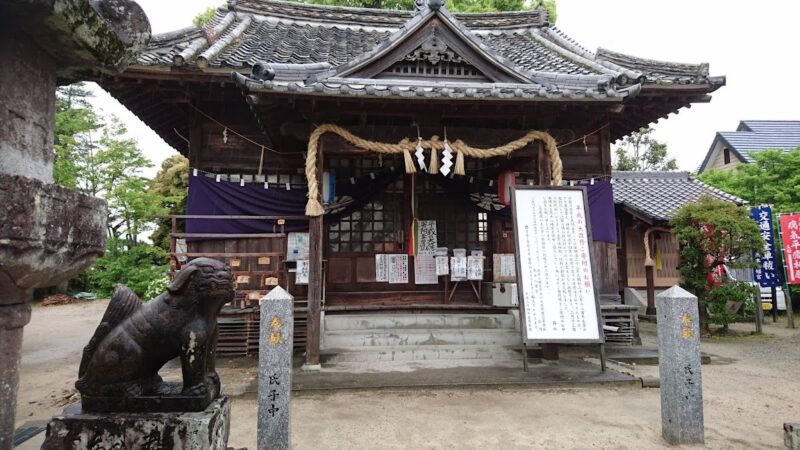
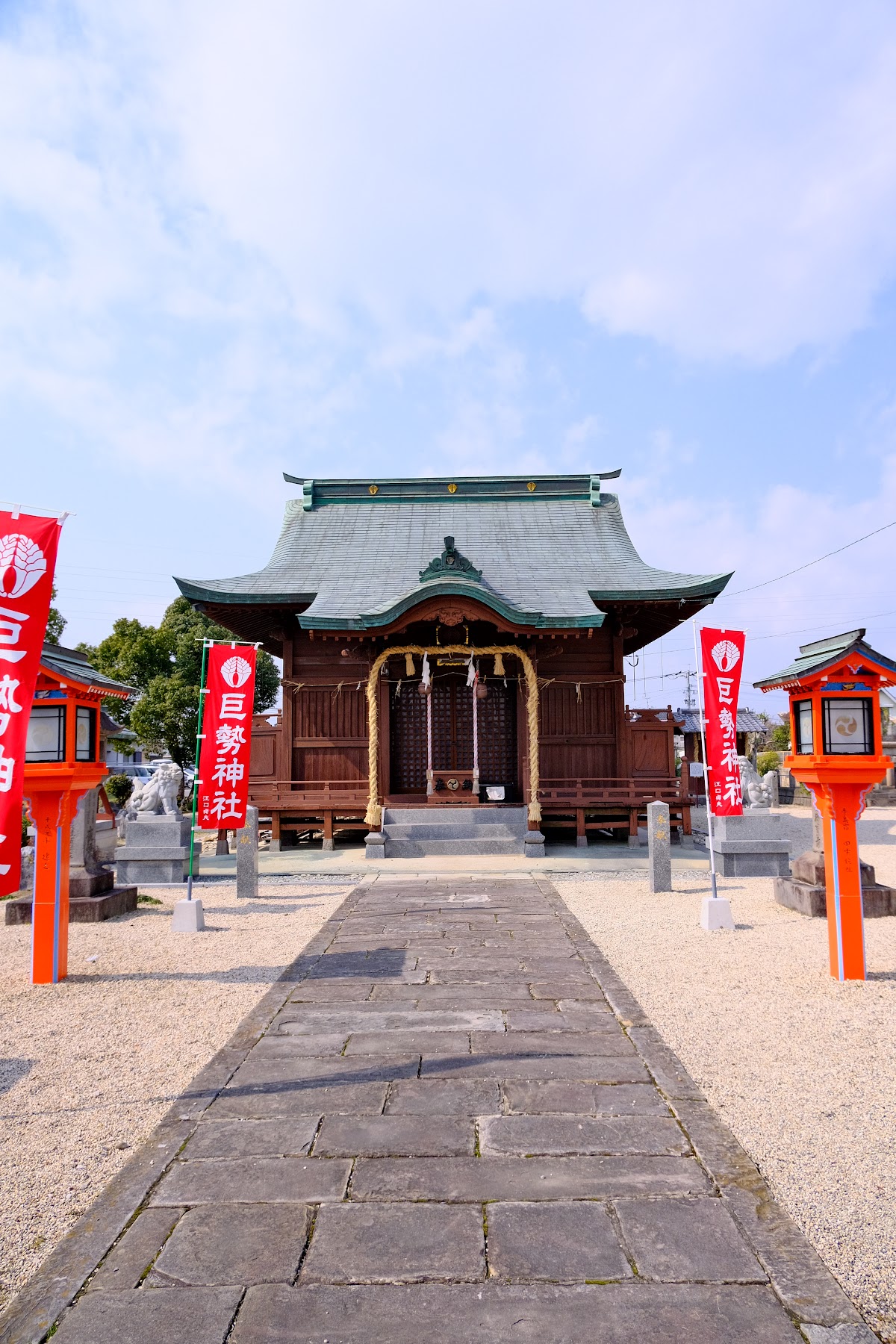
The shrine buildings of Hie Shrine have been restored and renovated by the Ryuzoji and Nabeshima clans to their current form. The wooden main hall preserves the traditional style of shrine architecture in the Saga region, creating a tranquil atmosphere.
The worship hall is a place of quiet prayer where local people visit daily. It is especially crowded with worshippers during New Year’s and the annual festival. ### Shrine within the Precincts: Inari Shrine
Within the precincts is an Inari Shrine, revered as the god of business prosperity and abundant harvests. Its distinctive vermilion torii gate gives it a different atmosphere from the main shrine.
Nature of the Sacred Grounds
As the place name Kihara suggests, this area was once surrounded by a lush forest. Even today, trees remain on the grounds, making it a valuable green space in the increasingly urbanized city of Saga. The nature within the grounds, which changes with the seasons, is one of the pleasures of visiting the shrine.
Annual Festivals and Events
Grand Festival (October 15th)
The most important festival of Hie Shrine is the Grand Festival, held annually on October 15th. Parishioners and local residents gather for the solemn Shinto rituals. It is an important event to express gratitude for a bountiful harvest and to pray for the safety of the community.
New Year’s Visit
Many worshippers visit the shrine in the new year to pray for a safe year and the well-being of their families. For local residents, it is an important place that marks the beginning of the new year.
Monthly Festival
A monthly festival is held regularly each month, offering daily gratitude and prayers.
Etiquette and Manners for Worship
Basic Worship Etiquette
- Bow before passing through the torii gate: Show respect before entering the sacred area.
- Purify yourself at the water basin: Purify your left hand, right hand, and mouth in that order.
- Walk along the edge of the path: The center is considered the path of the gods.
- Etiquette in front of the main hall: Two bows, two claps, and one bow are the basic rituals.
Meaning of Offerings
Offerings express gratitude to the gods. There are no set amounts, but it is important to offer them sincerely.
Access and Parking Information
Location
1-8-34 Kihara, Saga City, Saga Prefecture 840-0857
Access by Public Transportation
- From JR Saga Station: Approximately 15 minutes by bus, get off at the “Kihara” bus stop, then approximately 3 minutes on foot.
- Saga City Bus: Take a bus bound for Kihara.
Access by Car
- From Nagasaki Expressway, Saga Yamato IC: Approximately 20 minutes.
- From Saga City Center: Approximately 10 minutes.
Parking
There is parking space for visitors on the temple grounds. It may get crowded during festivals and other events, so it is recommended to visit with plenty of time to spare.
Nearby Tourist Attractions
Fukumanji Temple (Nagaoyama)
Fukumanji Temple, which has deep ties to Hie Shrine, is an ancient temple said to have been founded by Kobo Daishi Kukai. As a place where you can feel the history of Shinto-Buddhist syncretism, it is worth visiting in conjunction with this site.
Saga Castle Ruins and Saga Castle Honmaru History Museum
This is the site of the castle where the Nabeshima clan of the Saga Domain resided. You can learn about the history of Saga in the reconstructed Honmaru Palace. It is about a 10-minute drive from Hie Shrine.
Saga City Historical and Folk Museum
Meiji-era Western-style buildings and merchant houses are preserved here, allowing you to experience the modern history of Saga.
Hie Shrine and the Historical Background of Saga
History of the Kihara District
Kihara has long been located at the mouth of a river flowing into the Ariake Sea and was a port area called “Egami-tsu.” The fact that Kobo Daishi chose this area when traveling to Tang China indicates its importance as a port at the time.
From the medieval to the early modern period, as the Saga Plain developed, the Kihara district also developed as an agricultural area. Hie Shrine has been revered by local residents as a guardian deity that has watched over the development and growth of this region.
Protection by the Ryuzoji and Nabeshima Clans
The Ryuzoji clan, who ruled Hizen Province during the Sengoku period, dedicated themselves to the restoration of Hie Shrine. Later, the Nabeshima clan, who became the lords of the Saga Domain, also protected the shrine, contributing to the maintenance of the shrine buildings and the preservation of festivals throughout the Edo period.
The Saga Domain was known for its emphasis on education and culture, and was actively involved in the protection of shrines and temples. Hie Shrine benefited from this, allowing it to continue functioning as a spiritual pillar of the region.
Relationships with Hie Shrines Nationwide
Sanno Faith Network
Hie Shrine is part of a network of Sanno faith shrines, with Hiyoshi Taisha in Otsu City, Shiga Prefecture, as its head shrine. Numerous Hie and Hiyoshi shrines exist throughout Japan, each serving as a center of local faith.
- Hie Shrine (Akasaka), Tokyo: Revered by the Tokugawa Shogunate as the guardian shrine of Edo Castle.
- Hie Shrine, Toyama: Received protection from the Maeda family of the Kaga Domain.
- Hida Sanno-gu Hie Shrine, Gifu: The principal guardian shrine of Hida Takayama.
The Hie Shrine in Saga is unique in that, while belonging to the same lineage of faith as these shrines, it has its own origin story involving Kobo Daishi Kukai.
History of Shinto-Buddhist Syncretism
Sanno faith was originally a form of faith with strong Shinto-Buddhist syncretism. It has a history of developing in conjunction with Enryaku-ji Temple on Mount Hiei, the head temple of the Tendai sect, and its guardian deity, Hiyoshi Taisha Shrine.
The Hie Shrine in Saga also embodied the tradition of Shinto-Buddhist syncretism in its relationship with Fukuman-ji Temple. Although formally separated by the Meiji-era Shinto-Buddhist Separation Order, its historical connection remains in the memory of the region.
Voices of Worshippers and the Current State of Faith
Center of the Local Community
Hie Shrine continues to serve as the tutelary shrine for the Kihara district and surrounding areas, acting as a spiritual pillar for the local community. Many local residents gather for the annual festival and New Year’s visits, creating a place for intergenerational exchange.
A Place of Quiet Prayer
Despite the increasing urbanization of Saga City, the grounds of Hie Shrine maintain a tranquil space for prayer. It is a beloved place for many, offering a peaceful retreat from the hustle and bustle of everyday life.
Summary: Saga’s Guardian Deity with 1200 Years of History
Hie Shrine in Kihara, Saga City, is an ancient shrine with a history of over 1200 years, dating back to 804 AD (Enryaku 23), and is said to have been founded by Kobo Daishi Kukai. Based on Sanno faith, with Oyamakui-no-Mikoto as its main deity, it has attracted worshippers for various blessings, including abundant harvests, protection from evil, and family safety. Having survived destruction during wartime, and rebuilt under the protection of the Ryuzoji and Nabeshima clans, it is still revered today as the guardian deity of the region. An Inari shrine is also enshrined within the grounds, allowing for peaceful worship in a tranquil setting.
When visiting Saga, why not take a trip to this historic Hie Shrine and experience a place of faith that has been passed down for over 1200 years? The time spent quietly offering prayers while feeling the presence of Kobo Daishi Kukai will surely be a special experience.