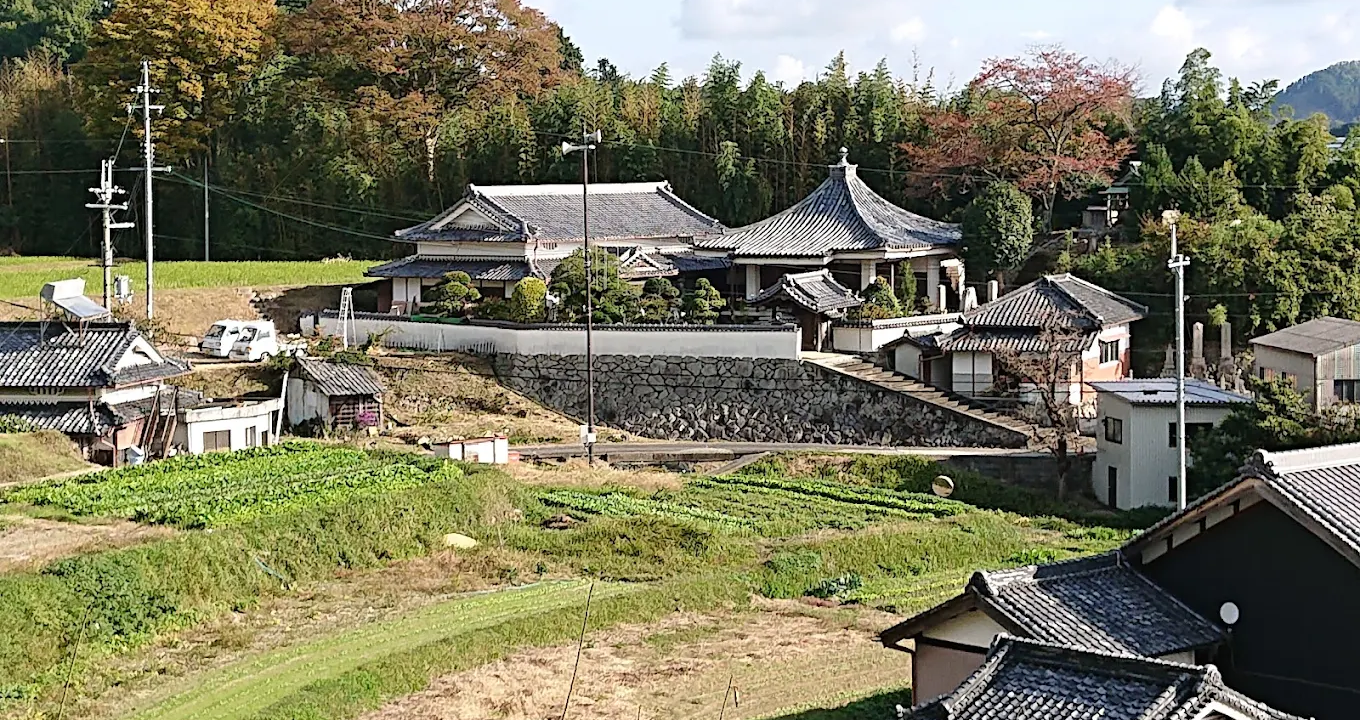
Houoji Temple (Gojo City, Nara Prefecture) Complete Guide | History, Access, and Highlights Explained in Detail
Houoji Temple, nestled quietly in Kowa-cho, Gojo City, Nara Prefecture, is a historic temple belonging to the Koyasan Shingon sect. Located on high ground in the northeastern part of the Kowa settlement, this temple had deep ties to Shugendo (mountain asceticism) in the Middle Ages and flourished as a center of local faith. This article comprehensively guides you through the history of Houoji Temple, its principal image, cultural properties, access methods, and other information useful for those considering a visit.
Basic Information about Ho-o-ji Temple
Temple Overview
Official Name: Ho-o-ji Temple
Sect: Koyasan Shingon Buddhism
Principal Image: Amida Buddha (Made during the Muromachi period)
Chief Priest: Hidenobu Aida
Location: 857 Kowa-cho, Gojo City, Nara Prefecture 637-0019
Founding Date: Details unknown (Estimated to be before the Middle Ages)
Religion: Buddhism
Ho-o-ji Temple is located in the mountainous area of Gojo City, in the southern part of Nara Prefecture. It is a valuable religious facility that still transmits the teachings of Shingon Esoteric Buddhism. It attracts the faith of local residents and is known as a temple of high historical and cultural value.
Temple Name Spelling and Pronunciation
Ho-o-ji Temple is pronounced “Hō-o-ji”. Since there are temples with the same name throughout Japan, it is important to specify the location when referring to Ho-o-ji Temple in Gojo City, Nara Prefecture. There are several temples named Houoji throughout Japan, including the Shinshu Otani-ha Houoji in Sapporo, Hokkaido, the Tendai-shu Houoji in Hyogo Prefecture, and the Soto-shu Houoji in Oshu, Iwate Prefecture.
History and Origins of Houoji Temple
Connection to Shugendo in the Middle Ages
A noteworthy aspect of Houoji Temple’s history is its deep connection to Shugendo in the Middle Ages. According to the “Shosan Engi” (Chronicles of Various Mountains), Houoji Temple flourished as a temple associated with Shugendo. Shugendo is a uniquely Japanese religious form that fuses mountain worship with Buddhism, particularly Esoteric Buddhism, and mountain temples played an important role as places where mountain ascetics and Shugendo practitioners underwent rigorous training.
Gojo City is close to sacred sites of Shugendo such as Mount Yoshino and Mount Omine, and has long been a region with a high volume of Shugendo practitioners. The fact that Houoji Temple is located in the northeastern part of the Kowa settlement, at a high altitude, also suggests a connection to Shugendo. Its location in a mountainous area makes it an ideal place for ascetic training away from the secular world, and it is highly likely that it served as a base for Shugendo practitioners.
Affiliation with the Koyasan Shingon Sect
Currently, Hōōji Temple belongs to the Koyasan Shingon sect. The Koyasan Shingon sect is a branch of Shingon Esoteric Buddhism founded by Kūkai, and its head temple is Kongōbu-ji Temple on Mount Koya in Wakayama Prefecture. The area from southern Nara Prefecture to northern Wakayama Prefecture was strongly influenced by Koyasan, and many Shingon temples are scattered throughout the region.
The exact time when Hōōji Temple became affiliated with the Koyasan Shingon sect is unclear, but it is possible that it evolved from a Shugendō temple in the medieval period to a Shingon temple in the early modern period. Shugendō and Shingon Esoteric Buddhism have a high degree of affinity, and many Shugendō temples were under the influence of the Shingon sect.
Center of Faith in the Region
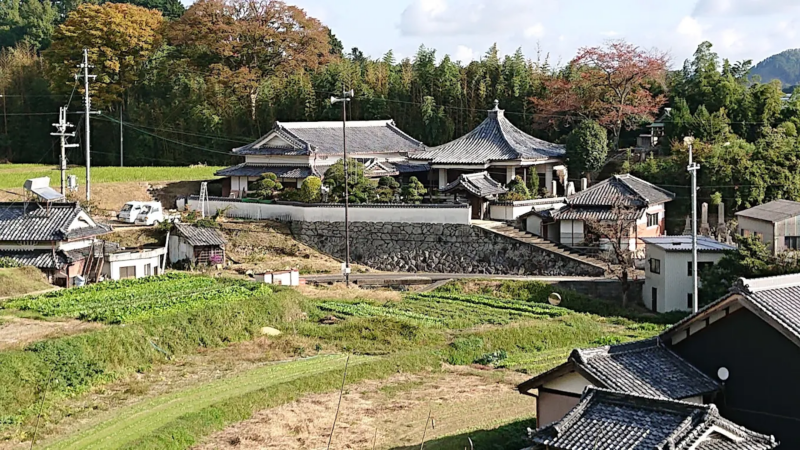
Kowa-cho is a settlement located in the mountainous area of Gojo City, where life has historically revolved around agriculture. Hōōji Temple has served as the center of faith for these local residents, closely connected to the community through funerals, memorial services, and annual events.
From its elevated location, the temple overlooks the Kowa settlement, suggesting it also served as the guardian temple of the community. It has a history of watching over people’s lives for centuries as a spiritual pillar of the region.
Principal Image and Cultural Assets
Amida Buddha Statue (Muromachi Period)
The principal image of Hōōji Temple is Amida Buddha. This statue is believed to have been created during the Muromachi period (1336-1573), making it a valuable cultural asset with a history of over 500 years.
Amida Buddha is widely worshipped as the principal deity of the Western Pure Land, and as the Buddha who leads those who chant the Nembutsu to rebirth in paradise. In Shingon Buddhist temples, Amida worship is highly valued, and a form of faith that fuses the teachings of Esoteric Buddhism with Pure Land Buddhism can be observed.
The Muromachi period was a crucial period in Japanese Buddhist art, and Buddhist statues from this era exhibit mature characteristics both technically and stylistically. While detailed information regarding the style and size of the Amida Buddha statue at Hōōji Temple is limited, it is an important legacy that tells the story of the region’s religious history as a work by a local Buddhist sculptor from the Muromachi period.
Other Temple Treasures
Besides the main image, Hōōji Temple may possess other temple treasures and documents accumulated over its long history. Given its history as a Shugendō temple in the Middle Ages, it is possible that Shugendō-related ritual implements and documents, or Shingon Esoteric Buddhism ritual implements, have been passed down through generations.
However, since this detailed information is not generally available, it is recommended to inquire directly with the temple upon your visit.
Access and Transportation Information
Location Details
Address: 857 Kowacho, Gojo City, Nara Prefecture 637-0019
Hoo-ji Temple is located on high ground in the northeastern part of the Kowacho settlement, northeast of the center of Gojo City. Due to its mountainous location, prior preparation and planning are necessary for a visit.
Nearest Station and Access Method
Nearest Station: JR Wakayama Line “Kita-Uchi Station”
Hoo-ji Temple is approximately 3-4 km from Kita-Uchi Station, taking about 40 minutes to 1 hour on foot. Taking a taxi from the station or accessing by private car is more practical.
Access by Car
Access from Major Roads:
- Approximately 15 minutes from the Gojo-Kita Interchange on the Keina-Wa Expressway
- Accessible via Prefectural Roads from National Route 24
Gojo City is located in the southwestern part of Nara Prefecture. It can be accessed from the Osaka area via National Route 24 or the Keina-Wa Expressway. When using a car navigation system, please enter the address “857 Kowa-cho, Gojo City, Nara Prefecture”.
Please avoid visiting in large vehicles and drive with caution, as you may be driving on narrow mountain roads.
Notes on Using Public Transportation
Access by public transportation alone is difficult. While there may be bus routes from Kita-Uchi Station, the number of services is likely limited, so it is recommended to check the Gojo City community bus and regular bus timetables in advance.
If using a taxi, it is recommended to contact taxi companies around Kita-Uchi Station or Gojo Station in advance for a smoother experience.
Visiting and Worship Information
Visiting Hours and Admission Fees
Official information regarding visiting hours and admission fees for Hōōji Temple is limited. Similar to typical local temples, access to the grounds is likely limited to daylight hours.
If you wish to view the interior of the main hall or the principal image of worship, we strongly recommend contacting the temple in advance to confirm. Since visits may not be possible due to the absence of the head priest or religious services, prior contact is essential, especially for visitors traveling from afar.
Precautions for Visiting the Temple
- Please visit quietly and respect the lives of local residents.
- Please obtain permission before taking photographs on the temple grounds.
- Please take all your trash with you and cooperate in environmental conservation.
- Please avoid parking on the street as parking space may be limited.
- As it is a mountainous area, insect repellent and warm clothing may be necessary depending on the season.
Religious Events and Annual Events
As a Shingon Buddhist temple, Hōōji Temple may hold the following annual events:
- New Year’s Day visit (first three days of the year)
- Spring and Autumn equinox memorial services
- Obon memorial service
- Memorial service on the anniversary of Kōbō Daishi’s death (March 21st in the old calendar)
For specific dates of these events and whether public participation is permitted, please contact the temple directly.
Nearby Tourist Attractions and Points of Interest
History and Culture of Gojō City
Gojō City is located in the southwestern part of Nara Prefecture and has flourished as a transportation hub since ancient times. This town developed along the Yoshino River (Kinokawa River), and during the Edo period, it was the administrative center of the northern part of the Kii Peninsula, with the Gojo Magistrate’s Office located there.
Main Tourist Spots:
- Gojo Shinmachi Street: A designated Important Preservation District for Groups of Traditional Buildings, preserving the townscape of the Edo period.
- Eizanji Temple: An ancient temple with a national treasure, the Octagonal Hall.
- Kano Plum Grove: One of the most famous plum blossom viewing spots in the Kansai region.
- Yoshino River: Known for its clear waters, it’s a popular spot for ayu (sweetfish) fishing.
Access to Mount Yoshino, a Sacred Site of Shugendo
To the northeast of Gojo City lies Mount Yoshino, part of the World Heritage Site “Sacred Sites and Pilgrimage Routes in the Kii Mountain Range.” Known for its cherry blossoms, Mount Yoshino also has a history as a fundamental training ground for Shugendo, with important temples, including Kinpusenji Temple, scattered throughout the area.
Considering that Hōōji Temple had ties to Shugendō (mountain asceticism) in the Middle Ages, its historical connection to Mount Yoshino is also an interesting point.
Sightseeing in the Mount Kōya Area
South of Gojō City lies Mount Kōya, the head temple of the Kōyasan Shingon sect. It’s accessible by car in about 1.5 to 2 hours, allowing you to visit the central sites of Shingon Esoteric Buddhism, such as Okunoin, Kongōbu-ji, and Danjō Garan.
Visiting Mount Kōya after visiting Hōōji Temple will allow you to gain a deeper understanding of Shingon Buddhism.
About Memorial Services and Ceremonies at Hōōji Temple
Consultation Regarding Funerals and Memorial Services
Hōōji Temple conducts funerals and memorial services for its parishioners and local residents. The head priest, Reverend Hidenobu Aida, conducts respectful services in accordance with Shingon Buddhist customs.
If you wish to arrange a funeral or memorial service, please contact the temple directly to discuss the date and details. Shingon Buddhist funerals have unique rituals based on the teachings of Esoteric Buddhism, and are solemn ceremonies praying for the deceased’s enlightenment and the peace of mind of the bereaved family.
Perpetual Memorial Services and Cemeteries
It is common for temples in rural areas to manage cemeteries for their parishioners. While Hōōji Temple may also have a cemetery, you will need to inquire directly with the temple regarding new plot acceptance and the availability of perpetual memorial services.
In recent years, due to the declining birthrate, aging population, and population outflow to urban areas, managing cemeteries in rural areas has become a challenge. Those considering closing a grave or relocating remains are advised to consult with a temple first.
Shingon Buddhist Teachings and Beliefs
What is the Koyasan Shingon School?
The Koyasan Shingon School is a Buddhist sect based on the teachings of Esoteric Buddhism brought back from China by Kūkai (774-835), Kōbō Daishi. The Shingon sect centers on the teaching of “instantaneous attainment of Buddhahood” (becoming a Buddha in this very body) and emphasizes esoteric Buddhist practices such as mandalas, goma (fire ritual), and mantras.
The head temple, Kongobu-ji on Mount Koya, is the fundamental training ground of Shingon Esoteric Buddhism, founded by Kukai in 816, and boasts a history of over 1200 years. With approximately 3,600 branch temples nationwide, it is a highly influential sect within Japanese Buddhism.
Amida Worship and Shingon Buddhism
The fact that the principal image of Ho-o-ji Temple is Amida Buddha demonstrates the importance of Pure Land Buddhism in the Shingon sect. In the Shingon sect, the teachings of Esoteric Buddhism and Pure Land thought are fused, resulting in a unique view of the Pure Land called “Mitsugon Jodo” (Mitsugon Pure Land).
Amida Buddha is the principal deity of the Western Pure Land, and is the Buddha who saves those who chant the Nembutsu (invocation of Amida Buddha). In Shingon Buddhism, Amida Buddha is considered an incarnation of Dainichi Nyorai, and a faith incorporating esoteric Buddhist interpretations is developed.
Relationship between Shugendo and Shingon Esoteric Buddhism
The fact that Hōōji Temple flourished as a Shugendō temple in the Middle Ages speaks to the deep relationship between Shingon Esoteric Buddhism and Shugendō. Shugendō is a uniquely Japanese religion that combines mountain worship, Shinto, and Buddhism (especially Esoteric Buddhism), with mountain ascetics and Shugendō practitioners undergoing rigorous training in the mountains.
Kūkai, the founder of Shingon Buddhism, himself emphasized mountain training and established his main training ground in the mountainous region of Kōyasan. Therefore, Shingon Buddhism and Shugendō have a historically close relationship, and many Shugendō temples belong to Shingon Buddhism.
Temple Culture and Historical Background of Gojō City
Buddhist History of Gojō City
Gojō City is a region where Buddhist culture has flourished since ancient times, and many temples are scattered throughout the area. The city boasts numerous historical temples, including Eizanji Temple (National Treasure Octagonal Hall), said to have been founded during the Nara period.
Due to its geographical location in the Yoshino River basin, it lies on a transportation route connecting Yamato (Nara Basin) and Kii (Wakayama), functioning as a cultural exchange point. Buddhist culture also developed within this exchange, and temples of diverse sects have coexisted.
The Role of Temples in Mountainous Areas
Temples in mountainous areas, such as Hōōji Temple, have played a role far beyond mere religious institutions. As centers of local communities, they have undertaken a wide range of social functions, including education, culture, and welfare.
Especially before the Edo period, temples served as educational institutions (terakoya), providing literacy and basic education to local residents. Furthermore, temples played a role in providing medical care and welfare, assisting the poor in the community.
Even today, local temples continue to play a vital role as spiritual pillars of their communities and as inheritors of regional culture.
Etiquette and Manners When Visiting a Temple
Etiquette for Visiting a Shingon Buddhist Temple
Here are the basic etiquette rules for visiting a Shingon Buddhist temple:
- Bow at the Temple Gate: Before entering the temple grounds, bow at the temple gate.
- Purification at the Water Basin: If there is a water basin, purify your hands and mouth.
- Worship at the Main Hall:
- Bow in front of the main hall.
- Quietly place your offering in the offering box.
- Join your hands and chant “Namu Daishi Henjo Kongo” or “Namu Amida Butsu.”
- Bow deeply.
- Bow Upon Exit: When leaving the temple grounds, turn back at the temple gate and bow.
Clothing and Belongings
When visiting a temple, the following considerations are desirable:
- Avoid overly revealing clothing.
- Wear comfortable shoes as the temple is located in a mountainous area.
- Take appropriate measures for the season (cold or hot).
- Insect repellent spray (summer)
- Drinking water (there may not be a vending machine nearby)
Photography Etiquette
Please always obtain permission before taking photographs of the temple grounds and buildings. Photography of the interior of the main hall and Buddhist statues is often prohibited for religious reasons. Even if permission is granted, please be considerate of other visitors.
The Significance of Visiting Hōōji Temple
Dialogue with History
Visiting Hōōji Temple offers an opportunity to engage with the history of Japanese religion, particularly Shugendō and Shingon Esoteric Buddhism, which have continued since the Middle Ages. In the tranquil atmosphere unique to a rural mountain temple, different from large urban temples, you can feel the weight of history.
Understanding Local Culture
As the central temple of the mountain village of Kowa-machi, Hōōji Temple has been closely intertwined with the lives of the local people. By visiting the temple, you can catch a glimpse of the traditional relationship between local community and religion that remains even in today’s increasingly urbanized society.
Seeking Peace of Mind
From Hōōji Temple, situated on high ground, a panoramic view overlooking the Kowa settlement unfolds. Away from the hustle and bustle of everyday life, the time spent calming the mind in this tranquil mountain temple will be a precious experience for modern people.
Holding hands in prayer before the Amida Buddha, the principal deity of Shingon Esoteric Buddhism, and taking time to reflect on oneself brings a sense of spiritual fulfillment.
Summary
Hōōji Temple, located in Kowa-cho, Gojō City, Nara Prefecture, is a historic temple belonging to the Koyasan Shingon sect. It flourished as a Shugendō temple in the Middle Ages, and today continues to serve as a center of local faith, supporting its parishioners and residents.
The temple’s principal deity is an Amida Buddha statue created during the Muromachi period, and the head priest, Reverend Hidenobu Aida, maintains the temple. Due to its location in a mountainous area, access by private car or taxi is recommended, as public transportation is difficult.
Those considering a visit are advised to contact the temple in advance to confirm visiting hours and availability. Why not spend some time finding peace of mind in a quiet mountain temple while experiencing the rich history and culture of Gojo City?
Hōōji Temple is not a tourist temple, but a place of faith deeply rooted in the community. When visiting, please be mindful of respecting the lives of the local residents and the religious significance of the temple, and observe proper etiquette during your visit. It will be a valuable opportunity to experience the teachings of Shingon Esoteric Buddhism and the profound depths of Japanese religious culture.