Complete Guide to Taiso Shrine (Aka, Tagawa District, Fukuoka Prefecture) | History, Deities, and Shrine Highlights Explained in Detail
Taiso Shrine, located in Aka, Aka Village, Tagawa District, Fukuoka Prefecture, is a historic shrine situated in the mountainous region of the Chikuhō area. While there is another Taiso Shrine in the Uchida district of Aka Village, this article focuses on the one located in Aka. We will thoroughly explain the charm of this shrine, which has long been revered as the local tutelary deity, from its shrine grounds and history to access methods.
Basic Information about Taiso Shrine
Shrine Name and Location
Shrine Name: Taiso Shrine
Location: Aka, Aka Village, Tagawa District, Fukuoka Prefecture
Former Shrine Rank: Village Shrine
Jurisdiction: Chikuhō Branch, Fukuoka Prefectural Shrine Association
Aka Village is a small village with a population of approximately 3,000 located in the Chikuhō region of Fukuoka Prefecture. Taiso Shrine is cherished by the local residents as the guardian deity of the Aka district.
Deities and History
The deities enshrined at Taiso Shrine are recorded in the local tutelary shrine register. Like many shrines in the Chikuhō region, it has long functioned as a place to pray for abundant harvests, family safety, and the well-being of parishioners.
While there are no clear records of the shrine’s founding date, it is presumed to have a considerable history based on local traditions and stone structures within the shrine grounds. Many shrines in the Chikuhō region of Fukuoka Prefecture existed before the development of coal mines, and Ōso Shrine is thought to be one of them.
Highlights of the Shrine Grounds
Torii Gate and Approach
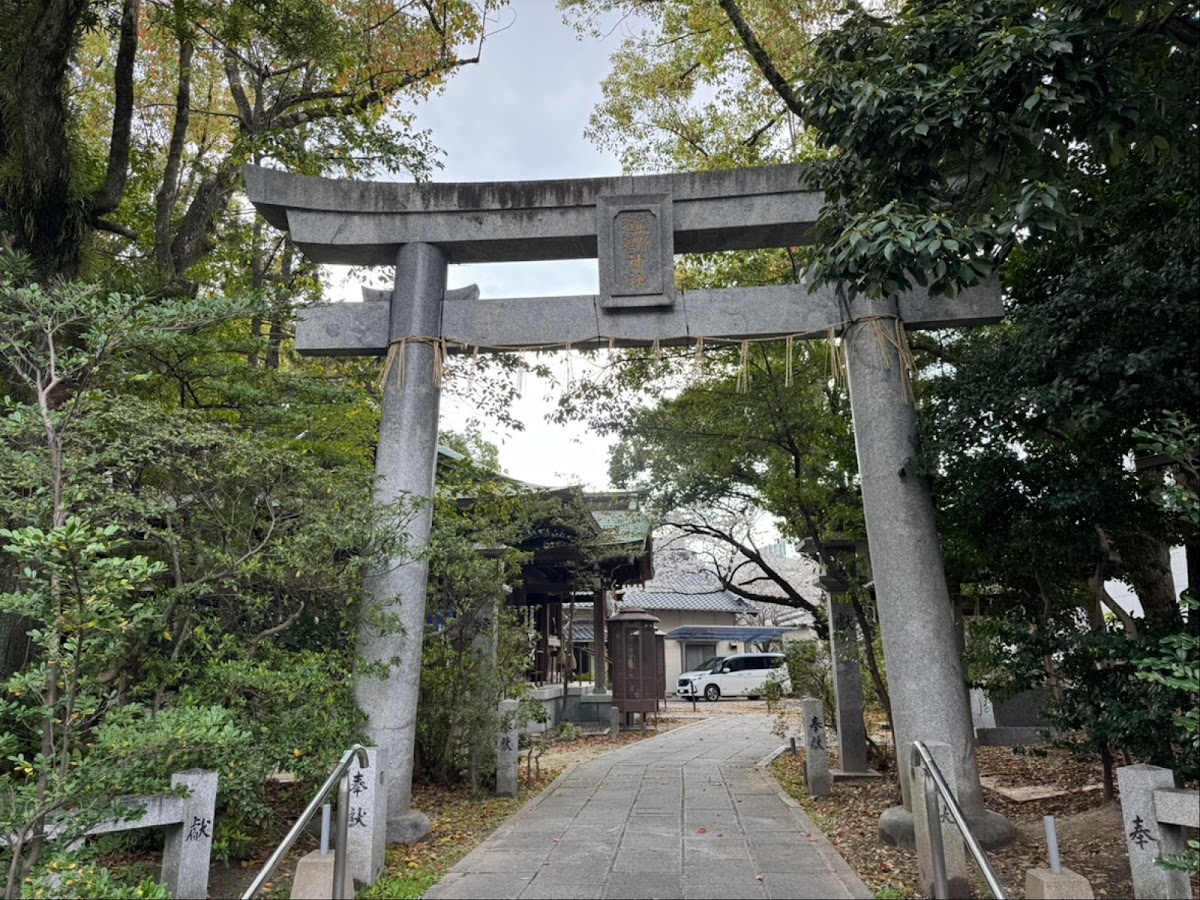
Upon entering the grounds of Ōso Shrine, visitors are greeted by a magnificent torii gate. Beyond the gate lies an approach path, lined with lush, natural trees. The path is well-maintained, allowing visitors to enjoy the changing seasons as they walk.
A water basin is located along the path, allowing visitors to purify themselves before praying. This stone basin also shows its age, conveying the weight of history and its long history of watching over worshippers in this place.
Komainu (Guardian Dogs) – A-form and Un-form
A pair of guardian dogs (komainu) are positioned within the shrine grounds. The A-form dog, with its mouth open, sits on the right, while the Un-form dog, with its mouth closed, sits on the left, guarding the sacred area. These guardian lion-dogs exhibit a style unique to the Chikuhō region and are believed to have been crafted by local stonemasons. Their weathering indicates considerable age, making them valuable cultural assets that tell the story of the region’s history.
Worship Hall and Main Shrine
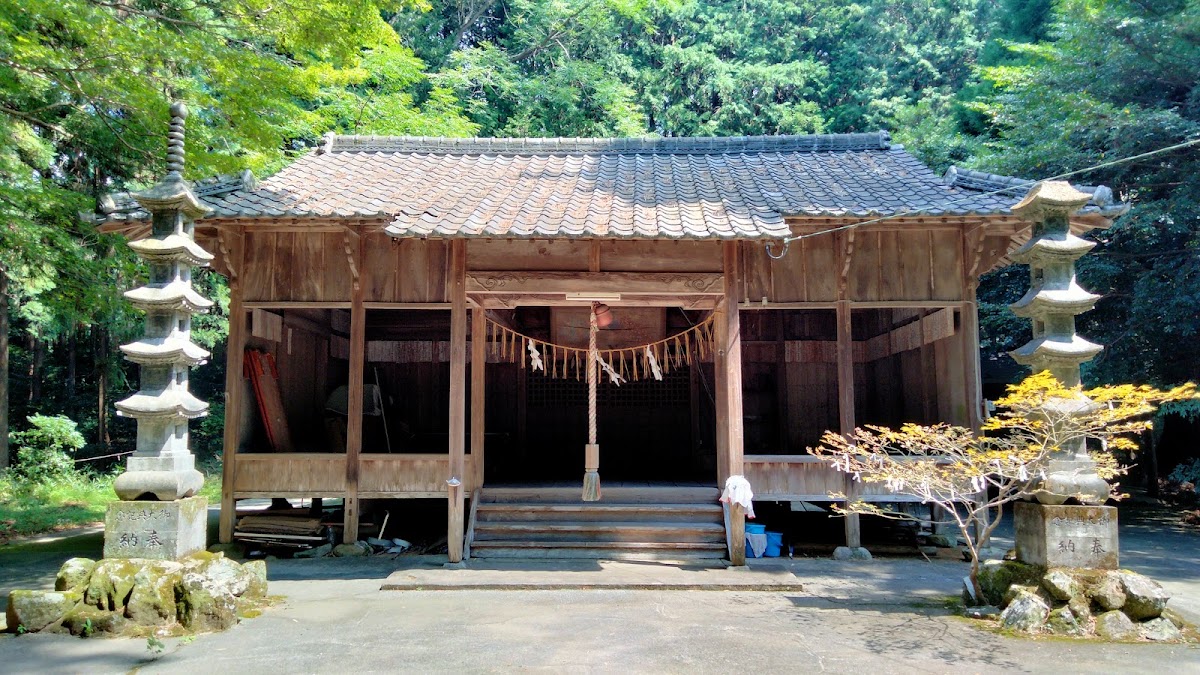
As you proceed along the approach to the shrine, the worship hall comes into view. The worship hall is a traditional wooden structure, characterized by its sturdy and robust construction. Its design is well-suited to the climatic conditions of the mountainous Chikuhō region, conveying a sense of robustness that has withstood years of wind and snow.
Behind the worship hall sits the main shrine. The main shrine retains an even older style than the worship hall, preserving the tradition of shrine architecture. Looking at the entire shrine complex, a beautiful landscape unfolds, harmonizing with the surrounding nature.
Subsidiary Shrines and Auxiliary Shrines
In addition to the main shrine, several subsidiary shrines are enshrined within the grounds of Ōsojinja Shrine.
Yamagami-gu Shrine: This shrine is dedicated to the mountain god and has long been revered by people engaged in forestry and mountain work. The Chikuhō region is rich in forests, and mountain god worship is deeply rooted in this area.
Hachiman-gu Shrine: This shrine is dedicated to Hachiman, the god of military fortune and victory in competitions. It demonstrates the deep roots of Hachiman worship, which is widely practiced throughout Japan.
Hiyoke-gu Shrine: This shrine is dedicated to the god of fire prevention. In the past, when wooden houses were prevalent, fire was one of the most feared disasters.
Suga-gu Shrine: This shrine is believed to be dedicated to Susanoo-no-Mikoto and is revered for protection against misfortune and disease.
These subsidiary shrines within the grounds tell a story of how they have responded to the diverse religious needs of the local residents.
The Charm of the Inner Sanctuary
Torii Gate at the Entrance to the Inner Sanctuary
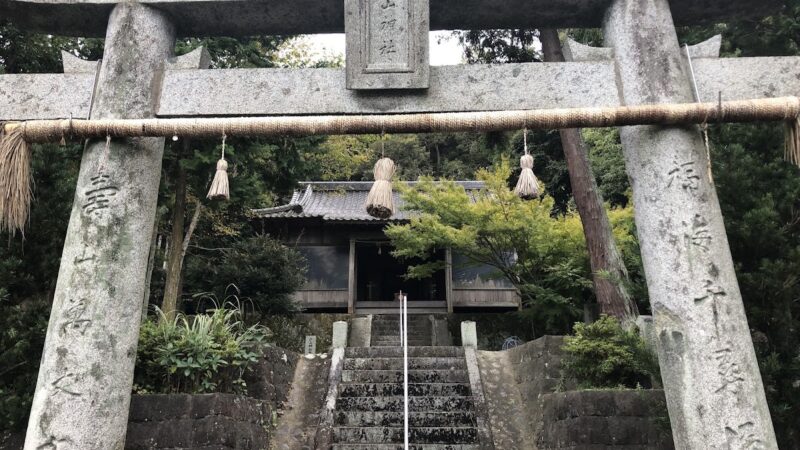
One of the most distinctive features of Ooso Shrine is the existence of the inner sanctuary, which extends beyond the main shrine building. A dedicated torii gate stands at the entrance to the inner sanctuary, signifying that this is a special sacred area.
The Path to the Inner Sanctuary and the Path to the Mountaintop
The path to the inner sanctuary leads from behind the main shrine building up to the mountaintop. The path utilizes the natural terrain, with rocks and trees strategically placed along the way, strongly retaining the atmosphere of mountain worship.
As you ascend the path, you can feel the surrounding tranquility and the breath of nature. The chirping of birds, the rustling of trees in the wind, the moss and wildflowers underfoot—it’s a precious space where you can experience nature with all your senses.
The Sacred Sanctuary of the Inner Sanctuary
Upon reaching the mountaintop, you’ll find the shrine of the inner sanctuary. This is considered the most sacred place within Ooso Shrine and has been used as a place of special prayer since ancient times.
The view from the inner sanctuary is magnificent, offering a panoramic view of the mountains and rural landscape of Akamura. Looking at this scenery, and imagining that people of ancient times offered similar prayers, one can feel a connection that transcends time and space.
History of Akamura and the Ooso Shrine
Origin of Akamura
There are several theories regarding the origin of the name Akamura, but one theory suggests it derives from the color of the soil. The soil in this region is rich in iron and has a reddish hue, leading to the name “Aka” (red).
Another theory suggests it’s related to ancient iron production. The Chikuhō region has long been blessed with mineral resources, and it’s possible that groups possessing iron-making technology lived here.
Position in the Chikuhō Region of Fukuoka Prefecture
The Chikuhō region is known as a region that once prospered from coal mining, but even before that, life centered on agriculture and forestry was practiced here. The Ooso Shrine existed in this area even before the development of coal mining, and has functioned as a spiritual pillar of the region.
As recorded in the Ubusunagami Register, the Ooso Shrine has served as the tutelary deity (ubusunagami) of the Aka district of Akamura, acting as a guardian deity for those born in this area. The worship of tutelary deities is a fundamental form of Shinto in Japan, playing a crucial role in strengthening community bonds.
Ooso Shrine and the Legend of Empress Jingu
Akamura has a legend related to Empress Jingu. Legend says that Empress Jingu rested in this area on her way to Nakatsu County, and a stone where the Empress is said to have rested remains on the grounds of the Ooso Shrine (Uchida district) in the Yamaura district.
Such legends suggest that Akamura was a transportation hub since ancient times. The legend of Empress Jingu remains in various parts of Kyushu, serving as valuable historical material that tells of the importance of regions and cultural connections in ancient times.
It is believed that the Ooso Shrine in the Aka district also carries on this history of ancient faith.
Relationship with Other Ooso Shrines in Akamura
There are several Ooso Shrines in Akamura. In particular, the Ooso Shrines in the Uchida district (Uchida 3538 and Uchida 296) each have their own unique history and characteristics.
One of the Ooso Shrines in the Uchida district has the alternative name “Myoken-gu,” and this name is inscribed on the shrine’s plaque. Myoken worship is a deification of the North Star and the Big Dipper, and has been revered as a guardian deity of safe voyages and directions.
On the other hand, the Ooso Shrine in the Akamura district has stronger elements of mountain worship, symbolized by the existence of an inner sanctuary. The fact that shrines bearing the same name, “Ooso Shrine,” have different forms of worship and historical backgrounds in each district is an interesting example of the diversity of Japanese shrine worship.
Notes and Manners for Visiting
Etiquette for Visiting
When visiting an Ooso Shrine, please observe the following basic etiquette.
- Bow before passing through the torii gate: This shows respect for entering the sacred area.
- Walk along the edge of the path: The center is considered the path of the gods.
- Purify yourself at the water basin: Purify your left hand, right hand, and mouth in that order.
- Worship at the main hall: Two bows, two claps, and one bow is the basic ritual.
- Don’t forget the subsidiary shrines: Pay your respects at each of the subsidiary shrines.
- Visit the inner sanctuary: Those confident in their physical strength can go to the inner sanctuary at the top of the mountain.
Points to note when visiting
- Clothing: Since you will be walking on mountain paths, comfortable clothing and walking shoes are recommended.
- Season: In summer, take precautions against insects; in winter, take precautions against the cold.
- Time: Allow ample time to descend the mountain before sunset.
- Environmental protection: Always take your trash with you and cherish nature.
- Photography: Photography is restricted in some areas, such as inside the main shrine building.
Access Information and Map
Access by Car
Access to Ooso Shrine is most convenient by car.
From Fukuoka:
- Approximately 40 minutes from the Kyushu Expressway “Kokura Minami IC” via National Route 322
- From National Route 322, turn onto Prefectural Road 418 and head towards Akamura
From Kitakyushu:
- Approximately 35 minutes from the Higashi-Kyushu Expressway “Yukuhashi IC” via National Route 496 and Prefectural Road 52
Parking: There is parking space for visitors around the shrine grounds (limited number of spaces)
Access by Public Transportation
Visiting by public transportation is difficult due to limited service; prior confirmation is necessary.
Nearest Station: JR Hitahikosan Line “Uchida Station”
Distance from Station: Approximately 3-4km (approximately 40-50 minutes on foot, or by taxi)
There are also local buses, but they are infrequent, so checking the timetable is essential.
Nearby Tourist Attractions
Akamura has other attractions besides Ooso Shrine.
- Komyo Hachiman Shrine: Another historical shrine within Akamura
- Wagashika Hachiman Shrine: A Hachiman shrine located in the Wagashika area
- Nature of Akamura: A landscape woven from beautiful mountains and clear streams
- Akamura Specialty Products: Local agricultural products and processed goods
The Akamura Town Hall (1188 Uchida, Akamura, Tagawa-gun) also provides tourist information, so it’s a good idea to inquire before visiting.
Annual Events and Festivals
Ooso Shrine holds various Shinto rituals and festivals throughout the year.
Main Annual Events
Spring Grand Festival: A festival is held to pray for a bountiful harvest as spring arrives. It is an important event for local farmers.
Summer Festival: A festival is held to pray for protection against summer diseases and for the safety of families.
Autumn Grand Festival: One of the most important festivals, expressing gratitude for the harvest. Local residents gather, and sometimes portable shrines and offerings are made.
Winter Festival: A festival is held to pray for good health and protection from illness in the new year.
The detailed dates of these festivals may vary from year to year, so it is recommended that those wishing to participate check in advance.
Cultural Properties and Stone Structures of Ooso Shrine
Stone Five-Storied Pagoda, etc.
Several historically valuable stone structures exist within the shrine grounds. A stone five-storied pagoda remains next to the main hall of the Ooso Shrine in the Uchida district, and similar cultural properties may exist at the Ooso Shrine in the Aka district. These stone structures are valuable historical documents that demonstrate the depth of faith and the economic power of the region in the past. While some details are unclear due to weathering, each bears the wishes of its donors and reflects the historical context.
Votive Tablets and Offerings
Inside the main hall, votive tablets and offerings donated by worshippers are displayed. These not only reflect the wishes of modern worshippers but also provide clues to the forms of faith of people in the past.
Older votive tablets depict the lifestyles and wishes of the past, making them valuable resources from an ethnological perspective.
Giant Trees and the Natural Environment of the Shrine Grounds
Sacred Trees and Giant Trees
Several giant trees, estimated to be several hundred years old, exist within the grounds of the Oozo Shrine. These giant trees tell the story of the shrine’s long history and further enhance the solemnity of the sacred area.
The giant trees along the approach to the shrine, in particular, overwhelm worshippers with their thickness and height. Their trunks have circumferences of several meters, and when you look up, their branches spread out as if piercing the sky. These trees are not merely plants; they are living witnesses that have watched over the history of the shrine, and they are a source of spiritual support for the local people.
Nature in Every Season
The grounds of Ooso Shrine show different faces in each of the four seasons.
Spring: The fresh greenery is beautiful, and the entire grounds are filled with vitality.
Summer: Enveloped in deep green, the shade of the trees provides coolness.
Autumn: The autumn leaves color the grounds, making it arguably the most beautiful season.
Winter: The snow-covered grounds are enveloped in silence, enhancing the sacred atmosphere.
No matter what season you visit, you can feel the charm of the shrine, which is one with nature.
Local Community and Ooso Shrine
Parishioner Organization and Maintenance
Ooso Shrine is maintained by the local parishioner organization. Even amidst depopulation, local residents continue their efforts to protect the shrine.
Many tasks, such as cleaning the grounds, maintaining the approach to the shrine, and preparing for festivals, are carried out by the parishioners. These activities not only maintain the shrine but also play a crucial role in strengthening the bonds of the local community.
Local Faith and Life
The Ooso Shrine, as the tutelary shrine of the Aka district of Aka Village, is deeply intertwined with the lives of the local residents. Visiting the shrine at various milestones in life—such as a baby’s first shrine visit, an exorcism upon reaching adulthood—is a tradition in this region.
Although there is a trend of population migration to urban areas today, those who have left their hometown still cherish the tradition of returning home for New Year’s and Obon to visit the Ooso Shrine. The shrine continues to play a vital role as the core of the region’s identity.
Summary
The Ooso Shrine, located in Aka Village, Tagawa District, Fukuoka Prefecture, is a historic shrine situated in the mountainous region of the Chikuhō area. The magnificent torii gate and approach, the grounds guarded by the A-shaped and Un-shaped guardian lion-dogs, and the solemn space created by the worship hall and main sanctuary deeply impress visitors.
Within the shrine grounds are several smaller shrines, including Yamagami-gu Shrine, Hachiman-gu Shrine, Hiyoke-gu Shrine, and Suga-gu Shrine, accommodating the diverse beliefs of the region. Furthermore, the inner sanctuary beyond the main hall is a precious sacred area that strongly preserves the traditions of mountain worship.
This region boasts a rich history and traditions, including the origins of Akamura village and the legend of Empress Jingu. Ooso Shrine has been carefully preserved to this day as a witness to this history and a spiritual pillar of the local community.
If you have the opportunity to visit the Chikuhō region of Fukuoka Prefecture, be sure to visit Ooso Shrine. This shrine, listed in the local tutelary shrine register, is a place where you can experience the beauty of traditional Japanese beliefs and regional culture. From the giant trees and stone structures within the grounds to the inner sanctuary on the mountaintop, there are countless sights to see.
Spending time in this quiet mountain shrine, calming your mind and offering prayers like the people of ancient times, will surely remind you of important things that are often forgotten in modern society.