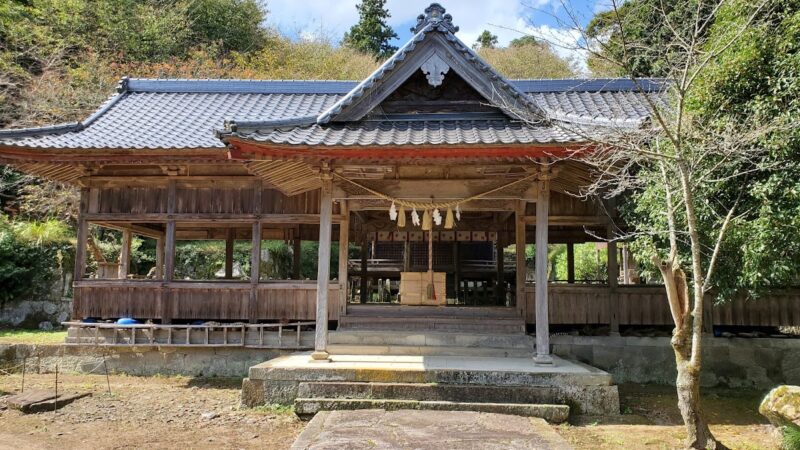
Wakamiya Hachiman Shrine (Ota Nagamatsu, Kitsuki City, Oita Prefecture) | A History Rooted in the Community and the Tradition of Bon Odori Dance
Wakamiya Hachiman Shrine, located in the Ota Nagamatsu district of Kitsuki City, Oita Prefecture, is a shrine that has long been cherished as the center of faith for the local residents. This article provides a detailed explanation of the history of Wakamiya Hachiman Shrine in the Nagamatsu district, its annual events rooted in the community, transportation access, and the characteristics of the local community.
Basic Information on Wakamiya Hachiman Shrine
Location and Basic Data
Wakamiya Hachiman Shrine is a shrine located in Ota Nagamatsu, Kitsuki City, Oita Prefecture, and is cherished by the local residents as the spiritual pillar of the Nagamatsu district. The Nagamatsu district belongs to the Ota area of Kitsuki City, and its postal code is 879-0903. This area consists of small hamlets such as Kishina, Gonbo, Kamizono, Shimomura, and Nakamura, and is a rural area blessed with a rich natural environment.
The Nagamatsu district, while located relatively close to the Kitsuki city center, is known for its strong, traditional community ties. Wakamiya Hachiman Shrine is a central presence in this area, deeply intertwined with the lives of its residents.
Relationship with Wakamiya Hachiman Shrine in Kitsuki City
While there are several Wakamiya Hachiman Shrines in Kitsuki City, Oita Prefecture, the most famous is the one situated on Mt. Kintaka in the Kitsuki city center. This Wakamiya Hachiman Shrine, the guardian shrine of Kitsuki, was founded in 985 AD (Kanna 1) by inviting a divine image from Iwashimizu Hachiman Shrine in Kyoto, and boasts a history of over 1000 years.
On the other hand, the Wakamiya Hachiman Shrine in Ota Nagamatsu is a shrine that has been protected by the residents of the Nagamatsu district as the local tutelary deity, and is a separate shrine from the Wakamiya Hachiman Shrine in the Kitsuki city center. However, they share a common religious foundation: Hachiman worship, and are revered as guardian deities of their respective regions.
History and Culture of the Nagamatsu District
Regional Development
The Nagamatsu district belongs to the Ota region of Kitsuki City, and has long been a place where people have lived a life centered on agriculture. The place name “Nagamatsu” is thought to embody the meaning of long-lasting pine trees and a wish for prosperity. This region has a history of belonging to Hayami District of Bungo Province and developed as part of the Kitsuki Domain.
Unraveling the region’s history reveals that a strong community was formed in an environment where cooperation among residents was essential, such as securing agricultural water and working together. Wakamiya Hachiman Shrine has been cherished across generations as a symbol of these regional ties.
Hachiman Worship and Local Society
Hachiman worship is one of the representative Shinto beliefs spread throughout Japan, and has been revered as a god of war, agriculture, and maritime safety. Oita Prefecture, in particular, is a center of Hachiman worship, with Usa Shrine as its head shrine, and Hachiman shrines are located throughout the prefecture.
Wakamiya Hachiman Shrine in the Nagamatsu district is also a shrine that follows this tradition of Hachiman worship, and has functioned as a place to pray for abundant harvests, family safety, and prosperity of descendants in the region. Especially in the era when agriculture was central to the economy, harvest prayers and harvest thanksgiving festivals were held on a grand scale, becoming important events in the community.
Annual Events and Local Traditions
Memorial Dance for the Deceased (August 13th)
The most distinctive event at Wakamiya Hachiman Shrine in the Nagamatsu district is the “Memorial Dance for the Deceased,” held every year on August 13th. This is a traditional event organized by the district and held on the grounds of Wakamiya Hachiman Shrine, and it is a dance to commemorate the local residents who died that year.
This memorial dance is a unique culture that combines the traditional Japanese custom of comforting the spirits of ancestors and the deceased during the Obon period with the strong ties of the local community. This event provides an opportunity for local residents to gather, dance to the rhythm of drums and music, remember the deceased, comfort the bereaved, and share in the grief of the entire community.
This event is more than just a religious ceremony; it plays an important social role in reaffirming community bonds and promoting intergenerational exchange. In aging rural communities, continuing such traditional events is crucial for maintaining community identity.
Bon Odori with Lottery (August 15th)
Interestingly, in the Nagamatsu district, in years without deaths, a “Bon Odori with Lottery” is held on August 15th. This event differs in character from the memorial dance for the deceased, and is held in a more festive atmosphere.
The “lottery” feature is a way to provide enjoyment for participants and encourage greater participation from residents. A wide range of age groups, from children to the elderly, gather to enjoy the summer night. The lottery, with its prizes, is particularly enjoyable for children and effectively increases their willingness to participate in the traditional event.
This Bon Odori dance is also held within the grounds of Wakamiya Hachiman Shrine, demonstrating the shrine’s role as a center for local cultural and social activities. Through local festivals and events, interaction among residents deepens, leading to the revitalization of the local community.
Significance of Annual Events
These annual events have meaning beyond mere entertainment or religious ceremonies. They provide valuable opportunities to maintain community ties, which tend to weaken in modern society, and to promote intergenerational exchange.
Especially with the trend of younger generations migrating to urban areas, these local events play a role in fostering attachment to one’s hometown and providing an opportunity to return home. Those who return home during the Obon period can reaffirm their sense of belonging to the community by participating in events at Wakamiya Hachiman Shrine.
Characteristics of the Local Community
Event Management Sponsored by the District
A distinctive feature of events at Wakamiya Hachiman Shrine in the Nagamatsu district is that they are “sponsored by the district.” This means that the events are planned and managed primarily by self-governing organizations comprised of local residents. What’s noteworthy is that, while it’s a shrine festival, it’s positioned as an initiative involving the entire local community.
The fact that it’s organized by the district means that many residents share roles and cooperate, from preparation to operation on the day of the event and cleanup. Through this collaborative work, the bonds between residents are strengthened, and opportunities to discuss local issues are created.
Community Center and Local Activities
The Nagamatsu district has a community center that functions as a hub for local activities. Events at Wakamiya Hachiman Shrine are also supported by a local organization centered around this community center.
The community center not only plans and manages annual events, but also conducts various local activities such as disaster prevention drills, cleaning activities, support for the elderly, and childcare support. Wakamiya Hachiman Shrine serves as a symbolic presence for these local activities and a spiritual anchor for the residents.
District Fees and Community Management
The maintenance and management of local events and facilities are covered by district fees paid by residents. In the Nagamatsu district, the costs of holding events at Wakamiya Hachiman Shrine, as well as the cleaning and maintenance of the shrine grounds, are covered by district fees collected from each household.
This cost-sharing system means that residents fulfill their responsibilities as members of the community while simultaneously having the right to participate in the management of the community. Highly transparent accounting and democratic decision-making processes support the health of the local community.
Tourism Resources of Kitsuki City and Surrounding Areas
History and Culture of Kitsuki City
Kitsuki City is a castle town sometimes called “Little Kyoto,” characterized by its beautiful streetscape that retains the atmosphere of the Edo period. The samurai residences that developed around Kitsuki Castle have been designated as a National Important Preservation District for Groups of Traditional Buildings, attracting many tourists.
Wakamiya Hachiman Shrine in the city center has a history of over 1000 years as the guardian shrine of Kitsuki, and the “Wakamiya-gaku” dance performed at the Mid-Autumn Festival in mid-September is known as a traditional performing art said to have been danced before going into battle to pray for victory. This Wakamiya Gaku has been passed down as a musical ritual, and the magnificent festival, with its resounding drum sounds, has become a tourist attraction.
Relationship with Usa Shrine
Oita Prefecture is home to Usa Shrine, the head shrine of Hachiman worship, and Hachiman shrines throughout the prefecture have deep connections to Usa Shrine. Wakamiya Hachiman Shrine in Kitsuki City is also a shrine connected to the lineage of Usa Shrine through Iwashimizu Hachiman Shrine.
Usa Shrine, as the head shrine of approximately 40,000 Hachiman shrines nationwide, has been revered by the imperial court since ancient times. Wakamiya Hachiman Shrine in the Nagamatsu area also supports local faith as part of this network of Hachiman worship.
Nearby Tourist Attractions
Besides Wakamiya Hachiman Shrine, there are many other tourist attractions around Kitsuki City. The area boasts numerous historical and cultural sites, including the scenic views from Kitsuki Castle, the charming cobblestone streets of Suya-no-zaka and Shioya-no-zaka.
Furthermore, the area is blessed with abundant tourist resources, including the rich natural beauty of the Kunisaki Peninsula, the beautiful coastline of Beppu Bay, and nearby hot spring resorts. The Ota region, including the Nagamatsu area, has the potential to showcase the charm of its rural landscape and local culture as part of this tourist area.
Transportation Access and Map Information
Access to the Nagamatsu Area
Access to Ota Nagamatsu in Kitsuki City, Oita Prefecture, is primarily by car. From Kitsuki city center, take national or prefectural roads towards the Ota area. Public transportation is limited, so it is recommended to check transportation options in advance.
The nearest major station is Kitsuki Station on the JR Nippo Main Line; from there, you will travel by car towards Ota Nagamatsu. It’s about a 10-15 minute drive from the center of Kitsuki city.
Map and Location Information
Nagamatsu district is located in the southwestern part of Kitsuki city, close to the center of the Ota region. The surrounding area is farmland, offering a peaceful rural landscape. Wakamiya Hachiman Shrine is situated in a central location in the area and serves as a landmark for local residents.
You can find the area’s location by searching for “Ota Nagamatsu, Kitsuki City, Oita Prefecture” on your car navigation system or smartphone map app. However, for detailed directions to the shrine, it’s best to ask a local resident for directions.
Precautions When Visiting
Wakamiya Hachiman Shrine is a place of worship for local residents and is a shrine that is regularly maintained. When visiting, please be considerate of the lives and beliefs of the local people and pray quietly.
Especially during annual events, these are important times when local residents gather, so if you are visiting from outside, it is necessary to check with local residents beforehand and show appropriate consideration. It is also advisable to obtain permission before taking photographs.
Regional Challenges and Future Prospects
Addressing Depopulation and Aging
Many rural areas, including the Nagamatsu district, are experiencing depopulation and an aging population. The outflow of young people to urban areas is exacerbating the shortage of people to carry on local traditions, impacting the continuation of traditional events and the maintenance of shrines.
However, in the Nagamatsu district, annual events organized by the district continue, maintaining community ties. These efforts play a crucial role in preserving the vitality of the region.
Preserving Traditional Culture
Passing on unique traditional cultures, such as memorial dances for the deceased and Bon Odori dances with lottery draws, to the next generation is a critical challenge for the region. These events are not merely entertainment; they embody the region’s identity and history.
Efforts are needed to convey the significance of tradition to younger generations and encourage their participation. Incorporating fun elements such as lotteries is one such effort. Furthermore, documenting the history and significance of events is also important for their continuation.
Utilization as a Local Resource
Wakamiya Hachiman Shrine and local traditional events also possess value as tourism and community resources. There is potential for utilization in various forms, such as interaction with urban residents, promoting migration, and regional branding.
For example, developing events to welcome returning residents and tourists during the Bon Odori festival, or developing educational programs to learn about local history and culture, could create new value.
Sustainable Community Development
For the Nagamatsu district to develop as a sustainable community, it is necessary to leverage the strengths of the local community centered around Wakamiya Hachiman Shrine while also adapting to the times.
New initiatives such as disseminating local information using information technology, promoting online interaction, and introducing flexible participation forms should be considered. At the same time, it is important to cherish and take pride in the region’s history and traditions.
Summary
Wakamiya Hachiman Shrine, located in Ota Nagamatsu, Kitsuki City, Oita Prefecture, has been cherished for many years as the center of faith and life for the local residents. Unique annual events such as the memorial dance for the deceased on August 13th and the Bon Odori dance with a lottery on August 15th play an important role in strengthening community bonds and passing on traditional culture.
The district’s management of these events encourages active participation and cooperation from residents, fostering a strong community. Such initiatives can be considered a valuable model case in modern rural areas facing depopulation and an aging population.
Wakamiya Hachiman Shrine is not merely a religious facility; it symbolizes the history, culture, and connections of the people in the region. Passing on this shrine and the traditions of the region to future generations is significant not only for the residents of the Nagamatsu district but also for Japanese regional culture as a whole.
If you have the opportunity to visit Kitsuki City, please look beyond the tourist spots in the city center and explore areas like Ota Nagamatsu. There, you will find the rich culture nurtured by Japanese rural areas and the warm connections between people still thriving.