
Wakamiya Hachiman Shrine (Miyaji, Kitsuki City, Oita Prefecture) Complete Guide | History, Deities, Wakamiya Music, and Visiting Information
Wakamiya Hachiman Shrine, located in Miyaji, Kitsuki City, Oita Prefecture, is a venerable shrine boasting a history of over 1000 years. Situated on the slopes of Mt. Kintaka, it has been deeply revered by the local people as the guardian shrine of Kitsuki. This article provides a detailed explanation of Wakamiya Hachiman Shrine, including its history, deities, cultural assets, festivals, and visiting information.
Overview and Basic Information of Wakamiya Hachiman Shrine
Wakamiya Hachiman Shrine is a prestigious shrine that was ranked as a prefectural shrine under the modern shrine ranking system. Also known as Kitsuki Wakamiya Hachiman Shrine, it is located at 336 Miyaji, Kitsuki City, Oita Prefecture.
Location and Access
Address: 336 Miyaji, Kitsuki City, Oita Prefecture 873-0011
Access:
- Approximately 1.3km east from Kitsuki IC on the Oita Expressway
- Approximately 4 minutes on foot (308m) from the “Gota Bus Stop” on the Kita-Kitsuki Line
- Approximately 10 minutes by car from JR Kitsuki Station
Located on the slopes of Mt. Kintaka, the approach to the shrine consists of a long flight of stone steps. The distance from the first torii gate to the shrine grounds is approximately 150m, allowing visitors to experience a solemn and dignified atmosphere during their visit.
Shrine Rank and Alternative Names
- Former Shrine Rank: Prefectural Shrine
- Alternative Names: Kitsuki Wakamiya Hachiman Shrine, Kintakayama Wakamiya Hachiman
- Status: Guardian Shrine of Kitsuki
History of Wakamiya Hachiman Shrine
The history of Wakamiya Hachiman Shrine dates back to the mid-Heian period and developed in close connection with Iwashimizu Hachiman Shrine.
Origin of Founding
It is said to have been founded in December of the first year of Kanna (985) by Ki no Kanesada, who was sent to Yasaka-go, Hayamizu-gun, Bungo Province by imperial decree. Ki no Kanesada protected and enshrined four divine statues from Iwashimizu Hachiman Shrine in Kyoto and built a shrine in Kashiwajima, Shimoji Village.
This area has long been known as Yasaka-go and was also part of the sacred territory of Usa Shrine. Around the Jōgan era (859-877), the relationship with Iwashimizu Hachimangu Shrine in Yamashiro Province deepened, and eventually, Wakamiya Hachimangu Shrine was established by inviting the divine image of Iwashimizu Hachimangu Shrine to be enshrined there.
History of Relocation
After its founding, Wakamiya Hachimangu Shrine has been relocated several times.
During the Engi era (901-923), it is said to have been relocated to its current location on the slopes of Mt. Kintaka by imperial decree of Prince Atsuzane. This relocation established its position as the guardian deity watching over the Kitsuki area.
Mt. Kintaka is located about 1 km northwest of the center of Kitsuki City. Although relatively low in elevation, it is a scenic spot offering a panoramic view of the Kitsuki castle town. This location is one of the reasons why Wakamiya Hachimangu Shrine is revered as the guardian deity of the region.
Relationship with Successive Lords
From the medieval to the early modern period, Wakamiya Hachiman Shrine was deeply revered by successive lords who ruled Kitsuki. During the Sengoku period, it served as a shrine for praying for victory in battle, and during the Edo period, it received patronage from the lord of the Kitsuki domain, leading to the construction and repair of the shrine buildings.
In 1693 (Genroku 6), a hundred stone steps were built, and in 1761 (Horeki 11), the Zuishinmon gate was constructed, forming the basic structure of the current shrine grounds during the mid-Edo period.
Development Since the Modern Era
In the Meiji era’s modern shrine ranking system, Wakamiya Hachiman Shrine was ranked as a prefectural shrine. This represents one of the highest ranks in Oita Prefecture.
In 1961 (Showa 36), Wakamiya-gaku was designated as an Oita Prefecture Intangible Folk Cultural Property, and it came to be recognized as an important cultural heritage of the region.
Even after the Heisei era, local residents organized worship associations, and on July 28, 2020, the “Wakamiya Hachiman Shrine Worship Association” was officially established, demonstrating that the faith remains deeply rooted in the community even today.
Deities Enshrined
Wakamiya Hachiman Shrine enshrines four deities. All are related to Emperor Ōjin’s “Wakamiya,” that is, his son.
Ōsazaki-no-Mikoto
This is the name of Emperor Nintoku, the 16th emperor. Born as a son of Emperor Ōjin, he is known for the beautiful story of his succession to the throne with his half-brother, Uji-no-Wakiiratsuko. Emperor Nintoku is revered as a compassionate emperor who cared deeply for his people, as exemplified by the anecdote of “the people’s hearth.”
Uji no Wakiratsuko
A prince of Emperor Ōjin and half-brother of Ōsasagi no Mikoto (Emperor Nintoku). He was appointed Crown Prince by his father’s dying wish, but after a dispute over the throne with his older brother, Ōsasagi no Mikoto, he ultimately took his own life, as recorded in the Kojiki and Nihon Shoki. Known for his academic excellence, he is enshrined in Uji.
Urehime
A goddess believed to be a princess of Emperor Ōjin. While detailed records of her life are scarce, she is enshrined as one of the important deities at Wakamiya Hachiman Shrine.
Kurehime
Similar to Urehime, she is also a goddess believed to be a princess of Emperor Ōjin. These princess deities are believed to bestow divine blessings such as regional protection, abundant harvests, and family safety.
About Wakamiya Faith
“Wakamiya” refers to the child deity of the main shrine. As the Wakamiya faith of Iwashimizu Hachimangu Shrine spread throughout Japan, Wakamiya Hachiman Shrine was founded following this tradition. By enshrining the child deity of Emperor Ojin, a faith developed to pray for the prosperity of the imperial line, national peace, and regional peace.
Highlights of the Shrine Grounds
The grounds of Wakamiya Hachiman Shrine harmoniously blend historical buildings with nature.
Approach and Stone Steps
After passing through the first torii gate, a gentle approach continues. Beyond the second torii gate, a hundred stone steps, built in 1693 (Genroku 6), appear. These steps have a history of over 300 years, and you can feel the weight of history in each step.
Climbing the steps reveals a breathtaking view, offering a panoramic view of the town of Kitsuki.
Zuishinmon Gate
At the end of the stone steps stands the Zuishinmon Gate, built in 1761 (Hōreki 11). Characterized by its vibrant vermilion color and intricate decorations, it is a valuable structure that preserves the architectural style of the mid-Edo period.
The Zuishinmon Gate has guardian deities (Zuishin) on either side, welcoming worshippers.
Haiden and Honden
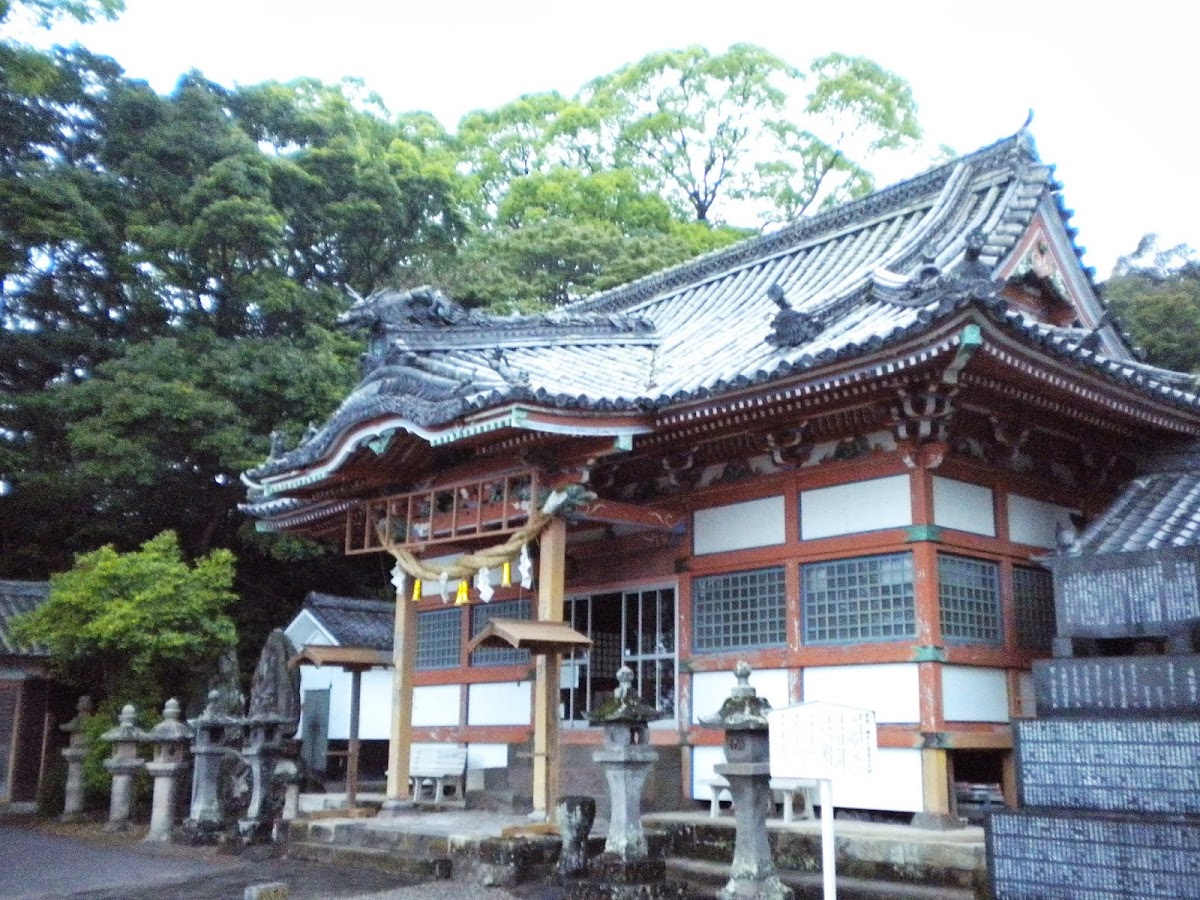
Passing through the Zuishinmon Gate, the brightly colored Haiden (worship hall) appears directly ahead. The roof of the Haiden is adorned with magnificent tiles, including dragon-shaped gargoyles and bellows-like designs.
Behind the Haiden is the Honden (main hall), where the enshrined deity resides. While simpler than the Haiden, the Honden exudes a sacred atmosphere.
Shrine Forest
The shrine forest of Wakamiya Hachiman Shrine is designated as a natural monument by Oita Prefecture. A broadleaf evergreen forest, primarily composed of Japanese cedar and camphor trees, covers approximately 22,000 square meters, preserving a rich natural environment.
This shrine forest preserves the natural vegetation of Mount Kintaka in excellent condition and is of academic value. The shrine forest, displaying different expressions throughout the seasons, provides tranquility to visitors.
Subsidiary Shrines
Several subsidiary shrines are located within the shrine grounds. These include the Shinmei Shrine, which was established by inviting the deity from Ise Grand Shrine, and a subsidiary shrine indicating its connection to Kora Taisha Shrine, illustrating the breadth of Wakamiya Hachiman Shrine’s faith.
Visiting these subsidiary shrines allows one to understand the multifaceted nature of Wakamiya Hachiman Shrine’s faith.
Festivals and Annual Events
Wakamiya Hachiman Shrine holds various festivals throughout the year.
Annual Grand Festival
The annual grand festival is held around December 5th each year. Since 2020, the annual festival has been held at 11:00 AM, and fireworks have also been launched.
The annual festival is the most important event at Wakamiya Hachiman Shrine, and many local people attend to express gratitude for the past year and pray for peace in the coming year.
Wakamiya-gaku (Prefectural Designated Intangible Folk Cultural Property)
Wakamiya-gaku is a musical performance dedicated at the Mid-Autumn Festival in mid-September. It was designated as an Oita Prefecture Intangible Folk Cultural Property in 1961.
Origin of Wakamiya-gaku
Wakamiya-gaku is believed to have originated from a dance performed before going into battle to pray for victory during the Sengoku period (Warring States period). There is a legend that warlords visited Wakamiya Hachiman Shrine and offered dances to pray for victory in battle.
Current Wakamiya-gaku
Currently, local children play the leading role in carrying on the tradition of Wakamiya-gaku. The children wear grass skirts and straw sandals, and carry decorated banners on their backs. They dance to a unique rhythm while beating drums on their chests.
Their appearance is both brave and endearing, touching the hearts of those who watch. Wakamiya-gaku is carefully preserved as a regional traditional culture and passed down to future generations.
Rice Planting Festival
In spring, the Rice Planting Festival is held. This festival, praying for a bountiful harvest, holds significant meaning in Kitsuki, a region where agriculture thrives.
At the Rice Planting Festival, after the Shinto priests recite prayers, a ritual mimicking rice planting is performed. This festival is a valuable event that conveys the connection between Japanese rice cultivation culture and Shinto beliefs.
New Year’s Visit and Annual Events
In the New Year, the shrine is bustling with visitors for their first shrine visit of the year. People climb the stone steps to pray for peace in the new year, welcoming the start of the new year before the shrine.
In addition, various festivals are held throughout the year, such as the Setsubun Festival, the Summer Purification Ceremony, and Shichi-Go-San, and are closely intertwined with the lives of the local people.
Cultural Properties
Wakamiya Hachiman Shrine has several designated cultural properties.
Oita Prefecture Designated Intangible Folk Cultural Property
Wakamiya Gaku: Designated in 1961. As mentioned above, this is a traditional performing art said to have originated from a dance praying for victory in battle.
Oita Prefecture Designated Natural Monument
Kitsuki Wakamiya Hachiman Shrine Precinct Forest: A broad-leaved evergreen forest that maintains the natural vegetation of Mt. Kintaka in excellent condition, and is highly valued for its academic significance.
Other Cultural Values
Edo period structures such as the Zuishinmon Gate (built in 1761) and the Hyakudan no Ishidan (100-step stone staircase, built in 1693) also possess cultural value. While not officially designated cultural properties, they are important legacies that convey the history of the region.
Goshuin (Shrine Seal) Information
An original goshuincho (stamp book) for “Kintakayama Wakamiya Hachiman” is available. Its design, expressing the beautiful scenery of Kitsuki City and the characteristics of Wakamiya Hachiman Shrine, makes it a popular souvenir of visits.
Regarding the issuance of goshuin, it is recommended to check with the shrine office upon arrival. Limited edition goshuin may be available on special days such as the New Year and the annual festival.
Wakamiya Hachiman Shrine’s Connection to the Region
As the Guardian Shrine of Kitsuki
For over 1000 years, Wakamiya Hachiman Shrine has watched over the region as the guardian shrine of Kitsuki. The place name “Miyaji” itself is said to originate from the chief priest (shinto priest) of Wakamiya Hachiman Shrine, demonstrating the deep connection between the shrine and the local community.
Wakamiya Plaza and Community Activities
In the Miyaji district, located at the foot of Wakamiya Hachiman Shrine, there is a 22,000 square meter Wakamiya Plaza. This plaza is a popular venue for various club activities, including gateball, ground golf, and softball.
The Miyaji Community Center has also been newly constructed and functions as a central hub for the local community. Wakamiya Hachiman Shrine is not merely a place of worship, but a base for interaction and activities among local residents.
Activities of the Wakamiya Hachiman Shrine Preservation Society
The “Wakamiya Hachiman Shrine Preservation Society” was established on July 28, 2020. This organization works to maintain and manage Wakamiya Hachiman Shrine, manage festivals, and protect cultural properties.
This initiative, in which local residents take the lead in protecting the shrine and passing it on to future generations, demonstrates an ideal relationship between a shrine and its community in the modern age.
Nearby Attractions
Around Wakamiya Hachimangu Shrine, there are many attractive tourist spots in Kitsuki City.
Kitsuki Castle
Located approximately 2 km southeast of Wakamiya Hachimangu Shrine, Kitsuki Castle was built during the Muromachi period. Currently, a replica keep stands, and it is open to the public as a museum where you can learn about the history of Kitsuki City.
Kitsuki Castle Town
Kitsuki’s castle town, known as a “sandwich-type castle town,” has been designated a National Important Preservation District for Groups of Traditional Buildings. The landscape of sloping streets lined with samurai residences retains a strong atmosphere of the Edo period.
Yasaka Shrine and Yamajinja Shrine
Several shrines, including Yasaka Shrine (9-minute walk) and Yamajinja Shrine (7-minute walk), are located around Wakamiya Hachimangu Shrine. Visiting these shrines is one way to enjoy sightseeing in Kitsuki.
Points and Manners for Visiting the Shrine
Etiquette for Visiting the Shrine
- Bow at the first torii gate before entering the shrine grounds.
- When climbing the stone steps, take your time and compose yourself.
- Bow before the Zuishinmon gate.
- Bow twice, clap twice, and bow once before the main hall.
- After visiting the main shrine, also visit the subsidiary shrines.
- Take a stroll through the shrine grounds and enjoy nature.
- Bow at the first torii gate on your way back.
Clothing and Items to Bring
Since there are many stone steps, we recommend wearing comfortable shoes. Remember to take precautions against the heat in summer and warm clothing in winter. The shrine grounds have plenty of shade, making it relatively cool even in summer.
Photography
Photography is generally permitted on the shrine grounds, but there may be restrictions during festivals or inside the main hall. Please check with a Shinto priest if you have any questions.
Detailed Access Information to Wakamiya Hachiman Shrine
Access by Car
- From Oita Expressway, Kitsuki IC: Approximately 1.3 km east, about 5 minutes by car
- From Beppu City: Approximately 40 minutes via National Route 10
- From Oita City: Approximately 50 minutes via National Route 10
Parking: There is parking space for visitors within the shrine grounds. During busy periods such as the annual festival, the parking lot at Wakamiya Plaza is also available.
Access by Public Transportation
- From JR Kitsuki Station: Approximately 10 minutes by taxi, or a 4-minute walk from the “Gota Bus Stop” by bus.
- From Oita Airport: Approximately 30 minutes by airport limousine bus to Kitsuki Bus Terminal, then approximately 10 minutes by taxi.
Walking Time
- From Kitsuki Castle Town: Approximately 20-25 minutes on foot.
- From Kitsuki Station: Approximately 40 minutes on foot (suitable for those with strong legs).
Summary
Wakamiya Hachiman Shrine is a historic shrine that has watched over the Kitsuki area for over 1000 years since its founding in 985 AD. It has protected the divine image invited from Iwashimizu Hachiman Shrine and has developed as a center of Wakamiya faith, enshrining the son of Emperor Ojin.
Nestled on the slopes of Mount Kintaka, the shrine grounds are a beautiful space where Edo-period architecture, such as the Genroku-era stone steps, the Horeki-era gate, and the brightly colored worship hall, harmonize with the lush forest surrounding the shrine. The Wakamiya-gaku, a prefecturally designated intangible folk cultural property, is passed down by local children, preserving the vibrant form of traditional culture.
As the guardian shrine of Kitsuki, Wakamiya Hachiman Shrine is deeply rooted in the community and, even in the Reiwa era, is carefully preserved by local residents, primarily through the shrine’s association. We encourage you to visit and experience its history, culture, and natural beauty firsthand. The view that unfolds after climbing the hundred stone steps and the tranquil atmosphere of the shrine grounds will surely be a memorable experience.


