Hino Tsukushima Shrine (Nagasaki Prefecture) Complete Guide: Access, Deities, and Highlights Explained in Detail
Hino Tsukushima Shrine, located in Hino-cho, Sasebo City, Nagasaki Prefecture, is a shrine quietly nestled in an area overlooking the Tsukushima Islands. Despite being in the famous tourist area of Tsukushima, it is known as a historical shrine that has been protected by the local people. This article comprehensively introduces all the information you need to know before visiting Hino Tsukushima Shrine, including detailed information, access methods, deities, historical background, and nearby attractions.
Basic Information on Hino Tsukushima Shrine
Location and Access Details
Hino Tsukushima Shrine is located at 394 Hino-cho, Sasebo City, Nagasaki Prefecture. It is situated in a quiet residential area slightly away from the center of Sasebo City and is cherished as the local guardian shrine.
Address: 394 Hino-cho, Sasebo City, Nagasaki Prefecture 858-0923
Access by Train
When using public transportation, the Matsuura Railway is convenient.
- From Daigaku Station: Approximately 35 minutes on foot (approx. 2.8 km)
- From Sasebo Chuo Station: Approximately 43 minutes on foot (approx. 3.4 km)
Due to the long walking distance, we recommend using the bus.
Access by Bus
The most convenient access method is using the Seihoku Bus.
- Nearest Bus Stop: Nagasaka-cho Bus Stop
- Distance from Bus Stop: Approximately 3-5 minutes on foot
- Routes: Various Seihoku Bus routes
It is convenient to take a bus bound for Nagasaka-cho from Sasebo Station Bus Center and get off at the Nagasaka-cho bus stop. The path from the bus stop to the shrine is flat, so even first-time visitors can arrive without getting lost. ### Access by Car
If visiting by private car, it takes approximately 15-20 minutes from the center of Sasebo City using national and prefectural roads.
- From Sasebo Station: Approximately 15 minutes by car
- From Sasebo Chuo Interchange on the West Kyushu Expressway: Approximately 10 minutes
The area around the shrine is a residential area, so parking space is limited. Please be considerate of the neighbors when visiting.
History and Origins of Hino Tsukushima Shrine
Founding and Development of the Shrine
While there are various theories regarding the exact founding date of Hino Tsukushima Shrine, according to local elders’ traditions, it is believed to have already existed as a center of local faith in the mid-Edo period. Hino-cho in Sasebo City has long been a region where agriculture and fishing flourished, and the shrine has been cherished by local residents as a place to pray for abundant harvests and maritime safety.
Connection to the Kujukushima Islands
The name “Kujukushima” in the shrine’s name refers to the collective name for the 208 islands scattered from outside Sasebo Port to Hirado. Hino Kujukushima Shrine is situated in an area overlooking this beautiful archipelago, and has long been a center of faith for people who live and breathe the sea. It is a place of gratitude for the blessings of the Kujukushima Islands and a place to pray for safety at sea, and is deeply revered by those involved in the fishing industry.
As a Center of the Local Community
Hino Kujukushima Shrine is more than just a place of worship; it also plays a role in strengthening the bonds of the local community. Festivals and rituals held throughout the year bring together local residents and provide opportunities for intergenerational exchange. The autumn grand festival, in particular, attracts many worshippers and is an important event for passing on the region’s traditional culture to future generations.
Deities and Divine Virtues
Deities Enshrined
The deities enshrined at Hino Kujukushima Shrine are based on local traditions and beliefs. Generally, shrines in the Kujukushima region often enshrine deities who bestow blessings for maritime safety, abundant harvests, and family safety. Hino Kujukushima Shrine is believed to have inherited this tradition.
Divine Blessings and Benefits
Visitors to Hino Kujukushima Shrine seek the following divine blessings:
- Maritime Safety and Navigation: To protect the safety of those who live in harmony with the seas of Kujukushima
- Abundant Harvest: To pray for agricultural prosperity and a bountiful harvest
- Family Safety: To protect the health and peaceful lives of families
- Regional Peace and Security: To pray for peace and development throughout the region
- Protection from Misfortune and Bringing Good Fortune: To ward off misfortune and invite good luck
Highlights of the Shrine Grounds
Main Hall and Worship Hall
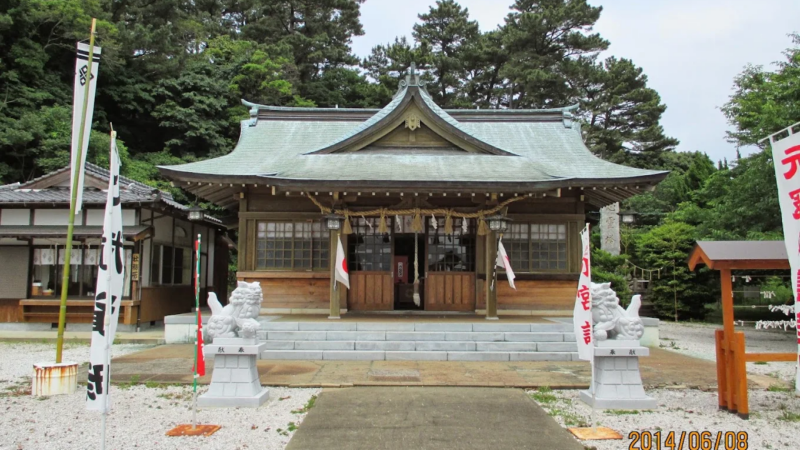
The main hall of Hino Kujukushima Shrine is simple yet meticulously maintained. The shrine buildings, carefully preserved by the local people, retain the characteristics of traditional shrine architecture in northern Nagasaki Prefecture. In front of the worship hall, worshippers can be seen devoutly clasping their hands together, reflecting the deep-rooted faith of the community.
Natural Environment of the Shrine Grounds
The shrine grounds are a tranquil space surrounded by nature that changes with the seasons. Cherry blossoms bloom especially in spring, and autumn leaves color the grounds. Located away from the hustle and bustle of the city, it provides a peaceful environment for worship, where one can listen to the chirping of wild birds.
Stone Steps and Torii Gate
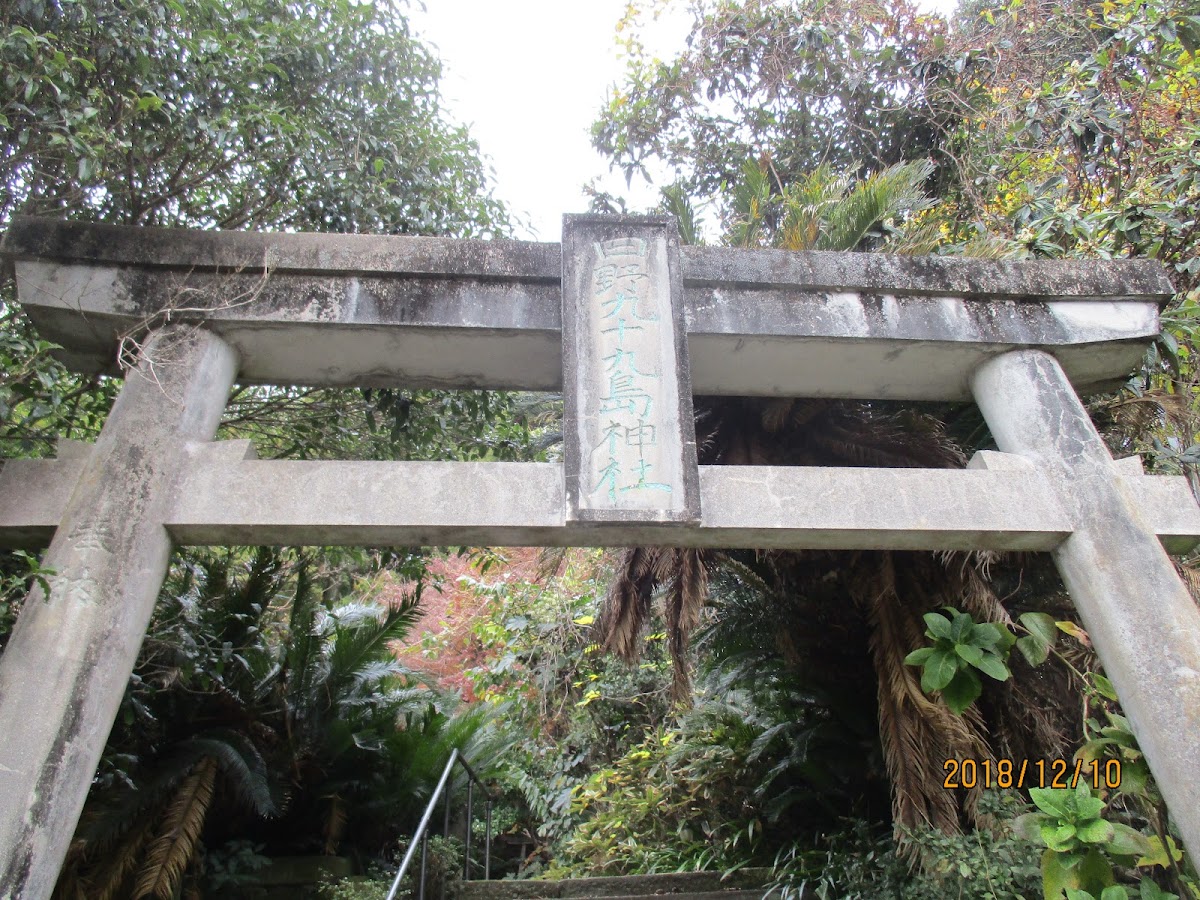
The path leading to the shrine features stone steps that evoke a sense of history. As you pass through the torii gate and ascend the steps, your mind shifts from everyday life to a sacred space. While there aren’t many steps, the act of carefully taking each one naturally prepares you for worship.
About Goshuin (Shrine Seals)
About the Issuance of Goshuin
Regarding the issuance of Goshuin at Hino Kujukushima Shrine, it is recommended to check in advance as there may not be a permanent shrine office. Many small shrines have priests who serve multiple shrines, so if you wish to receive a Goshuin, it is recommended to inquire with the Nagasaki Prefectural Shrine Association or a nearby shrine.
Manners When Receiving a Goshuin
Goshuin are given as proof of worship. Please observe the following basic manners:
- Always worship first: Goshuin are proof of worship. First, worship sincerely at the main hall.
- Prepare your Goshuincho (Goshuin notebook): Prepare a dedicated Goshuincho and present it open.
- Prepare the offering: Generally around 300-500 yen. Please prepare the exact amount of money so that no change is needed.
- Polite language: Please politely request, “May I have a Goshuin (temple/shrine stamp)?”
- Expressing gratitude: After receiving it, express your gratitude by saying, “Thank you.”
Annual Events and Festivals
Grand Festival
At Hino Tsukushima Shrine, the Grand Festival is held once a year. It is an important Shinto ritual where local parishioners gather to express gratitude to the gods and pray for the prosperity of the community. During the Grand Festival, the shrine grounds are purified, and special rituals are performed.
Monthly Festivals and Daily Rituals
Monthly festivals and daily rituals are performed by the local priest and parishioner representatives. These rituals are important activities that maintain the bond between the shrine and the community.
Manners and Etiquette for Visiting Shrines
Basic Visiting Etiquette
When visiting Hino Tsukushima Shrine, please observe the following basic visiting etiquette.
How to Pass Through a Torii Gate
- Bow before the torii gate.
- Since the center of the path is considered the path of the gods, walk on either the left or right side.
- Maintain a reverent attitude even when entering the shrine grounds.
How to Wash Your Hands at the Water Basin
If there is a water basin, purify yourself in the following order.
- Take the ladle with your right hand and purify your left hand.
- Switch the ladle to your left hand and purify your right hand.
- Switch the ladle back to your right hand, receive water in your left hand, and rinse your mouth.
- Purify your left hand once more.
- Hold the ladle upright, purify the handle, and return it to its original position.
Worship at the Main Hall
- Stand in front of the offering box and bow slightly.
- Gently place your offering (do not throw it in).
- If there is a bell, ring it.
- Worship using the “two bows, two claps, one bow” method.
- Bow deeply twice.
- Clap your hands twice at chest height.
- Pray with sincerity.
- Finally, bow deeply once.
Clothing and Items to Bring When Visiting
There are no specific dress code requirements, but please dress appropriately as this is a sacred place.
- Clothing to Avoid: Excessive exposure, sandals, dirty clothing
- Recommended Clothing: Clean and understated clothing
- Items to Bring: Offering money, Goshuincho (stamp book) (if desired), camera (only in areas where photography is permitted)
Nearby Tourist Attractions
Kujukushima Pearl Sea Resort
This is a base facility for Kujukushima sightseeing, located about 20 minutes by car from Hino Kujukushima Shrine. It offers facilities where you can enjoy the nature of Kujukushima, such as the Kujukushima Aquarium “Umikirara” and the sightseeing boat “Pearl Queen”.
- Distance: Approximately 8km (about 20 minutes by car)
- Highlights: Aquarium, sightseeing boat, restaurant, souvenir shop
- Opening Hours: Varies by facility (please check)
Tenkaiho
A popular observation deck offering a spectacular panoramic view of Kujukushima. The breathtaking view of the Kujukushima Islands from a hilltop approximately 170m above sea level is truly spectacular.
- Distance: Approximately 6km (about 15 minutes by car)
- Highlights: Stunning views of the Kujukushima Islands, seasonal flowers
- Admission Fee: Free
Ishidake Observatory
This observatory offers a 360-degree panoramic view of the entire Kujukushima Islands. The view at sunset is particularly stunning.
- Distance: Approximately 10km (about 25 minutes by car)
- Highlights: Panoramic views of the Kujukushima Islands, sunset
- Access: Convenient access by car
Shrines and Temples in Sasebo City
Kameyama Hachimangu Shrine
A historic shrine located in the heart of Sasebo City, revered as the guardian deity of the region.
- Distance: Approximately 5km (about 15 minutes by car)
- Deities Enshrined: Emperor Ōjin and others
- Highlights: Magnificent shrine buildings, views of the city
Temples in Sasebo City
Sasebo City has many historical temples that can be visited in conjunction with shrine visits.
Natural Spots of Kujukushima Islands
Funakoshi Observatory
One of the observation spots where you can enjoy the beautiful scenery of Kujukushima Islands. Located along a scenic drive course along the coastline, it’s easy to stop by.
Awashima Shrine
A shrine located on one of the Kujukushima Islands, worshipped as a guardian deity of maritime safety.
Charms of Hino-cho, Sasebo City
Regional Characteristics
Hino-cho is located in the northeastern part of Sasebo City and is a quiet area where residential areas and nature are in harmony. It is close to the Kujukushima area and offers a peaceful living environment while allowing residents to feel the blessings of the sea.
Local History
Hino Town has a long history, having developed primarily around agriculture and fishing. After the war, it was developed as a residential area alongside the growth of Sasebo City, and is now known as a region with strong community ties.
Local Food Culture
While Sasebo City is famous for its “Sasebo Burger,” you can also enjoy dishes made with fresh seafood in and around Hino Town. The seafood caught in the Kujukushima Islands is exquisite and can be enjoyed at local restaurants and izakayas (Japanese pubs).
Attractions as a Photo Spot
Photography Etiquette on the Shrine Grounds
The grounds of Hino Kujukushima Shrine are attractive for their quiet and peaceful atmosphere. Please observe the following etiquette when taking photographs.
- Avoid disturbing other worshippers: Please be considerate and avoid including other worshippers in your photos.
- Respect for sacred places: Do not take photos in areas where photography is prohibited, such as inside the main hall.
- Be quiet: Do not shout or make noise.
- Use of tripods: Please refrain from using tripods during crowded times or in places that block the approach to the shrine.
Recommended shooting spots
- Torii gate and approach: Capture the authentic atmosphere of a shrine.
- Main hall: Photograph the beauty of traditional shrine architecture.
- Nature on the grounds: Trees and flowers of each season make great subjects.
- Stone steps: Create compositions with depth.
Seasonal highlights
Spring (March-May)
In spring, Hino Kujukushima Shrine is adorned with fresh greenery and cherry blossoms. It’s a season to enjoy a refreshing visit in mild weather.
- Cherry Blossom Viewing Season: Late March to Early April
- Fresh Greenery: Mid-April to May
- Temperature: Around 15-20℃
Summer (June-August)
Summer is the season when the greenery is lush and the sound of cicadas fills the air. Visiting in the early morning or evening is recommended.
- Temperature: 25-30℃ or higher
- Precautions: Heatstroke prevention and insect repellent are necessary
- Recommended Time of Day: Early morning or evening
Autumn (September-November)
Autumn is the most suitable season for visiting the shrine. It’s a time with many attractions, including autumn foliage and the annual festival.
- Best time to see autumn leaves: Mid-November to early December
- Annual Festival: Autumn (details to be confirmed)
- Temperature: Around 15-25℃
Winter (December to February)
The temple grounds are enveloped in silence during winter, creating a more solemn atmosphere. It becomes bustling with many visitors during the New Year’s pilgrimage season.
- New Year’s Visit: January 1st-3rd
- Temperature: Around 5-10℃
- Note: Warm clothing is necessary
Planning a visit to Hino Kujukushima Shrine
Estimated time required
- Worship only: 15-30 minutes
- Including a stroll around the grounds: 30-60 minutes
- Including sightseeing in the surrounding area: Half a day to a full day
Recommended time of visit
- Early morning (6:00-8:00): You can worship in a quiet and refreshing atmosphere
- Morning (9:00-11:00): The weather is stable and suitable for photography
- Evening (16:00-17:00): You can worship peacefully in soft light
Notes for your visit
- Shrine office opening hours: Since there may not be a permanent staff member present, prior confirmation is necessary if you wish to receive a Goshuin (temple/shrine stamp).
- Parking: There may be limited space.
- Restrooms: If there are no restrooms on the shrine grounds, please use the facilities beforehand.
- Vending Machines: There may be few in the surrounding area, so it is advisable to bring your own drinks.
Nagasaki Prefecture’s Shrine Culture and Hino Kujukushima Shrine
Characteristics of Shrines in Nagasaki Prefecture
Nagasaki Prefecture has approximately 1,260 shrines, managed by the Nagasaki Prefectural Shrine Association. Due to its geographical location as a key point for maritime traffic, many shrines in Nagasaki Prefecture are dedicated to praying for maritime safety and safe voyages.
Shrine Culture in the Sasebo Region
Sasebo City has a history of development as a former naval port and is a region deeply connected to the sea. Therefore, the local shrines also have a deeply rooted belief in praying for safety at sea. Hino Kujukushima Shrine is one of the shrines that carries on this tradition.
Locally Rooted Faith
Small, local shrines like Hino Kujukushima Shrine possess a different charm than large, well-known tourist destinations. Their forms of faith, intertwined with the daily lives of local residents and passed down through generations, offer a glimpse into the essence of Japanese shrine culture.
Model Courses to Enjoy the Charms of the Kujukushima Area
Day Trip Course
Morning:
- 9:00 Departure from Sasebo Station
- 9:30 Visit to Hino Kujukushima Shrine (30 minutes)
- 10:30 Enjoy the spectacular view at Tenkaiho (45 minutes)
- 11:30 Lunch at Kujukushima Pearl Sea Resort
Afternoon:
- 13:00 Kujukushima Sightseeing Cruise (approx. 50 minutes)
- 14:30 Visit to Kujukushima Aquarium “Umikirara” (90 minutes)
- 16:30 Enjoy the sunset view at Ishidake Observatory
- 17:30 Return to Sasebo Station
2-Day/1-Night Course
Day 1:
- Morning: Sightseeing in Sasebo City (including Kameyama Hachimangu Shrine)
- Afternoon: Kujukushima Pearl Sea Resort
- Evening: Visit Hino Kujukushima Shrine
- Night: Overnight stay in Sasebo City
Day 2:
- Morning: Observation deck tour (Tenkaiho, Ishidake Observation Deck)
- Afternoon: Nature walk around Kujukushima
- Evening: Souvenir shopping in Sasebo City
Summary: The Charm of Hino Kujukushima Shrine
Hino Kujukushima Shrine, while located in the bustling Kujukushima area, continues to exist as a quietly rooted place of worship in the community. It may not be flashy, but it embodies the essence of Japanese shrine culture: “faith that lives in harmony with the community.”
When visiting the beautiful nature of Kujukushima, be sure to visit this small shrine. It may not be prominently featured on tourist maps, but the prayers and history of the local people quietly breathe within it. Away from the hustle and bustle of the city, the time spent quietly offering prayers will deepen your travel memories.
Why not spend a peaceful moment at Hino Tsukushima Shrine in Hino-cho, Sasebo City, and experience the faith of the people who live in harmony with the sea of Nagasaki?
—
Final checkpoints before your visit:
- Check access methods (bus timetable, etc.)
- Inquire in advance if you wish to receive a Goshuin (shrine stamp)
- Prepare comfortable clothing and shoes
- Check the opening hours of nearby tourist attractions
- Prepare for the weather (parasol, rain gear, etc.)
We hope your visit to Hino Tsukushima Shrine will be a memorable experience.