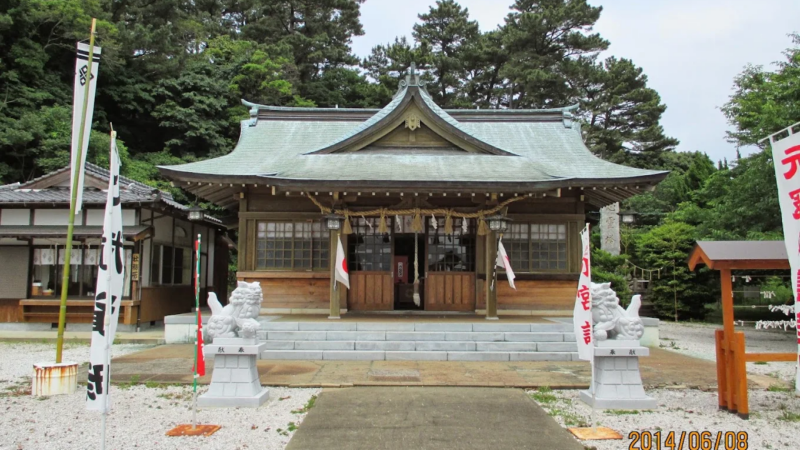
Kumano Shrine (Matsudaira, Funatsu, Tarami-cho, Isahaya City, Nagasaki Prefecture) Complete Guide | A Thorough Explanation of History, Deities, and Natural Monument Plants
Kumano Shrine, located in Matsudaira, Funatsu, Tarami-cho, Isahaya City, Nagasaki Prefecture, is a historic shrine surrounded by abundant nature. Situated approximately 1km north-northwest of Nishi-Isahaya Station, it is known as a valuable shrine possessing a plant community designated as a natural monument by Isahaya City. This article provides a detailed explanation of Kumano Shrine’s history, deities, highlights, and surrounding area information.
Basic Information about Kumano Shrine
Location and Access
Address: Matsudaira, Funatsu, Tarami-cho, Isahaya City, Nagasaki Prefecture
Nearest Station: Approximately 1km north-northwest of Nishi-Isahaya Station on the JR Nagasaki Main Line
Access Method:
- Approximately 15 minutes on foot from Nishi-Isahaya Station
- Approximately 10 minutes by car from Isahaya city center
- Parking: Parking available for visitors on the shrine grounds
Basic Data
Deities Enshrined:
- Izanagi-no-Mikoto
- Izanami-no-Mikoto
- Onamuchi-no-Mikoto
Festival Day: October 17th
Designated Cultural Property: Isahaya City Designated Natural Monument (Plant Group of Kumano Shrine)
History and Origins of Kumano Shrine
Background of Founding
Kumano Shrine is a shrine founded based on the Kumano faith, with the Kumano Sanzan (Three Grand Shrines of Kumano) in Kii Province (present-day Wakayama Prefecture) as its head shrine. The Kumano faith spread throughout Japan from the Heian period to the Kamakura period, and many Kumano shrines were established in various locations.
The Kumano Shrine in Funatsu, Tarami-cho, Isahaya City, is also believed to have been founded as part of this Kumano faith. The Tarami region has flourished as an important point for maritime traffic since ancient times, and it is presumed that the Kumano faith spread via sea routes.
Connection with the Community
Kumano Shrine has been revered by local residents as the tutelary deity of the Funatsu district. From the Edo period to the Meiji period, it was worshipped as the guardian deity of local agriculture and fishing, and prayers for bountiful harvests and maritime safety were offered.
Even today, local residents gather for the annual festival on October 17th, and traditional rituals are performed.
Detailed Explanation of the Deities Enshrined
Izanagi-no-Mikoto
In Japanese mythology, Izanagi-no-Mikoto is a god of creation, who, along with Izanami-no-Mikoto, gave birth to the Japanese archipelago and many other gods. He is also known as the god who originated the practice of misogi-harae (purification ritual) and is believed to possess divine virtues of purification and protection against evil.
Izanami-no-Mikoto
Izanagi-no-Mikoto’s wife and the mother goddess who, together with Izanagi-no-Mikoto, gave birth to the land and the gods. She is known for her divine virtues of safe childbirth, matchmaking, and family safety.
Ōnamuchi-no-Mikoto
This is another name for the god commonly known as Ōkuninushi-no-Mikoto. As a god of nation-building, he is believed to possess a wide range of divine virtues, including agriculture, commerce, medicine, and matchmaking.
By enshrining these three deities, Kumano Shrine possesses a comprehensive divine virtue encompassing creation, life, and prosperity.
Isahaya City Designated Natural Monument: “Plant Cluster of Kumano Shrine”
Value of Natural Monument Designation
The most distinctive feature of Kumano Shrine is the rich plant community that spreads throughout its grounds. It is designated as an Isahaya City Designated Natural Monument, and the signpost along the approach to the shrine clearly states “Isahaya City Designated Natural Monument: Plant Cluster of Kumano Shrine.”
This plant community preserves a typical form of evergreen broad-leaved forest, representative of Nagasaki Prefecture’s warm climate, and is a valuable natural heritage from an academic perspective.
Giant Trees Estimated to be 200-300 Years Old
The shrine grounds are home to giant trees of warm climates, such as oaks and chestnuts, estimated to be 200-300 years old. These giant trees are evidence that the shrine has been carefully preserved as a center of local faith for many years.
Main Types of Giant Trees:
- Oak species (Quercus glauca, Quercus myrsinaefolia, etc.)
- Castanopsis species (Castanopsis sieboldii, etc.)
- Other evergreen broad-leaved trees
The forest formed by these giant trees gives the shrine a sacred atmosphere and also plays an important role as a habitat for diverse organisms.
Fern Habitat
Under the abundant shade created by the giant trees, a variety of ferns grow naturally. Since ferns prefer humid environments, this is evidence that the forest of Kumano Shrine maintains a good environment.
Main Fern Types:
- Dryopteris erythrosora
- Dryopteris erythrosora
- Cycas revoluta
- Many other species
Particularly Rare Ardisia crenata
Among the plant communities of Kumano Shrine, the natural growth of Ardisia crenata (white-fruited Ardisia crenata) is particularly noteworthy. While Ardisia crenata (Japanese laurel) typically bears red berries, the white-berryed variety is extremely rare, and its natural habitat is limited.
The white-berryed Ardisia crenata is a result of genetic mutation, and its confirmation of natural occurrence is a botanically valuable discovery. This indicates that the forest surrounding Kumano Shrine maintains a stable environment where such rare plants can thrive.
Highlights of the Shrine Grounds
Approach and Torii Gate
The approach to Kumano Shrine is a mystical path through a lush forest. Passing through the torii gate, you immediately enter a different world surrounded by giant trees. Simply walking along the approach allows you to forget the hustle and bustle of the city and experience a sense of spiritual cleansing.
Shrine Architecture
The main shrine building is constructed in the traditional style of shrine architecture and is an important structure that tells the history of the region. Regular maintenance keeps it in excellent condition.
Atmosphere of the Shrine Grounds
The entire shrine grounds are enveloped in a deep forest, allowing you to experience the changing seasons. It displays different expressions in each season, especially the shade of summer, the vibrant autumn foliage, and the tranquility of winter.
Annual Events and Festivals
Grand Festival (October 17th)
The most important festival of Kumano Shrine is the Grand Festival, held annually on October 17th. Local parishioners gather, and a solemn Shinto ritual is performed. It is a traditional festival praying for a bountiful harvest, family safety, and the prosperity of the community.
New Year’s Visit
At the start of the new year, worshippers visit for their first shrine visit of the year, praying for safety and happiness throughout the year. A New Year’s visit in the quiet forest is perfect for a peaceful start to the new year.
Other Annual Events
Based on local traditions, Shinto rituals such as the Setsubun Festival and the Summer Purification Ceremony are also held. For detailed dates, please check local bulletin boards or information from Isahaya City.
Etiquette and Manners for Visiting a Shrine
Basic Etiquette for Visiting a Shrine
- Bow before passing through the torii gate: As a sign of respect before entering the sacred area, bow before the torii gate.
- Walk along the edge of the path: The center of the path is considered the path of the gods, so walk along the edge.
- Purify yourself at the water basin: If there is a water basin, purify your hands and mouth before praying.
- Two bows, two claps, one bow: Before the shrine, bow deeply twice, clap twice, and finally bow deeply once.
Request for Nature Conservation
The plant community at Kumano Shrine is a valuable natural monument. Please note the following points when visiting:
- Do not damage plants
- Take all your trash with you
- Do not enter areas other than designated areas
- Take photographs only within permitted areas
Nearby Attractions and Tourist Information
History of Tarami-cho, Isahaya City
Tarami-cho is a historical area located in the southwestern part of Isahaya City, facing Omura Bay. It has flourished since ancient times as a key point for maritime traffic, and many historical sites and cultural assets remain.
Nearby Shrines and Temples
Kotoshironushi Shrine (604 Funatsu, Tarami-cho, Isahaya City, Nagasaki Prefecture)
This shrine is located in the same Funatsu area as Kumano Shrine, and you can visit both together.
Aso Shrine (862 Kakeya, Tarami-cho, Isahaya City, Nagasaki Prefecture)
Another historically significant shrine located within Tarami-cho.
Tourist Attractions in Isahaya City
Isahaya Shrine
Located in the heart of Isahaya City, this is the city’s main guardian shrine and is known as “Shimen-gu,” the guardian deity of Kyushu. Founded in 728 AD, this historic shrine is a must-visit spot when sightseeing in Isahaya.
Isahaya Park
A park known for its cherry blossoms, it is bustling with many visitors enjoying the blossoms in spring.
Detailed Access Information to Kumano Shrine
Access by Public Transportation
Using the JR Nagasaki Main Line
- From Nagasaki Station to Nishi-Isahaya Station: Approximately 20 minutes by rapid train
- From Saga area: Via Hizen-Yamaguchi Station to Nishi-Isahaya Station
- Approximately 15 minutes on foot from Nishi-Isahaya Station
Access by Car
From Nagasaki City
- Take National Route 34 towards Isahaya
- Travel time: Approximately 30 minutes
From Saga Area
- Approximately 15 minutes from Isahaya IC on the Nagasaki Expressway
Car Navigation Settings
- Address: Matsudaira, Funatsu, Tarami-cho, Isahaya City, Nagasaki Prefecture
- Landmark: Approximately 1 km north of Nishi-Isahaya Station
Parking Information
There is parking space for visitors on the shrine grounds. However, congestion is expected during events such as the annual festival, so we recommend using public transportation. ## How to Enjoy Visiting Kumano Shrine
Enjoying Nature Observation
The greatest charm of Kumano Shrine is its rich natural environment. Those interested in plants can enjoy their visit even more by paying attention to the following points:
- Observing the trunks and branches of giant trees
- Seasonal changes in vegetation
- Birdsong and insect sounds
- The scent and atmosphere of the forest
Photography Tips
Kumano Shrine is a photo spot where the beauty of nature stands out:
- Sunlight filtering through the trees along the approach
- Moss-covered stone steps and lanterns
- The impressive sight of giant trees
- The contrast between the torii gate and the forest
*When taking photos, please be considerate of other visitors and remember that this is a sacred place.
Seasonal Highlights
Spring (March-May)
The fresh greenery is beautiful, and the entire forest is full of vitality. The singing of wild birds also becomes more active.
Summer (June-August)
The deep shade of the trees provides coolness. This is the season when ferns are at their most vibrant.
Autumn (September-November)
While evergreen trees dominate, some deciduous trees change color, creating an autumnal atmosphere. The annual festival on October 17th is also a highlight.
Winter (December-February)
The tranquil shrine grounds are ideal for meditation and introspection. The evergreen trees stand out even amidst the winter barrenness.
Kumano Shrine’s Connection to the Community
Center of the Community
Kumano Shrine has served as a spiritual pillar for the Funatsu district, strengthening community ties. Through festivals and cleaning activities, it has become a place for intergenerational exchange.
Environmental Protection Activities
Local residents continuously clean the shrine grounds and carry out protection activities to preserve the plant communities designated as natural monuments. This ensures that the precious natural environment is passed on to future generations. ### Educational Value
Local elementary and junior high schools utilize the plant life at Kumano Shrine as teaching material for environmental studies. It plays an important role as a place where children learn about the value of local nature.
Precautions When Visiting
Clothing
While there are no specific dress code requirements for visiting the shrine, it is advisable to dress appropriately for a sacred place. Since you will be walking through the forest, comfortable clothing that you don’t mind getting dirty is recommended.
Weather Precautions
- In case of rain: The path to the shrine may become slippery, so please watch your step.
- When a typhoon is approaching: It is recommended to refrain from visiting.
- In summer: Insect repellent is recommended.
Safety Considerations
- Under large trees, branches may fall in strong winds.
- Please walk carefully, paying attention to stones and tree roots underfoot.
- When visiting alone, please take extra precautions for safety.
Kumano Faith and Japanese Shinto Culture
What are the Kumano Sanzan?
The Kumano Sanzan, the head shrines of the Kumano faith, refer to the three shrines located in Wakayama Prefecture: Kumano Hongu Taisha, Kumano Hayatama Taisha, and Kumano Nachi Taisha. From the Heian period onward, they attracted a wide range of followers, from aristocrats to commoners, through “Kumano-mairi” (pilgrimages to Kumano).
Kumano Shrines Spreading Nationwide
The Kumano faith spread throughout Japan during the medieval period, and Kumano shrines were established in various locations. The Kumano Shrine in Tarami-cho, Isahaya City, is also thought to have been founded within this spread of the faith.
History of Shinto-Buddhist Syncretism
The Kumano faith is a typical example of Shinto-Buddhist syncretism, where Shinto and Buddhism merged. Until the separation of Shinto and Buddhism in the Meiji era, it was also deeply connected to Shugendo (mountain asceticism).
Summary: The Charm of Kumano Shrine
Located in Matsudaira, Funatsu, Tarami-cho, Isahaya City, Nagasaki Prefecture, Kumano Shrine is a precious shrine where nature and history harmonize, boasting a group of giant trees estimated to be 200-300 years old and a plant community designated as a natural monument by Isahaya City.
It enshrines three deities: Izanagi-no-Mikoto, Izanami-no-Mikoto, and Ohirukuchi-no-Mikoto, and has long been revered as the local guardian deity. In particular, it preserves a botanically valuable natural environment, including the natural growth of *Ardisia crenata*.
Despite its convenient location, approximately a 15-minute walk from Nishi-Isahaya Station, the sacred space enveloped in a deep forest is the perfect place to escape from everyday life and find peace of mind.
When visiting Isahaya City, be sure to visit Kumano Shrine and experience its rich nature and history. A visit to the shrine in the quiet forest will bring deep peace to your heart.
Every year on October 17th, during the annual grand festival, you can also witness traditional local rituals. Kumano Shrine, which displays different expressions throughout the seasons, is a fascinating power spot where you can discover something new no matter how many times you visit.