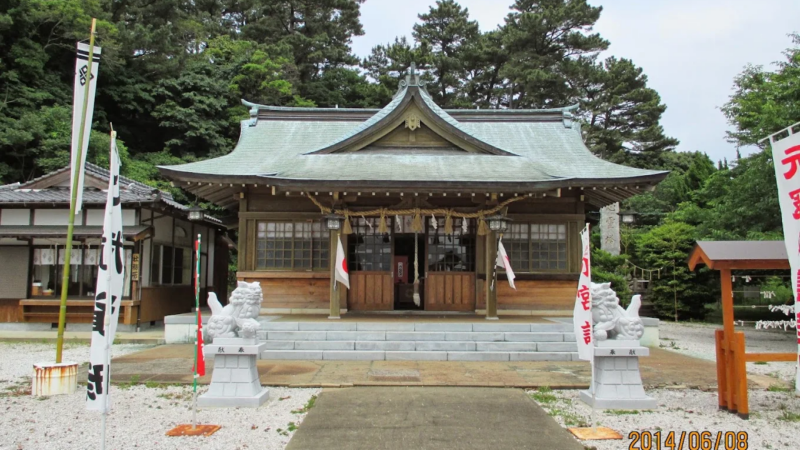
Aso Shrine (Tarami-cho, Isahaya City, Nagasaki Prefecture) Complete Guide | History, Goshuin (Shrine Seal), and Access Information
Aso Shrine, located in Tarami-cho, Isahaya City, Nagasaki Prefecture, is a venerable shrine boasting a history of approximately 500 years. It was established by inviting a divided spirit from Aso Ichinomiya in Kumamoto Prefecture and has been cherished by the local people as the guardian shrine of Kikitsu Village. This article comprehensively introduces information useful for visiting Aso Shrine, including its history, enshrined deities, goshuin (shrine seal), cultural properties, and access methods.
Basic Information about Aso Shrine
Location: 862 Kakeya, Tarami-cho, Isahaya City, Nagasaki Prefecture 859-0401
Phone Number: 0957-43-5235
FAX: 0957-43-5235
Nearest Station: Approximately 6 minutes on foot (approx. 508m) from Kikitsu Station on the JR Nagasaki Main Line
Parking: Available
Shrine Office Hours: Normally 9:00 AM – 5:00 PM (Worship is possible 24 hours a day)
Aso Shrine is located in a quiet residential area of Tarami-cho, Isahaya City, and has been revered as the local guardian deity for many years. Its convenient location within walking distance of Kikitsu Station makes it easily accessible for worshippers.
History of Aso Shrine | From Tenbun 3 to the Reiwa Era
Origin of the Shrine
The founding of Aso Shrine dates back to Tenbun 3 (1534 or 1535 AD), mid-autumn, September. At that time, Saigo Iwamori, the lord of Isahaya who governed Kikitsu, invited a divided spirit from the main shrine of Aso Ichinomiya in Kumamoto and enshrined it as the guardian deity of Kikitsu Village.
Amidst the turmoil of the Sengoku period, Saigo Iwamori, wishing for the peace and prosperity of his people and the region, decided to invite the highly revered deity of Aso, a representative of Kyushu. Takeiwatatsu-no-mikoto, the enshrined deity of Aso Shrine, is known as a god of both military and literary arts, and was revered as a god of pioneering and governance, making him the ideal guardian deity of the new land.
A History of Approximately 500 Years
From 1534 (Tenbun 3) to 2024 (Reiwa 6), Aso Shrine has a history spanning approximately 490 years. During the Edo period, it received the patronage of the Isahaya Domain, and even after the Meiji Restoration’s separation of Shinto and Buddhism, it has continued to exist as a spiritual pillar of the region through the changing times of the Showa, Heisei, and Reiwa eras.
In particular, on July 6, 1998 (Heisei 10), the second and third torii gates were designated as Tarami Town Tangible Cultural Properties, officially recognizing their historical and cultural value. This demonstrates that Aso Shrine is not merely a place of worship, but also plays an important role as a historical heritage site of the region.
Deity Enshrined | Takeiwatatsu-no-Mikoto
The deity enshrined at Aso Shrine is Takeiwatatsu-no-Mikoto.
About Takeiwatatsu-no-Mikoto
Takeiwatatsu-no-Mikoto is a deity descended from Emperor Jimmu, the first emperor of Japan, and is renowned as a god of both literary and martial arts. He is considered a god of pioneering and governance, having developed the Aso region under the imperial command of Emperor Jimmu and governing the entire Kyushu region.
Divine Virtues
The main divine virtues of Takeiwatatsu-no-Mikoto are as follows:
- Good Fortune and Prosperity: The power to forge new paths
- Long-lasting Military Fortune: The power to overcome difficulties
- Family Safety: Peace and safety for the family
- Industrial Development: Prosperity in agriculture and commerce
- Protection from Evil: The power to ward off and purify from misfortune
- Prayer for Victory: Success in competitions
As a god of both literary and martial arts, many worshippers visit to pray for academic success, passing exams, and victory in sports. Furthermore, due to its character as a god of pioneering, it is also suitable for prayers for success in new businesses, job changes, and relocations.
Highlights of Aso Shrine
Designated Cultural Property Torii Gates
The greatest highlight of Aso Shrine is the Second and Third Torii Gates, which are designated as Tarami Town Tangible Cultural Properties. The designation was issued by the Tarami Town Board of Education on July 6, 1998.
These torii gates are believed to have been built between the Edo and Meiji periods and are preserved as valuable historical structures within Nagasaki Prefecture. Their imposing stone construction conveys a sense of timeless faith.
Atmosphere of the Shrine Grounds
The shrine grounds are well-maintained and enveloped in a tranquil atmosphere. Despite being located in a residential area, stepping inside evokes a sacred feeling.
The main hall is built in the traditional shrine architectural style, and the worship hall is also magnificently constructed. The shrine grounds are home to many ancient trees, and the opportunity to visit while experiencing the changing seasons is one of its charms.
Seasonal Events
Aso Shrine holds various festivals throughout the year:
- New Year’s Day Festival (January 1st): A festival celebrating the New Year
- Spring Grand Festival: A prayer for gratitude for spring and a bountiful harvest
- Summer Purification Ceremony (June 30th): A Shinto ritual to purify oneself of the impurities accumulated over the past six months
- Autumn Grand Festival: A prayer for gratitude for the harvest and a bountiful harvest
- Year-End Purification Ceremony (December 31st): A Shinto ritual to purify oneself of the impurities accumulated over the past year
Especially during the Grand Festivals, many local people gather, and traditional festival ceremonies are held.
Goshuin (Shrine Seal) Information
About the Issuance of Goshuin
Aso Shrine offers Goshuin (shrine seals). You can receive a Goshuin (temple/shrine stamp) if you visit during the shrine office’s opening hours (usually 9:00 AM to 5:00 PM).
Offering Fee: Usually around 300-500 yen (Please check when you visit, as this may change).
Goshuin Design
The Goshuin of Aso Shrine features the shrine’s name, “Aso Shrine,” written in ink, and the shrine’s seal. It features a simple yet powerful calligraphy style, reflecting the divine virtues of Takeiwatatsu-no-Mikoto, who embodied both literary and martial arts.
About Goshuincho (Stamp Books)
Please inquire directly with the shrine office regarding the availability of original Goshuincho. If you do not have a Goshuincho, you may be given a pre-printed Goshuin.
Manners for Receiving a Goshuin (Shrine Stamp)
- Complete your prayers first: The goshuin is proof of your visit, so always pray first.
- Request politely at the shrine office: Open your goshuin book and indicate the page where you would like the stamp.
- Prepare the offering: Prepare small change to avoid needing change.
- Don’t forget to express your gratitude: Say “Thank you.”
Access
Access by Train
Approximately 6 minutes on foot from JR Nagasaki Main Line “Kikitsu Station”
Kikitsu Station is approximately 20 minutes from Nagasaki Station and approximately 10 minutes from Isahaya Station. Exit the station and head north. After passing through the residential area, you will arrive at Aso Shrine. The distance is approximately 508 meters, about a 6-minute walk.
- From Nagasaki Station: Approximately 20 minutes by JR Nagasaki Main Line, fare approximately 330 yen
- From Isahaya Station: Approximately 10 minutes by JR Nagasaki Main Line, fare approximately 200 yen
- From Nagasaki Airport: Take a limousine bus to Isahaya Station, then take the JR train to Kikitsu Station
Access by Car
Approximately 15 minutes from the Isahaya Interchange on the Nagasaki Expressway
After exiting the Isahaya Interchange, take National Route 34 and then the prefectural road north to reach Aso Shrine. For car navigation, please enter “862 Kakeya, Tarami-cho, Isahaya City, Nagasaki Prefecture” or the phone number “0957-43-5235”.
Parking: Parking is available on the shrine grounds or nearby. Due to limited spaces, we recommend using public transportation during peak seasons such as New Year’s Day and the annual festival.
Transportation Information in the Surrounding Area
Aso Shrine is located in a residential area of Tarami-cho, Isahaya City, and some roads are relatively narrow. When visiting by car, please drive safely and pay attention to oncoming traffic.
Nearby Tourist Attractions
When visiting Aso Shrine, we recommend also visiting nearby tourist attractions.
History of the Kikitsu Area
Kikitsu is an old port town that flourished as a post town on the Nagasaki Kaido during the Edo period. You can still stroll through the townscape that retains its historical atmosphere.
Tourist Attractions in Isahaya City
- Isahaya Park: A park known for its cherry blossoms
- Meganebashi Bridge: One of the oldest stone arch bridges in Japan
- Isahaya Shrine: The main guardian shrine of Isahaya City
- Honmyo River: A river known for its clear waters
Gourmet Information
Isahaya City is surrounded by the sea and mountains, and you can enjoy fresh seafood and mountain produce. Dishes featuring seafood caught in the Ariake Sea and local agricultural products are particularly popular.
Manners and Etiquette for Visiting a Shrine
Basic Etiquette for Visiting a Shrine
- Bow before passing through the torii gate: This is a greeting before entering the sacred area.
- Purify yourself at the water basin: Purify your left hand, then your right hand, then your mouth.
- Walk along the edge of the path: The center is considered the path of the gods.
- Etiquette in front of the main hall: Two bows, two claps, and one bow are the basics.
- Bow when leaving: Turn around and bow before leaving the torii gate.
About Offerings
Offerings express gratitude to the gods. There are no set amounts, but 5-yen coins (for good fortune) and 50-yen coins (for fivefold good fortune) are considered auspicious.
Regarding Prayers
If you wish to request a special prayer (such as protection from evil, family safety, or business prosperity), you can apply for a prayer service at the shrine office. Please inquire by phone in advance regarding prayer fees and reception hours.
Annual Events at Aso Shrine
Main Festival Calendar
- January 1st: New Year’s Day Festival/First Shrine Visit of the Year
- Mid-January: Tondo-yaki (Varies by region)
- February: Setsubun Festival
- March-April: Spring Grand Festival
- June 30th: Summer Purification Ceremony
- September-October: Autumn Grand Festival (Often held in September, the month of the shrine’s founding)
- November: Shichi-Go-San Festival
- December 31st: Year-End Purification Ceremony/New Year’s Eve Festival
About First Shrine Visit of the Year
From New Year’s Day to the third day of the year, many worshippers visit to pray for the new year. Aso Shrine, beloved as the local guardian shrine, is bustling with locals. If you want to avoid crowds, visiting early in the morning or after sunset is recommended.
The Connection Between Aso Shrine and the Community
As the Guardian Shrine of Kikitsu Village
Since its founding, Aso Shrine has served as the guardian shrine of Kikitsu Village (present-day Kakeya district, Tarami-cho, Isahaya City), becoming the spiritual center of the region. A guardian shrine is a shrine that protects the entire region and is closely intertwined with the lives of the residents.
The Center of the Community
Even today, Aso Shrine remains an important hub for the local community. During festivals, local people gather, fostering intergenerational exchange through traditional events. From children’s Shichi-Go-San (a traditional rite of passage for children) to prayers for community safety, the shrine is a familiar and beloved presence in life’s milestones and daily life.
The Charm of Visiting Aso Shrine
A Space Where History Can Be Felt
The approximately 500-year history, dating back to Tenbun 3 (1534 or 1535), is etched throughout the shrine grounds. The torii gate, designated as a cultural property, and the aged appearance of the main shrine tell the story of a history of faith that continues from the past to the present.
A Place of Quiet Prayer
Located in a residential area away from the hustle and bustle of the city, the shrine grounds are enveloped in a tranquil atmosphere. It is a precious space where you can escape the busyness of everyday life and calm your mind to offer prayer.
Easy Access
Its excellent location, just a 6-minute walk from Kikitsu Station, is a major attraction in terms of ease of visitation. Because it is easily accessible, it is suitable for regular visits or as a stop during a stroll.
Summary
Aso Shrine, located in Kakeya, Tarami-cho, Isahaya City, Nagasaki Prefecture, is a venerable shrine with a history of approximately 500 years, founded in 1534 or 1535 by Saigo Iwamori, the lord of Isahaya. The enshrined deity, Takeiwatatsu-no-Mikoto, who was invited from Aso Ichinomiya in Kumamoto Prefecture, is known as a god of both literary and martial arts, and is revered for his divine blessings of good fortune, long-lasting military success, and family safety.
The shrine boasts historically valuable structures, including the second and third torii gates, which were designated as tangible cultural properties of Tarami Town in 1998, and plays an important role as a regional historical heritage site. Its convenient location, approximately a 6-minute walk from JR Kikitsu Station, is also a major draw, and visitors can receive a Goshuin (shrine stamp).
Aso Shrine, cherished by the local people as the guardian shrine of Kikitsu Village, continues to welcome many worshippers as a spiritual center of the community. When visiting Nagasaki Prefecture, why not pay a visit?
Contact Information
Aso Shrine Office
862 Kakeya, Tarami-cho, Isahaya City, Nagasaki Prefecture 859-0401
Tel: 0957-43-5235
Fax: 0957-43-5235