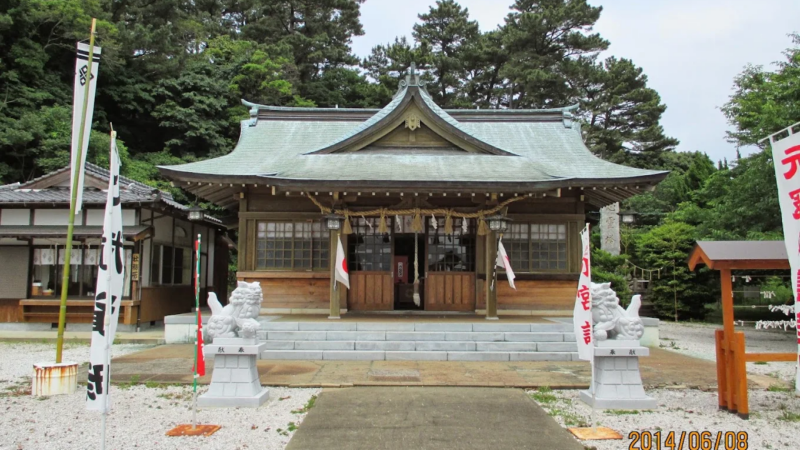
Hasami Shrine (Nagasaki Prefecture) Complete Guide: A Thorough Explanation of History, Deities, Blessings, and How to Visit
Hasami Shrine, located in Hirado City, Nagasaki Prefecture, is a historic shrine that attracts the faith of the local community. This article provides a detailed explanation of everything you need to know before visiting, from the historical background of Hasami Shrine to its enshrined deities, blessings, how to visit, and access information.
What is Hasami Shrine?
Hasami Shrine (Hazami Jinja) is a shrine located in Hirado City, Nagasaki Prefecture, and has long been cherished as a center of faith for the local residents. It is deeply intertwined with the history of the Hirado region and has been carefully preserved as the guardian deity of the area to this day.
The name of the shrine, “Hasami,” is thought to originate from the geographical characteristics and historical background of the region, reflecting Hirado’s proximity to the sea.
Location and Environment of the Shrine
Hasami Shrine is located in a place surrounded by the rich natural environment of Hirado City. Hirado is located in the northern part of Nagasaki Prefecture and has flourished since ancient times as a key point for maritime traffic. The area surrounding the shrine is a quiet residential area with rural landscapes, offering a peaceful atmosphere for visitors.
History of Hasami Shrine
Origin of Founding
While detailed records regarding the exact founding date of Hasami Shrine are limited, local tradition suggests it has been located in this area since ancient times. From ancient to medieval times, the Hirado region developed as a vital hub for maritime traffic, and many shrines and temples were built.
Hasami Shrine is also believed to have been founded within this historical context as a place to pray for the safety and prosperity of the local residents.
The Relationship Between Hirado’s History and the Shrine
From the Sengoku period to the Edo period, Hirado prospered as a castle town of the Matsuura clan. It was also known as an international trading port where Portuguese and Dutch ships arrived, playing an important role in Japanese history.
Hasami Shrine has walked hand in hand with the development of Hirado, functioning as a spiritual pillar of the local community. In particular, it is said that the shrine was deeply revered by those involved in the fishing industry, who prayed for safe maritime traffic and abundant catches.
Changes Since the Modern Era
Even after the Meiji-era separation of Shinto and Buddhism and the social changes of the post-war period, Hasami Shrine has continued to attract worshippers as the local guardian deity. A local residents’ parishioner organization supports the maintenance and management of the shrine, and various festivals are held throughout the year.
Deities and Divine Virtues
Main Deity
The deities enshrined at Hasami Shrine are worshipped based on local traditions and beliefs. Like many local shrines, they have the characteristics of guardian deities and tutelary deities of the region, and are revered as beings that watch over all aspects of the lives of the residents.
Benefits and Divine Virtues
Hasami Shrine is believed to offer the following benefits:
Family Safety and Health
As the local guardian deity, it is believed to protect the health and safety of all family members.
Abundant Harvests and Business Prosperity
There is a belief that the shrine prays for the prosperity of those engaged in agriculture and commerce.
Prayers for Maritime Safety and Abundant Catch
Located near the sea in Hirado, this shrine is also a place of worship for those involved in fishing and sailing, who pray for safety.
Protection from Misfortune and Good Fortune
Many visitors come to pray for protection from misfortune at important life events and for improved luck.
Peace and Well-being of the Community
As the guardian deity of the region, it is considered a watchful presence for the peace and development of the entire community.
Highlights of the Shrine Grounds
Main Hall and Worship Hall
The main hall and worship hall of Hasami Shrine preserve the traditional style of shrine architecture. While not large in scale, the shrine maintains a pure and serene atmosphere thanks to the faith of the local people and meticulous maintenance.
Torii Gate and Approach
A torii gate stands at the entrance to the shrine, leading to the approach path that continues to the main hall. Walking along the approach allows one to escape the hustle and bustle of everyday life and calm their mind in a sacred space.
Shrines within the Precincts and Subsidiary Shrines
Around the main shrine building, there may be smaller shrines and subsidiary shrines reflecting local beliefs. Each of these small shrines embodies the history and faith of the region.
Sacred Trees and Natural Environment
The shrine grounds contain trees that have been considered sacred since ancient times, as well as plants that display beautiful scenery throughout the seasons. This natural environment enhances the spiritual power of the shrine and provides peace to worshippers.
Annual Events and Festivals
Grand Festival
Hasami Shrine holds various festivals throughout the year. The Grand Festival, in particular, is the most important festival, with the participation of all local residents. It includes a procession of portable shrines and dedication ceremonies, providing an opportunity to strengthen the bonds of the local community.
New Year’s Visit
At the start of the new year, many parishioners and local residents visit the shrine for their first visit of the year. The shrine is bustling with worshippers praying for safety and happiness throughout the year.
Setsubun Festival
During Setsubun in February, events such as bean-throwing are sometimes held. It is a popular traditional event for warding off evil and inviting good fortune.
Summer Festival
In the summer, local summer festivals are sometimes held, with the shrine being the center of the festivities. Bon Odori (traditional Japanese dance) and food stalls liven up the community.
Autumn Harvest Festival
In autumn, a festival is held to give thanks for a bountiful harvest. Primarily composed of parishioners engaged in agriculture, offering thanks for the year’s harvest.
Etiquette and Manners for Visiting the Shrine
Basic Way to Visit
When visiting Hasami Shrine, please observe the following basic etiquette:
1. Bowing at the Torii Gate
Bow before passing through the torii gate to show respect for entering the sacred area.
2. How to Walk Along the Approach
The center of the approach is considered the path of the gods, so it is polite to walk along the sides.
3. Purification at the Water Basin
If there is a water basin, scoop water with the ladle and purify your left hand, right hand, and mouth in that order.
4. Worship at the Main Hall
At the main hall, worship using the “two bows, two claps, one bow” ritual.
Attire for Worship
Except for special festivals, everyday clothing is acceptable for worship, but please aim for clean and subdued attire. It is best to avoid revealing or overly flashy clothing.
Photography
Photography is generally permitted on the shrine grounds, but please refrain from taking pictures inside the main hall or in sacred areas. Also, please be considerate of other worshippers.
Access Information
Location
Hasami Shrine is located in Hirado City, Nagasaki Prefecture. For the specific address, please refer to the Hirado City Tourist Information Center or local information boards.
Access by Public Transportation
By Train
The nearest major station is JR Sasebo Station. You will need to transfer to a bus bound for Hirado from there.
By Bus
From Sasebo Station, take a Nishihi Bus bound for Hirado, get off at the nearest bus stop, and then walk.
Access by Car
From Fukuoka
Take the Nishikyushu Expressway, exit at Sasa IC, and proceed along National Route 204 towards Hirado.
From Nagasaki City
Take National Route 206 and National Route 204 towards Hirado.
Parking
Depending on the size of the shrine, there may not be a dedicated parking lot. Please use nearby public parking lots, or temporary parking lots may be set up during festivals.
Nearby Tourist Attractions
Hirado Castle
Hirado Castle, a symbol of Hirado, is a historical building that flourished as the residence of the Matsuura clan. From the castle tower, you can enjoy a panoramic view of Hirado’s beautiful coastline.
Hirado Xavier Memorial Church
This church symbolizes Hirado, the first Christian mission site in Japan, and its unique architectural style is a highlight.
Matsuura Historical Museum
This museum exhibits valuable historical materials from the Matsuura family, the lords of the Hirado domain, allowing you to gain a deep understanding of Hirado’s history.
Hirado Dutch Trading Post
This is a reconstructed facility of the Dutch trading post, which was the only window to Western trade during Japan’s isolationist period in the Edo era.
Kawauchi Pass
A scenic spot where you can enjoy Hirado’s nature, with an idyllic landscape of grazing cows.
History and Culture of Hirado
Hirado as an International Trading Port
From the 16th to the 17th centuries, Hirado flourished as a trading port with Portugal, Spain, the Netherlands, and England. During this period, Hirado was at the forefront of international exchange in Japan and a window into which Western culture flowed.
History of Hidden Christians
The Hirado region has a history of hidden Christians who continued to practice their faith during the period of religious persecution. A unique religious culture was formed, where Shinto and Christian beliefs were intricately intertwined.
Traditional Industries of Hirado
Hirado is a region with a thriving fishing industry, particularly known for its catches of horse mackerel and squid. Livestock farming, including Hirado beef, is also an important industry in the region.
Precautions When Visiting Shrines
Visiting Hours
Shrines are generally open for daytime visits, but it should be avoided at night due to darkness. Hours may also change during festivals and special events.
Seasonal Precautions
Spring
Those with hay fever should remember to take precautions.
Summer
The sun is strong, so prepare a hat and sunscreen. Insect repellent spray is also effective.
Autumn
There is a large temperature difference between morning and evening, so it’s a good idea to bring a jacket.
Winter
Hirado is close to the sea, so it can be windy. Please take thorough precautions against the cold.
During Typhoons and Bad Weather
During typhoon season or heavy rain, it is recommended to refrain from visiting the shrine or to check the shrine’s status beforehand.
Connection with the Community
Parishioner Organization
Hasami Shrine is supported by the local parishioner organization. The parishioners are involved in the maintenance and management of the shrine and the operation of festivals, passing down their faith across generations.
Participation in Local Events
The shrine is central to various local events and is deeply connected to local events such as sports days and cultural festivals.
Connection with Children
As a venue for ceremonies celebrating children’s growth, such as Shichi-Go-San (a traditional Japanese rite of passage for children) and Hatsumiyamairi (a first shrine visit for newborns), the shrine plays a central role in the local child-rearing culture.
About Goshuin (Shrine Seals)
Issuance of Goshuin
Whether or not Goshuin are issued at Hasami Shrine depends on the size and structure of the shrine. For smaller shrines, there may not be a resident priest, so it’s recommended to check in advance.
Goshuincho (Shrine/Temple Stamp Book)
When touring the Hirado area, you can visit multiple shrines and temples. Having a dedicated goshuincho will serve as a memento of your visit.
Hirado Sightseeing and Pilgrimage Plan
1-Day Sightseeing Course
Morning
- Visit to Hasami Shrine (30 minutes)
- Visit to Hirado Castle (1 hour)
- Matsuura Historical Museum (1 hour)
Afternoon
- Hirado Dutch Trading Post (1 hour)
- Hirado Xavier Memorial Church (30 minutes)
- Lunch with seafood cuisine
- Enjoy the spectacular view from Kawauchi Pass (1 hour)
2-Day Sightseeing Course
A recommended course is to visit historical sites in the city on the first day and explore nature and shrines/temples on the second day. Hirado also has hot spring facilities, so you can stay overnight and enjoy sightseeing at a leisurely pace.
Hirado Gourmet Information
Seafood Cuisine
Hirado boasts an abundance of fresh seafood. Flounder, horse mackerel, and squid are particularly famous, and can be enjoyed as sashimi or sushi.
Hirado Beef
Hirado beef, a brand of beef from Hirado, is characterized by its tenderness and juiciness. It can be enjoyed as steak or yakiniku (Japanese barbecue).
Casdosu
A traditional confectionary introduced from Portugal, this luxurious sweet consists of sponge cake coated with egg yolk and sugar.
Hirado Chanpon
Nagasaki’s famous chanpon can also be enjoyed in Hirado. It’s a dish generously using local seafood.
Accommodation Information
Hotels & Ryokans
Hirado offers a variety of accommodations, from resort hotels overlooking the sea to historic hot spring inns.
Homestays & Guesthouses
For those who want to experience the local culture more deeply, homestays and guesthouses are recommended. You can enjoy interacting with local people.
Detailed Access Information to Hirado
From Fukuoka Airport
From Fukuoka Airport, take a bus to Hakata Station, then take the JR train to Sasebo Station. From there, take a bus to Hirado. The journey takes approximately 3 hours.
From Nagasaki Airport
From Nagasaki Airport, take a bus to Sasebo Station, then take a bus to Hirado. The journey takes approximately 2 hours and 30 minutes.
Using a Rental Car
To efficiently sightsee around Hirado, using a rental car is convenient. You can rent a car at Sasebo Station or Nagasaki Airport.
Summary
Hasami Shrine is a community-based shrine located in Hirado City, Nagasaki Prefecture. It has long been revered by local residents amidst Hirado’s rich history and culture.
It is believed to offer blessings for all aspects of life, including family safety, abundant harvests, and maritime safety, and is cherished by the local people as their guardian deity. When visiting Hirado, be sure to also visit Hasami Shrine and experience the local faith and culture.
Hirado has a rich history as an international trading port and boasts numerous attractions, including Hirado Castle, the Dutch trading post, and the Xavier Memorial Church. Its beautiful nature, fresh seafood, and warm hospitality will captivate visitors.
By visiting Hasami Shrine, you can feel Hirado’s deep history and culture, as well as the strong bonds of its community. Take some time to pray in peace and fully appreciate the charm of Hirado.