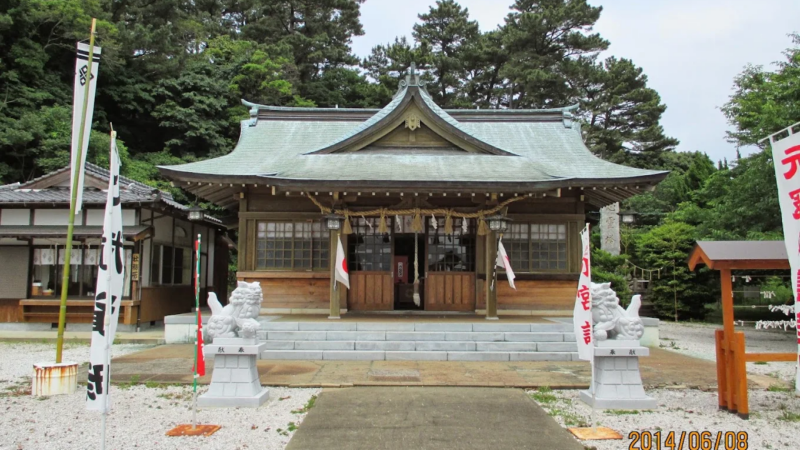
Sonogi Shrine (Higashisonogi Town, Nagasaki Prefecture) Complete Guide | History, Goshuin (Shrine Seal), and Access Information
Sonogi Shrine, located in Higashisonogi Town, Higashisonogi District, Nagasaki Prefecture, is a historic shrine built on the site of the main inn of Sonogi-juku, a post town on the Nagasaki Kaido during the Edo period. This shrine, which has watched over the area of Sonogi, a thriving transportation hub, has records of visits from famous figures such as Saito Mokichi and Siebold. This article provides detailed information useful for visiting Sonogi Shrine, including its history, enshrined deities, goshuin information, and access methods.
History and Origins of Sonogi Shrine
A Shrine Located in a Post Town on the Nagasaki Kaido
Higashisonogi Town, where Sonogi Shrine is located, was a region that flourished greatly as a post town on the Nagasaki Kaido during the Edo period. The Nagasaki Kaido was one of the secondary roads developed by the Edo Shogunate, and was an important transportation route connecting Kokura to Nagasaki. Sonogi-juku held a particularly important position within this route, functioning as a crucial transportation hub where the Nagasaki Kaido and the Hirado Kaido intersected.
The site where Sonogi Shrine stands was formerly the location of the Sonogi-juku honjin (main inn). A honjin was a high-status lodging facility where daimyo (feudal lords) and shogunate officials stayed, and it was the central facility of the post town. The construction of the shrine in this historically significant location speaks to the importance of Sonogi as a center of religious belief.
Sonogi as a Transportation Hub
Sonogi played an important role not only as a land route but also as a hub for sea routes. As a junction with the Hirado Kaido and connected to the Tokitsu sea route, it saw a bustling flow of people and goods. This geographical advantage was the driving force behind Sonogi’s development into a commercial and cultural center in northern Nagasaki Prefecture.
The former Sonogi Port was built with stone walls, and historical buildings that still retain the atmosphere of the Edo period are scattered throughout the area. Along with historical sites such as the Genroku Wharf and Yasaka Shrine, Sonogi Shrine is a valuable place that conveys the history of the region to the present day.
Connections with Notable Figures
Many historical figures have visited Sonogi Shrine and the Sonogi area.
The poet Saito Mokichi is said to have been impressed by the scenery and history of Sonogi during his visit. Furthermore, there are records of Philipp Franz von Siebold, a German physician and naturalist who came to Japan in the late Edo period, also visiting Sonogi. Siebold actively conducted research in the surrounding areas during his activities in Nagasaki, and Sonogi was one of his research sites.
In addition, Sonogi is an important place in the history of Christianity in Japan. In 1597, the Twenty-Six Martyrs of Japan, who were to be executed by order of Toyotomi Hideyoshi, are said to have departed from Sonogi Port for Nagasaki. This historical fact demonstrates Sonogi’s importance in the history of Christianity in Nagasaki.
Deities and Benefits of Sonogi Shrine
About the Deities
The deities enshrined at Sonogi Shrine have been revered since ancient times as guardian deities of the region. The name of the shrine, “Sonogi,” is a place name that has referred to this region since ancient times and is a historical name mentioned in the “Hizen Province Fudoki” (ancient provincial gazetteer).
The Sonogi area flourished as the center of Sonogi County in Hizen Province since ancient times. During the Kofun period, the Hisagozuka Kofun (a keyhole-shaped burial mound) was constructed here, indicating that it was a land ruled by powerful figures from ancient times. As a shrine in a region with such a historical background, Sonogi Shrine has attracted the faith of local residents.
Benefits and Divine Virtues
Sonogi Shrine is considered the local guardian deity and is believed to offer various benefits. The main benefits include:
- Matchmaking and Romantic Success: Believed to bring good fortune in relationships for worshippers.
- Traffic Safety: Located at a former transportation hub, it protects travelers safely.
- Business Prosperity: As the guardian deity of a prosperous post town.
- Family Safety: As the local guardian deity, it watches over the peace and well-being of families.
- Exorcism and Good Fortune: Believed to ward off misfortune in daily life and bring good luck.
Sonogi Shrine Grounds and Highlights
Main Hall and Shrine Architecture
Sonogi Shrine’s main hall is built in the traditional style of shrine architecture. Located on the historical site of a former inn, the shrine is an important structure that tells the history of the region.
The grounds are neatly maintained, creating a tranquil atmosphere that welcomes worshippers. Trees surround the shrine, creating a tranquil space far removed from the hustle and bustle of the city.
Surrounding Historical Environment
The area surrounding Sonogi Shrine retains the atmosphere of an Edo-period post town. The approximately 500-meter stretch of townscape centered around Shianbashi, where the Nagasaki and Hirado roads intersect, is preserved as a scenic resource of Nagasaki Prefecture.
Around the former Sonogi Port, historical buildings such as stone-walled piers and Yasaka Shrine are scattered, allowing visitors to enjoy a historical walk in conjunction with their shrine visit. Visiting these historical sites will give you a real sense of the prosperity of Sonogi-juku during the Edo period.
Collaboration with Cultural Properties in Higashi-Sonogi Town
When visiting Sonogi Shrine, we recommend also visiting the surrounding cultural facilities. At the Higashi Sonogi Town Historical and Folk Museum, you can see artifacts excavated from the Hisagozuka Kofun, one of the largest keyhole-shaped burial mounds in Nagasaki Prefecture, as well as exhibits on ancient Sonogi history and traditional performing arts.
Admission to the museum is free. Opening hours are 10:00 AM to 5:00 PM (last entry at 4:30 PM), and it is closed every Tuesday. Please note that it is also closed during the New Year holidays (December 29th to January 3rd).
Information on Goshuin (Shrine Seals) at Sonogi Shrine
About the Issuance of Goshuin
Goshuin are available at Sonogi Shrine. Goshuin are popular among many visitors as proof of worship and a tangible representation of their connection to the shrine.
When receiving a Goshuin, it is customary to first pray at the main shrine before visiting the shrine office. Please bring your Goshuincho (seal book) and make your request politely.
Manners for Receiving a Goshuin (Shrine/Temple Stamp)
When receiving a Goshuin, please observe the following manners:
- Complete your prayers first: The Goshuin is proof of your prayers, so always pray at the main shrine first.
- Prepare a Goshuincho (Shrine/Temple Stamp Book): Please prepare a dedicated Goshuincho. Avoid using a regular notepad.
- Prepare the exact amount: Please prepare the offering (generally 300-500 yen) in exact change.
- Wait quietly: Please wait quietly while the Goshuin is being written.
- Express your gratitude: After receiving the Goshuin, express your gratitude by saying “Thank you.”
Shrine Office Hours
Shrine office hours vary depending on the shrine, so if you want to be sure to receive a Goshuin, it is recommended to check by phone in advance. Generally, the hours are from 9:00 AM to around 4:00 PM, but they may not be able to assist you during religious ceremonies or events.
How to Access Sonogi Shrine
Basic Information
- Address: 1880-1 Kuramoto-go, Higashisonogi-cho, Higashisonogi-gun, Nagasaki Prefecture 859-3808
- Phone Number: It is recommended to check with the Higashisonogi Town Tourism Association in advance.
Access by Public Transportation
Using the JR Omura Line
The nearest station to Sonogi Shrine is Sonogi Station on the JR Omura Line.
- Walking Distance from Sonogi Station: Approximately 4 minutes (approximately 287 meters)
Sonogi Station is a station on the JR Omura Line, which connects Nagasaki and Sasebo, and express trains also stop there. The shrine is very close to the station, making walking convenient.
Using the Bus
If using a local bus, the nearest stop is Sonogi Honmachi Bus Stop.
- Walking distance from Sonogi Honmachi bus stop: Approximately 2 minutes (approximately 120 meters)
The shrine is very close to the bus stop and easily accessible.
Access by Car
From Nagasaki
If using the Nagasaki Expressway, exit at the Higashi Sonogi Interchange. From the interchange, it’s about a 10-minute drive on local roads to Sonogi Shrine.
If using National Route 205, head north from Isahaya towards the center of Higashi Sonogi town.
From Sasebo
Head south on National Route 205 towards the center of Higashi Sonogi town. Once you enter the town of Sonogi, you can find the shrine by following the signs and directions from locals.
Parking
It is recommended to check in advance whether the shrine has a parking lot and for details. There are facilities nearby, such as the roadside station “Sonogi no Sho,” and it’s possible to visit on foot using their parking lot.
Combining with Nearby Tourist Attractions
When visiting Sonogi Shrine, combining it with the following nearby attractions will make your visit more fulfilling:
- Michi-no-Eki Sonogi-no-Sho: Popular for its specialty “Chacha-yaki” made with local Sonogi tea.
- Higashi-Sonogi Town Historical and Folk Museum: A facility where you can learn about the history of ancient Sonogi.
- Hisagozuka Kofun: One of the largest keyhole-shaped burial mounds in Nagasaki Prefecture.
- Around the Former Sonogi Port: Historical sites such as Edo-period stone walls and the Genroku pier.
- Yasaka Shrine: A historic shrine located near Sonogi Port.
Historical Walking Courses Around Sonogi Shrine
Walking the Nagasaki Kaido and Sonogi-juku
Starting from Sonogi Shrine, we introduce a walking course that takes you through the streets that retain the atmosphere of an Edo-period post town.
Recommended Walking Route (Estimated Time: Approx. 2-3 Hours)
- Sonogi Shrine (Visit and collect Goshuin stamp: 30 minutes)
- Shianbashi Area (Intersection of Nagasaki Kaido and Hirado Kaido, 5-minute walk)
- Former Sonogi Post Townscape (View historical buildings, 15-minute walk)
- Former Sonogi Port (View stone walls and Genroku Wharf, 10-minute walk)
- Yasaka Shrine (Visit, 5-minute walk)
- Michi-no-Eki Sonogi-no-Sho (Rest and souvenir shopping, 5-minute drive)
- Higashi-Sonogi Town Historical and Folk Museum (View exhibits, 5-minute drive)
- Hisagozuka Tumulus (Stroll through historical park, 10-minute walk)
Visiting Sites Associated with the Twenty-Six Martyrs
For those interested in the history of Christianity in Japan, we recommend visiting Sonogi Port, the port from which the 26 martyrs departed for Nagasaki. On February 5, 1597, 26 Christians, arrested in Kyoto and Osaka, set sail from this port for Nagasaki and were martyred on Nishizaka Hill.
Currently, the Twenty-Six Martyrs Memorial Museum is located in Nishizaka, Nagasaki City, and Sonogi Port is a historically significant site as its starting point.
Local Products and Gourmet Food of Higashi-Sonogi Town
Sonogi Tea
Higashi-Sonogi Town is known as a production area for “Sonogi Tea.” The warm climate and rich natural environment facing Omura Bay are ideal for cultivating high-quality tea. Sonogi Tea is known as Tamaryokucha (Guricha), characterized by its unique rounded tea leaf shape and mellow flavor.
Various products using Sonogi Tea are sold at the roadside station “Sonogi no Sho.” Particularly popular is “Chacha-yaki,” a baked confection made with honey-infused dough and generously filled with white bean paste infused with Sonogi tea. It’s a popular souvenir.
Seafood and Mountain Delicacies
In Higashisonogi Town, facing Omura Bay, you can enjoy fresh seafood. Furthermore, the warm climate allows for an abundance of agricultural products, offering seasonal flavors.
Annual Events and Festivals
Grand Festival
Sonogi Shrine holds various Shinto rituals and festivals throughout the year. During the Grand Festival, local residents gather for traditional ceremonies. It’s recommended to check the specific dates in advance.
First Shrine Visit of the New Year
Many worshippers visit the shrine for their local guardian deity’s first shrine visit of the year. It’s bustling with people praying for safety throughout the year, family well-being, and business prosperity.
Other Annual Events
Seasonal Shinto rituals such as the Setsubun Festival, the Summer Purification Ceremony, and the Autumn Harvest Thanksgiving Festival are held. These events are important opportunities to preserve and pass on the region’s traditional culture.
Manners and Etiquette for Visiting Shrines
Basic Etiquette for Visiting Shrines
We will introduce basic etiquette for visiting shrines.
How to Pass Through the Torii Gate
- Bow before the torii gate.
- Walk along the edge of the path, as the center is considered the path of the gods.
- Maintain a reverent attitude even when entering the shrine grounds.
How to Purify Yourself at the Water Basin
- Hold the ladle in your right hand and purify your left hand.
- Switch the ladle to your left hand and purify your right hand.
- Hold the ladle in your right hand again, receive water in your left hand, and rinse your mouth (do not put your mouth directly on the ladle).
- Purify your left hand once more.
- Stand the ladle upright and pour water over the handle to purify it.
- Return the ladle to its original position.
How to Worship at the Main Hall
- Stand in front of the offering box and bow slightly.
- Gently place your offering in the box.
- If there is a bell, ring it.
- Bow twice, clap twice, bow once
- Bow deeply twice (two bows)
- Clap your hands twice at chest height (two claps)
- Finally, bow deeply once (one bow)
- Take a few steps back, bow once, and leave.
Regarding Attire
There are no specific dress code requirements, but please be mindful that this is a sacred place and dress cleanly and modestly. Especially in summer, avoid overly revealing clothing.
Points to Note When Visiting Sonogi Shrine
Regarding Photography
Photography is generally permitted on the shrine grounds, but please note the following:
- Do not take photos in areas where photography is prohibited, such as inside the main hall.
- Be considerate of other worshippers.
- Use flash sparingly.
- Commercial photography requires prior permission.
Visiting Hours
The shrine grounds are generally open for worship at any time during the day, but the shrine office has limited operating hours. If you wish to receive a Goshuin (temple/shrine stamp) or amulet, please check the operating hours in advance.
Seasonal Highlights
- Spring: Enjoy the beautiful fresh greenery and a refreshing visit.
- Summer: Experience the coolness of the lush green grounds.
- Autumn: The autumn leaves color the grounds.
- Winter: Enjoy a solemn visit in a tranquil atmosphere.
Summary: The Charm of Sonogi Shrine
Sonogi Shrine is an important shrine that conveys the history of Sonogi-juku, which flourished as a key point on the Nagasaki Kaido road. Located on the historical site of the former honjin (main inn), this place, visited by figures such as Saito Mokichi and Siebold, is a valuable place to experience the transportation culture of the Edo period.
It is believed to bring blessings for matchmaking and traffic safety, and continues to attract many worshippers as the local guardian deity. Goshuin are available, making it a recommended destination for those who enjoy visiting shrines.
Located just a 4-minute walk from JR Sonogi Station, Sonogi Town boasts excellent accessibility, and the surrounding area is dotted with historical sites such as the Higashi Sonogi Town Historical and Folk Museum, the Hisagozuka Tumulus, and the former Sonogi Port. At the roadside station “Sonogi no Sho,” you can enjoy local specialties such as the famous “Chacha-yaki” and Sonogi tea.
When visiting Nagasaki Prefecture, be sure to visit Sonogi Shrine and experience the history and culture of this Edo-period post town. Find peace of mind in the tranquil grounds and pray for safe travels and good fortune.
The rich nature and history of Higashi Sonogi Town, along with encounters with its warm and friendly people, are sure to create wonderful memories.