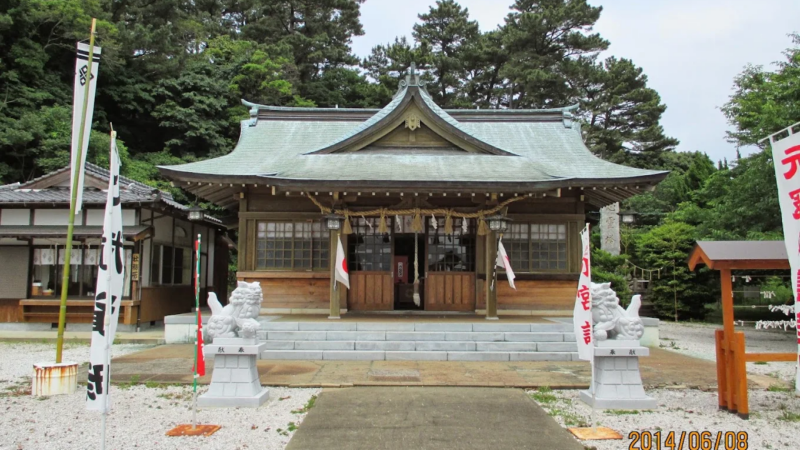
Goshajinja Shrine (Goto City, Nagasaki Prefecture) Complete Guide | Thorough Explanation of Goshuin (Shrine Seals), Access, and History
Goshajinja Shrine, located in Kami-Otsu-cho, Goto City, Nagasaki Prefecture, is a historic shrine that conveys the history and culture of the Goto Islands. This article provides detailed information you should know before visiting Goshajinja Shrine, including how to obtain goshuin (shrine seals), highlights of the grounds, history, and access methods.
Basic Information about Goshajinja Shrine
Location and Access
Address: 859 Kami-Otsu-cho, Goto City, Nagasaki Prefecture 853-0013 (sometimes listed as 861)
Phone Number: 0959-74-2404
Goshajinja Shrine is located in the Kami-Otsu district of Goto City, easily accessible from the center of Fukue Island. Hachiman Shrine is also nearby, and it is recommended to visit both when touring the shrines of Goto.
Access Information
Access by Car:
- Approximately 15 minutes by car from Fukue Port
- Approximately 20 minutes by car from Fukue Airport
- Parking: Parking is available around the shrine grounds.
Public Transportation:
- Take a bus from Goto City towards Kami-Otsu.
- A few minutes’ walk from the nearest bus stop.
Renting a Car is Recommended:
Renting a car is the most convenient way to visit shrines in the Goto Islands. Rental car companies are available at Fukue Port and Fukue Airport.
Goshajinja Shrine’s Goshuin (Shrine Seal) Information
About Receiving Goshuin
Goshajinja Shrine offers Goshuin. According to visitor experiences, Goshuin are given at the priest’s residence located directly in front of the torii gate.
Goshuin (Shrine/Temple Stamp) Reception Procedure:
- First, complete your prayers within the shrine grounds.
- Exit the torii gate and proceed to the priest’s residence directly in front.
- Press the intercom and request a goshuin.
- Pay the offering fee (usually around 300-500 yen).
Points to Note Regarding Goshuin Reception
- The priest may be absent, so please visit with ample time.
- Visiting in the morning or early afternoon is recommended.
- Bring your goshuincho (stamp book) with you (pre-written stamps may be available).
- Be polite and remember to express your gratitude.
About Electronic Goshuin
In recent years, services allowing you to obtain electronic goshuin through apps such as “Yaoyorozu no Kami” (Eight Million Gods) have become available. Since you can save them as a memento on your smartphone, it’s a convenient option if you can’t bring your goshuincho.
History and Origins of Goshajinja Shrine
Origin of the Name of Goshajinja Shrine
The name Goshajinja Shrine originates from the fact that it enshrines multiple deities. There are several shrines named “Goshajinja” throughout Japan, and the Goshajinja Shrine in Goto City is said to be the 77th largest (out of 94 shrines).
About the Enshrined Deities
Goshajinja Shrine enshrines multiple deities. Generally, the following deities are often enshrined at Goshajinja Shrines:
- Amaterasu Omikami
- Toyouke Omikami
- Other deities associated with the region
For specific information about the enshrined deities, please ask the chief priest during your visit.
Historical Background of Shrines in Goto
The Goto Islands have flourished since ancient times as a key trading point with the continent, and a unique culture has developed there. There are 96 shrines in Goto City, accounting for approximately 7.31% of the total number of shrines in Nagasaki Prefecture.
The shrines of Goto have played a vital role throughout history as centers of faith for the local people and as places that strengthen community ties. The unique religious background of Goto, including its coexistence with Christian culture, is also an interesting element in understanding the history of the shrines.
Highlights of the Shrine Grounds
Worship Hall
The worship hall of Goshajinja Shrine maintains the style of traditional shrine architecture. According to visitor records, it presents a beautiful appearance during October visits, and its different appearance can be enjoyed with each season.
Procedure for Worship:
- Bow before the torii gate
- Walk avoiding the center of the approach path
- Purify your body and mind at the water basin
- Bow twice, clap twice, and bow once in front of the worship hall
Water Basin
There is a water basin on the shrine grounds where you can purify your body and mind before worship. Let’s visit the shrine with a pure heart by following the proper etiquette for purification.
Procedure for Purification:
- Take the ladle with your right hand and purify your left hand.
- Switch the ladle to your left hand and purify your right hand.
- Switch the ladle back to your right hand, receive water in your left hand, and rinse your mouth.
- Purify your left hand once more.
- Hold the ladle upright, purify the handle, and return it to its original position.
Torii Gate
The torii gate, the entrance to the sacred area, is the face of the shrine. When passing through the torii gate, bow to show respect to the gods.
Atmosphere of the Shrine Grounds
The grounds of Goshajinja Shrine are enveloped in a quiet and peaceful atmosphere. You can spend a relaxing time in Goto, away from the hustle and bustle of the city.
Shrine Pilgrimage in Goto City
Recommended Shrines Around Goshajinja Shrine
Goto City has as many as 96 shrines, so you can enjoy shrine pilgrimage. When visiting Goshajinja Shrine, we recommend also visiting the following shrines:
Hachiman Shrine:
- Located close to Goshajinja Shrine
- Address: 631-635 Shimo-Otsu-cho, Goto City, Nagasaki Prefecture
- Phone: 0959-72-3057
- One of Goto City’s representative shrines
Other major shrines in Goto City:
- Shiratori Shrine
- Sumiyoshi Shrine
- Sanno Shrine
Visiting these shrines will allow you to gain a deeper understanding of Goto’s history and culture.
Tips for Efficient Shrine Visits
- Plan your route in advance: Check the location of each shrine using a map app and create an efficient route.
- Allow plenty of time: Receiving Goshuin (shrine stamps) and visiting shrines can take longer than expected.
- Utilize rental cars: Places that are difficult to reach by public transport can be visited efficiently by car.
- Interact with locals: You may be able to obtain information not found in guidebooks from shrine priests and local residents.
About Goto City
Overview of Goto City
Goto City is located in the western part of Nagasaki Prefecture, in the southwestern part of the Goto Islands. It consists of Fukue Island, Kuga Island, Naru Island, and other inhabited islands, as well as numerous uninhabited islands.
Population: Approximately 35,000 (declining trend)
Area: Approximately 420 square kilometers
Climate: Warm oceanic climate
Access to Goto City
Airplane:
- Approximately 30 minutes from Nagasaki Airport to Fukue Airport
- Approximately 40 minutes from Fukuoka Airport to Fukue Airport
Ferry/High-Speed Boat:
- Approximately 1 hour 25 minutes by high-speed boat or 3 hours by ferry from Nagasaki Port to Fukue Port
- There is also a route from Sasebo Port
Attractions in Goto City
Goto City sightseeing spots that can be enjoyed in conjunction with shrine visits:
World Heritage Site Related:
- Former Gorin Church on Kuga Island (Component of the World Cultural Heritage Site “Hidden Christian Sites in the Nagasaki Region”)
- Egami Catholic Church on Naru Island
Natural Landscape:
- Osezaki Lighthouse (Spectacular view of the East China Sea)
- Onitake (a lava dome formed by volcanic activity)
- Takahama Beach (one of Japan’s Top 100 Beaches)
Gourmet:
- Goto Udon (one of Japan’s three great udon noodles)
- Fresh seafood
- Goto Beef
Manners and Etiquette for Visiting Shrines
Basic Manners for Visiting Shrines
There are manners to observe when visiting a shrine. When visiting Goshajinja Shrine, please keep the following points in mind.
Attire:
- Dress neatly and cleanly.
- Avoid clothing that exposes too much skin.
- Remove your hat before passing through the torii gate.
Behavior within the Shrine Grounds:
- Do not speak loudly.
- Do not run.
- Please refrain from bringing pets (depending on the area).
- Smoking and eating are permitted only in designated areas.
Photography:
- Photography inside the main hall is generally prohibited.
- Please be considerate and avoid including other worshippers in your photos.
- Please check in advance before using a tripod.
About Offerings
Amount:
- There are no set amounts; it’s a matter of feeling.
- Generally, 5 yen (good fortune), 15 yen (abundant good fortune), and 45 yen (ever-ending good fortune) are considered auspicious.
- Banknotes are acceptable.
How to Place an Offering:
- Place the offering quietly into the offering box.
- Please place it gently, rather than throwing it in.
Goto Accommodation and Sightseeing Plan
Recommended Accommodation Area
For accommodation in Goto City, Fukue City on Fukue Island is convenient. There are various types of accommodations available, including hotels, ryokans (traditional Japanese inns), minshuku (guesthouses), and guesthouses.
Fukue City Center:
- Abundant restaurants and convenience stores
- Good access to the port and bus terminal
Seaside Resort:
- Enjoy beautiful ocean views
- Relax in a quiet environment
1-Night, 2-Day Model Course
Day 1:
- Morning: Arrive at Fukue Port or Fukue Airport, arrange rental car
- Afternoon: Visit Goshajinja Shrine and Hachimanjinja Shrine, sightseeing in the city center
- Evening: Goto Udon dinner in Fukue city center
- Night: Stay at a hotel in the city center
Day 2:
- Morning: Sightseeing of natural landscapes such as Osezaki Lighthouse and Onidake Mountain
- Afternoon: Church tour or beach visit
- Evening: Depart from Fukue Port or Fukue Airport
2-Night, 3-Day Model Course
In addition to the 1-night, 2-day course:
- Island sightseeing to Kugashima and Narushima Islands
- Visit more shrines
- Activities such as fishing and diving
History and Culture of the Goto Islands
The Goto Islands and the Japanese Envoys to Tang China
The Goto Islands played an important role as a port of call for ancient Japanese envoys to Tang China. As a gateway for exchange with the continent, a unique culture flourished.
History of Hidden Christians
During the Edo period, Christians persecuted under the ban on Christianity migrated to the Goto Islands and continued to practice their faith in hiding. This history is still carefully preserved today as part of the “Hidden Christian Sites in the Nagasaki Region,” which was registered as a World Cultural Heritage site in 2018.
Coexistence of Shinto Shrines and Christianity
In the Goto Islands, a rare religious culture can be observed where Shinto shrines and Christian churches coexist. This unique cultural background offers an interesting perspective when visiting the shrines of the Goto Islands.
Goshajinja Shrines by Season
Spring (March-May)
This season boasts a mild climate and pleasant weather, with beautiful fresh greenery. During cherry blossom season, you can enjoy cherry blossom viewing throughout the Goto Islands. ### Summer (June-August)
This is the peak season for swimming and tourism. Trips combining shrine visits with marine leisure activities are popular. Be prepared with rain gear during the rainy season.
Autumn (September-November)
After the typhoon season, the weather stabilizes, making it an ideal time for sightseeing. Many visitors record visits in October, and this period is recommended for shrine visits.
Winter (December-February)
While relatively mild, the sea can be rough, so be aware of potential ferry cancellations. This is also a season with fewer tourists, allowing for quieter shrine visits.
Goto City Shrine Data
Goto City Shrine Statistics
- Total Number: 96 shrines
- Percentage within Nagasaki Prefecture: 7.31%
- National City/Town/Village Ranking: 231st
This number is remarkably high considering Goto City’s area and population, reflecting the deep-rooted faith within the region.
National Ranking of Goshajinja Shrine
Among all the “Goshajinja Shrines” nationwide, the Goshajinja Shrine in Goto City is ranked 77th (out of 94). Its registered corporate code is “1310005006902”.
Visitor Feedback
Actual Visiting Experiences
Visitors have shared the following comments:
- “It’s a quiet and peaceful shrine.”
- “The head priest was very kind and helpful.”
- “You can get a Goshuin (shrine stamp) at the head priest’s house directly in front of the torii gate.”
- “Visiting it together with Hachiman Shrine is recommended.”
- “It’s a place where you can feel the history of Goto.”
Points to Note When Visiting (Visitor Advice)
- When visiting the head priest’s house, be sure to greet him politely.
- Prepare cash when receiving a Goshuin.
- Plan your visit with plenty of time to spare.
- Checking the location in advance using a map app is recommended.
Combining Shrine Visits with Goto Sightseeing
Shrine and World Heritage Site Visits
By combining a visit to Goto’s shrines with a visit to its World Heritage churches, you can experience the diverse religious culture of Goto.
Recommended Route:
- Morning: Visit Goshajinja Shrine and Hachimanjinja Shrine
- Afternoon: Visit churches such as Dozaki Catholic Church and Mizunoura Church
- Evening: Watch the sunset at Osezaki Lighthouse
Shrine Pilgrimage and Gourmet Tour
We also recommend a shrine pilgrimage while enjoying fresh seafood from Goto and Goto udon noodles.
Gourmet Spots:
- Goto udon specialty restaurants (Tsubaki, Chikusui-tei, etc.)
- Seafood restaurants
- Restaurants serving Goto beef
Shrine Pilgrimage and Nature Experience
Visiting shrines while enjoying the rich nature of Goto is also appealing.
Nature Experience Activities:
- Onitake Trekking
- Sea Kayaking
- Snorkeling
- Fishing
Summary: Points to Note When Visiting Goshajinja Shrine
Goshajinja Shrine (Goto City, Nagasaki Prefecture) is a historic shrine where you can feel the history and culture of the Goto Islands. When visiting the shrine, please keep the following points in mind:
Points to remember when visiting:
- Goshuin (shrine stamp): Receive your Goshuin at the priest’s residence directly in front of the torii gate.
- Access: Renting a car is convenient.
- Time required: Approximately 30 minutes to 1 hour for worship and receiving your Goshuin.
- Nearby sightseeing: Visit other shrines such as Hachiman Shrine in conjunction with your visit.
- Best season: Autumn (September to November) is recommended due to the weather.
Points to remember when traveling to Goto:
- A stay of 1 night or more is recommended.
- Experience both shrine and church visits.
- Enjoy Goto udon noodles and fresh seafood.
- Enjoy the beautiful natural scenery.
Through a visit to Goshajinja Shrine, you can experience the deep history and culture of Goto, as well as the warmth of the local people. If you are planning a trip to the Goto Islands, please visit Goshajinja Shrine and spend some time in peaceful worship.
Nagasaki Prefecture’s Goto City boasts 96 shrines, each with its own unique history and charm. Why not start your shrine-hopping journey around Goto Islands from Goshajinja Shrine? The rich nature, history, and encounters with warm-hearted people are sure to create wonderful memories.