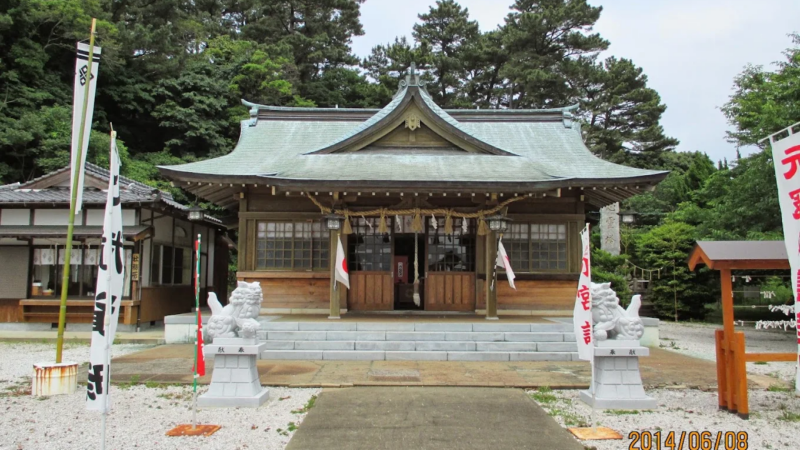
Complete Guide to Arikawa Shrine (Shin-Kamigoto Town, Nagasaki Prefecture) | The History of the Three-Shrine Merger and the Tradition of Arikawa Kagura
Arikawa Shrine, located in Arikawa-go, Shin-Kamigoto Town, Minami-Matsuura District, Nagasaki Prefecture, is an important shrine that conveys the history and culture of the Goto Islands to the present day. Although a relatively new shrine, formed in the 1980s through the merger of three shrines, it is steeped in centuries of local religious history. This article comprehensively introduces information you should know before visiting, from the origins of Arikawa Shrine to its enshrined deities, annual events, and traditional performing arts.
History and Origins of Arikawa Shrine
Circumstances of its Founding through the Merger of Three Shrines
The history of Arikawa Shrine dates back to 1985. In that year, a joint meeting of the three shrines located in the Arikawa area—”Ubagimi Shrine,” “Tenman Shrine,” and “Hachiman Shrine”—was held, and the merger of the three shrines was officially decided.
The merger was driven by social factors such as depopulation and a decline in parishioners in the region. As maintaining each shrine individually became difficult, there was a strong desire to create a single shrine that would serve as the center of faith for the entire Arikawa district, thereby passing on the region’s traditions and culture to future generations.
After the merger, a new shrine building was constructed at the current location, the former site of Tenman Shrine, and a grand relocation ceremony was held in 1987. This ceremony officially marked the beginning of Arikawa Shrine’s role as the central shrine of the Arikawa district.
History of the Three Shrines Before the Merger
Sobogumi Shrine had long been revered as the guardian deity of the region. Sobogumi refers to a female deity who watches over the community, and was particularly revered by women as a goddess of safe childbirth and child-rearing.
Tenman Shrine, dedicated to Sugawara no Michizane, the god of learning, played a central role in the region’s education and culture. It is said that from the Edo period to the Meiji period, many children prayed at this shrine for academic success.
Hachiman Shrine enshrines Homutawake-no-kami (Emperor Ojin), the god of military fortune, and functioned as a shrine protecting the safety and prosperity of the region. In the Arikawa district, where fishing was thriving, it also played an important role as a place to pray for safety at sea.
Deities and Divine Virtues
Main Deities (Three Deities)
At Arikawa Shrine, the main deities of the three merged shrines were inherited, and three deities are still enshrined as the main deities today.
Izanami-no-Okami
The goddess of creation in Japanese mythology, and the deity enshrined at Sobogimi Shrine. As the mother goddess who gives birth to all things, she is believed to have divine virtues such as safe childbirth, child-rearing, matchmaking, and family safety.
Sugawara no Michizane
The enshrined deity of Tenman Shrine, he is known nationwide as the god of learning. He is believed to grant blessings for academic success, passing exams, improving calligraphy, and enhancing literary arts, attracting many worshippers during exam season.
Homudawake no Kami
The enshrined deity of Hachiman Shrine, he is the divine name of Emperor Ojin, the 15th emperor. He is believed to grant blessings for military success, victory in competitions, maritime safety, protection from evil, and family prosperity.
Enshrined Deities (Thirteen Deities)
In addition to the main deity, Arikawa Shrine enshrines thirteen enshrined deities. These deities were also worshipped at the respective shrines before the merger.
- Susanoo-no-Mikoto: God of protection against misfortune and disease
- Kushinada-hime: Goddess of matchmaking and marital harmony
- Kotoshironushi-no-Kami: Two deities are enshrined here; god of business prosperity and fishing
- Oyamatsumi-no-Kami: God of mountains and sake brewing
- Watatsumi-no-Kami: God of the sea and safe voyages
- Ame-no-Hohi-no-Mikoto: God of agriculture and industry
- Tagiri-hime-no-Kami: Goddess of the sea and safe voyages
- Mizuhanome-no-Mikoto: Goddess of Water and Irrigation
Including these deities, a total of sixteen gods are enshrined at Arikawa Shrine, making it a comprehensive shrine that fulfills all kinds of wishes in the region.
Highlights of the Shrine Grounds
Stone Structures Collected from Three Shrines
Of particular note within the grounds of Arikawa Shrine are the stone structures such as torii gates, lanterns, and stone monuments collected from the three merged shrines. These are not merely decorations, but valuable cultural assets that convey the history of each shrine to the present day.
Walking around the grounds, you can see stone monuments inscribed with the construction dates and the names of the donors. Some date back to the late Edo period, providing clues to the state of faith in the Arikawa area at that time.
Features of the Shrine Building
The shrine building, constructed in 1987, follows the traditional style of shrine architecture while incorporating modern construction methods. The wooden main shrine building is constructed to suit the climate and environment of the Goto Islands, and is designed to withstand natural disasters such as typhoons.
The worship hall has an open design and is spacious enough to accommodate many people during local gatherings and events.
Natural Environment of the Shrine Grounds
The grounds of Arikawa Shrine are surrounded by plants nurtured by the warm climate unique to the Goto Islands. You can enjoy the changing seasons, with cherry blossoms in spring, fresh greenery in early summer, and autumn leaves in fall.
In particular, the camellia trees planted on the grounds symbolize the Goto Islands’ reputation as a camellia producing region, and they bloom beautifully from winter to spring.
The Tradition of Arikawa Kagura
A Traditional Performing Art Part of Goto Kagura
In the Arikawa area (excluding Tainoura), the traditional performing art called “Arikawa Kagura” is passed down. This Arikawa Kagura is one of the important elements that make up “Goto Kagura,” which was designated as a National Important Intangible Folk Cultural Property in March 2021.
Goto Kagura is a general term for the kagura (sacred dance) passed down in various parts of the Goto Islands, with each region inheriting its own unique repertoire and dance style. Arikawa Kagura is one of them, and is said to have a history of nearly 400 years.
Characteristics and Repertoire of Arikawa Kagura
Arikawa Kagura is a sacred performing art dedicated at shrine festivals and important local events. It embodies gratitude to the gods and prayers for a bountiful harvest, a good catch of fish, and the safety of the region.
The repertoire includes dances based on mythology and dances praying for a good harvest and a good catch of fish, and is characterized by its elaborate dances using masks and costumes. The dancers perform gracefully, and sometimes powerfully, to the accompaniment of instruments such as flutes and drums.
Arikawa Kagura Evening
Every year on August 12th, before the Obon festival, the “Arikawa Kagura Evening” is held at Arikawa Shrine. This event aims to widely showcase the traditional performing arts passed down in the region and to ensure their transmission to future generations.
The Arikawa Kagura Evening features not only Arikawa Kagura, but also “Benzaiten (Meizaiten),” a performance passed down in the Arikawa area for over 300 years, and the “Jushichinichi Matsuri,” a town-designated intangible folk cultural property. It offers a valuable opportunity to experience the region’s traditional culture all at once.
The performances, which unfold one after another on the stage set up on the shrine grounds from dusk to night, are enchanting and popular with both locals and tourists.
Efforts to Cultivate Successors
The preservation of Arikawa Kagura is a community-wide effort. Activities such as teaching Kagura to local children and holding regular practice sessions are ongoing efforts to pass on the tradition to the next generation.
Despite facing challenges such as depopulation and a declining birthrate, the dedication of those who continue to preserve the Arikawa Kagura as a source of local pride can be considered a model case for cultural preservation in the Goto Islands.
Annual Events and Festivals
Main Annual Events
Arikawa Shrine holds various festivals and events throughout the year.
New Year’s Day Festival (January 1st)
This festival prays for happiness in the new year and the safety of the community. Many visitors come on New Year’s Day to welcome the start of the new year at the shrine.
Spring Grand Festival
This important festival held in spring prays for a bountiful harvest and a good catch of fish.
Summer Purification Ceremony (June 30th)
This Shinto ritual purifies and cleanses away the sins and impurities accumulated over the past six months. Sometimes, a ritual such as passing through a ring of reeds is performed.
Arikawa Kagura Evening (August 12th)
As mentioned above, this is an important event showcasing traditional performing arts.
Autumn Grand Festival
A festival to give thanks for the autumn harvest and pray for the prosperity of the region.
Year-End Purification Ceremony (December 31st)
A Shinto ritual to purify oneself of the sins and impurities of the past year and welcome the new year with a fresh start.
Visiting Information and Access
Basic Information
Location
Arikawa-go, Shinkamigoto-cho, Minamimatsuura-gun, Nagasaki Prefecture
Visiting Hours
The shrine grounds are generally open for free visits. The shrine office is open during the daytime.
Goshuin (Shrine Seal)
Currently, Arikawa Shrine does not seem to be issuing Goshuin. Those wishing to receive one are advised to check in advance.
Access Methods
Access by Air
Fly from Nagasaki Airport to Goto Fukue Airport, then take a ferry or high-speed boat from Fukue Port to Arikawa Port. The total travel time from the airport is approximately 2 hours and 30 minutes.
Access by Ferry
You can also take a ferry directly from Nagasaki Port or Sasebo Port to Arikawa Port. The journey takes approximately 3 hours from Nagasaki Port and approximately 2 hours and 30 minutes from Sasebo Port.
Transportation on the Island
From Arikawa Port to Arikawa Shrine is approximately 5 minutes by car and 15 minutes on foot. Renting a car or taking a taxi is convenient. A town bus also operates, but the number of services is limited, so it is recommended to check the timetable in advance.
Parking
There is parking space for visitors near the shrine. It can get crowded during major festivals, so it is recommended to visit with plenty of time to spare.
Nearby Tourist Attractions
Arikawa Port Terminal
Located about a 5-minute drive from Arikawa Shrine, Arikawa Port is one of the gateways to Shin-Kamigoto Town. The terminal also houses a tourist information center where you can obtain information about the island.
Whale Museum
This museum in the Arikawa area tells the history of whaling. It features valuable materials from the time when the Goto Islands flourished as a whaling base, as well as extensive exhibits related to whales. It’s about a 10-minute drive from Arikawa Shrine.
Sennenji and Okunenji Temples
The Arikawa area is dotted with historical temples. Both Sennenji and Okunenji are Jodo Shinshu Buddhist temples, important temples that tell the history of the Buddhist revival in the Goto Islands after the persecution of Christians. Visiting them in conjunction with a shrine visit allows you to experience the diversity of religious culture in the Goto Islands.
Nature and Culture of Shin-Kamigoto Town
Shin-Kamigoto Town is an island blessed with a beautiful coastline, crystal-clear waters, and abundant nature. In addition to visiting Arikawa Shrine, you can also enjoy the following sightseeing activities:
- Beach: Enjoy swimming at the beautiful beach during the summer.
- Churches: Beautiful churches, including components of the World Cultural Heritage site “Hidden Christian Sites in the Nagasaki Region,” are scattered throughout the area.
- Goto Udon: A traditional flavor considered one of Japan’s three great udon noodles.
- Camellia Oil: Visit a workshop producing high-quality camellia oil, a specialty of Goto.
Things to keep in mind when visiting Arikawa Shrine
Manners for Worship
There are basic manners to observe when visiting a shrine. Bow before passing through the torii gate, and avoid walking in the center of the path (the center is considered the path of the gods). Cleanse your hands and mouth at the water basin before proceeding to the main hall.
The basic method of worship is “two bows, two claps, one bow.” Bow deeply twice, clap your hands twice, and finally bow deeply once. ### Clothing and Belongings
There are no specific dress code requirements, but it is advisable to dress appropriately for a sacred place. In summer, the sun is strong, so a hat and sunscreen are recommended. Also, since the island’s weather is unpredictable, bringing a folding umbrella is recommended.
Photography
Photography is generally permitted within the shrine grounds, but there may be restrictions, such as inside the main hall or during religious ceremonies. If unsure, please check with the shrine office or observe the surrounding situation.
Arikawa Shrine’s Connection to the Community
As a Center of the Community
Arikawa Shrine is not merely a place of worship, but also plays a central role in the local community. Festivals and events provide valuable opportunities for local people to gather and foster intergenerational exchange.
In a remote island facing depopulation, shrines are crucial centers for maintaining local identity. The decision of our ancestors to merge three shrines to create Arikawa Shrine can be seen as wisdom for passing on local culture to future generations.
A Hub for the Preservation of Traditional Culture
Arikawa Shrine plays a crucial role as a hub for the preservation of traditional performing arts, including Arikawa Kagura. Through events such as the “Arikawa Kagura Evening,” activities continue to convey the value of traditional culture to younger generations and cultivate successors.
Arikawa Kagura, a part of the Goto Kagura designated as a National Important Intangible Folk Cultural Property, is an important element of the Goto Islands’ cultural identity, and its preservation and transmission hold great significance for the region.
Summary: The Charm and Significance of Visiting Arikawa Shrine
Arikawa Shrine in Shin-Kamigoto Town, Nagasaki Prefecture, is a relatively new shrine, formed in 1987 through the merger of three shrines. However, its background encapsulates centuries of local faith history.
As a comprehensive shrine enshrining sixteen deities, it fulfills all the wishes of the community and serves as a cultural hub for the preservation of Goto Kagura, a National Important Intangible Folk Cultural Property. The torii gates, lanterns, and stone monuments collected from the three shrines are valuable cultural assets that convey the history of each shrine to the present day. When planning a trip to the Goto Islands, be sure to visit not only the beautiful nature and World Heritage churches, but also Arikawa Shrine, where the faith and culture of the local people thrive. Visiting during the “Arikawa Kagura Evening” on August 12th will be a particularly valuable opportunity to directly experience the wonders of traditional performing arts.
Witnessing the people who continue to preserve local traditions and culture in the environment of a remote island will remind you of the importance of “community bonds” that are gradually disappearing in modern society. A visit to Arikawa Shrine will be more than just sightseeing; it will be an opportunity to reflect on the depth of Japanese regional culture and the significance of its preservation.