Omori Shrine (Aioi-cho, Tottori City, Tottori Prefecture) Complete Guide | History, Goshuin (Shrine Seal), and Access Information
Omori Shrine, located in Aioi-cho, Tottori City, is a historic shrine said to have been established by inviting a deity from Izumo Taisha Shrine. Situated in a quiet residential area of Aioi-cho 4-chome, this shrine has long been affectionately known as “Omori Daimyojin” by the local people. This article comprehensively covers everything you need to know before visiting Omori Shrine, including its history, enshrined deities, goshuin information, annual festivals, access methods, and nearby tourist attractions.
Basic Information about Omori Shrine
Location and Access
Address: 4-404 Aioi-cho, Tottori City, Tottori Prefecture 680-0805
Phone Number: 0857-22-8633
Nearest Station: Approximately 24 minutes on foot (approx. 1.9 km) from the North Exit of JR Tottori Station
Omori Shrine is located in a residential area of Aioi-cho 4-chome, northeast of Tottori Station. It can be easily found by searching for “Omori Shrine Tottori City Aioi-cho” on a map app.
Visiting Hours and Admission Fee
Visiting is generally free, and there is no admission fee. It is recommended to check the shrine office’s operating hours by phone in advance.
History and Origins of Omori Shrine
Origin of Founding
The exact founding date of Omori Shrine is unknown, but it is said to have been established in ancient times by inviting a deity from Izumo Taisha Shrine. The deep connection with Izumo Taisha Shrine is reflected in the enshrined deities, and the shrine has functioned as an important center of Izumo faith in the Inaba region.
In ancient times, it was called “Omori Daimyojin” and was revered as the guardian deity of the region. This name is thought to be a combination of the character “大” (dai) from the name of the main enshrined deity, Oonamuchi-no-Okami (Okuninushi-no-Okami), and “森” (mori), meaning forest or forest.
Changes in the Shrine Building
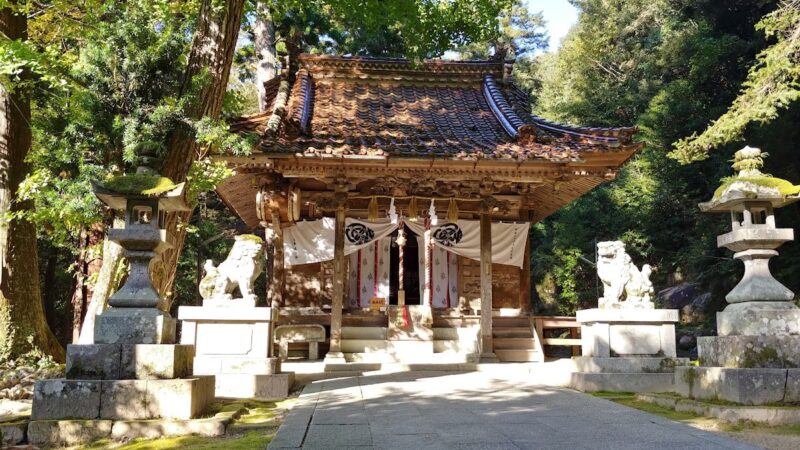
The oldest recorded building of Omori Shrine is a two-bay stone hall built around the beginning of the Hoei era (around 1704). Later, in the first year of the Shotoku era (1711), the shrine was relocated to an eight-roofed main hall made entirely of zelkova wood. This main hall forms the foundation of the current shrine building and is a valuable structure with a history of over 300 years.
The main hall, made entirely of zelkova wood, represents the pinnacle of architectural technology at the time, and its complex eight-roof structure is distinctive even among shrine architecture. The shrine buildings, which have maintained their dignified appearance through the ages, are recognized as valuable historical buildings in Tottori City.
Changes in the Meiji Period
With the separation of Shinto and Buddhism in the early Meiji period, Omori Shrine also underwent significant changes. During this period, the Inari Shrine (dedicated to Uke Mochi no Kami), which was a subsidiary shrine within the grounds, was merged with the main shrine, and the official name was changed from “Omori Daimyojin” to “Omori Shrine.”
This name change was carried out as part of the Meiji government’s reform of the shrine system, and shrines throughout the country went through a similar process. The merger of the Inari Shrine added the divine virtues of abundant harvests and business prosperity, attracting a wider range of worshippers.
Deities and Divine Virtues
Main Deity
Omori Shrine enshrines three deities.
Onamuchi no Okami
Also known as Okuninushi no Okami, this is the main deity of Izumo Taisha Shrine. Known as the god of nation-building and matchmaking, this deity bestows divine blessings upon a wide range of areas, including agriculture, medicine, and commerce. Known as a gentle deity, also featured in the myth of “The White Rabbit of Inaba,” this deity has long been revered by people.
Amaterasu Omikami
The supreme deity in Japanese mythology and the ancestral deity of the Imperial family, this sun goddess bestows divine blessings upon the nation, abundant harvests, and good fortune. She is also known as the principal deity of Ise Grand Shrine.
Kotoshironushi no Okami
A son of Okuninushi no Okami, affectionately known as “Ebisu-sama.” Worshipped as the god of business prosperity, protection of fisheries, and perfect happiness, he is also known as one of the Seven Lucky Gods.
Deities Enshrined Together
Ukemochi no Kami, enshrined together in the early Meiji era, is the deity who presides over food. As a deity who brings abundant harvests, food blessings, and stability in life, this is a central deity in Inari worship.
Divine Virtues
Omori Shrine is believed to possess the following divine virtues:
- Matchmaking and successful relationships
- Family safety and harmony
- Business prosperity and success
- Abundant harvests and protection of agriculture
- Healing from illness and longevity
- Good fortune and protection from evil
About Goshuin (Shrine Seals)
Issuance of Goshuin
Omori Shrine offers Goshuin (shrine seals). Goshuin are popular among many worshippers as proof of their visit and as a record of their faith.
To receive a Goshuin, please speak to someone at the shrine office. However, the office may be unattended, so if you want to be sure to receive a Goshuin, it is recommended to call in advance (0857-22-8633).
About Goshuincho (Stamp Books)
When receiving a Goshuin (temple/shrine stamp), please bring your Goshuincho. If you do not have a Goshuincho, you may receive a paper stamp instead, so it is recommended to check in advance.
Goshuin Manners
When receiving a Goshuin, please observe the following manners:
- Always complete your prayers before receiving the Goshuin.
- Open and prepare your Goshuincho.
- Request using polite language.
- Prepare a donation (amount you feel is appropriate, generally 300-500 yen).
- Do not treat it like a stamp rally.
Annual Festivals and Events
Annual Festival (Autumn Festival)
The annual festival of Omori Shrine is held as an important annual event in the region. The Kirin Shimai (Kirin Lion Dance) is sometimes performed at the festival, and it is attracting attention as a component of the Japanese Heritage site “Kirin no Machi” (Town of the Kirin).
The Kirin Lion Dance is a unique lion dance of the Inaba region, characterized by its Kirin lion head and Shōjō mask. This traditional performing art is protected as a local cultural asset and passed down to future generations.
Festival in Aioi-cho (4-chome), Tottori City
In the parish area of Aioi-cho 4-chome, a community centered around Ōmori Shrine has been formed, and community bonds are deepened through festivals. During the annual festival, the townspeople all pitch in to prepare, and traditional events such as the portable shrine procession and lion dance are held.
Highlights of the Shrine Grounds
Main Hall
The main hall, built in 1711 (Shōtoku 1) and constructed entirely of zelkova wood with eight roofs, is the greatest highlight of Ōmori Shrine. The zelkova wood, over 300 years old, possesses a deep character, and the intricate carvings and architectural style speak to the high level of craftsmanship of the time.
The complex eight-roof structure is rare among shrine architecture and is considered to have high architectural historical value.
Komainu (Guardian Lion-Dogs)
Distinctive guardian lion-dogs are placed within the shrine grounds. These lion-dogs are also recorded in Tottori City’s cultural property survey and are recognized as important stone structures that convey the history of the region.
Shrine Grove
Despite being located in a residential area, the shrine grounds maintain abundant greenery. Ancient trees and seasonal flowers welcome visitors, creating a tranquil atmosphere despite being in an urban area.
Manners and Etiquette for Visiting a Shrine
Basic Etiquette for Visiting a Shrine
Here are some basic manners for visiting a shrine:
- Bow before passing through the torii gate: This is a greeting before entering the sacred area.
- Walk along the edge of the path: The center is considered the path of the gods.
- Purify yourself at the water basin: Purify your left hand, then your right hand, then your mouth.
- Pray in front of the main hall: Two bows, two claps, and one bow is the basic ritual.
- Bow when leaving: Turn around and bow before leaving the torii gate.
Attire for Visiting a Shrine
There are no specific dress code requirements, but please dress appropriately as it is a sacred place. It is advisable to avoid revealing or overly flashy clothing.
Detailed Access Information
Access by Train
From JR Tottori Station
- Approximately 24 minutes on foot from the north exit of Tottori Station (approx. 1.9 km)
- Approximately 7 minutes by taxi
If walking, exit the north exit of Tottori Station and proceed northeast along Prefectural Road 21 towards Aioi-cho. Using a map app will help you arrive without getting lost.
Access by Bus
If using a local bus from Tottori Station, take a bus bound for Aioi-cho, get off at the nearest bus stop, and walk for a few minutes. Please check the bus timetable on the Tottori City public transportation information website.
Access by Car
From the Tottori Expressway
- Approximately 15 minutes from Tottori IC
- Via National Route 29 towards the city center
Parking
There may be parking spaces on the shrine grounds or nearby, but please contact the shrine directly for details. As it is located in a residential area, please avoid street parking and be considerate of the neighbors. ### Address and Map Information
Exact Address: 4-404 Aioi-cho, Tottori City, Tottori Prefecture 680-0805
Map Code: 125 612 796*80
Latitude and Longitude: 35.51049868°N, 134.22673853°E
Elevation: Approximately 7m (above sea level)
Searching for “Omori Shrine, Aioi-cho, Tottori City” on map services such as Yahoo! Maps, Google Maps, or Mapion will display the exact location.
Nearby Tourist Attractions
Tourist Attractions Near This Spot
When visiting Omori Shrine, we recommend also visiting nearby tourist attractions.
Tottori Castle Ruins/Hisamatsu Park
Located approximately 2.5km southwest of Omori Shrine, about an 8-minute drive. This historical park, where the remains of Tottori Castle still stand, is a popular cherry blossom viewing spot in spring. From the castle tower base, you can enjoy a panoramic view of Tottori city and the Sea of Japan.
Tottori Sand Dunes
Known as one of Japan’s largest sand dunes, this is a national natural monument. It’s approximately 8km north of Omori Shrine, about a 20-minute drive. There are many ways to enjoy the dunes, including the magnificent scenery, camel rides, and paragliding.
Tottori City History Museum (Yamabiko-kan)
This museum allows you to learn about the history and culture of Tottori City. It’s approximately 3km north of Omori Shrine, about a 10-minute drive. It exhibits historical and folk materials from the Inaba region.
Hakuto Shrine
This shrine is the setting for the “White Rabbit of Inaba” myth and is known for its blessings for matchmaking. It’s approximately 10km west of Omori Shrine, about a 25-minute drive. As it also enshrines Okuninushi-no-Okami, visiting both shrines is recommended.
Tottori Prefectural Museum
This museum comprehensively exhibits the nature, history, and art of Tottori Prefecture. It is located approximately 2 km from Omori Shrine, about a 7-minute drive.
Jinpukaku
This is a Western-style building from the Meiji era, designated as a National Important Cultural Property. It is located within Hisamatsu Park, approximately 2.5 km from Omori Shrine. The beautiful white building has been used as a filming location for movies and dramas.
About Aioi-cho, Tottori City
History of Aioi-cho
Aioi-cho is located in the northern part of Tottori City’s urban area and has developed as a residential area since ancient times. Omori Shrine, located in Aioi-cho 4-chome, is the guardian shrine of this area and is deeply connected to the lives of the residents.
Characteristics of the Area
Aioi-cho is a quiet residential area, yet it has good access to Tottori Station and the city center. The local community is active, and interaction among residents is maintained through local events, including the annual festival of Omori Shrine.
Relationship with the “Kirin no Machi” Japan Heritage Site
The Kirin Lion Dance performed at the annual festival of Omori Shrine is a component of the “Kirin no Machi” Japan Heritage Site. “Kirin no Machi” is a Japan Heritage site centered on the Kirin Lion Dance culture of the Inaba-Tajima region, spanning eastern Tottori Prefecture and northwestern Hyogo Prefecture.
The Kirin Lion Dance is a unique traditional performing art of this region, characterized by a single-horned Kirin lion head and a red Shōjō mask. It is performed at the annual festivals of shrines throughout the region as a dance praying for a bountiful harvest and family safety.
The Kirin Lion Dance at the annual festival of Omori Shrine is an important cultural heritage of the Aioi-cho 4-chome area and is carefully preserved and passed down by the local people.
Visitor Reviews and Reputation
Omori Shrine is a community-oriented shrine that enjoys deep faith from parishioners and local residents. Visitors have shared the following comments:
- “It’s a quiet shrine located in a residential area, allowing for a peaceful visit.”
- “The historic main hall is wonderful, and you can feel its more than 300 years of history.”
- “I was glad to receive a Goshuin (shrine stamp). They were very kind and helpful.”
- “I felt that this shrine is cherished by the local community.”
Photography and Social Media Posting
Photography is generally permitted at the shrine, but please note the following:
- Refrain from photographing the interior of the main hall or sacred areas.
- Be considerate of other visitors.
- Check beforehand if using a tripod is permitted.
- Remember to show respect to the shrine when posting on social media.
Summary
Omori Shrine is a historic shrine located in Aioi-cho 4-chome, Tottori City. The main deity enshrined here is Ōkuninushi-no-Ōkami, who was invited from Izumo Taisha Shrine. The main hall, built entirely of zelkova wood in 1711, boasts a history of over 300 years.
Despite being located in a residential area, it maintains a tranquil atmosphere and attracts the faith of the local community as their guardian deity. The shrine offers Goshuin (stamped seals) and, with the Kirin Shishimai (lion dance) performed at its annual festival, it is a valuable shrine that preserves the traditional culture of the Inaba region.
With easy access—approximately a 24-minute walk from Tottori Station—it’s a must-visit spot for Tottori sightseeing. Many other tourist attractions, such as the Tottori Castle ruins and the Tottori Sand Dunes, are nearby, allowing you to experience Tottori’s history and culture.
Through a visit to Ōmori Shrine, you can connect with Tottori’s history and local culture and enjoy a peaceful time.