Complete Guide to Omike Shrine (Komagane City, Nagano Prefecture) | The Legend of Yamato Takeru and the Charm of Tachikawa-ryu Architecture
Omike Shrine, located in Akaho, Komagane City, Nagano Prefecture, is a historical shrine steeped in the legend of Yamato Takeru. Also known as “Bijogamori,” it is a popular tourist spot with many attractions, including the over 1250-year-old Mikage Cedar and the main hall carvings by master craftsmen of the Tachikawa-ryu school.
This article will introduce the charm of Omike Shrine in its entirety, from its history and architecture to its festivals and visiting information.
History and Origins of Omike Shrine
Legend of Yamato Takeru and the Story of its Founding
The founding of Omike Shrine is deeply intertwined with the legend of Yamato Takeru, a hero of Japanese mythology.
According to legend, in the 41st year of Emperor Keiko’s reign (around 111 AD), when Yamato Takeru was returning from his eastern expedition, he passed through this area and received a grand three-day and three-night feast from Akasuhiko, the local chieftain, under a large cedar tree. This cedar tree is called “Mikage-sugi” (also known as the Sun’s Mikage-sugi or the Moon’s Mikage-sugi) and is still revered as a sacred tree within the shrine grounds.
The stone on which Yamato Takeru is said to have touched the tree during his hospitality is still preserved on the grounds as the “Mitekake-ishi” (Hand-touching Stone), a valuable historical site that conveys this legend to the present day.
In the 58th year of Emperor Keiko’s reign (around 129 AD), a shrine was built beneath this Mikage-sugi, and the enshrinement of Yamato Takeru marks the beginning of the Omikami Shrine. The name “Omikami” is widely believed to derive from the grand hospitality given to Yamato Takeru.
The Legend of the Jindai Moji Shrine and the Mysteries of its History
The Omikami Shrine possesses an ancient document called the “Jindai Moji Shrine Legend,” which is said to record the history from the time of Emperor Keiko to the 5th year of the Tenryaku era (951 AD) during the reign of Emperor Murakami. However, there are suggestions that this document may be a forgery, and academic evaluations are divided.
Nevertheless, the historical position of the Omikami Shrine in the Akaho region is certain. As a central shrine located almost in the center of the early modern Akasu Village, upstream of the Miyazawa River, it has attracted the faith of local residents.
The Sacred Grove and Precincts of Bijogamori
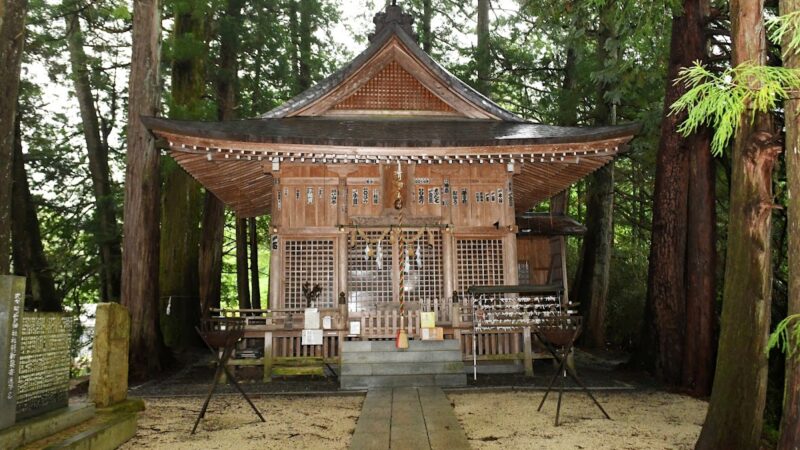
The precincts of the Omikami Shrine have been covered with large trees since ancient times, and are surrounded by a rich natural environment known as “Bijogamori” (Beautiful Forest). The current precincts were developed after the late Edo period, and the carefully maintained grounds provide visitors with a tranquil atmosphere.
The sacred grove contains towering trees, including the Mikage Sugi, creating a sacred space. This naturally rich environment remains a precious spot for relaxation even in today’s increasingly urbanized world.
The Charm of the Main Shrine, a Masterpiece of Tachikawa-ryu Architecture
What is Tachikawa-ryu?
The Tachikawa-ryu was a school of shrine carpenters active in the Suwa region during the late Edo period. They were a group of superstars in the architectural world, known for their exquisite carving techniques. Beginning with the first generation, Tachikawa Washiro Tomimune, they reached their peak during the time of the second generation, Tachikawa Washiro Tomimasa, leaving behind numerous outstanding shrine buildings both within and outside Nagano Prefecture.
The characteristics of the Tachikawa-ryu lie in their complex joinery structures and three-dimensional, dynamic carvings featuring motifs such as dragons, lions, and flowers and birds. Their techniques were highly regarded as “Suwa shrine carving,” and they produced many disciples.
Architectural Style of the Omikami Shrine Main Hall
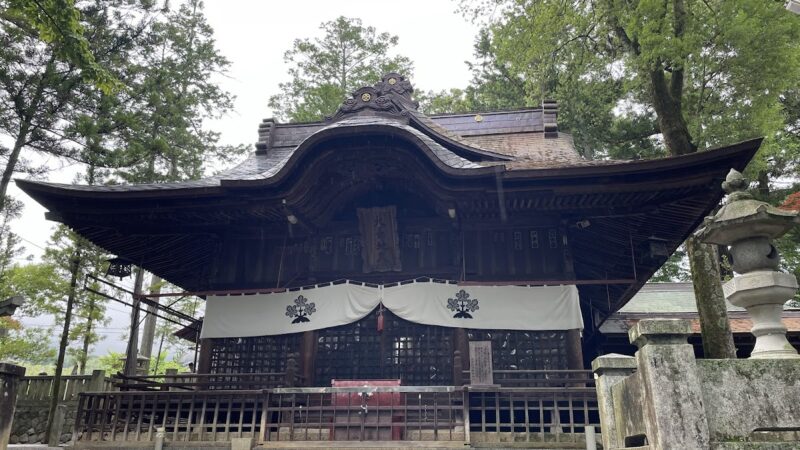
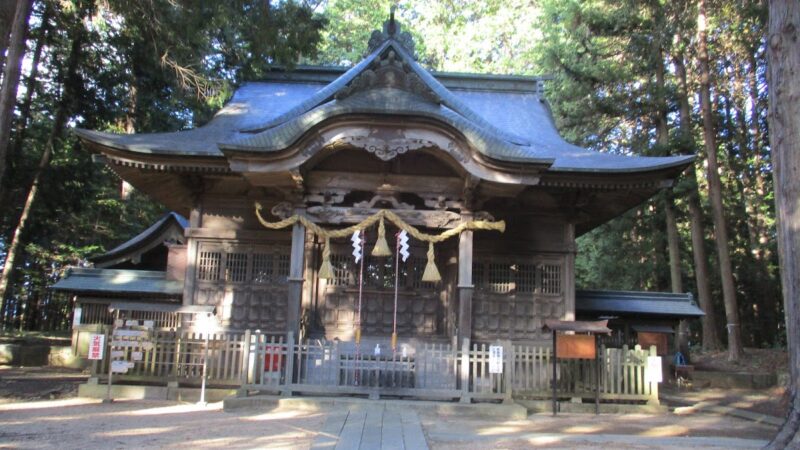
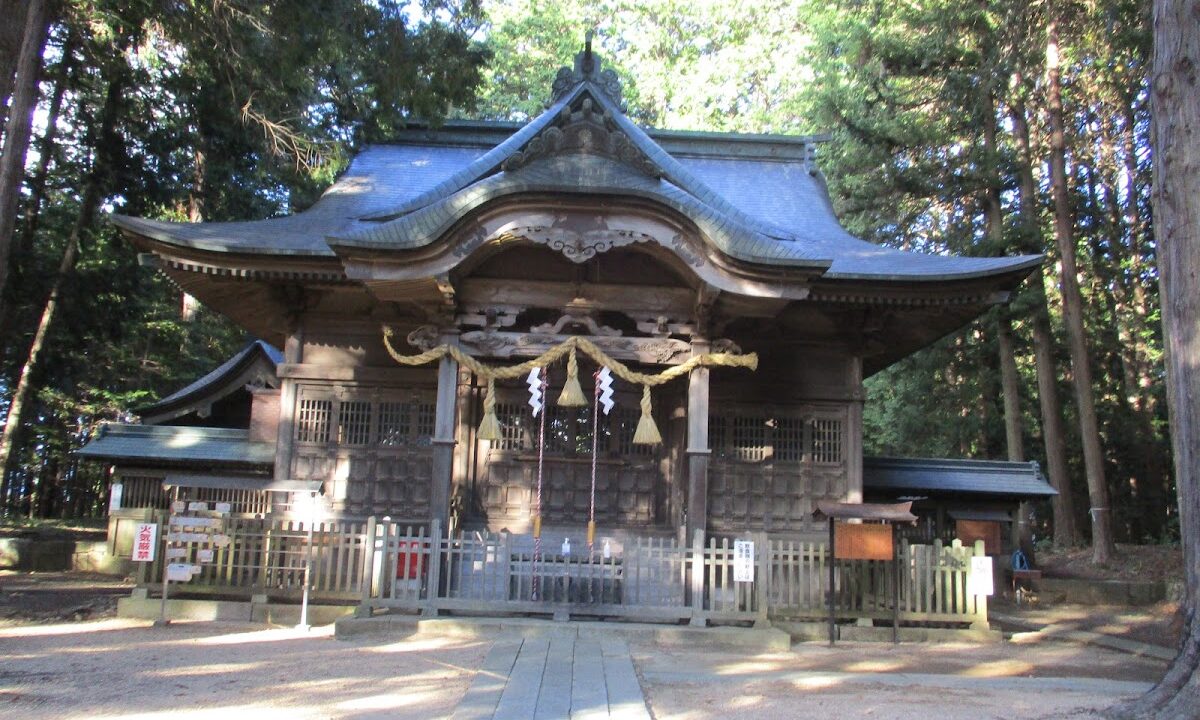
The current main hall of the Omikami Shrine was completed in 1864 (Genji 1). It is a large-scale, three-bay nagare-zukuri style shrine building with a 4.2-meter-wide span between pillars. It features an elegant exterior with a curved gable roof (nokikarahafu), and holds an important position as a large-scale shrine building of the Tachikawa school.
The master carpenter was Tsunekichi Saito, the foremost disciple of Washiro Tomimasa Tachikawa, the second head of the Tachikawa school. The sculptor was Otoshiro Tachiki, also a disciple of Tachikawa. This masterpiece, showcasing the advanced techniques inherited from their master, is designated as a cultural property of Komagane City.
Highlights of the Main Hall’s Carvings
The main hall of the Omikami Shrine features numerous intricate carvings, making it a must-see point for visitors.
The carvings of dragons and lions are remarkably three-dimensional, possessing a dynamic quality that makes them seem as if they could come to life at any moment. Decorative carvings featuring motifs of flowers, birds, wind, and moon can be seen throughout, allowing visitors to appreciate the finest craftsmanship of the late Edo period.
Particularly noteworthy are the meticulously finished carvings of the wooden brackets and frog-leg supports, showcasing the bold yet delicate expression characteristic of the Tachikawa school. While these carvings are not designated as National Treasures or Important Cultural Properties, their artistic value is extremely high, making this a highly recommended spot for anyone interested in architecture or sculpture.
Mikage Sugi and Highlights of the Shrine Grounds
The 1250-Year-Old Mikage Sugi
Appearing to the right after passing through the torii gate of Omikami Shrine is the gigantic Mikage Sugi, over 1250 years old and 34.3 meters tall. This ancient cedar is legendary, said to be the tree under which Yamato Takeru was entertained, and it has become a symbolic presence of the shrine.
The trunk is incredibly thick, exuding a dignified presence that reflects over a thousand years of history. Looking up at it from nearby, one cannot help but feel a sense of awe at its overwhelming presence. The Mikage Cedar is carefully protected as a sacred tree, and visitors can clasp their hands together in front of it, reflecting on its long history.
The Hand-Raising Stone
Near the Mikage Cedar is the “Hand-Raising Stone,” said to have been touched by Yamato Takeru. This stone is a valuable historical site that conveys the legend to the present day, and many visitors stop to admire it.
While the boundary between legend and historical fact is unclear, the fact that such traditions have taken root in the community and have been carefully preserved speaks to the historical value of Omikami Shrine.
Atmosphere and Environment of the Shrine Grounds
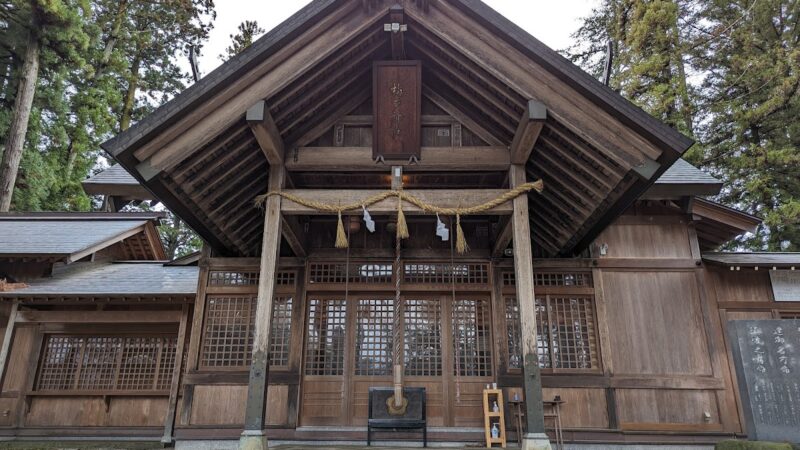
The grounds of Omikami Shrine are meticulously maintained, exuding a clean and tranquil atmosphere. Adjacent to the shrine is a playground where local children can be seen playing energetically, giving a sense that the shrine functions as a center of the local community. The shrine’s forest, known as Bijogamori, is covered in lush greenery, allowing visitors to enjoy the changing scenery of nature throughout the seasons. The fresh green of spring, the deep green of summer, the vibrant autumn foliage, and the tranquility of winter each offer a different charm depending on the time of year.
Lion Dance | A Traditional Event Dating Back to the Middle Ages
What is the Lion Dance?
The most noteworthy event at the Omikami Shrine’s annual festival is the “Lion Dance,” a tradition dating back to the Middle Ages. Every year in September, this traditional event is held with great fanfare, praying for the prosperity of the region and a bountiful harvest.
The Lion Dance is a magnificent event in which a lion, pulled by many children, parades towards the shrine. With approximately 450 residents participating, this festival is a testament to community unity and is also popular with tourists.
Festival Schedule and Contents
The annual festival is held in mid-September each year. From the eve of the festival to the main festival, various Shinto rituals and events are held over several days.
In the lion procession, a brightly colored lion’s head leads the procession, accompanied by the sounds of flutes and drums. The energetic shouts of children and the enthusiasm of the local residents come together to create a lively festival atmosphere.
If you wish to receive prayers, advance reservations are required, so we recommend checking beforehand if you plan to visit.
1900th Anniversary and Special Years
In 2018, the 1900th anniversary of Omikami Shrine was celebrated with a grander-than-usual festival. In such milestone years, special Shinto rituals and commemorative events are often planned, providing an opportunity to reaffirm the history and traditions of the region.
Visiting Information and Access
Basic Information
Location
11475 Akaho, Komagane City, Nagano Prefecture
Main Deity
Yamato Takeru no Mikoto
Shrine Rank
Village Shrine
Annual Festival Date
Mid-September (Lion Dance)
Access Methods
Access by Train
Approximately 15 minutes on foot from JR Iida Line “Komachiya Station”
Approximately 10 minutes by taxi from JR Iida Line “Komagane Station”
Access by Car
Approximately 10 minutes from Chuo Expressway “Komagane IC”
Parking available (free)
Precautions When Visiting
- The shrine grounds are a sacred place, so please visit quietly.
- Photography of the sacred cedar tree and the carvings on the main hall is permitted, but please be considerate of other visitors.
- Advance reservations are required if you wish to receive prayers.
- Crowds are expected during the festival period, so we recommend visiting with plenty of time to spare.
Nearby Tourist Attractions
Besides Omikami Shrine, Komagane City has many other attractive tourist spots.
Komagatake Ropeway
A popular outdoor spot where you can enjoy spectacular views of the Central Alps. It provides access to the Senjojiki Cirque at an altitude of 2612 meters.
Kōzenji Temple
An ancient Tendai sect temple known for the legend of the spirit dog Hayataro. It boasts beautiful weeping cherry trees and gardens, offering beautiful scenery throughout the seasons.
Komagane Plateau
A resort area rich in nature, with plenty of accommodations, restaurants, and hot spring facilities.
Sauce Katsu Don (Pork Cutlet Rice Bowl with Sauce)
Famous as a local specialty of Komagane City. It can be enjoyed at many restaurants in the city.
Cultural Value of Omikami Shrine
Komagane City Designated Cultural Property
The main hall of Omikami Shrine is designated as a cultural property of Komagane City, representing a valuable cultural asset that conveys the excellent architectural techniques and sculptural art of the Tachikawa school.
Although not designated as a National Treasure or Important Cultural Property, its artistic value and historical significance are highly regarded, making it an indispensable presence when discussing Tachikawa-ryu architecture in Nagano Prefecture.
Preservation of Local Culture
Omikami Shrine is not merely a historical building; it continues to function as the center of the local community. Traditional events, including the lion dance, have been passed down through generations and are an important element in forming the region’s cultural identity.
Children participate in the festivals, and adults support them. As long as these activities continue, Omikami Shrine will maintain its value as a living cultural asset.
Goshuin (Shrine Seal) Information
Issuance of Goshuin
Goshuin are available at Omikami Shrine. Many visitors receive a Goshuin (temple/shrine stamp) as a memento of their visit and as a souvenir of their shrine pilgrimage.
Goshuin are given out at the shrine office, but staff may be absent, so it is recommended to contact them in advance if you wish to be sure to receive one.
Goshuincho (Goshuin Stamp Book)
When visiting shrines in Komagane City, it is a good idea to prepare your own original Goshuincho. The Goshuin of Omikami Shrine features a design that reflects the shrine’s characteristics, such as the legend of Yamato Takeru and the Tachikawa-ryu architecture.
Omikami Shrine in the Four Seasons
Omikami Shrine in Spring
In spring, the trees in the shrine grounds are enveloped in fresh greenery, creating a vibrant landscape. The young leaves of the Mikage cedar are also beautiful, and you can feel the breath of the shrine awakened from the silence of winter.
Omikami Shrine in Summer
In summer, deep green covers the shrine grounds, and the shade of the trees creates a cool atmosphere. The sacred grove of Bijogamori Shrine offers a refreshing, summery atmosphere, making it a pleasant place to visit even on hot days.
Autumn at Omikami Shrine
In autumn, the annual festival is held, and the shrine grounds are bustling with activity during the lion dance procession. During the autumn foliage season, the trees in the shrine grove change color, creating a beautiful landscape in combination with the carvings on the main hall.
Winter at Omikami Shrine
In winter, Omikami Shrine is enveloped in silence, and the snow-covered grounds exude a fantastical atmosphere. The snow accumulating on the Mikage Cedar adds to the charm, and visiting in the crisp air is a special experience.
Summary
Omikami Shrine in Komagane City, Nagano Prefecture, is a shrine with diverse attractions, including the legend of Yamato Takeru, the 1250-year-old Mikage Cedar, the exquisite carvings on the main hall in the Tachikawa style, and the traditional lion dance procession that has continued since the Middle Ages.
Although not a National Treasure or Important Cultural Property, its historical value and artistic merit are exceptionally high, and it continues to attract many worshippers and tourists as a representative cultural spot of the Kami-Ina region.
When visiting Komagane City, we highly recommend visiting Omikami Shrine and spending some quiet time in its grounds, where over a thousand years of history breathe life into. The architectural beauty of the Tachikawa style, the sacredness of the Mikage cedar, and the warmth of the local people will surely make for a memorable pilgrimage.
Nestled amidst the rich nature of Bijogamori, Omikami Shrine is a precious cultural heritage that Nagano Prefecture is proud of, continuing to preserve its unwavering faith and traditions even in modern times.