Hachioji Shrine (Iida City, Nagano Prefecture) Complete Guide | History, Deities, and Access Information
Hachioji Shrine, located in Kanae Nagokuma, Iida City, Nagano Prefecture, is a historic shrine situated at the foot of Mount Nosoko and is a center of local faith. This shrine has a unique history, enshrining a divine image crafted from buried wood dating back to before the Common Era. Local parishioners gather here in spring, autumn, and on New Year’s Day to perform rituals, making it a deeply rooted place of worship in the community.
This article provides comprehensive information about Hachioji Shrine, including its detailed information, historical background, enshrined deities, access methods, and nearby attractions, making it useful for anyone considering a visit.
Basic Information about Hachioji Shrine
Location and Contact Information
Location: 1822-1 Nagokuma, Kanae, Iida City, Nagano Prefecture
Postal Code: 〒395-0804
Corporate Number: 6100005009806
Hachioji Shrine is located in the Nagokuma area of Kanae district in Iida City. Situated in a corner of Nozokoyama Forest Park, it is a tranquil shrine surrounded by a rich natural environment.
Features of the Shrine
The most distinctive feature of Hachioji Shrine lies in the wood used for its sacred statue. It is made from buried cypress wood excavated from a place called “Ikenohira” deep in Nozokoyama, and its age is estimated to be between 300 BC and 90 AD.
Buried wood refers to timber that has been buried in the soil or water for a long period of time, possessing a unique texture and historical value different from ordinary wood. Shrines that use such ancient wood for their sacred statues are rare throughout Japan, making it a significant characteristic of Hachioji Shrine.
Deities and History of Hachioji Shrine
What is Hachioji Shrine?
Hachioji Shrines, found throughout Japan, generally enshrine the eight divine children of Susanoo-no-Mikoto (Gozu Tenno). Gozu Tenno is known as a guardian deity in Buddhism and is said to have fathered eight children (Hachioji) with Hari-Sainyo.
The origin of Hachioji Shrines lies in the enshrinement of these eight children, and they are also called “Hachioji-gu” or “Yahashira-jinja,” and are distributed throughout Japan.
The Deity of Hachioji Shrine in Iida City
Hachioji Shrine in Kanae Nagokuma, Iida City, is revered as the “Mountain God” protecting Mount Nosoko. Mount Nosoko is a familiar mountain to the citizens of Iida and is known for its rich natural environment, including the habitat of the Japanese tree frog (Rhacophorus arboreus).
This shrine has a character linked to mountain worship and has long been a place of faith for local residents, where they pray for regional safety, abundant harvests, and family well-being.
Historical Background
The exact founding date of Hachioji Shrine is unknown, but the age of the buried wood used in the sacred image suggests a very long history of faith in this region. The area around Mount Nosoko has been a living area since ancient times, and it is highly likely that it has been revered as an object of mountain worship.
Even today, local parishioners gather in spring and autumn, and on New Year’s Day, to perform rituals, playing an important role in strengthening the bonds of the local community.
How to Access Hachioji Shrine
Access by Train and Bus
Nearest Station: JR Iida Line “Kaname Station”
Distance from Station: Approximately 2.5km
Walking Distance: Approximately 30 minutes
If walking from Kaname Station, head north on National Route 153 towards the Nagokuma area. Follow the signs for Nozoyama Forest Park to reach Hachioji Shrine.
Access by Car
From Iida IC on the Chuo Expressway: Approximately 15 minutes (approximately 8km)
From Tenryukyo IC on the San’en-Nanshin Expressway: Approximately 10 minutes (approximately 6km)
From Iida city center, head south on National Route 153, enter the Kaname area, and then head towards Nagokuma. Parking is available at Nozoyama Forest Park.
Parking Information
Parking is available at Nozoyama Forest Park and is free of charge. We recommend visiting not only the shrine but also combining it with a stroll through the forest park.
Highlights of Hachioji Shrine
Divine Statue and Shrine Building
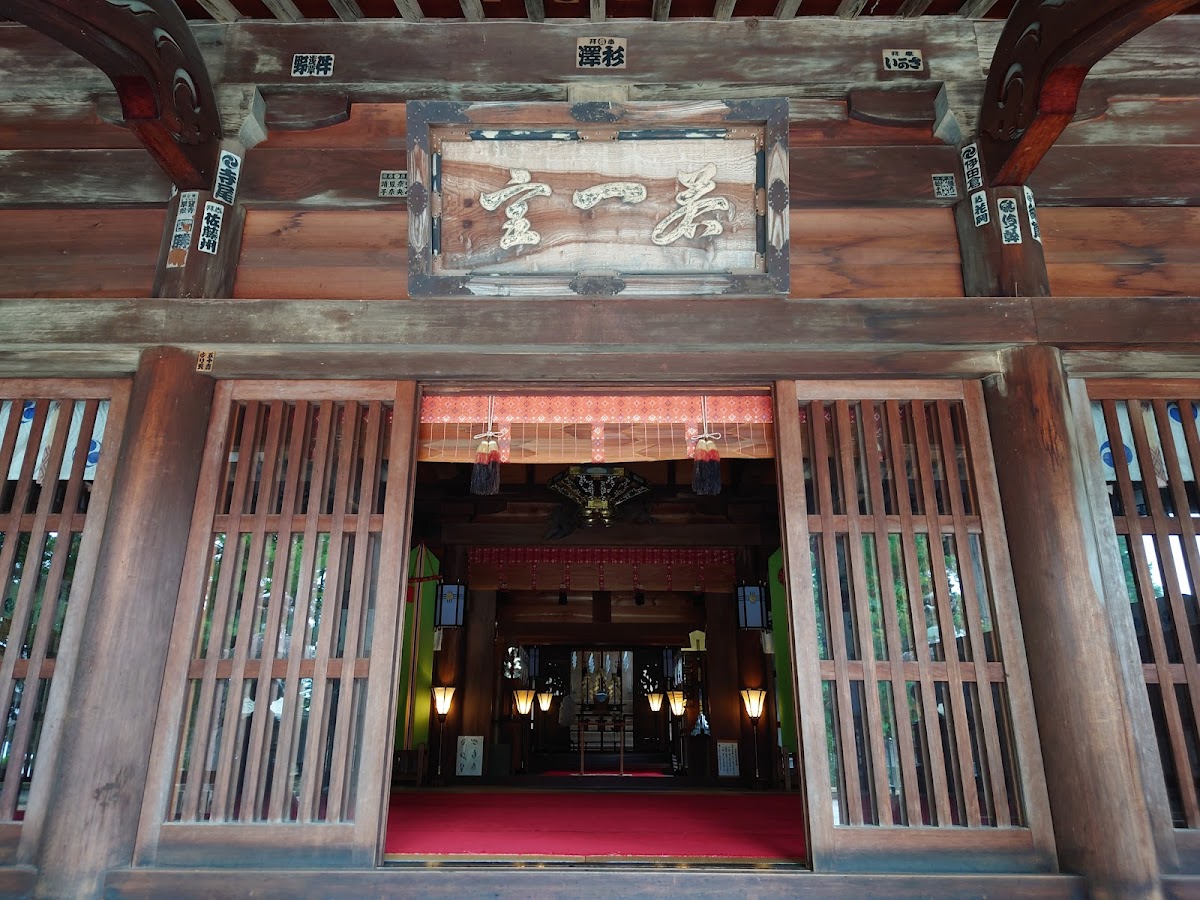
As mentioned earlier, the divine statue, crafted from buried wood dating back to before the Common Era, is the shrine’s greatest treasure. While usually not open to the public, its very existence speaks to the shrine’s spiritual power.
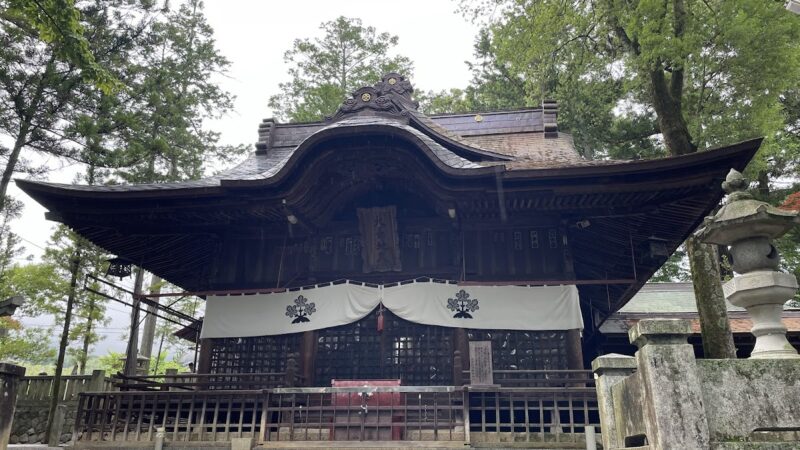
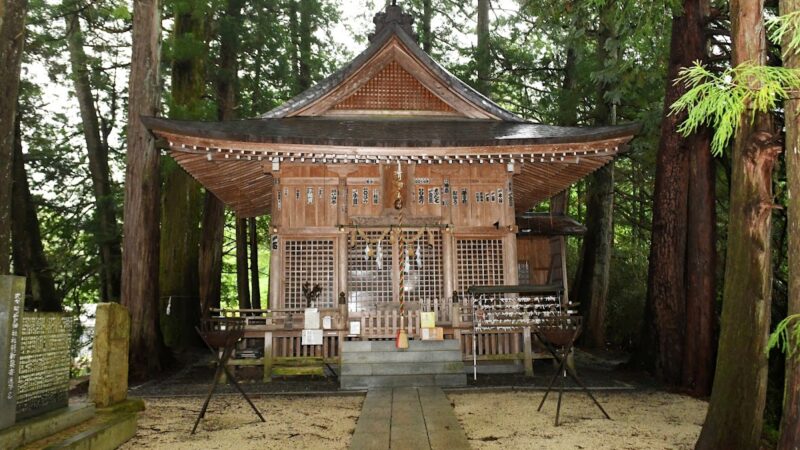
The shrine building is a simple wooden structure, but it presents a beautiful appearance in harmony with the surrounding natural environment.
Natural Environment of Nosoko Mountain
Nosoko Mountain, where Hachioji Shrine is located, is blessed with a rich forest inhabited by the Japanese tree frog (Rhacophorus arboreus). The Japanese tree frog is a valuable species listed on the Ministry of the Environment’s Red List, and Nosoko Mountain holds significant value as its habitat.
Combining a visit to the shrine with a stroll along the walking trails of Nosoko Mountain Forest Park allows you to fully enjoy the changing seasons.
Annual Events
Spring Festival: A grand spring festival praying for a bountiful harvest and safety in the region.
Autumn Festival: A grand autumn festival offering thanks for the harvest.
New Year’s Day Festival: A first shrine visit of the year to pray for peace in the new year.
These festivals bring together local parishioners, and traditional Shinto rituals are performed. General visitors may also be able to attend, offering a valuable opportunity to experience local traditional culture.
Other Hachioji Shrines in Iida City
While there may be several Hachioji Shrines in Iida City, the Hachioji Shrine in Kanae Nagokuma has strong ties to Mount Nosoko and possesses unique characteristics.
If you are planning a shrine tour in Iida City, we recommend also visiting Nagahime Shrine, Hatogamine Hachimangu Shrine, and Omiya Suwa Shrine.
Other Hachioji Shrines in Nagano Prefecture
There are several Hachioji Shrines in Nagano Prefecture.
Hachioji Shrine (Omachi City)
Location: Tokiwa, Omachi City, Nagano Prefecture
Features: Located in the Tokiwa district of Omachi City, it is revered as the local guardian deity.
Each Hachioji Shrine in different locations has its own unique history and characteristics, demonstrating the diversity of Hachioji faith.
Nearby Tourist Attractions
Nosokoyama Forest Park
Nosokoyama Forest Park, where Hachioji Shrine is located, is an ideal spot for nature walks. It has well-maintained walking trails and is known as a habitat for the Japanese tree frog (Rhacophorus arboreus). It offers charm in each of the four seasons: the fresh green of spring, the deep green of summer, the autumn foliage, and the tranquility of winter.
Iida City Center
Iida City is also known as “Little Kyoto of Southern Shinshu,” and boasts a wealth of historical streetscapes and cultural facilities.
- Iida Castle Ruins: The site of the Iida Domain’s castle, now developed as a park.
- Apple Tree-lined Street: A symbolic street tree in Iida City.
- Iida City Museum of Art: A facility where you can learn about the local history and culture.
Tenryu Gorge
A scenic spot where you can enjoy the beauty of the Tenryu River gorge, with stunning views from the walking path. It’s about a 15-minute drive from Hachioji Shrine.
Manners and Precautions for Visiting a Shrine
Basic Worship Etiquette
- Bow before passing through the torii gate: A courtesy when entering the sacred area.
- Purify yourself at the water basin: Purify your left hand, right hand, and mouth in that order.
- Avoid walking in the center of the path: The center is considered the path of the gods.
- Etiquette in front of the main hall: Two bows, two claps, and one bow is the basic procedure.
Points to Note When Visiting
- Clothing: There are no specific rules, but clean and modest attire is desirable.
- Photography: Photography is generally permitted on the shrine grounds, but please refrain from photographing the sacred object or the interior of the main hall.
- Nature Conservation: To protect the rich nature of Nosokoyama, please be sure to take your trash with you.
- Quietness: Shrines are sacred places. Please refrain from speaking loudly.
Best Time to Visit
Spring (April-May): Beautiful fresh greenery, and the time when spring festivals are held.
Autumn (October-November): The best time to see the autumn leaves, and the time when autumn festivals are held.
New Year’s Day: Bustling with locals for their first shrine visit of the year.
In mid-summer, it’s relatively cool in the forest, but insect repellent is recommended. In winter, there is a possibility of snow, so be careful of your footing.
Hachioji Shrine and the Local Community
Hachioji Shrine is not merely a tourist spot; it is deeply rooted in the faith and lives of the local residents. During the spring and autumn festivals, and the New Year’s Day festival, parishioners gather to perform Shinto rituals and reaffirm their community bonds.
Such community-oriented shrines play an important role as the core of communities in rural areas facing depopulation and aging populations. Visitors should respect the history and culture of the region when visiting.
The Spread of Hachioji Faith
Numerous Hachioji shrines exist throughout Japan, each reflecting the unique characteristics of its region and exhibiting distinctive forms of worship.
What is Hachioji Gongen?
Hachioji Gongen refers to the eight divine children of Susanoo-no-Mikoto (Gozu Tenno). During the era of syncretism of Shinto and Buddhism, its aspects as a Buddhist guardian deity and as a Shinto god were fused.
After the Meiji Restoration’s separation of Shinto and Buddhism, many Hachioji shrines were reorganized as Shinto shrines, but the foundation of their faith remains rooted in ancient mountain worship and nature worship.
Relationship with Hachioji City, Tokyo
Incidentally, the name of Hachioji City, Tokyo, also originates from Hachioji Gongen. The Hachioji Gongen enshrined on Mt. Fukasawa (the current site of Hachioji Castle) is considered the origin of the place name, indicating that Hachioji faith was widespread throughout Japan.
Shrine Culture of Iida City
Iida City, as the central city of southern Nagano Prefecture, boasts numerous shrines. Besides Hachioji Shrine, there are other notable shrines in the area, such as:
Nagahime Shrine
Known as the guardian shrine of Iida City, this historical shrine was revered by the lords of Iida Castle.
Hatogamine Hachimangu Shrine
As the center of Hachiman worship in Iida City, it is beloved by the local people.
Omiya Suwa Shrine
A shrine that conveys Suwa worship, it is one of the many Suwa shrines in Nagano Prefecture.
By visiting these shrines, you can experience the rich religious culture and history of Iida City.
History and Culture of Nozoko Mountain
Nozoko Mountain, where Hachioji Shrine is located, is a mountain with an elevation of approximately 750 meters and is a popular place of relaxation for the citizens of Iida.
Legend of Ikenohira
Ikenohira, where the buried wood used to create the sacred statue was excavated, is located deep within Nozoko Mountain. This area has many ancient legends and exudes a mystical atmosphere.
The discovery of buried wood is important evidence that this area has been a human activity zone since ancient times.
Habitat of the Japanese Tree Frog
Nozokoyama Forest Park is known as the “forest where Japanese tree frogs live.” Japanese tree frogs are rare frogs that lay their eggs in trees and are indicators of a rich forest environment.
When visiting shrines, it is important to be mindful of protecting such valuable natural environments.
Practical Guide to Visiting Hachioji Shrine
Recommended Visit Plans
Half-Day Course:
- Travel by car from Kanae Station or Iida city center (approx. 15 minutes)
- Arrive at Nosokoyama Forest Park parking lot
- Visit Hachioji Shrine (30 minutes)
- Stroll along the forest park trails (1 hour)
- Lunch and sightseeing in Iida city center
Full-Day Course:
- Morning: Sightseeing at Tenryukyo Gorge
- Lunch: Iida city center
- Afternoon: Visit Hachioji Shrine and stroll along Nosokoyama Mountain
- Evening: Visit other shrines in Iida city center
Checklist of Things to Bring
- Comfortable walking shoes: Essential for walking in the forest park
- Drinks: Hydration is especially important in summer
- Insect repellent: Necessary from spring to autumn due to the forest area
- Camera: For photographing beautiful natural scenery
- Warm clothing: It can get cold in winter and early mornings.
Nearby Restaurants
Iida City is also known as the “City of Yakiniku (Japanese BBQ),” and there are many delicious restaurants.
- Iida Specialties: Goheimochi (rice cakes), Shinshu Soba (buckwheat noodles), Yakiniku
- Local Ingredients: Apples, Ichida Persimmons, and other local specialties
Since there are few restaurants around Hachioji Shrine, we recommend eating in Iida city center.
Summary: The Charm of Hachioji Shrine
Hachioji Shrine, located in Kanae Nagokuma, Iida City, Nagano Prefecture, is a shrine full of history and mystery, enshrining a divine statue made from buried wood dating back to before the Common Era. As the mountain god protecting Mount Nosoko, it continues to attract the faith of the local people.
Main Attractions of Hachioji Shrine:
- Divine Statue Made from Ancient Buried Wood: Historical Value from before the Common Era to the Early AD
- Rich Nature of Nozoko Mountain: Forest Environment Home to the Japanese Tree Frog
- Community-Based Faith: Spring and Autumn Festivals, Gathering of Parishioners at the New Year’s Day Festival
- Easy Access: Approximately 15 minutes by car from Iida city center
- Combination with Nearby Sightseeing: Can be visited in conjunction with sightseeing in Tenryukyo Gorge and Iida city center
A visit to Hachioji Shrine is not merely sightseeing; it will be a valuable experience to touch upon the history of faith that has continued since ancient times, the rich natural environment, and the bonds of the local community.
When visiting Iida City, be sure to visit Hachioji Shrine on Nozoko Mountain and spend time purifying your soul in the tranquil forest. In the sacred grounds watched over by a divine statue made from wood dating back to before the Common Era, you will surely feel the passage of time.
Visiting a shrine allows you to rediscover Japan’s traditional culture and reverence for nature, while enjoying a peaceful time away from the hustle and bustle of everyday life. Hachioji Shrine is a hidden gem in Iida City that offers just such a special experience.