Complete Guide to Nyakuichioji Shrine | A Thorough Explanation of History, Cultural Assets, Yabusame Festival, and Visitor Information
Nyakuichioji Shrine, located at the northern edge of the city center of Omachi, Nagano Prefecture, is revered as the tutelary shrine of the Nishina clan. It is a valuable shrine that retains strong traces of the syncretism of Shinto and Buddhism, including its main hall, which is designated as a National Important Cultural Property. Its annual festival, known as one of Japan’s three major Yabusame festivals (alongside Tsurugaoka Hachimangu Shrine and Kamo Shrine), is also famous, and it attracts many visitors as a representative cultural heritage of Omachi City, where history and culture intersect.
This article will thoroughly explain the charm of Nyakuichioji Shrine, from its founding to the present day, to the numerous cultural assets remaining on its grounds, annual events, and access methods.
About Wakaichi-Oji Shrine | A Historic Shrine Representing Omachi City, Nagano Prefecture
Wakaichi-Oji Shrine is a shrine located in Omachi, Omachi City, Nagano Prefecture. Formerly a prefectural shrine, it is currently designated as a special shrine by the Association of Shinto Shrines. Along with Hotaka Shrine and Nishina Shinmei-gu, it is counted as one of the “Three Great Shrines of Nishina,” and has a long history as a center of faith in this region.
The shrine’s name, “Wakaichi-Oji,” originates from Wakaichi-Oji Gongen, enshrined in the fifth hall of Kumano Nachi Taisha in Kii Province. While the Kumano faith spread throughout Japan, there were many instances of shrines inviting only Wakaichi-Oji, and Wakaichi-Oji Shrine in Omachi City, Nagano Prefecture, is known as a representative example.
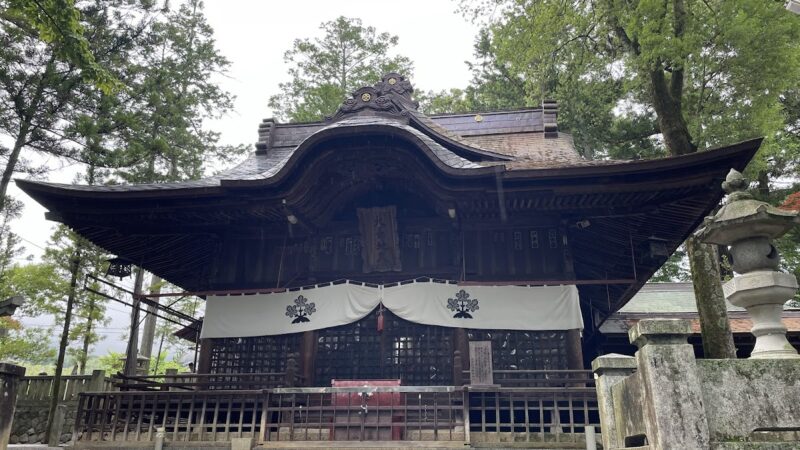
Within the shrine grounds, there are numerous buildings that strongly retain the atmosphere of the Shinto-Buddhist syncretism era, including the main hall, designated as a National Important Cultural Property, as well as the three-story pagoda and Kannon-do hall, both designated as Nagano Prefecture treasures, forming a group of cultural properties of high historical value. Furthermore, the shrine’s grove, composed of cedar and cypress trees, is designated a natural monument of Nagano Prefecture, creating a space where nature and history harmonize.
History and Origins of Wakaichi-Oji Shrine | The Connection Between the Nishina Clan and Kumano Faith
Founding Legend and Ancient Origins
While there are various theories regarding the founding of Wakaichi-Oji Shrine, according to shrine tradition, it began during the reign of Emperor Suinin when Prince Nishina, the guardian of this area, enshrined Izanami-no-Mikoto. Izanami-no-Mikoto was worshipped as a water deity and revered as a god who brought abundant water to the Omachi area.
In 849 (Kashō 2), it is said that the Nishina clan, who ruled the area, enshrined their ancestral deity, Prince Nishina, and his consort, Imoya-hime, together, formally establishing the shrine. From this period onward, it strengthened its character as the tutelary shrine of the Nishina clan.
Late Heian Period to Kamakura Period | Invitation of Kumano Gongen
At the end of the Heian period, Nishina Morito, a local lord who ruled the Azumi district, visited Kumano Gongen in Kii Province. He invited Wakaichi Oji, enshrined in the fifth hall of Nachi Taisha, to become the guardian deity of Nishina Manor. From this point onward, the shrine came to be known as “Wakaichi no Miya,” “Wakaichi Oji,” and “Oji Gongen,” establishing a unique form of worship that blended Kumano faith with local tutelary deity worship.
Kumano faith originates from Kumano Shrine, considered the “back shrine” of Ise Grand Shrine, and strongly reflects the syncretic ideas of Shinto and Buddhism. Wakaichi Oji Shrine was also influenced by this, retaining a strong “syncretic” form of Shinto-Buddhist influence, incorporating Buddhist elements despite being a Shinto shrine.
From the Muromachi to the Azuchi-Momoyama Periods: The Formation of the Omachi City Center and the Role of the Shrine
From the Kamakura period to the Muromachi period, the current Omachi city center was systematically developed by the Nishina clan. The “Ichimachi” district was formed facing the Chikuni Kaido (Salt Road), the central thoroughfare. Clean water from the Kashima River was drawn behind the townhouses, while the “Machigawa” (Town River) flowed in front.
Wakaichi-Oji Shrine was situated at a crucial point in the distribution of this water, on the northern edge of the city center, and was enshrined as a guardian deity praying for the town’s prosperity. In 1556 (Koji 2), the current main hall was constructed, and its architecture, which strongly retains the style of the Azuchi-Momoyama period, was later designated a National Important Cultural Property.
From the Edo Period Onward: From Syncretism of Shinto and Buddhism to Separation of Shinto and Buddhism
Throughout the Edo period, Wakaichi-Oji Shrine continued to attract local faith as a shrine where Shinto and Buddhism were syncretized. Within the shrine grounds, a three-story pagoda and a Kannon Hall were erected, reflecting the established form of worship that unified Shinto and Buddhism.
While many shrines eliminated Buddhist elements due to the Meiji-era separation of Shinto and Buddhism, Wakaichi-Oji Shrine retained its three-story pagoda and Kannon Hall, preserving them as valuable relics of the era of Shinto-Buddhist syncretism. After the Meiji Restoration, it was ranked as a prefectural shrine, establishing its position as a central shrine in the region.
Highlights of the Shrine Grounds | National Treasure-Class Cultural Properties and Relics of Shinto-Buddhist Syncretism
Main Hall | A Masterpiece Designated as a National Important Cultural Property
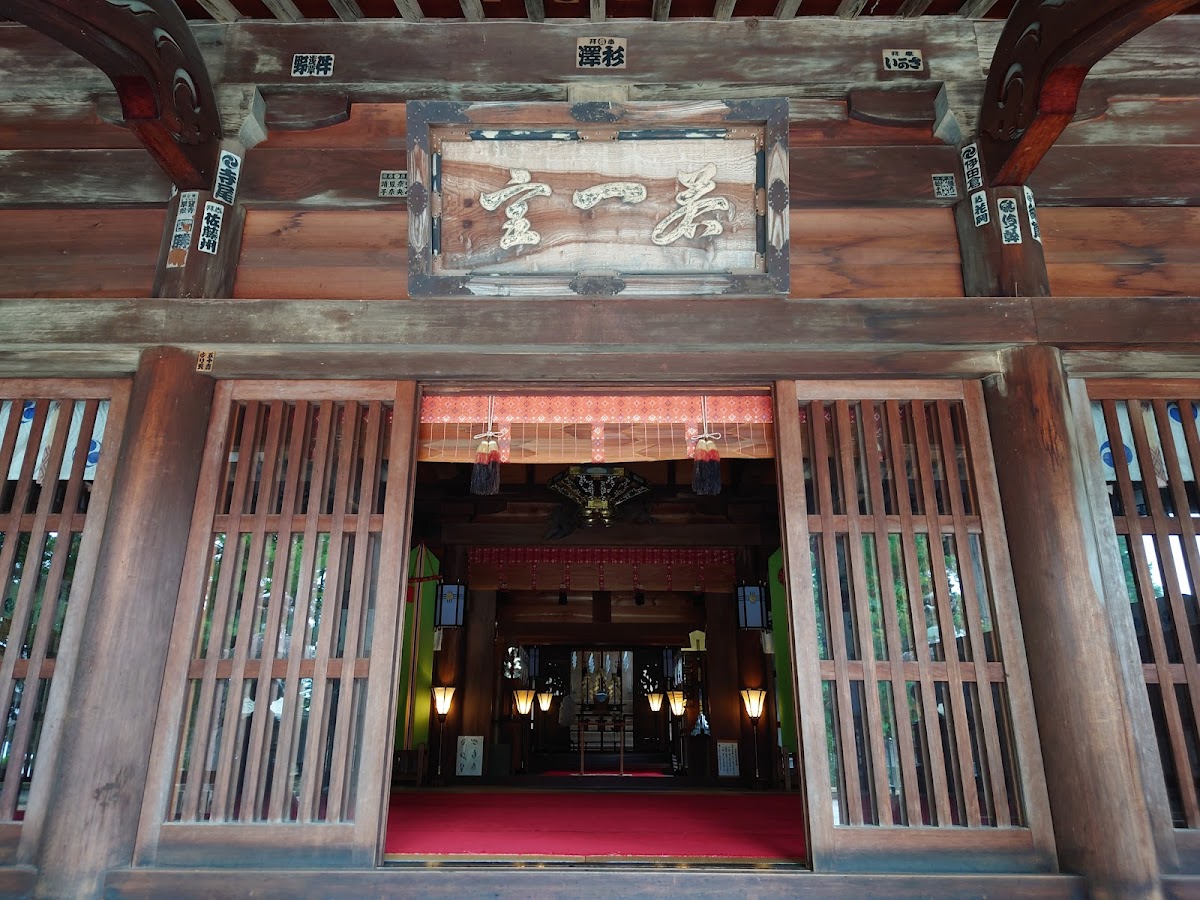
The main hall of Wakaichi-Oji Shrine was constructed in 1556 and designated as a National Important Cultural Property in 1953. While retaining strong elements of the Azuchi-Momoyama period style, it also incorporated Edo-period architectural styles through Edo-period renovations, making it highly regarded as a richly regionally distinctive building.
The main hall is characterized by its exquisite carvings and highly decorative coloring. As a valuable historical document demonstrating the high level of architectural skill in Shinshu (Nagano Prefecture) at the time, it holds an important place in architectural history.
Three-Storied Pagoda | An Elegant Pagoda Designated as a Nagano Prefecture Treasure
The three-storied pagoda towering within the temple grounds was constructed in the mid-Edo period and is designated as a Nagano Prefecture Treasure. It is rare to find a Buddhist pagoda remaining within a shrine’s grounds since the separation of Shinto and Buddhism, making it an important relic that tells the history of Shinto-Buddhist syncretism at Wakaichi Oji Shrine.
The pagoda is approximately 20 meters tall and is characterized by its well-proportioned and beautiful form. The curvature of the eaves on each story and the composition of the brackets faithfully reflect the architectural style of the mid-Edo period, and it is highly valued as a representative example of Buddhist pagoda architecture in the Shinshu region.
Kannon Hall and Palace | Buddhist Architecture Designated as a Nagano Prefecture Treasure
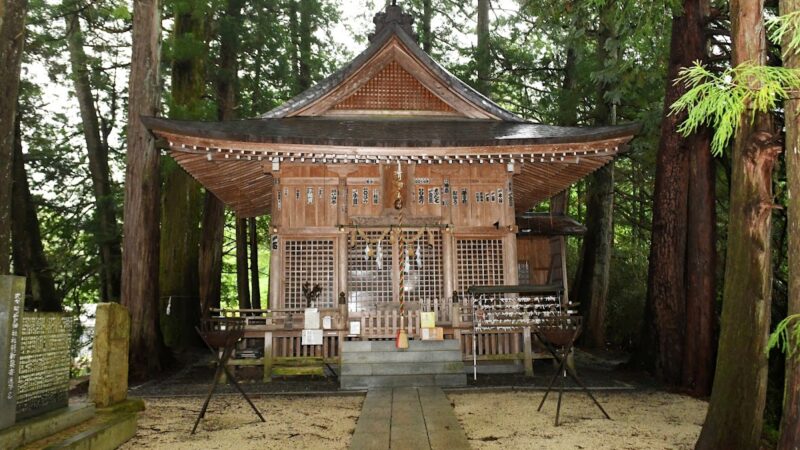
The Kannon Hall, like the three-storied pagoda, is also designated as a Nagano Prefecture Treasure and is a symbolic representation of Shinto-Buddhist syncretism within the temple grounds. Inside the hall is a shrine called a “kuden,” adorned with intricate decorations.
The Kannon Hall, an Edo period building, maintains its Buddhist architectural style while harmonizing with the shrine grounds, making it a valuable cultural asset demonstrating the diversity and tolerance of Japanese religious culture.
Shrine Grove | Nagano Prefecture Natural Monument
The shrine grove surrounding the grounds of Wakaichi Oji Shrine is a dense forest of giant trees such as cedar, cypress, and zelkova, and is designated as a natural monument of Nagano Prefecture. Many of the trees are over several hundred years old and are carefully protected as living witnesses to the long history of the shrine.
The shrine grove exudes a sacred atmosphere befitting a divine area and contributes to the conservation of biodiversity as a valuable natural environment in an urban area. Walking through the grounds, you can hear the sound of the wind rustling through the trees and the chirping of birds, allowing you to enjoy a moment of peace and tranquility.
Annual Festival Celebration and Omachi Children’s Yabusame | One of Japan’s Three Great Yabusame (Horseback Archery)
History and Characteristics of Omachi Children’s Yabusame
The most famous event at Wakaichi Oji Shrine’s annual festival is the “Omachi Children’s Yabusame,” held every year in late July. This yabusame is considered one of Japan’s “Three Great Yabusame,” alongside those at Tsurugaoka Hachimangu Shrine in Kamakura and Kamo Shrine in Kyoto, boasting a long tradition and history passed down by the Nishina clan.
Its most distinctive feature is that the archers are children. The sight of children, clad in adorable costumes, bravely riding horses and shooting at targets is rare nationwide and is cherished as a source of pride for the citizens.
Festival Flow and Highlights
The festival begins in the morning, unfolding an elegant spectacle lasting approximately five hours, from a procession through the town to Shinto rituals within the shrine grounds.
The children who become archers, dressed in traditional attire, parade through the streets of Omachi on horseback. Many spectators line the streets, cheering on the children’s brave efforts. Afterward, the Yabusame ritual is performed in the shrine grounds, showcasing the skill of shooting targets from galloping horseback.
This Yabusame is not merely a traditional event; it is highly valued as a cultural asset, a unique and invaluable piece of folklore nationwide.
Deities and Blessings | Protection of the Water God and Kumano Gongen
The main deity enshrined at Wakaichi Oji Shrine is Izanami-no-Mikoto, with Prince Ninohina, Princess Imoya, and Wakaichi Oji Gongen as secondary deities.
Izanami-no-Mikoto is the goddess of creation in Japanese mythology and is also worshipped as Mikumari-no-Kami (water god). Wakaichi Oji Gongen has been revered since ancient times as a deity who brings abundant water to the Omachi region and supports agriculture and daily life.
Wakaichi Oji Gongen is a deity invited from Kumano Nachi Taisha Shrine and is an important deity in Kumano faith. Kumano Gongen is believed to possess the power of purification and regeneration, and is thought to bestow upon worshippers cleansing of mind and body and renewed strength.
The blessings offered include abundant harvests, business prosperity, family safety, protection from evil, and the fulfillment of wishes. Especially due to its nature as a water deity, many worshippers visit to pray for safety in water-related work and daily life.
Access and Visiting Information for Wakaichi Oji Shrine
Location and Basic Information
Address: 2097 Omachi, Omachi City, Nagano Prefecture
Phone: 0261-22-1626
Visiting Hours: Grounds are freely accessible (Shrine office is usually open from 9:00 to 17:00)
Admission Fee: Free
Parking: Available (Free, approximately 20 spaces)
Access by Train
Approximately 15 minutes on foot from JR Oito Line “Shinano-Omachi Station”. Exit the station and head northwest. After passing through the Omachi city area, you will see the shrine’s grove. A taxi ride takes approximately 5 minutes and costs around 700 yen.
Access by Car
Approximately 40 minutes from Nagano Expressway “Azumino IC” via National Route 147. Entering the city of Omachi and heading north along the Chikuni Road, you will see a sign for Wakaichi-oji Shrine at the northern edge of the city.
During winter, there is a possibility of snow and icy roads, so we recommend using snow tires or carrying snow chains.
Nearby Tourist Attractions
When visiting Wakaichi-oji Shrine, we recommend also visiting other tourist attractions in Omachi City.
- Nishina Shinmei-gu Shrine: One of the three major Nishina shrines, and the oldest Shinmei-zukuri style building in Japan, designated as a National Treasure.
- Omachi Mountain Museum: A museum where you can learn about the nature and history of the Northern Alps.
- Omachi Dam: A beautiful dam lake with the Northern Alps as a backdrop.
- Tateyama Kurobe Alpine Route: One of Japan’s leading mountain sightseeing routes, starting from Ogizawa Station.
Omachi City is known as the “gateway to the Northern Alps” and is an ideal base for mountain sightseeing. Combine your visit to Wakaichi-oji Shrine with a trip to enjoy the nature and history of Shinshu. ## Annual Events and Festivals
Wakaichi Oji Shrine holds various Shinto rituals and festivals throughout the year.
Main Annual Events
- January 1st: New Year’s Day Festival
- February (Setsubun): Setsubun Festival
- Mid-April: Spring Grand Festival
- Late July: Celebration Festival for the Annual Festival and Omachi Children’s Yabusame (mounted archery)
- Mid-November: Autumn Grand Festival
- November 15th: Shichi-Go-San Prayer Ceremony
- December 31st: Great Purification Ceremony and New Year’s Eve Festival
Among these, the Celebration Festival for the Annual Festival in late July is the most important festival, featuring the Omachi Children’s Yabusame, and attracts many worshippers and tourists from both within and outside the city.
List of Cultural Properties Designated at Wakaichi Oji Shrine
The following cultural properties are designated at Wakaichi Oji Shrine and within its grounds. ### Nationally Designated Cultural Properties
- Main Hall: Nationally Designated Important Cultural Property (Building)
Nagano Prefecture Designated Cultural Properties
- Three-Storied Pagoda: Nagano Prefecture Treasure (Building)
- Kannon Hall and Palace: Nagano Prefecture Treasure (Building)
- Shrine Grove: Nagano Prefecture Natural Monument
These cultural properties demonstrate that Wakaichi-Oji Shrine is not merely a place of worship, but a comprehensive cultural heritage site of extremely important historical and cultural value.
Valuable Remains Conveying the History of Shinto-Buddhist Syncretism
The most distinctive feature of Wakaichi-Oji Shrine is that it retains strong traces of the Shinto-Buddhist syncretism era even after the separation of Shinto and Buddhism in the Meiji period.
Shinto-Buddhist syncretism is a form of faith that fused ancient Japanese Shinto with foreign Buddhism, and it formed the mainstream of Japanese religious culture for approximately 1,000 years, from the Nara period to the early Meiji period. Following the Meiji government’s decree separating Shinto and Buddhism, Buddhist elements were removed from many Shinto shrines. However, at Wakaichi-Oji Shrine, the three-story pagoda and Kannon Hall remain, preserving the religious practices of that time.
Walking through the shrine grounds, one can see the harmonious arrangement of the shrine’s torii gate and main hall alongside the Buddhist architecture of the three-story pagoda and Kannon Hall. This scene speaks to the religious tolerance that the Japanese people have cultivated over their long history, and the cultural richness that embraces diverse beliefs.
Omachi City and Wakaichi-Oji Shrine | The Center of Local History and Culture
Wakaichi-Oji Shrine is not a shrine that exists in isolation; it has been deeply intertwined with the region as the center of Omachi City’s history and culture.
From the Kamakura period to the Muromachi period, the Omachi city area, systematically developed by the Nishina clan, prospered as a post town on the Chikuni Kaido (Salt Road) and as a key trading hub connecting Shinshu and the Sea of Japan. Wakaichi-Oji Shrine, situated at the northern edge of the city center, a crucial location for water distribution, has long served as a guardian deity watching over the town’s prosperity and the peace and well-being of its residents.
Even today, Wakaichi-Oji Shrine holds a special place in the hearts of Omachi citizens, serving as an indispensable site for life’s milestones and local events such as New Year’s visits, Shichi-Go-San (a traditional rite of passage for children), and annual festivals. The Omachi Children’s Yabusame (mounted archery) is a source of pride for the citizens, providing a valuable opportunity to pass on traditional culture to children.
Summary | Wakaichi-Oji Shrine: A Sacred Site Condensing the History and Culture of Shinshu
Wakaichi-Oji Shrine, a representative historical shrine of Omachi City, Nagano Prefecture, possesses many attractions.
The main hall, designated a National Important Cultural Property, is a valuable architectural structure that preserves the style of the Azuchi-Momoyama period. The three-story pagoda and Kannon Hall remaining on the grounds are nationally rare remains that strongly reflect the era of syncretism of Shinto and Buddhism, and are highly valued as cultural assets.
The Omachi Children’s Yabusame, considered one of Japan’s three major Yabusame (mounted archery) events, is a traditional event passed down since the time of the Nishina clan. Its unique feature is the use of children as archers, a rare format nationwide. The annual festival in late July features a five-hour-long, elegant spectacle, captivating numerous worshippers and tourists.
As one of the three major Nishina shrines, along with Hotaka Shrine and Nishina Shinmei Shrine, Wakaichi Oji Shrine conveys the history and faith of Shinshu (Nagano Prefecture) to the present day. It is a sacred site that visitors to Omachi City should definitely visit. Combine your sightseeing in Omachi City, the gateway to the Northern Alps, with a visit to this historic shrine and experience Shinshu’s rich cultural heritage.
In the tranquil space of the shrine grounds, you can feel the breath of faith nurtured over a long history and spend a moment purifying your mind and body. Wakaichi Oji Shrine embodies the richness of Japanese religious culture, where past and present, gods and Buddhas, nature and culture harmonize.