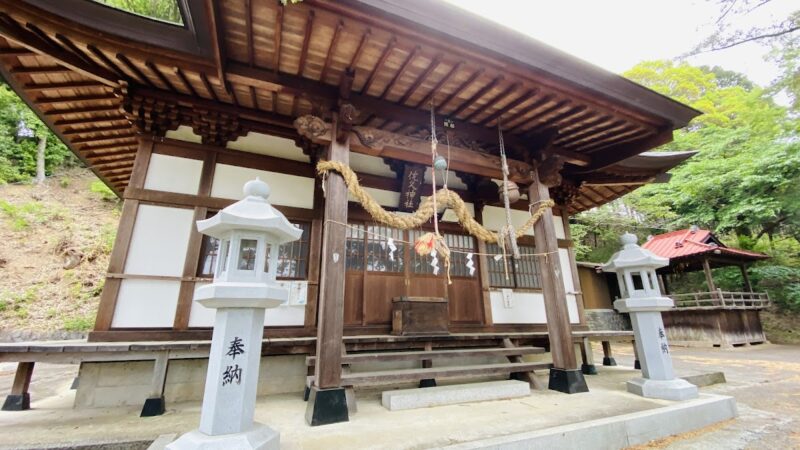
Amatsukasa Shrine (Kofu City, Yamanashi Prefecture) Complete Guide | Everything about Japan’s Oldest Puppet Theater and the Nationally Important Intangible Folk Cultural Property “Amatsukasa-mai”
About Amatsukasa Shrine
Amatsukasa Shrine is a historic shrine located in Oze-cho, Kofu City, Yamanashi Prefecture. Since ancient times, it has been revered by the local people as the guardian shrine of Oze-cho, and has preserved the traditional performing art of “Amatsukasa-mai,” which is extremely valuable in the history of Japanese culture, to this day.
The reason this shrine is particularly noteworthy is that “Amatsukasa-mai,” which is said to be Japan’s oldest puppet theater, was designated a Nationally Important Intangible Folk Cultural Property in 1976. It is highly valued as a classical Shinto ritual performance and as a progenitor of traditional Japanese performing arts, and is a valuable cultural asset with value as a Japanese heritage.
Deities and History of Amatsutsukasa Shrine
Deities
The following deities are enshrined at Amatsutsukasa Shrine:
- Futsunushi-no-kami
- Kihata-no-kami
- Iwatutsuo-no-kami
- Iwatutsume-no-kami
- Nesaku-no-kami
- Iwasaku-no-kami
- Hyobi-no-kami
These deities are revered as Amatsukami (heavenly deities) and have been worshipped as guardian deities of the region.
Founding History and Legends
An interesting legend has been passed down since ancient times regarding the founding of Amatsutsukasa Shrine.
According to ancient legends, when this land was still undeveloped and a grassy marsh, the twelve Amatsu-kami (heavenly gods) descended from heaven and performed sacred dances. Afterward, two gods ascended to heaven, and one is said to have drowned in an old well (Kagami-no-i, or Mirror Well) in Nishi-Aburakawa Village. This well was said to reflect the god’s image on festival days and was therefore called “Kagami-no-i” (Mirror Well).
The remaining nine gods continued their sacred dances, and eventually this land was developed and became a human settlement. The people who witnessed these dances created nine statues of the gods, using the nine-star crest as their divine emblem, and began offering sacred dances annually as a religious ritual. This is considered the origin of “Amatsu-tsukasa-mai” (Heavenly Dance).
Another legend states that, “Long ago, before the village of Oze was developed, twelve gods descended from heaven and performed dance and music. Afterward, two gods returned to heaven, and one jumped into Kagami Pond in Nishi-Aburakawa and perished. However, the remaining nine gods continued to perform dance and music, and the village of Oze was developed. Officials then created statues of these gods, marking the beginning of the dance and music tradition.”
Historical Records
It has been confirmed that the Amatsutsukasa dance has been passed down since before the second year of Daiei (1522). A ridge beam inscription from August of the second year of Daiei, concerning the repair of the shrine by Takeda Minbu-no-shosuke Nobunori, remains, indicating that the shrine and dance were already established by this time.
This ridge beam inscription is still preserved today and is an important historical document proving the history of the Amatsutsukasa Shrine.
National Important Intangible Folk Cultural Property: “Amatsukasa-mai”
Overview of Amatsukasa-mai
Amatsukasa-mai is the oldest puppet show in Japan, passed down through generations at Amatsukasa Shrine, and is considered the progenitor of puppet theater.
It was designated an Intangible Cultural Property of Yamanashi Prefecture in 1955, and further designated a National Important Intangible Folk Cultural Property in 1976. This designation signifies the government’s recognition of Amatsukasa-mai’s extremely important position in the history of Japanese performing arts.
Date and Location
Amatsukasa-mai is performed on the first Sunday of April every year. While it was formerly held on the 19th day of the 7th month of the lunar calendar, it is now held on the Sunday closest to April 10th.
The dance proceeds as follows:
- Nine puppets are brought down from the main hall of Amatsutsukasa Shrine (Ose-cho, Kofu City)
- Seventeen parishioners from Ose Village each carry one puppet.
- The procession parades to Suzumiya Suwa Shrine (Shimokajiya-cho) in the neighboring town, accompanied by traditional music.
- The dance is performed at the “Mifune-gakoi” within the grounds of Suwa Shrine.
Composition of the Nine Puppets and the Dance
Each of the nine puppets used in the Amatsutsukasa dance has a designated role:
- Sasara (2 puppets)
- Taiko (2 puppets)
- Tsuzumi (1 puppet)
- Fue (1 puppet)
- Kashima (1 puppet)
- Hime (1 puppet)
- Oni (1 puppet)
These puppets are life-sized, with heads and arms attached to a body skewer, and draped in Dengaku costumes. The puppets are performed within a square bamboo enclosure (covered with curtains) called a “Mifune” (御船).
Characteristics and Value of Amatsu-tsukasa Dance
The reason Amatsu-tsukasa Dance is called “Japan’s oldest puppet show” lies in its form and the antiquity of its tradition. As a Shinto ritual art using puppets, it boasts a history of at least 450 years, and its preservation of its original form to this day is highly valued.
The dance is not merely entertainment, but is performed with strict adherence to Shinto rituals. Seventeen families in Kose Village have been involved in the transmission of this dance for generations, passing on the bonds and faith of the community to the present day.
Basic Information about Amatsutsukasa Shrine
Location and Access
Address: 557 Ose-cho, Kofu City, Yamanashi Prefecture 400-0836
Access by Public Transportation
- Approximately 20 minutes by bus from JR Kofu Station
- A few minutes’ walk from the nearest bus stop
Access by Car
- Approximately 15 minutes from Kofu Minami IC on the Chuo Expressway
- It is recommended to check parking availability in advance.
Visiting Hours
While the shrine grounds are generally open for free visits, it is recommended to check the operating hours of the shrine office in advance.
Inquiries
For detailed information about the Amatsutsukasa dance and the shrine, please contact:
- Kofu City Tourism Division
- Yamanashi Prefecture Shrine Association
- Yamanashi Prefecture Tourism Information Website
Points to Note When Viewing the Amatsutsukasa Dance
Points to Note When Viewing
The Amatsutsukasa dance is a precious Shinto ritual held only once a year, on the first Sunday of April. Those wishing to attend should note the following:
- Confirm the date: The date changes every year, so please check the exact date in advance.
- Allow plenty of time: The procession from Amatsutsukasa Shrine to Suwa Shrine is a highlight.
- Respect for the religious ceremony: Please observe proper etiquette, including when taking photographs.
- Avoid crowds: As this is a nationally designated Important Intangible Folk Cultural Property and attracts considerable attention, we recommend arriving early.
Photography
Please follow the instructions of the organizers regarding photography of the religious ceremony. Flash photography and any actions that disrupt the progress of the dance are strictly prohibited.
Nearby Tourist Attractions
Suzumiya Suwa Shrine
We also recommend visiting Suzumiya Suwa Shrine (Shimokajiya-cho, Kofu City), the destination of the Amatsutsukasa Dance procession. This shrine plays an important role in the Amatsutsukasa Dance, and the “Mifune-gakoi” (a sacred platform where the dance is performed) is set up here.
Cultural Properties in Kofu City
Kofu City has many other historical shrines, temples, and cultural properties. When visiting Amatsutsukasa Shrine, you can also enjoy a historical walk through Kofu City.
Amatsutsukasa Shrine and Yamanashi Culture
Status as an Intangible Cultural Property of Yamanashi Prefecture
Amatsutsukasa Dance was designated as an Intangible Cultural Property of Yamanashi Prefecture in 1955. This signifies the beginning of protection and transmission at the prefectural level as a traditional performing art that Yamanashi Prefecture is proud of.
Subsequently, its value was recognized nationwide with national designation in 1976.
Local Community and Tradition
One of the most important characteristics of Amatsutsukasa Dance is that it has been passed down through generations by a limited number of families—seventeen households—in the ancient village of Kose. This form of transmission holds significant meaning in modern society in terms of community bonds and the transmission of tradition.
The fact that a local community centered around the shrine has preserved its culture for over 450 years is a prime example of the strength of Japanese regional culture.
A Recommendation for Visiting Amatsutsukasa Shrine
Daily Visits
Even outside of Amatsutsukasa Dance performance days, you can visit Amatsutsukasa Shrine. In its tranquil grounds, you can offer prayers to the gods passed down through generations.
You can feel the atmosphere of a shrine that has been the guardian shrine of Kose Town, attracting the faith of the local people.
A Visit to Experience History
When visiting Amatsutsukasa Shrine, please pay attention to the following points:
- The nine-star crest
- The architectural style of the shrine building
- The atmosphere of the grounds
- The surrounding scenery of Kose Town
Through these, you can feel the history and tradition of this land where gods are said to have descended since ancient times.
The Cultural Value of Amatsutsukasa Shrine
Its Place in Japanese Cultural History
Amatsutsukasa Dance occupies an extremely important position in the history of Japanese performing arts and culture as “Japan’s oldest puppet show” and “the progenitor of puppet theater.”
The art of using puppets is believed to have influenced later forms of Japanese performing arts such as Bunraku (puppet theater), and is studied as one of the origins of traditional Japanese performing arts.
Protection and Succession as an Intangible Cultural Property
Designated as a National Important Intangible Folk Cultural Property, the Amatsu-tsukasa dance has received official protection and support. However, the efforts of local people are essential for its preservation.
The Amatsu-tsukasa dance, which is still carefully preserved by the people of Kose Town, is a “living cultural asset” distinct from tangible buildings, and its transmission to future generations continues.
The Significance of Visiting Amatsu-tsukasa Shrine
Amatsu-tsukasa Shrine is not merely a tourist spot. Here lies one of the origins of Japanese culture, and a faith and tradition that has been preserved by local people for over 450 years.
In particular, the Amatsu-tsukasa dance performed on the first Sunday of April is a precious sacred performance that can only be seen once a year. Witnessing Japan’s oldest puppet show will be a valuable experience that allows you to feel the depth of Japanese culture and the strength of community bonds.
When visiting Yamanashi Prefecture, be sure to visit Amatsutsukasa Shrine and experience the world of ancient Shinto rituals and performing arts. There, you will find the essence of Japanese traditional culture that continues to thrive today.
Summary
Amatsutsukasa Shrine (Kose-cho, Kofu City, Yamanashi Prefecture) is a historic shrine that preserves the “Amatsutsukasa Dance,” a nationally designated Important Intangible Folk Cultural Property. As Japan’s oldest puppet show, this ritual performance, with a history of over 450 years, is highly regarded as an invaluable and immortal cultural heritage in the history of Japanese culture.
Held annually on the first Sunday of April, the Amatsutsukasa Dance involves nine puppets parading from Amatsutsukasa Shrine to Suzumiya Suwa Shrine, where the dance is offered as a sacred ritual. This tradition, preserved for generations by the seventeen households of Kose Village, is a wonderful example of community bonds and the transmission of Japanese traditional culture.
Visiting Amatsutsukasa Shrine will be a valuable opportunity to touch the origins of Japanese culture and feel the power of locally rooted faith and tradition.