Nakao Shrine (Fuefuki City, Yamanashi Prefecture) Complete Guide | History and Goshuin Information of an Engishiki-Listed Shrine
Nakao Shrine, located in Nakao, Ichinomiya-cho, Fuefuki City, Yamanashi Prefecture, is a historically significant shrine listed in the Engishiki Jinmyocho (a list of shrines compiled in the Heian period). It is said to have been established in the 7th year of Emperor Suinin’s reign (23 BC), and is known as an ancient shrine with a history of approximately 2000 years. Located about 1 km northwest of Kai Ichinomiya Sengen Shrine, it has been affectionately known by local people as “Hinaga Myojin” or “Dōsojin-sama.”
This article comprehensively introduces all the information you need to know before visiting Nakao Shrine, including its detailed history, enshrined deities, highlights of the grounds, goshuin information, and access methods.
Basic Information about Nakao Shrine
Location: 1331 Nakao, Ichinomiya-cho, Fuefuki City, Yamanashi Prefecture 405-0053
Deities Enshrined: Ōnamuchi-no-mikoto, Sukunahikona-no-mikoto
Former Shrine Rank: Former Designated Village Shrine
**Shikinaisha (Shrine Listed in the Engishiki): Nakao Shrine, Yatsushiro District, Kai Province
Common Names: Tobina Myōjin, Dōsojin-sama
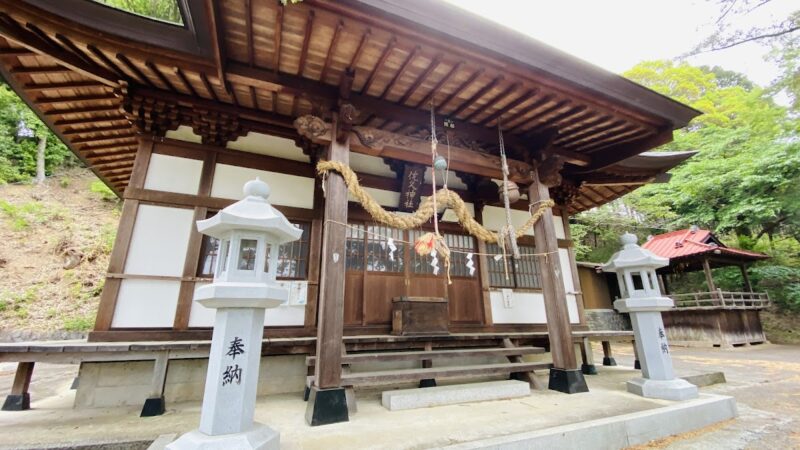
Nakao Shrine is a small shrine located at the corner of a road intersection, yet it possesses a beautiful atmosphere surrounded by large trees. Especially in autumn, the grounds are dyed a sea of yellow with fallen ginkgo leaves, and it can be seen that local people come to collect the ginkgo nuts.
History and Origins of Nakao Shrine
Founding and Ancient History
According to the shrine’s traditions, it is said to have been established on the first day of the first month of the 7th year of Emperor Suinin’s reign (23 BC). This period in ancient Japanese history marked the beginning of the construction of shrines throughout the country, and an important shrine was also founded in Kai Province.
During the reign of Emperor Daigo, it is listed in the Engishiki Jinmyocho (completed in 927) as “Nakao Shrine, Yatsushiro District, Kai Province,” making it an ancient shrine with the status of a Shikinaisha (a shrine listed in the Engishiki). Shrines listed in the Engishiki Jinmyocho were historically significant shrines officially recognized by the imperial court at the time, and were one of the centers of faith in Kai Province.
The Rebellion of Taira no Masakado and Fujiwara no Tadabumi’s Prayers
During the Tenkei era (937-947), when the Taira no Masakado Rebellion broke out, Fujiwara no Tadabumi, appointed as the Commander-in-Chief of the Eastern Expedition, set out on his eastern campaign. Records show that at this time, he offered heihaku (offerings to the gods) from Emperor Suzaku and prayed for victory at Nakao Shrine.
This historical fact indicates that Nakao Shrine was recognized as a militarily important place of prayer even at that time, and that it was a shrine with deep ties to the imperial court.
Relationship with the Takeda Family
In the medieval period, Nakao Shrine deepened its relationship with samurai families descended from the Kai Minamoto clan. From Shinra Saburo Yoshimitsu (Minamoto no Yoshimitsu, 1045-1127) onward, successive generations of the Takeda family revered Nakao Shrine and donated land to it.
The Takeda family flourished as a Sengoku daimyo of Kai Province, and especially during the time of Takeda Shingen, they showed deep reverence for shrines and temples within Kai Province. It is believed that Nakao Shrine also received the protection of the Takeda family. Even after the fall of the Takeda family, and even after Tokugawa Ieyasu came to rule Kai Province, the shrine’s existing land holdings were maintained, and the Tokugawa family continued the old practice of protecting Nakao Shrine.
Changes Since the Modern Era
In 1871 (Meiji 4), the Meiji government’s shogunate confiscated the shrine’s land holdings (returning them to the state). This was part of a nationwide policy of confiscating shrine lands, but Nakao Shrine survived as a center of local faith.
During the Meiji era, it was designated a village shrine, maintaining its important position in the local community. Even today, it remains the tutelary shrine of Ichinomiya-cho, Fuefuki City, attracting the faith of local residents.
About the Enshrined Deity
Ōnamuchi-no-Mikoto
Ōnamuchi-no-Mikoto is another name for Ōkuninushi-no-Mikoto and is an important deity in Japanese mythology, also known as the principal deity of Izumo Taisha Shrine. He possesses a wide range of divine virtues as the god of nation-building, agriculture, commerce, and medicine, and is believed to bring blessings for matchmaking, abundant harvests, business prosperity, and healing from illness.
Sukunahikona-no-Mikoto
Sukunahikona-no-Mikoto is a deity who, along with Ōkuninushi-no-Mikoto, helped build the country. He is worshipped as the god of medicine, hot springs, and incantations. Despite his small stature, he possessed great wisdom and is said to have assisted Ōkuninushi-no-Mikoto throughout Japan, teaching people medical and agricultural techniques.
These two deities are depicted in the Kojiki and Nihon Shoki as a pair who cooperated in building the country. Nakao Shrine enshrines both deities, praying for regional development and the health and prosperity of its people.
Highlights of the Shrine Grounds
Main Hall and Worship Hall
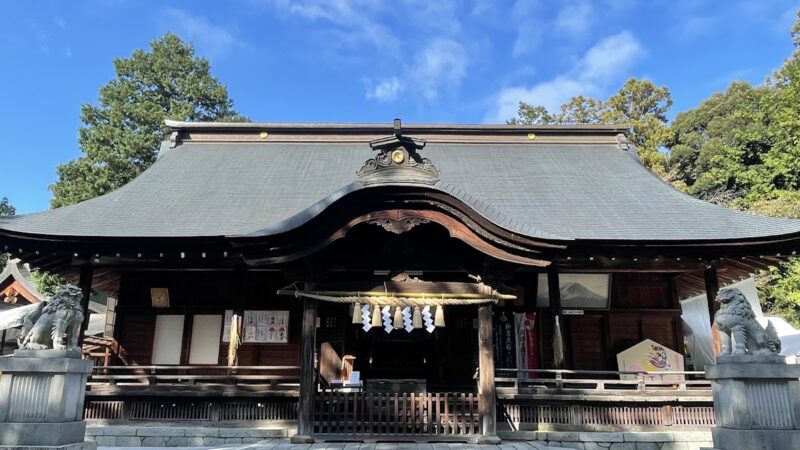
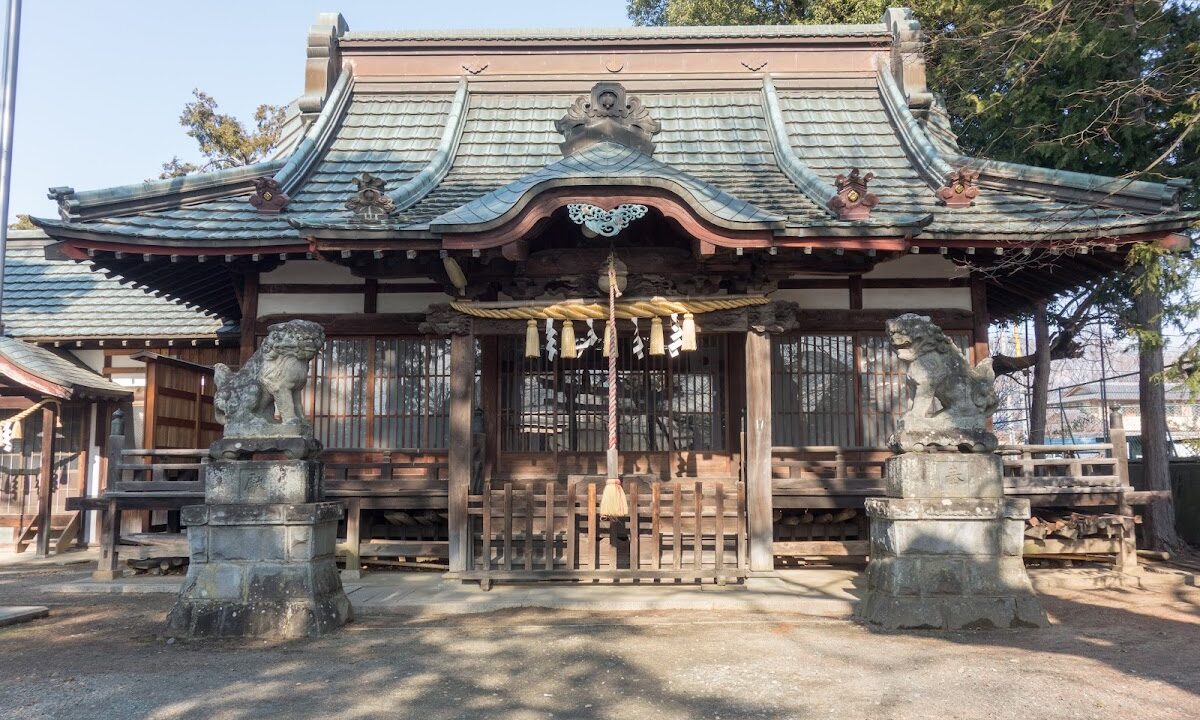
The grounds of Nakao Shrine are not particularly large, but despite its location at a road intersection, it maintains a tranquil atmosphere. The main hall and worship hall are built in the traditional shrine architectural style and are carefully maintained as the center of local faith.
The Sacred Ginkgo Tree
A distinctive feature of the shrine grounds is the magnificent sacred ginkgo tree. In autumn, the entire shrine grounds are dyed a uniform yellow with fallen ginkgo leaves, creating a beautiful scene. Families from the neighborhood can be seen picking ginkgo nuts, demonstrating the shrine’s deep roots in the community.
To the right of the grounds stands another large tree, though its name is not specifically identified. These ancient trees tell the story of the shrine’s long history.
Dōsojin Stone Shrine
Nakao Shrine is also known by the nickname “Dōsojin-sama,” and a small stone shrine dedicated to Dōsojin stands beside the main shrine building. Dōsojin is worshipped as the god of roads and travel, as well as a god of matchmaking and fertility, and is cherished by the local people.
Every year, on the weekend closest to January 15th, the Dōsojin Festival is held, attracting large crowds. This festival is an important annual event in the community, demonstrating that Nakao Shrine is not merely a historical shrine, but continues to function as a central hub for the local community.
Tenmangu Shrine
To the left of the shrine grounds is the Tenmangu Shrine. This shrine is dedicated to Sugawara no Michizane, the god of learning, and is visited by worshippers praying for success in examinations and academic achievement. As a subsidiary shrine of Nakao Shrine, it has received the wishes of the community for education.
Nakao Shrine and Koyo Ittokusai Fujiwara Sukenori
An indispensable figure when discussing Nakao Shrine is Koyo Ittokusai Fujiwara Sukenori (real name: Tamura Yasuki, later Yoshitomo, 1827-1909).
The Family of Nakao Shrine Priests
Koyo Ittokusai was born in Nakao Village (present-day Nakao, Ichinomiya-cho, Fuefuki City), and his family served as priests of Nakao Shrine. Despite being born into a family of priests, he also displayed talent as a swordsmith, becoming known as a master craftsman of Koshu swords.
Achievements as a Swordsmith
At the 5th National Industrial Exhibition held in 1891 (Meiji 23), he was honored to receive an award alongside the renowned Osaka swordsmith, Gassan Sadakazu. His skills caught the eye of Emperor Meiji, who requested and presented his swords to the Imperial Household Agency.
Koshu swords inherit the sword culture of Kai Province, which has continued since the time of Takeda Shingen. Koyo Ittokusai was an important figure who inherited and developed this tradition during the Meiji era.
Achievements of Descendants
Koyo Ittokusai’s sons included Iyozo, Okinoho, and Morie, and records show that all of them, including his nephew Yoshitomi, served as lieutenant generals in the Imperial Japanese Army. The fact that several military figures who supported the modernization of Meiji Japan came from the family of priests of Nakao Shrine demonstrates the high level of education in this region and the richness of the local culture centered around Nakao Shrine.
About Goshuin (Shrine Seals)
Goshuin (shrine seals) can be obtained at Nakao Shrine. However, since there is no permanent shrine office, those wishing to receive a Goshuin (shrine stamp) must contact the shrine by phone in advance.
How to Receive a Goshuin
- Contact by phone in advance
- Confirm the time when the Shinto priest will be coming
- Visit the shrine at the agreed time
- Receive a handwritten Goshuin
If you contact by phone, a Shinto priest will come and carefully handwrite your Goshuin. Many visitor reviews mention the kind and helpful service.
Features of the Goshuin
The Goshuin of Nakao Shrine includes the name “Nakao Shrine” and its status as a Shikinaisha (a shrine listed in the Engishiki). This Goshuin, reflecting the history of an ancient shrine listed in the Engishiki Jinmyocho (a list of shrines compiled in the Heian period), will be valuable for Goshuin collectors.
Other Nakao Shrines in Fuefuki City
Besides the Nakao Shrine in Nakao, Ichinomiya-cho, Fuefuki City, there is also a “Nakao Shrine” in Yonekura, Yatsushiro-cho.
Nakao Shrine in Yonekura, Yatsushiro Town
Located approximately 8km south of Isawa-Onsen Station on the Chuo Main Line, Nakao Shrine in Yonekura, Yatsushiro Town, sits at the end of a road that runs east through fields from the south end of the Yonekura Bridge over the Asakawa River.
This Nakao Shrine is remarkably simple, lacking a torii gate and consisting only of a single stone shrine in an open space. The words “Nakao Shrine” are inscribed on the base of the stone shrine. The linear motor train test line runs behind the shrine grounds, creating an interesting scene where an ancient place of worship coexists with cutting-edge technology.
Relationship between the two Nakao Shrines
While Nakao Shrine in Nakao, Ichinomiya Town, is a Shikinaisha (a shrine listed in the Engishiki Jinmyocho), the Nakao Shrine in Yonekura, Yatsushiro Town, is smaller in scale, and its detailed history is unclear. The existence of another shrine with the same name within the same city of Fuefuki suggests a possible historical connection, but no clear records remain at present.
Nearby Shrines and Shikinaisha Shrines of Kai Province
Kai Ichinomiya Sengen Shrine
Located approximately 1 km southeast of Nakao Shrine, Kai Ichinomiya Sengen Shrine is a highly prestigious shrine as the Ichinomiya (first-ranked shrine) of Kai Province. Sengen Shrines are central to the worship of Mount Fuji and enshrine Konohanasakuya-hime no Mikoto as their principal deity.
When visiting Nakao Shrine, we highly recommend also visiting Kai Ichinomiya Sengen Shrine.
Shikinaisha Shrines of Kai Province
The Engishiki Jinmyocho (Register of Shrines in the Engi Era) lists several shrines in Kai Province as Shikinaisha, and Nakao Shrine is one of them. Other Shikinaisha shrines exist in Yatsushiro District of Kai Province, indicating that this region has been a center of worship since ancient times.
Yamanashi Prefecture is home to numerous ancient shrines listed in the Engishiki Jinmyocho (a historical record of shrines compiled in the Heian period), such as Tamamoro Shrine (Kofu City) and Ojinja Shrine (Fuefuki City). Visiting these shrines is a popular activity among history enthusiasts.
Access Information
Access by Public Transportation
Nearest Station: JR Chuo Main Line “Yamanashi-shi Station” or “Isawa-onsen Station”
Distance from Station: Approximately 3-4 km
Access by public transportation is somewhat inconvenient; it requires a taxi or walking from the nearest station. While there are bus routes, the number of services is limited, so it is recommended to check the timetable in advance.
Access by Car
From Chuo Expressway “Ichinomiya-Misaka IC”: Approximately 10 minutes
From Chuo Expressway “Katsunuma IC”: Approximately 15 minutes
Nakao Shrine is located at the corner of a road intersection, making it easily accessible by car. However, the shrine grounds are small and there is no dedicated parking lot, so consideration for the surrounding area is necessary. While there may be some short-term parking spaces nearby, please avoid street parking and, if possible, use nearby public parking lots.
Car Navigation Settings
Address: 1331 Nakao, Ichinomiya-cho, Fuefuki City, Yamanashi Prefecture
Or search for “Nakao Shrine Fuefuki City”
Points to Note When Visiting
Visiting Hours
Nakao Shrine is open for worship at all times, but since the grounds are adjacent to a residential area, consideration for the neighbors is necessary when visiting early in the morning or late at night. Visiting during daylight hours is recommended.
Requesting a Goshuin (Shrine Stamp)
As mentioned above, if you wish to receive a Goshuin, please be sure to contact the shrine by phone in advance. Since the shrine priests are not always present, you may not be able to receive a Goshuin if you visit without prior contact.
Photography
Photography is generally permitted on the shrine grounds, but please be considerate of the privacy of worshippers and nearby residents, and avoid including people in your photos. In particular, when photographing local people picking ginkgo nuts, be sure to obtain their permission.
Ginkgo Season
During the autumn ginkgo season, the shrine grounds are dyed a beautiful yellow, but the fallen leaves can make the ground slippery. Please be careful of your footing when visiting.
Annual Events at Nakao Shrine
Dosojin Festival (January)
Held annually on the weekend closest to January 15th, the Dosojin Festival is Nakao Shrine’s most important annual event. It attracts many worshippers and is a traditional local event.
Dosojin worship is a folk belief found throughout Japan, where deities are enshrined at village boundaries and mountain passes to ward off disease and disasters from outside, and to pray for matchmaking and the prosperity of descendants. At Nakao Shrine’s Dosojin Festival, prayers are offered for the safety and prosperity of the community.
Other Festivals
For details on the annual festival and other events, please contact the shrine directly. As the local guardian deity, it is believed that various festivals are held throughout the year.
History of Fuefuki City and Ichinomiya Town
Ichinomiya Town in Fuefuki City, where Nakao Shrine is located, is a historically important area. The place name “Ichinomiya” originates from Asama Shrine, the Ichinomiya (first-ranked shrine) of Kai Province, and has been a center of worship since ancient times.
Fuefuki City was formed in 2004 through the merger of six towns and villages: Isawa Town, Misaka Town, Ichinomiya Town, Yashiro Town, Sakaigawa Village, and Kasugai Town. It is a region where fruit cultivation thrives, known as “Japan’s No. 1 Peach Paradise,” famous for its peach and grape production.
Ichinomiya Town is located in the eastern part of the Kofu Basin and is a scenic area with views of Mount Fuji. It has flourished as a transportation hub since ancient times, and many historical shrines and temples remain, including Nakao Shrine.
Summary
Nakao Shrine (Ichinomiya Town, Fuefuki City, Yamanashi Prefecture) is a Shikinaisha (a shrine listed in the Engishiki, an ancient Japanese legal code) with a history of approximately 2000 years, said to have been founded in the 7th year of Emperor Suinin’s reign. Despite being a prestigious ancient shrine listed in the Engishiki Jinmyocho (a historical record of shrines), it is situated in a familiar location at a road intersection and is affectionately known to locals as “Hinaga Myojin” and “Dōsojin-sama” (a local guardian deity).
The shrine enshrines Ōkuninushi-no-Mikoto and Sukunahikona-no-Mikoto as its deities, and is a place where one can receive the divine blessings of the gods who created the nation. The shrine, though small, boasts a rich history, including the beautiful sight of the large ginkgo tree in the precincts turning yellow in autumn, the lively atmosphere of the Dōsojin Festival, and its history as the birthplace of the swordsmith Kōyō Ittokusai.
Those wishing to receive a Goshuin (shrine stamp) should contact the shrine by phone in advance, but the shrine priests will kindly assist you. Visiting this shrine along with Kai Ichinomiya Asama Shrine will allow you to gain a deeper understanding of the ancient religious culture of Kai Province.
When you visit Fuefuki City, be sure to visit this historic Nakao Shrine and experience a place of faith that has been passed down for over 2000 years.