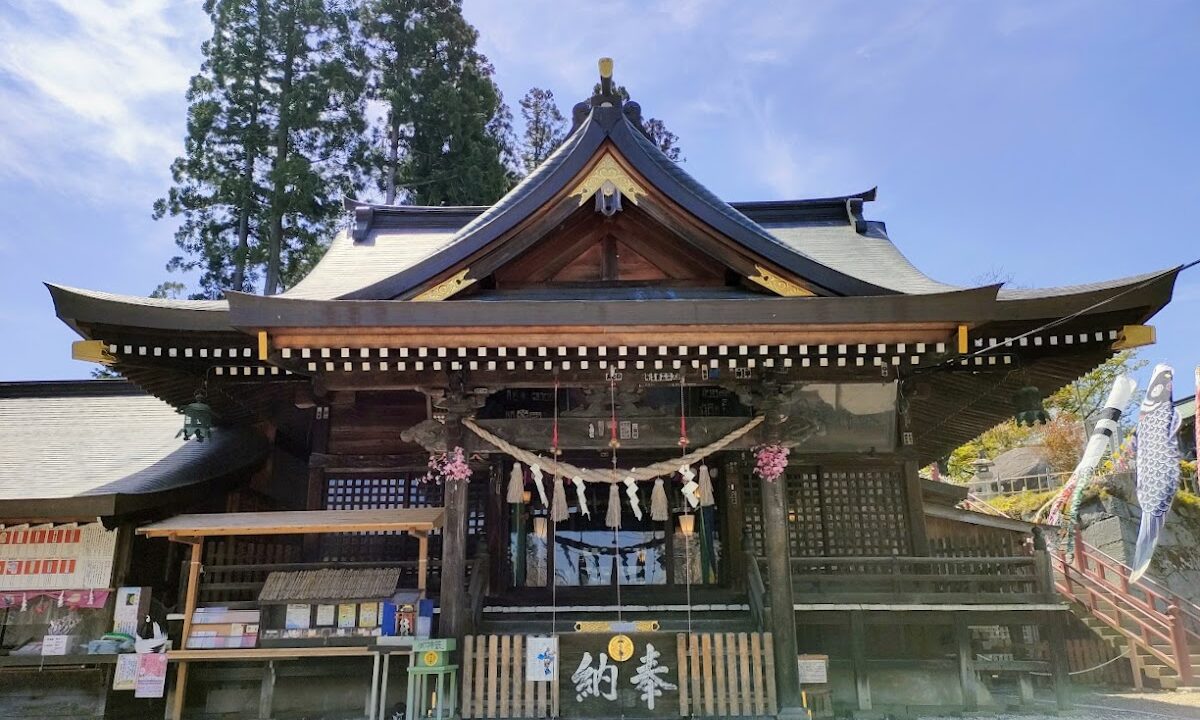
Complete Guide to Sakurayama Shrine (Morioka City, Iwate Prefecture) | A Thorough Explanation of History, Goshuin (Shrine Seals), and the Highlights of Eboshi Rock
Located in the heart of Morioka City, Iwate Prefecture, adjacent to Morioka Castle Ruins Park, Sakurayama Shrine is a historic shrine that has been revered as the guardian shrine of the Nanbu Domain since the Edo period. Many visitors come to this tourist spot, where history and tradition thrive, with attractions such as the massive Eboshi Rock (a remnant from the construction of Morioka Castle), the annual festival featuring a procession of warriors, and the winter tradition of the Naked Pilgrimage.
This article provides a detailed explanation of Sakurayama Shrine, from its historical background to its highlights, goshuin information, annual events, and access methods, incorporating a local perspective.
History and Origins of Sakurayama Shrine
Founding and Deep Connection with the Nanbu Domain
The history of Sakurayama Shrine dates back to the mid-Edo period, specifically Kanei 2 (1749). The origin of Sakurayama Shrine dates back to when Nanbu Toshimi, the eighth lord of the Morioka Domain, erected a shrine in Awajimaru within Morioka Castle to commemorate the virtues of the first lord, Nanbu Nobunao.
Nanbu Nobunao led the Nanbu clan from the Sengoku period to the early Edo period, served Toyotomi Hideyoshi and Tokugawa Ieyasu, and laid the foundation for the Morioka Domain. The shrine was established to honor his achievements and to enshrine him as the founder of the domain.
From Sakurayama Daimyojin to Sakurayama Shrine
Initially located within Morioka Castle, it was renamed “Sakurayama Daimyojin” in 1812. Subsequently, due to the abolition of the feudal domains and the separation of Shinto and Buddhism following the Meiji Restoration, it underwent several relocations.
In 1881, it was designated a prefectural shrine, and in 1899, it settled in its current location on the site of the third bailey of Morioka Castle. This area retains the magnificent stone walls of Morioka Castle, a testament to its former glory, and serves as a spiritual center for the citizens as a shrine dedicated to the local guardian deity.
Deities and Faith
The main deities enshrined at Sakurayama Shrine are Nanbu Mitsuyuki, the ancestral deity of the Nanbu family, and Nanbu Nobunao, the first lord of the Morioka Domain. Furthermore, successive lords of the Nanbu Domain are also enshrined here, and the shrine has long been revered by samurai and commoners as the guardian shrine of the Nanbu Domain.
Even today, it remains a familiar shrine for the citizens of Morioka, a place of worship for important life events such as New Year’s visits, Shichi-Go-San (a traditional rite of passage for children), and prayers for success in exams.
Highlights and Attractions of the Shrine Grounds
The Impressive Eboshi-iwa Rock
A must-see when visiting Sakurayama Shrine is the Eboshi-iwa Rock, located behind the main shrine building to the right. This massive rock, approximately 6-7 meters tall, is said to have appeared during excavation work for the construction of Morioka Castle.
As excavation continued into the original triangular rock, a giant rock resembling an eboshi (a type of hat worn by court nobles and samurai) emerged, hence its name. Revered as Morioka’s guardian rock or “Treasure Stone,” it is an object of worship as a sacred stone protecting the castle and town.
A shimenawa (sacred rope) surrounds Eboshi Rock, maintaining its sacred atmosphere. Its majestic presence, unchanged since the construction of Morioka Castle, is a witness to history spanning over 400 years.
Landscape Integrated with Morioka Castle’s Stone Walls
The grounds of Sakurayama Shrine are located on the site of Morioka Castle’s third bailey, surrounded by the magnificent stone walls of Morioka Castle. These stone walls, preserved from the time of Morioka Castle’s construction, are designated as a national historic site.
The landscape, where the shrine buildings and stone walls are integrated, is a precious space where you can truly experience the history of Morioka, a castle town. Especially during the seasons of fresh greenery and autumn leaves, you can enjoy the beautiful scenery where the stone walls and nature harmonize.
Shrine Precincts and Cultural Properties
In addition to the main shrine, Sakurayama Shrine has several subsidiary shrines within its grounds. Furthermore, the shrine houses a sword made by Kuninaga in the early Nanboku-cho period, which is designated as a National Important Cultural Property, conveying the history of the Nanbu family as a samurai family.
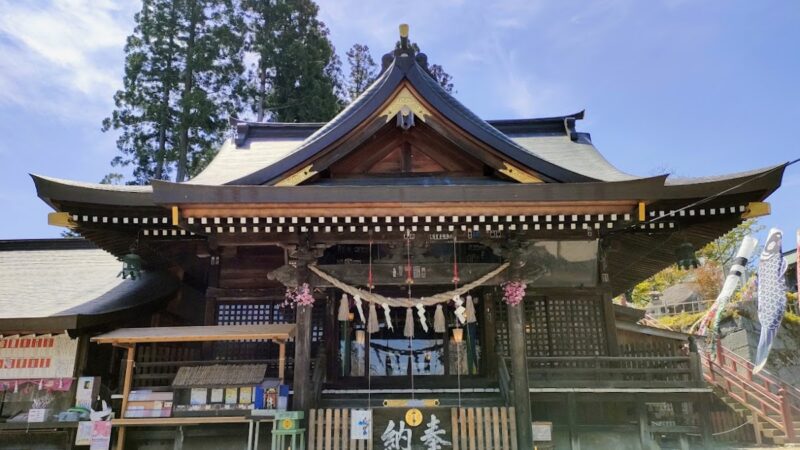
The shrine buildings themselves are of high historical value and are protected as cultural properties of Morioka City. When visiting, paying attention to the architectural style and decorations will allow you to feel the history of the shrine more deeply.
Annual Events at Sakurayama Shrine
Grand Festival (May 25th-27th)
The grandest festival at Sakurayama Shrine is the Grand Festival, held annually for three days starting on May 25th. This festival is a traditional event that has continued since the Nanbu Domain era and is a beloved symbol of early summer in Morioka.
The highlight of the main festival is the Warrior Procession. Mounted warriors clad in armor and helmets lead the portable shrine as they parade through Morioka city, a truly spectacular sight. This procession, which conveys the samurai culture of the Nanbu Domain, captivates many tourists.
Traditional performing arts are also offered within the shrine grounds, with Kagura (sacred dance) and local performing arts being showcased. Numerous stalls line the streets, further enhancing the festive atmosphere. For locals, it is an important event that signals the arrival of early summer.
Naked Pilgrimage (January 26th)
A winter tradition of Morioka, known nationwide, is the Naked Pilgrimage held on January 26th. This traditional event involves worshippers, clad in white robes, parading through the city in the bitter cold before visiting Sakurayama Shrine. Participants, dressed in headbands and white loincloths, march through the city chanting “Jasso, Joyasa.” This pilgrimage in the bitter cold is meant to purify the mind and body, and to pray for good health and safety for the family.
In recent years, the number of female participants has increased, and participation in white robes is now permitted. When observing, please be considerate of the participants and experience this traditional winter culture of Morioka.
Other Annual Events
Sakurayama Shrine holds various events throughout the year.
- Hatsumode (January 1st-3rd): Many citizens visit the shrine for New Year’s prayers.
- Setsubun Festival (February 3rd): Bean-throwing ceremonies are held to receive good fortune.
- Shichi-Go-San (November): The shrine is bustling with families praying for their children’s healthy growth.
- Oharai (June & December): A Shinto ritual to purify and cleanse away the impurities accumulated over the past six months.
These events are still cherished and passed down as forms of faith rooted in the community.
Goshuin and Amulets
Types and Hours of Goshuin Distribution
Sakurayama Shrine offers Goshuin as a memento of your visit. They are available at the shrine office, and in addition to the regular Goshuin, seasonal limited-edition Goshuin are sometimes distributed.
The Goshuin features the calligraphy of “Sakurayama Shrine” and the shrine’s seal, creating a simple yet dignified design. The offering fee is generally around 300 to 500 yen.
Sakurayama Shrine also offers its own original goshuincho (stamp book), with designs featuring Morioka Castle and Eboshi-iwa Rock being particularly popular. Those collecting goshuin stamps should definitely consider getting one.
Amulets and Souvenirs
Sakurayama Shrine offers a variety of amulets and souvenirs.
- Traffic Safety Amulet: For safe driving and cycling
- Academic Success Amulet: Popular among students and those taking exams
- Exorcism Amulet: For protection against misfortune for those in their unlucky year
- Matchmaking Amulet: For those seeking a good relationship
- Health Amulet: For recovery from illness and longevity
In addition, lucky charms featuring Eboshi-iwa Rock are available and are popular as souvenirs of your visit.
Access and Visiting Information
How to Access Sakurayama Shrine
Location: 1-42 Uchimaru, Morioka City, Iwate Prefecture
Access by Train
- Approximately 20 minutes on foot from JR Morioka Station
- If using the bus from Morioka Station, get off at the “Morioka Castle Ruins Park” bus stop and walk for approximately 5 minutes
- Approximately 5-10 minutes by taxi from Morioka Station
Access by Car
- Approximately 15 minutes from the Tohoku Expressway “Morioka IC”
- Paid parking is available around Morioka Castle Ruins Park (there is no dedicated parking lot for the shrine)
Since it is adjacent to Morioka Castle Ruins Park (Iwate Park), it is recommended to visit in conjunction with a stroll through the park.
Opening Hours and Notes for Visitors
- Visiting Hours: The shrine grounds are generally open for free visits.
- Shrine Office Reception Hours: Approximately 9:00 AM to 5:00 PM (may vary depending on the season)
- Goshuin (Shrine Seal) Issuance Hours: Within shrine office reception hours
Please note that hours may change during festivals and events; it is recommended to check in advance.
Contact Information
- Phone: 019-622-2061
- Official Website: https://www.sakurayamajinja.jp/
For detailed and up-to-date information regarding visits, please check the official website or call.
Tourist Attractions Around Sakurayama Shrine
Morioka Castle Ruins Park (Iwate Park)
Located right next to Sakurayama Shrine, Morioka Castle Ruins Park is a symbol of Morioka and a designated national historic site. The stone walls remain beautifully preserved, and in spring, it is a popular spot for cherry blossom viewing, attracting many visitors. You can feel the history of the castle town while strolling through the park. ### Morioka History and Culture Museum
Located within Morioka Castle Ruins Park, the History and Culture Museum offers a chance to learn about Morioka’s history and culture. Exhibits cover the history of the Nanbu clan and Morioka Castle. Visiting before or after visiting Sakurayama Shrine will deepen your understanding of Morioka’s history.
Morioka City Center Sightseeing
Within walking distance of Sakurayama Shrine lies the central business district of Morioka.
- Zaimokucho Yoichi: A morning market held every Saturday
- Morioka Hachimangu Shrine: One of Morioka’s three major shrines
- Morioka Tegami-kan: A facility associated with Kenji Miyazawa and Takuboku Ishikawa
- Konyamachi Area: A retro shopping street
There are also many famous restaurants where you can enjoy Morioka’s representative cuisine: Wanko Soba, Morioka Reimen, and Morioka Jajamen.
Tips for Enjoying the Charms of Sakurayama Shrine to the Fullest
Best Season to Visit
Sakurayama Shrine has charm in every season, but here are some particularly recommended times to visit:
- Spring (Late April to May): The cherry blossoms and fresh greenery at Morioka Castle Ruins Park are beautiful, and the annual festival is held.
- Summer (June to August): You can enjoy a refreshing visit in the lush green shrine grounds.
- Autumn (October to November): The contrast between the autumn leaves and the stone walls is a spectacular sight.
- Winter (January): You can witness the traditional “Naked Pilgrimage” event.
Photography Tips
Sakurayama Shrine is also a popular photography spot.
- Eboshi Rock: The view looking up from the right rear of the shrine is truly impressive.
- Stone Wall and Shrine: A composition where the stone wall of Morioka Castle and the shrine are integrated.
- Warrior Procession at the Annual Festival: Aim for dynamic scenes.
Please observe proper etiquette when taking photos so as not to disturb worshippers or the festival.
Recommended Worship Style by Locals
Among Morioka residents, the “Morioka Three Shrine Pilgrimage,” which includes Sakurayama Shrine, is popular. It is believed that visiting all three shrines—Sakurayama Shrine, Morioka Hachimangu Shrine, and Morioka Tenmangu Shrine—brings greater blessings. If you have the time, please try the Three Shrine Pilgrimage.
Summary: Sakurayama Shrine, Where Morioka’s History and Culture Breathe
Sakurayama Shrine, as the guardian shrine of the Nanbu Domain since the Edo period, is a valuable presence that conveys Morioka’s history and culture to the present day. Sakurayama Shrine is full of unique attractions, including the Eboshi Rock that remains from the time of Morioka Castle’s construction, magnificent stone walls, the annual festival featuring a procession of warriors, and the extremely cold naked pilgrimage.
Located in the heart of Morioka City, Uchimaru, the shrine grounds maintain a tranquil atmosphere and continue to be a spiritual haven for the city’s residents. When you visit Iwate Prefecture, be sure to visit Sakurayama Shrine and experience the history of the Nanbu clan and the culture of Morioka.
Sakurayama Shrine is cherished not only as a tourist spot but also as a place of worship. We hope you will appreciate the history and traditions that breathe life into this place while observing proper worship etiquette.
Frequently Asked Questions (FAQ)
Q1. What are the hours for receiving a Goshuin (shrine stamp) at Sakurayama Shrine?
A1. Goshuin at Sakurayama Shrine are available from 9:00 AM to around 5:00 PM, when the shrine office is open. However, times may change during festivals and events, so if you want to be sure to receive a Goshuin (temple/shrine stamp), we recommend checking by phone (019-622-2061) in advance. Seasonal limited-edition Goshuin are sometimes distributed, so it’s a good idea to check the official website for the latest information.
Q2. Does Sakurayama Shrine have a parking lot?
A2. Sakurayama Shrine does not have its own parking lot. If you are coming by car, please use the paid parking lots around Morioka Castle Ruins Park. There are several coin-operated parking lots in the center of Morioka City. It is also convenient to use public transportation; it’s about a 20-minute walk from JR Morioka Station, or about a 5-minute walk after getting off at the “Morioka Castle Ruins Park” bus stop.
Q3. When is the Sakurayama Shrine Grand Festival held? What are the highlights?
A3. The Sakurayama Shrine Grand Festival is held annually for three days, from May 25th to 27th. The main highlight is the warrior procession, where mounted warriors clad in armor and helmets lead a portable shrine through Morioka city. Traditional performing arts are also offered within the shrine grounds, and numerous stalls line the streets. This traditional event, which has continued since the Nanbu clan era, is a representative festival of early summer in Morioka and attracts many tourists.
Q4. What is Eboshi-iwa? Where can I see it?
A4. Eboshi-iwa is a massive rock, approximately 6-7 meters tall, located behind the right side of the main hall of Sakurayama Shrine. It was discovered during excavation work when Morioka Castle was being built, and was named after its resemblance to an eboshi (a type of hat worn by court nobles and samurai). It is revered as Morioka’s guardian rock and treasure stone, and remains an object of worship as a sacred stone protecting the castle and town. When visiting, be sure to go behind the shrine to see it.
Q5. Can anyone participate in the Naked Pilgrimage? Can I just watch?
A5. The Naked Pilgrimage is a traditional event held on January 26th, and participation requires prior registration. Participants, clad in white robes, parade through the city in the freezing cold before visiting Sakurayama Shrine. In recent years, the number of female participants has increased, and wearing white robes is also permitted. Those wishing to participate should contact the shrine in advance. Of course, it is also possible to simply observe, and it is a popular winter event in Morioka that attracts many spectators. When observing, please be considerate of the participants.