Complete Guide to Sanshaza Shrine (Shizukuishi Town, Iwate Prefecture) | The Charm of “Oshime-san,” the Starting Point of History, Festivals, and Naked Pilgrimages
Located on Shizukuishi Yoshare Street in the heart of Shizukuishi Town, Iwate Prefecture, Sanshaza Shrine is a historic shrine affectionately known locally as “Oshime-san.” Founded in the early Edo period, it has attracted the faith of local people for over 400 years. This article provides a detailed introduction to the charm of Sanshaza Shrine, including its history, enshrined deities, traditional events such as festivals and naked pilgrimages, and access information.
History and Background of Sanshaza Shrine’s Founding
Founded in Genna 1 (1615)
Sanshaza Shrine was founded in Genna 1 (1615), the year the Toyotomi family was destroyed in the Summer Siege of Osaka and the Tokugawa Shogunate’s rule was established. It is said that the shrine was built by Miya Jurozaemon, the then-governor of the Nanbu Domain, with the aim of maintaining public order in the Shizukuishi area and ensuring the peace and well-being of the farmers and townspeople.
In the early Edo period, Shizukuishi was developing as a post town on the highway connecting Morioka Castle town and Akita. As the flow of people increased, the existence of a shrine as a spiritual pillar for the region became necessary. The fact that a local administrator, the governor, founded the shrine indicates that it was not merely a place of worship, but played an important role as part of regional governance.
Origin of the name “Sanshaza”
The name “Sanshaza” originates from the fact that three deities are enshrined in a single shrine building. While the practice of enshrining three deities with different divine attributes was seen in various places during the Edo period due to the syncretic beliefs of Shinto and Buddhism and practical reasons, in Shizukuishi, it embodied the intention of comprehensively protecting the peace and well-being of the region.
Deities Enshrined | The Land of Shizukuishi Protected by Three Gods
As its name suggests, Sanshaza Shrine enshrines three deities.
Amaterasu Omikami
The supreme deity in Japanese mythology, and the goddess symbolizing the sun. She is revered as the ancestral deity of the Imperial family and is the principal deity of Ise Grand Shrine. Sanshaza Shrine enshrines Amaterasu Omikami as its principal deity, and the common name “O-Shinmei-san” also originates from this god. “Shinmei” is another name for shrines dedicated to Amaterasu Omikami, indicating a similar form of worship to Shinmei Shrines throughout Japan.
Amaterasu Omikami is worshipped as the goddess of national peace, abundant harvests, and good fortune, and has been revered as a watchful presence over the lives of the people of Shizukuishi.
Kasuga Okami
The deity of the Kasuga faith, with Kasuga Taisha in Nara as its head shrine. Specifically, this refers to the four deities: Takemikazuchi-no-Mikoto, Futsunushi-no-Mikoto, Amenokoyane-no-Mikoto, and Himegami.
Kasuga-no-Okami is known as the god of military success, national protection, and academic achievement. He was deeply revered by the samurai class of the Nanbu domain, and his divine attributes align with the founding purpose of maintaining regional order.
Hachiman-no-Okami
Hachiman-no-Okami is the deity of the Hachiman faith, which is said to have approximately 44,000 shrines throughout Japan, with Emperor Ojin as its principal deity. While he was deeply revered by the samurai class as a god of war and military prowess, he also had aspects of an agricultural and commercial god, and was widely worshipped by commoners.
In post towns like Shizukuishi, he was worshipped by people praying for safe travels and business prosperity, playing an important role as a guardian deity of the entire community.
The Reason for its Affectionate Affection as “Oshime-san”
The reason why Sanshaza Shrine is affectionately called “Oshime-san” by locals is due to its principal deity, Amaterasu Omikami. In the Tohoku region, it’s customary to refer to shrines dedicated to Amaterasu Omikami as “Shinmei-sama” or “Oshime-san,” a term of endearment used to show respect for a prestigious shrine.
For the people of Shizukuishi, Sanshaza Shrine has functioned not merely as a place of worship, but as the heart of the local community. For over 400 years, it has been a place where people gather and deepen their bonds through festivals and annual events, deeply rooted in the region.
The Annual Festival on September 16th | The Liveliest Festival in Shizukuishi Town
History and Characteristics of the Annual Festival
The annual festival of Sanshaza Shrine, held every year on September 16th, is known as the liveliest festival in Shizukuishi Town. On this day, Shizukuishi Yoshare Street (a shopping district) is bustling with many worshippers and stalls, and the entire town is enveloped in a festive atmosphere.
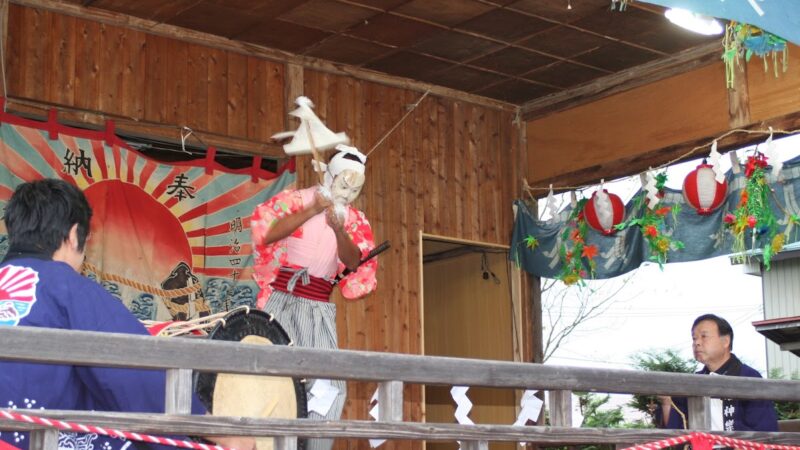
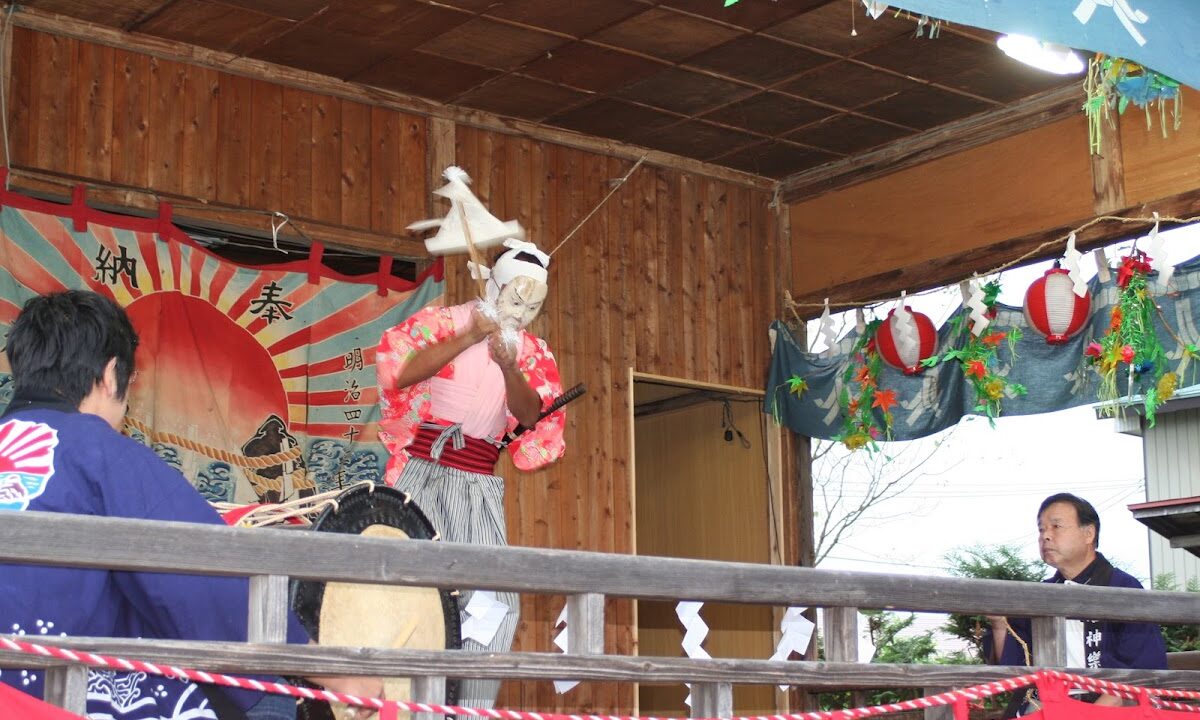
The annual festival includes various Shinto rituals and events, such as a portable shrine procession, Kagura (sacred dance) performances, and demonstrations of traditional performing arts. Local children also participate, making it a valuable opportunity for traditions to be passed down across generations.
Unity with the Shopping District
Because Sanshaza Shrine is located within the Shizukuishi Yoshare Street shopping district, the annual festival also serves as an event to revitalize the shopping district. The cooperation of local shops to enliven the festival, and the way the shrine and shopping district work together to revitalize the community, demonstrates an ideal relationship between a shrine and a local community in the modern age.
In recent years, tourists have also begun to visit, and it is attracting attention as a valuable opportunity to experience Shizukuishi’s traditional culture.
Naked Pilgrimage in the Coldest Part of Winter | A Traditional Event in the Harsh Winter
What is the Naked Pilgrimage?
Sanshaza Shrine is known as the starting point for the “Naked Pilgrimage,” which takes place every year around the coldest part of winter. The Naked Pilgrimage is a traditional winter event passed down in the Tohoku region, where participants, dressed in white robes and loincloths, walk barefoot through the freezing cold while praying. It is a ritualistic event with a spiritual element.
The Significance of the Naked Pilgrimage
This event, which strengthens the mind and body by enduring the harsh cold and prays for good health and safety for the family throughout the year, is considered a tradition that has continued since the Edo period. While the number of participants is declining in modern times, it is carefully preserved by young people and devout believers in the community.
Starting from Sanshaza Shrine, participants visit several shrines within the town. The sight of them walking barefoot through the snow in the harsh winter cold of Iwate leaves a deep impression on those who witness it.
The Value of Naked Pilgrimage in Modern Times
In modern society, such traditional events possess cultural value that transcends mere religious ceremonies. Naked pilgrimages continue to hold significant meaning as an opportunity to reaffirm regional identity, deepen intergenerational bonds, and cultivate mental strength to face challenges.
The Grounds and Facilities of Sanshaza Shrine
The Shrine Buildings and Grounds
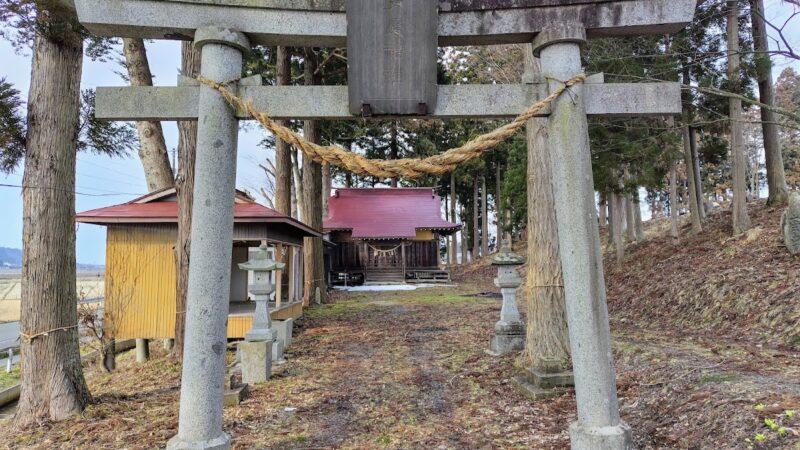
The grounds of Sanshaza Shrine, while located within the Shizukuishi Yoshare-dori shopping street, maintain a tranquil atmosphere. The shrine buildings retain the style of the Edo period, while undergoing restoration and renovation over time.
Basic elements of shrine architecture, such as the main hall, worship hall, and torii gate, are all present, warmly welcoming visitors. Sacred trees and stone monuments are also placed within the grounds, creating a space that evokes a long history.
Etiquette for Worship
Worship at Sanshaza Shrine follows the general etiquette for visiting any shrine. Before passing through the torii gate, bow once, purify your hands and mouth at the water basin, and then proceed to the main hall. At the main hall, perform the “two bows, two claps, one bow” ritual.
It is recommended to offer your gratitude and prayers to each of the three deities.
Access and Surrounding Information
Location
Address: Shizukuishi-cho, Iwate-gun, Iwate Prefecture (within Shizukuishi Yoshare Street)
Transportation Access
Access by Train:
- Approximately 10 minutes on foot from JR Tazawako Line “Shizukuishi Station”
- Approximately 30 minutes from Morioka Station to Shizukuishi Station
Access by Car:
- Approximately 20 minutes from Tohoku Expressway “Morioka IC”
- Approximately 5 minutes from Akita Expressway “Shizukuishi IC”
Parking
While there is limited parking for the shrine itself, there are public parking lots in the surrounding shopping district. During events such as annual festivals, congestion is expected, so we recommend using public transportation.
Visiting Hours and Admission Fee
Entry to the shrine grounds is generally free, and there is no admission fee. However, the operating hours of the shrine office may vary depending on the day, so we recommend checking in advance if you wish to receive a Goshuin (shrine stamp).
Tourist Attractions Around Sanshaza Shrine
Shizukuishi Yoshare-dori Shopping Street
The shopping street where the shrine is located is a charming tourist spot that retains the atmosphere of the Showa era. Shops selling local specialties and restaurants line the street, allowing you to experience the daily life of Shizukuishi.
Oushuku Onsen
Oushuku Onsen, located about 15 minutes by car from Sanshaza Shrine, is a hot spring resort with a history of over 450 years. We recommend relaxing in the hot springs after visiting the shrine.
Koiwai Farm
Koiwai Farm, one of Japan’s largest private comprehensive farms, is a representative tourist attraction of Shizukuishi. Enjoy nature experiences and interactions with animals on the vast grounds.
Mount Iwate
Mount Iwate, also known as “Southern Mount Fuji,” is an active volcano with an elevation of 2,038m and is a symbolic landmark of Iwate Prefecture. You can enjoy mountain climbing and trekking.
Annual Events at Sanshaza Shrine
Sanshaza Shrine holds various annual events in addition to its annual festival and the Naked Pilgrimage.
New Year’s Visit (January 1st-3rd)
Many local residents visit for the New Year’s visit to pray for happiness and safety in the new year. A Shinto ritual celebrating the new year is performed at the New Year’s Day Festival.
Setsubun Festival (around February 3rd)
Traditional events such as bean-throwing are held to pray for protection from evil and good fortune.
Summer Purification Ceremony (June 30th)
This is a Shinto ritual to purify oneself of sins and impurities accumulated over the past six months. A ritual involving passing through a ring of reeds is sometimes performed.
Autumn Festival (September 16th)
As mentioned above, this is the most lively festival in Shizukuishi Town.
Year-End Purification Ceremony (December 31st)
This is a Shinto ritual to purify oneself of the sins and impurities of the past year and to welcome the new year with a fresh start.
Benefits of Sanshaza Shrine
Sanshaza Shrine is believed to offer various benefits through the divine virtues of its three deities.
- National Peace and Security, Good Fortune and Prosperity (Amaterasu Omikami)
- Abundant Harvest and Business Prosperity (Amaterasu Omikami and Hachiman Omikami)
- Long-lasting Military Fortune and Good Luck in Competition (Kasuga Omikami and Hachiman Omikami)
- Academic Achievement (Kasuga Omikami)
- Family Safety and Good Health (Common to all three deities)
- Safe Travels (Hachiman Omikami)
This shrine is revered as a guardian deity of the region, watching over people in all aspects of life.
Goshuin Information
You can receive a goshuin (shrine stamp) at Sanshaza Shrine. Since the shrine office may be unattended, it is recommended to contact them in advance or visit during events such as festivals if you definitely want to receive a goshuin.
The goshuin will bear the name of “Sanshaza Shrine,” the date of your visit, and the shrine’s seal. You can bring your own goshuin book or receive a pre-printed goshuin. ## Connections with the Community | The Role of Sanshaza Shrine in the Modern Era
As a Community Center
For over 400 years since its founding, Sanshaza Shrine has remained a spiritual pillar for the people of Shizukuishi. Even today, it functions as a place that strengthens community bonds through its annual festivals and events.
Located in the heart of the shopping district, it is a prime example of a shrine integrated into local life, a place where people regularly pass through.
Preservation of Traditional Culture
Traditional events such as the Naked Pilgrimage and annual festivals are not merely religious ceremonies, but hold significant value as cultural heritage of the region. Passing on traditional culture to younger generations through these events is essential for maintaining regional identity.
Potential as a Tourism Resource
In recent years, “Goshuin pilgrimages” (visiting shrines and temples to collect Goshuin stamps) and “power spot pilgrimages” have gained popularity. Sanshaza Shrine is also seeing an increase in tourists visiting as part of Shizukuishi tourism.
Despite being a historical shrine, its unique location within a shopping street, the allure of its traditional events, and the abundant surrounding tourist resources give Sanshaza Shrine great potential as a tourist destination.
Points to Note When Visiting Sanshaza Shrine
Best Season for Visiting
Sanshaza Shrine can be visited year-round, but the following times are particularly recommended:
- Mid-September: This is the time of the annual festival, when the shrine is at its most lively.
- Daikan (Great Cold): You can witness the rare traditional event of “Hadaka Mairi” (naked pilgrimage).
- Hatsumode (First Shrine Visit of the New Year, January 1st-3rd): You can visit the shrine in a refreshing atmosphere of the new year.
- Spring to Autumn: The weather is pleasant, making it a good time to visit in conjunction with sightseeing in the surrounding area.
Clothing and Items to Bring
While no special clothing is required for a normal visit, it is advisable to dress appropriately for a sacred place. In winter, warm clothing suitable for Iwate’s harsh cold is essential.
If you wish to receive a Goshuin (shrine stamp), please bring your Goshuincho (stamp book). If you plan to take photos, please bring your camera. However, please be considerate of other visitors when taking photos on the shrine grounds.
Manners and Precautions
- Bow when passing through the torii gate.
- Walk along the sides of the path, as the center is considered the path of the gods.
- Cleanse your hands and mouth at the purification fountain before praying.
- When praying at the main hall, follow the “two bows, two claps, one bow” ritual.
- Smoking is prohibited on the shrine grounds; please take your trash with you.
- As the shrine is located in a shopping district, please be considerate of the surrounding residents and shops.
Summary | The Charm of Sanshaza Shrine
Sanshaza Shrine in Shizukuishi Town, Iwate Prefecture, is a historic shrine that has been loved by the local people for over 400 years since its founding in the early Edo period. It enshrines three deities: Amaterasu Omikami, Kasuga Omikami, and Hachiman Omikami, and is affectionately known as “O-Shinmei-san.”
The annual festival on September 16th is known as the liveliest festival in Shizukuishi town, and unique traditional events, such as serving as the starting point for the Daikan Naked Pilgrimage, are still being passed down today. Its location within a shopping district is also unusual, and the way the shrine and the local community are integrated represents an ideal form of a shrine in the modern age.
When you visit Shizukuishi, be sure to stop by Sanshaza Shrine and experience the unique atmosphere nurtured by its long history and the faith of the local people. Combining a visit to nearby tourist attractions will allow you to enjoy a more fulfilling Shizukuishi sightseeing experience.
Sanshaza Shrine is one of Iwate Prefecture’s representative shrines, possessing multifaceted charms including history, tradition, local community, and modern tourism.