Yasaka Shrine (Hachimantai City, Iwate Prefecture) Complete Guide | History, Grand Festival, Deities, and Access Information
Yasaka Shrine, located in Ōgure, Hachimantai City, Iwate Prefecture, is a historic shrine that has been cherished by the local people since the Edo period. It is revered as a deity that wards off epidemics, and a grand grand festival is held every year on July 15th. This article provides detailed information useful for visitors, including the history of Yasaka Shrine, its enshrined deities, festival events, and access methods.
Basic Information about Yasaka Shrine
Location
Address: 25, 19th Ward, Ōgure, Hachimantai City, Iwate Prefecture 028-7111
Yasaka Shrine is located in the Ōgure district, the central area of the former Nishine Town in Hachimantai City, in northern Iwate Prefecture. Ōgure is the administrative and commercial center of Hachimantai City, and the shrine has played an important role as the core of the local community.
Corporate Number and Registration Information
Corporate Number: 5400005002657 (Designated October 5, 2015)
This shrine is officially registered as a religious corporation and belongs to the Iwate Prefectural Shrine Association.
Nearest Station, Line, and Access
Nearest Station: JR Hanawa Line, Ōbuke Station
- Walking: Approximately 11 minutes on foot from Ōbuke Station (approximately 919m)
- Car: Approximately 10 minutes from Nishine IC on the Tohoku Expressway
- Bus: Approximately 5 minutes on foot from the Ōbuke bus stop (Iwate Prefectural Kita Bus)
Ōbuke Station serves as the gateway to Hachimantai City, and access to the shrine is excellent. The route from the station to the shrine is flat and easily accessible on foot.
Parking Information
There is parking available for visitors around the shrine. During events such as the annual festival, temporary parking lots may be set up, but congestion is expected, so we recommend considering using public transportation.
Deities and Divine Virtues
Main Deity: Susanoo-no-Mikoto
The deity enshrined at Yasaka Shrine is Susanoo-no-Mikoto. In Japanese mythology, Susanoo-no-Mikoto is known as the younger brother of Amaterasu-Omikami and is a god with a fierce yet courageous character. He is also famous as the heroic god who defeated Yamata-no-Orochi (the eight-headed serpent) and is worshipped nationwide as a god who wards off evil and disease.
Relationship with Gozu-Tenno Worship
The history of Yasaka Shrine mentions “Gozu-Tenno,” a name from the era of syncretism of Shinto and Buddhism. Gozu-Tenno is a deity that fused Buddhism and Shinto, and was worshipped by the people as a god who prevented disease. Following the Meiji-era decree separating Shinto and Buddhism, Gozu Tenno was identified with Susanoo-no-Mikoto, and many Yasaka Shrines and Gion Shrines began to enshrine Susanoo-no-Mikoto.
Divine Virtues (Benefits)
The main divine virtues that can be received at Yasaka Shrine are as follows:
- Protection from Epidemics and Healing from Illness: As is clear from the origin of its founding, the divine virtue of protection from epidemics and illnesses is most emphasized.
- Protection from Misfortune and Disaster: It is believed to have the power to ward off and purify all kinds of misfortunes.
- Family Safety: It protects the health and safety of the family.
- Business Prosperity: As a god that watches over the prosperity of the region, prayers for business success are also offered.
- Matchmaking: From the myth of Susanoo-no-Mikoto’s marriage to Kushinadahime-no-Mikoto, it is also believed to have the divine virtue of matchmaking.
History and Origins of Yasaka Shrine
Origin of Founding
The exact founding date of Yasaka Shrine is unknown, but according to the traditions of the elders, its origins date back to the mid-Edo period.
In June of the 7th year of the Kyoho era (1722), when an epidemic broke out in the area, a man named Hikosuke, having heard the legend that “no one in villages that worship Gozu Tenno falls ill,” is said to have invited the divine spirit from Gozu Tenno (Yasaka Shrine) in Yamashiro Province, Kyoto (present-day Kyoto Prefecture), and enshrined it on a hill below Oogake Tenno.
This legend is a valuable record showing how much people in the Edo period feared epidemics and how they relied on faith in gods and Buddhas as a countermeasure.
The Betto Position and the Hikosuke Family
Hikosuke, who founded the shrine, was succeeded by seven generations of his family, who served as the shrine’s betto (administrator). The betto was a position responsible for the management and rituals of shrines during the era of syncretism of Shinto and Buddhism, and was often held by Buddhist monks or Shinto priests. The fact that the Hikosuke family held this role for generations indicates that the shrine was a place of deep faith rooted in the community.
Changes Since the Meiji Era
Due to the Meiji-era decree separating Shinto and Buddhism, many “Gion Shrines” and “Tenno Shrines” throughout Japan were renamed “Yasaka Shrines.” The shrine in Ōfuke also similarly restarted as a Yasaka Shrine, with Susanoo-no-Mikoto as its principal deity, replacing Gozu Tennō.
Even as times changed from Meiji to Taisho, Showa, Heisei, and Reiwa, Yasaka Shrines have continued to serve as guardian deities of the region and a spiritual anchor for the residents.
About the Name of Yasaka Shrine
The name “Yasaka Shrine” is widely used for shrines whose head shrine is the Yasaka Shrine (Gion Shrine) in Higashiyama, Kyoto. There are approximately 1,055 Yasaka Shrines nationwide, making it the 10th most common shrine name in Japan. This indicates the widespread influence of Susanoo-no-Mikoto worship and Gion worship throughout Japan.
Annual Festival and Events
Yasaka Shrine Annual Festival (July 15th)
The most important festival at Yasaka Shrine is the Annual Festival, held every year on July 15th. This festival is a major event in the Ooguke district, attracting many worshippers and spectators not only from the local area but also from neighboring regions.
Main Contents of the Grand Festival
Pre-Festival/Eve Festival (July 14th):
- Pre-Festival Ritual
- Events by Local Residents as an Eve Festival
- Opening of Food Stalls
Grand Festival Day (July 15th):
- Morning: Start of Float Procession
- Afternoon: Parade from Ooguke Community Center to the Shrine
- Offering Ceremonies within the Shrine Grounds:
- Performance of Various Arts
- Kagura Performance
- Sumo Wrestling Offering
- Performance of Local Performing Arts (Traditional Performing Arts of Nishine Town)
- Karaoke Contest
- Mochi Scattering
- Evening to Night: Mikoshi Procession
Float Procession and Mikoshi Procession
One of the highlights of the Grand Festival is the procession of magnificent floats. From morning, the floats parading through the town are pulled by local young people, creating a festive atmosphere accompanied by traditional music.
In the evening, the portable shrine (mikoshi) is carried out, parading through the town with energetic shouts. The mikoshi procession is an important Shinto ritual in which the deity visits the parish area and blesses the entire community.
Food Stalls and the Summer Festival Atmosphere
During the annual festival, food stalls line the area in front of Yasaka Shrine. Classic festival foods such as yakisoba, takoyaki, shaved ice, and candied apples are available, creating a summer festival atmosphere that can be enjoyed by people of all ages.
Other Events
- Raffle
- Bon Odori Dance
- Game Competition
- Various Events
These events strengthen community bonds and provide a place for intergenerational interaction.
Major Annual Festivals
Besides the annual grand festival, Yasaka Shrine holds various festivals throughout the year:
- New Year’s Day Festival (January 1st): A festival celebrating the new year
- Spring Festival: A festival celebrating the arrival of spring
- Summer Purification Ceremony (around June 30th): A Shinto ritual to purify and cleanse away the impurities accumulated over the past six months
- Grand Festival (July 15th): The most important annual event
- Autumn Festival: A festival to give thanks for the harvest
- Year-End Purification Ceremony (December 31st): A Shinto ritual to purify and cleanse away the impurities accumulated over the past year
Highlights of the Shrine Grounds
Worship Hall and Main Sanctuary
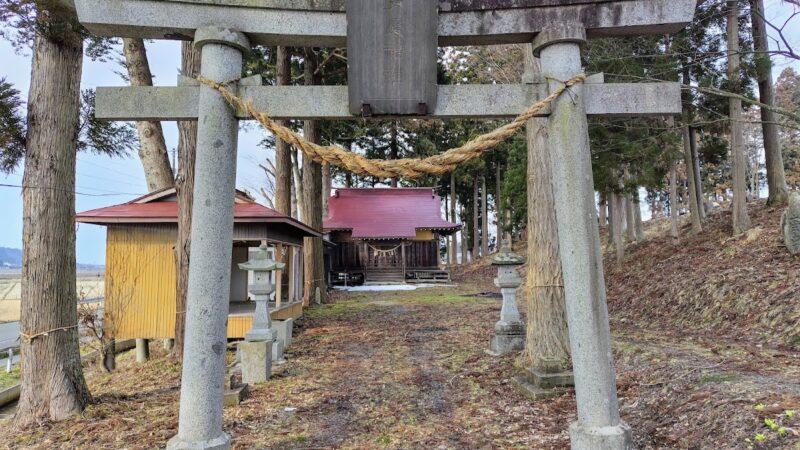
The worship hall of Yasaka Shrine is where worshippers offer their prayers. It retains a traditional shrine architectural style and is carefully maintained as the center of local faith. The main shrine houses the sacred object, and daily rituals are performed by Shinto priests.
Subsidiary Shrines and Auxiliary Shrines
Within the grounds of Yasaka Shrine, there may be subsidiary shrines and auxiliary shrines dedicated to deities other than the main deity. Many shrines enshrine various deities worshipped in the region, such as Inari shrines and Tenmangu shrines.
Kagura Hall and Shrine Office
There is a Kagura Hall and stage where Kagura and local performing arts are offered during festivals such as the annual grand festival, making it an important place for preserving the region’s traditional culture.
About Goshuin (Shrine Seals)
Many people collect Goshuin as a memento of their shrine visit. It is recommended to check in advance regarding the issuance of Goshuin at Yasaka Shrine.
Some shrine information websites offer electronic Goshuin services, but these are not official shrine services and are digital services that can be used as a record of your visit. If you wish to receive an official Goshuin, please check with the shrine office during your visit.
Nearby Shrines and Tourist Attractions
Nearby Shrines
Several shrines are located within walking distance of Yasaka Shrine:
Within 1 minute walk:
- Miyata Shrine: Approximately 1 minute walk (22m)
- Inari Shrine: Approximately 1 minute walk (45m)
Within 10 minutes walk:
- Iwashima Shrine (Itsukushima Jinja): Approximately 9 minutes walk (682m)
Within 20 minutes walk:
- Matsuo Shrine: Approximately 16 minutes walk (1.2km)
- Inari Shrine (another shrine): Approximately 21 minutes walk (1.6km)
Within 50 minutes walk:
- Komagata Shrine: Approximately 47 minutes walk (3.7km)
A “shrine pilgrimage” visiting these shrines would be a great opportunity to gain a deeper understanding of the charm of Hachimantai City.
Tourist Attractions in Hachimantai City
Hachimantai City is a region rich in nature, offering numerous tourist attractions that can be enjoyed in conjunction with shrine visits:
- Towada-Hachimantai National Park: A national park boasting magnificent natural scenery
- Hachimantai Aspite Line: A scenic driving route
- Hachimantai Onsenkyo: A hot spring resort offering a variety of spring qualities
- Iwate Prefectural Forest: Ideal for forest bathing and hiking
- Matsuo Mine Ruins: A historical industrial heritage site
About Hachimantai City and the Obuke Area
Overview of Hachimantai City
Hachimantai City is located in the northern part of Iwate Prefecture. It was formed in 2005 through the merger of Nishine Town, Matsuo Village, and Anshi Town. The city’s name originates from Mount Hachimantai, which rises on the border with Akita Prefecture.
Most of its area is covered by forests, making it a region rich in nature, including part of the Towada-Hachimantai National Park. Blessed with abundant tourist resources such as hot springs, ski resorts, and highland resorts, you can enjoy beautiful scenery throughout the four seasons.
History of the Obuke District
The Obuke district developed as the center of the former Nishine Town. While there are various theories about the origin of the name “Obuke,” it has a long history of being a place where people have lived and which has flourished as a transportation hub.
Even today, it remains one of the city’s central areas, with a concentration of administrative functions, commercial facilities, and public facilities.
Manners and Points for Visiting a Shrine
Basic Shrine Visit Etiquette
By observing the basic etiquette for visiting a shrine, you can offer a more heartfelt prayer:
- Bow before passing through the torii gate: This is a sign of respect when entering the sacred area.
- Avoid walking in the center of the path: The center is considered the path of the gods.
- Purify yourself at the water basin: Purify your left hand, then your right hand, then your mouth.
- Etiquette at the main hall:
- Quietly place your offering in the offering box.
- Ring the bell if there is one.
- Two bows, two claps, one bow (standard shrine etiquette).
- Pray with sincerity.
- Bow upon leaving: Turn around and bow when leaving the torii gate.
Photography
Photography is generally permitted on the shrine grounds, but please note the following:
- Do not take photos in areas where photography is prohibited, such as inside the main hall.
- During festivals, please be considerate so as not to disrupt the religious ceremonies.
- Please respect the privacy of other worshippers.
- Please refrain from using flash photography.
Attire
While special attire is not required for regular visits, it is desirable to dress appropriately for a sacred place. For formal festivals such as the Grand Festival, slightly more formal attire would be appropriate.
Connection with the Community
As a Community Center
Yasaka Shrine is more than just a place of worship; it plays a central role in the local community. Festivals, including the Grand Festival, provide valuable opportunities for local residents to gather and deepen their bonds.
Preservation of Traditional Culture
The dedication of Kagura (sacred dance) and local performing arts is an important activity for passing on the region’s traditional culture to the next generation. Younger generations also learn about the region’s history and culture and cultivate their identity by participating in the preparation and operation of festivals.
Relationship with the Iwate Prefecture Shinto Youth Association
Yasaka Shrine belongs to the Iwate Prefecture Shinto Youth Association and, as part of the prefectural shrine network, is committed to promoting Shinto culture and maintaining and developing shrines. It is also featured on the Iwate Prefecture Shrine Association website and is officially recognized as a shrine within the prefecture.
Other Yasaka Shrines in Hachimantai City
There are several Yasaka Shrines in Iwate Prefecture. Particularly famous is the Yasaka Shrine in Hiraizumi Town, which is said to have been founded during the Heian period, around the time of the Fujiwara clan’s third generation, and has an important history as one of the five guardian shrines of Motsuji Temple.
The Yasaka Shrine in Hachimantai City is a different shrine from the one in Hiraizumi, but it shares the commonality of enshrining Susanoo-no-Mikoto and attracting worshippers seeking protection from epidemics.
Significance of Yasaka Shrine in Modern Times
As a God of Protection from Epidemics
The divine virtue of “protection from epidemics,” which is the origin of Yasaka Shrine’s founding, remains of great significance even in modern times. Having experienced recent infectious disease outbreaks, the role of shrines as places to pray for health and safety has been reaffirmed for us.
As a Place of Spiritual Support
Even in modern society, shrines continue to be a place of spiritual support for people. The time spent quietly offering prayers, away from the hustle and bustle of daily life, brings peace of mind.
As a Core of Regional Revitalization
Festivals, including the annual grand festival, contribute to the revitalization of the region. The gathering and interaction of many people leads to the revitalization of the local economy and the promotion of tourism.
Precautions When Visiting
Visiting Hours
While the shrine grounds are generally open all day, the hours of operation at the shrine office are limited. If you wish to receive a Goshuin (shrine stamp) or prayers, it is recommended to check in advance.
Crowds During the Annual Grand Festival
During the annual grand festival on July 14th and 15th, the shrine will be crowded with many worshippers and spectators. The parking lot is likely to be full, so please allow ample time for your visit or consider using public transportation.
Visiting in Winter
Northern Iwate Prefecture is a region with heavy snowfall. If visiting in winter, please take precautions against the cold, wear non-slip shoes, and be very careful of your footing.
Contact Information
For detailed information and the latest status, please contact:
- Iwate Prefecture Shrine Association
- Hachimantai City Tourism Association
- Hachimantai City Hall
Summary
Yasaka Shrine, located in Ōsaragi, Hachimantai City, Iwate Prefecture, is a historical shrine founded in 1722 (Kyōhō 7) during the Edo period, with the aim of praying for the eradication of disease. It enshrines Susanoo-no-Mikoto as its main deity and has been cherished by the local people for its divine blessings of protection against misfortune and healing from illness.
The annual festival, held on July 15th, is a major event in the Obuke district, featuring a variety of activities including float processions, portable shrine processions, Kagura dance performances, and food stalls. The pre-festival and eve celebrations begin on July 14th, enveloping the entire community in a festive atmosphere for two days.
The shrine is easily accessible, just an 11-minute walk from Obuke Station on the JR Hanawa Line. Several other shrines, including Miyata Shrine, Inari Shrine, and Iwashima Shrine, are located nearby. We encourage you to plan a visit to Yasaka Shrine in conjunction with sightseeing in Hachimantai City, enjoying its rich natural beauty and hot springs.
As a center of the local community, a place for the transmission of traditional culture, and a spiritual haven for the people, Yasaka Shrine continues to quietly but surely exist in Obuke today. Why not offer prayers to the gods of protection against disease and misfortune, and pray for good health and safety for your family?