Complete Guide to Ooguke Inari Shrine (Hachimantai City, Iwate Prefecture) | Deities, Access, and Nearby Shrine Information
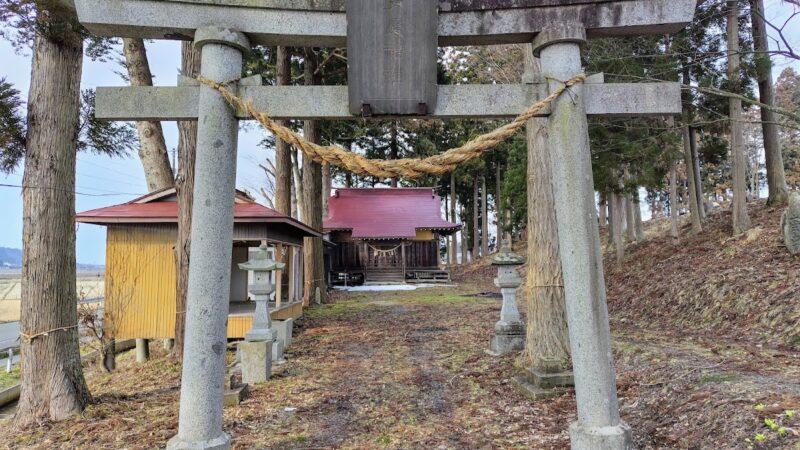
Ooguke Inari Shrine, located in Hachimantai City, Iwate Prefecture, is an Inari shrine that attracts the faith of the local community. This article provides detailed information useful for those considering visiting or enjoying shrine pilgrimages, covering the deities enshrined at Ooguke Inari Shrine, its location, access methods, relationship with surrounding shrines, and characteristics of Inari shrines in Iwate Prefecture.
Basic Information on Ooguke Inari Shrine
Location
Ooguke Inari Shrine is located at 26-3, 19th District, Ooguke, Hachimantai City, Iwate Prefecture. Hachimantai City is located in the northwestern part of Iwate Prefecture and is known for its rich natural environment and hot springs. The address notation “Jiwari” is unique to Iwate Prefecture and is a historical district designation originating from the land survey system of the Edo period.
The Ooguke district is located in the center of Hachimantai City and once developed as a region that supported the prosperity of the Matsuo Mine. Even today, Ooguke Inari Shrine remains a central hub for local residents, playing a vital role in the community.
Deity Enshrined
Ooguke Inari Shrine, as an Inari shrine, is believed to primarily enshrine Ukanomitama-no-kami. Ukanomitama-no-kami is the deity of grains and food, known for their divine blessings of abundant harvests, business prosperity, and industrial development.
Inari shrines are said to number over 30,000 nationwide, making them the most numerous type of shrine in Japan. In Japan, where agriculture was once thriving, the belief in praying for bountiful harvests has been deeply rooted since ancient times, and Inari worship has developed in close connection to the lives of ordinary people.
Divine Blessings and Virtues
Ooguke Inari Shrine is believed to offer the following blessings:
- Abundant Harvest: Wishing for a bountiful harvest of crops
- Business Prosperity: The development and success of businesses
- Family Safety: The health and peaceful lives of families
- Industrial Development: The promotion of local industries
- Good Fortune and Prosperity: Improving luck and attracting good fortune
It is particularly revered by those involved in local agriculture and commerce.
Access and Transportation Information
Nearest Station and Line
The nearest station to Ooguke Inari Shrine is Ooguke Station on the JR Hanawa Line. The shrine is approximately an 11-minute walk from Ooguke Station, making it relatively easy to access.
About the JR Hanawa Line:
The Hanawa Line is a local line connecting Koma Station in Iwate Prefecture to Odate Station in Akita Prefecture, known for its scenic views of the natural beauty of Hachimantai. Since the number of trains is limited, it is necessary to check the timetable in advance before visiting.
Access on Foot
The walking route from Obuke Station to the shrine is relatively easy to follow, and you can arrive via local residential roads. Along the way, you can enjoy the nature of Hachimantai and appreciate the different scenery depending on the season.
When actually visiting, it is recommended to check the exact location using a map app. Especially in winter, road conditions may change due to snow, so caution is necessary.
Access by Car
If accessing by car, the nearest interchange is Matsuo Hachimantai IC on the Tohoku Expressway. From the IC, it takes about 10 minutes via National Route 282.
Regarding parking availability, it is recommended to check with the facility before visiting. For small local shrines, dedicated parking may not be available, so prior confirmation is important.
Bus Routes
While local buses operating within Hachimantai City are also available, the number of buses is limited, so if using public transportation, it is necessary to check the Iwate Kenpoku Bus timetable in advance. ## Nearby Shrines and Temples
Several historical shrines are located near Ooguke Inari Shrine, offering opportunities for shrine hopping.
Miyata Shrine
Located near the Ooguke area, this shrine is revered as the guardian deity of the region. Visiting both Ooguke Inari Shrine and Miyata Shrine allows for a deeper understanding of the local religious culture.
Yasaka Shrine
This shrine enshrines Susanoo-no-Mikoto, known as the god of protection against disease and misfortune. Many of these shrines are central to local events such as summer festivals, playing a vital role as a hub for the community.
Iwashima Shrine
Several Iwashima Shrines exist within Iwate Prefecture, and this shrine is known for enshrining Ichikishima-hime-no-Mikoto. It also attracts worshippers as a water deity and Benzaiten.
Visiting these surrounding shrines allows you to experience the diverse religious culture of the Hachimantai region.
About Inari Shrines
History and Characteristics of Inari Worship
Inari worship is believed to have originated in the Nara period with Fushimi Inari Taisha in Kyoto as its head shrine. The name “Inari” derives from “Ina ga naru” (rice ripening), and originally, it was a worship strongly associated with agricultural deities.
As time passed, along with the development of commerce, its character as a god of business prosperity also strengthened, and in the Edo period, it became widely worshipped among common people. Currently, it is revered as a god who prays for the prosperity of all industries, not just agriculture and commerce.
Characteristic Elements of Inari Shrines
Torii Gate:
Many Inari shrines are characterized by their vermilion (red) torii gates. This is said to represent the divine power of Inari Okami and also has the meaning of warding off evil.
Fox Statues:
Fox statues are often placed in Inari shrines. This is because the fox is not a god itself, but rather a “divine messenger” of Inari Okami, that is, a messenger of the god.
Banners: Many Inari shrines display red and white banners, symbolizing the wishes of worshippers.
Major Inari Shrines in Iwate Prefecture
Besides the Ooguke Inari Shrine, many other Inari shrines are located in Iwate Prefecture. Here, we introduce some representative Inari shrines.
Shiwa Inari Shrine (Shiwa-cho, Shiwa-gun)
Shiwa Inari Shrine is particularly famous as a representative Inari shrine of Iwate Prefecture. It was formerly a prefectural shrine and designated as a special shrine, and is considered one of the Three Great Inari Shrines of Japan or Five Great Inari Shrines of Japan by locals.
Founded in 1057 (Tenki 5), it is said that Minamoto no Yoriyoshi invited a divided spirit from Fushimi Inari Taisha in Kyoto during his conquest of Oshu. Since then, it has attracted the faith of the local community for approximately 1,000 years.
The vast grounds are lined with vermilion torii gates, leaving a strong impression on worshippers. During New Year’s visits and the annual festival, many worshippers come from both within and outside the prefecture, and it is known as one of Iwate Prefecture’s representative power spots.
Otsuchi Inari Shrine (Futawatari Shrine)
Otsuchi Inari Shrine (Futawatari Shrine), located in Otsuchi Town, is an ancient shrine said to have been founded in the early Edo period. The enshrined deities are Ukanomitama-no-Mikoto and Takeminakata-no-Mikoto.
It is said to have been moved to its current location in 1720 (Kyoho 5), and is situated on a hill overlooking Otsuchi Bay. Known for its blessings of abundant harvests, maritime safety, and national prosperity and peace, it is deeply revered by local residents as “the guardian deity that has supported Otsuchi, a town that lives in harmony with the sea.”
It also houses town-designated cultural properties and is protected as a shrine of high historical value. Even after the Great East Japan Earthquake, it has played an important role as a symbol of regional recovery.
Itachihei Inari Shrine (Hanamaki City)
Located in Hanamaki City, Itachihei Inari Shrine is known as a shrine associated with Kenji Miyazawa. It is said to have connections to Miyazawa’s works and life, and is a pilgrimage site for literature fans.
Hanamaki Onsen Inari Shrine
Located within the Hanamaki Onsen hot spring resort area, this Inari shrine is worshipped as the guardian deity of the hot spring area. Many people visit it in conjunction with hot spring sightseeing, making it a popular tourist spot.
Aoyama Inari Shrine (Morioka City)
Located in Morioka City, this Inari shrine is a center of Inari worship in urban areas. It is a shrine with strong faith from local shop owners and business people praying for business prosperity.
Manners and Etiquette for Visiting Shrines
When visiting a shrine, it is important to observe basic manners for visiting.
How to Pass Through a Torii Gate
The torii gate is the entrance to the sacred area. Before passing through, bow once. Since the center is considered the path of the gods, it is considered polite to walk along the edge of the path.
Hand-Washing Etiquette
If there is a hand-washing station, purify your body and mind using the following steps:
- Hold the ladle in your right hand and wash your left hand.
- Switch the ladle to your left hand and wash your right hand.
- Switch the ladle back to your right hand, receive water in your left hand, and rinse your mouth.
- Wash your left hand once more.
- Hold the ladle upright, wash the handle, and return it to its original position.
Worship at the Main Hall
The basic etiquette is “two bows, two claps, one bow”:
- Place your offering in the offering box.
- If there is a bell, ring it.
- Bow deeply twice.
- Clap your hands twice at chest height.
- Pray with your hands clasped together.
- Finally, bow deeply once.
About Goshuin (Shrine Seals)
In recent years, collecting Goshuin has become a popular hobby. A Goshuin is a stamp given at a shrine as proof of worship, and its unique design varies from shrine to shrine.
It is recommended to check in advance whether you can get a Goshuin at Ooguke Inari Shrine. Smaller shrines may not have a resident priest and may not offer Goshuin.
Points to note when receiving a Goshuin:
- Always pray before receiving it.
- Prepare a Goshuincho (notebook or diary is not acceptable).
- Prepare a donation (around 300-500 yen).
- Request politely.
- Do not insist if a priest is absent.
History and Culture of Hachimantai City
Hachimantai City, where Ooguke Inari Shrine is located, is a relatively new city formed in 2005 through the merger of Matsuo Village and Anshio Town. However, the history of this region is long, and it has developed as a land blessed with abundant nature and mining resources.
History of Matsuo Mine
The Hachimantai region once flourished thanks to the Matsuo Mine, known as a “paradise in the clouds.” Prospering from sulfur mining, it developed into a company town with over 10,000 inhabitants at its peak. The Ooguke district played a vital role as a commercial center supporting the lives of the mine workers and their families.
Even after the mine closed, the region has transformed into a new area of development, focusing on hot spring tourism and tourism utilizing its natural environment.
Nature of Hachimantai
Hachimantai is designated as part of the Towada-Hachimantai National Park, protecting its rich natural environment. The “Hachimantai Dragon Eye,” which appears during the spring snowmelt, has recently become a popular topic on social media, attracting many tourists.
List of Festivals and Events (2026)
Shrine festivals and events are important annual events for the local community. For specific festival dates at Ooguke Inari Shrine, it is necessary to check with the shrine or local information.
Main Annual Events at a Typical Inari Shrine:
New Year’s Visit (January 1st-3rd)
A New Year’s visit to pray for safety and prosperity throughout the year.
First Horse Day Festival (First Horse Day of February)
One of the most important festivals at an Inari shrine. It is considered the day when Inari Okami descended upon Mount Inari, and prayers are offered for a bountiful harvest and business prosperity.
Grand Festival (Spring or Autumn)
The most important festival related to the founding of the shrine and the enshrined deity. The timing varies by region.
Summer Festival (July-August)
Often held as a local summer festival, sometimes featuring portable shrines and offerings.
Autumn Festival (September-November)
A festival of gratitude for the harvest, celebrating a bountiful harvest.
※Actual festival dates may change depending on the year. It is recommended to check with the relevant facility before visiting. **
Shrine Culture of Iwate Prefecture
Iwate Prefecture is home to over 900 shrines, each deeply intertwined with the history and culture of its region.
Major Shrines in the Prefecture
Morioka Hachimangu Shrine: The largest shrine in the prefecture and the guardian shrine of Morioka City. Many worshippers from both within and outside the prefecture visit for Hatsumode (first shrine visit of the year).
Motsuji Temple: A temple in Hiraizumi, a World Heritage Site, known for its beautiful Pure Land garden.
Hayachine Shrine: A shrine of mountain worship, with Mount Hayachine as its sacred object, revered by mountain climbers.
Sumiyoshi Shrine: Worshipped in coastal areas as the god of maritime safety and navigation.
Characteristics of Shrine Architecture in Iwate Prefecture
Shrine architecture in Iwate Prefecture is characterized by its robust construction adapted to harsh climatic conditions. Due to the many heavy snowfall areas, the roofs have steep slopes, designed to allow snow to slide off easily.
Furthermore, many buildings feature a simple yet powerful architectural style using local timber, reflecting the unique aesthetic sensibilities of the Tohoku region.
Notes on Visiting the Shrine
Attire
While there are no strict dress code regulations for visiting the shrine, clean attire that reflects the sacred nature of the place is desirable. Formal attire is especially recommended for formal worship or prayers.
Photography Etiquette
Photography is generally permitted within the shrine grounds, but photography should be refrained from inside the main hall or during religious ceremonies. Consideration should also be given to avoiding disturbing other visitors.
Visiting in Winter
Iwate Prefecture experiences heavy snowfall. If visiting in winter, please note the following:
- Wear non-slip shoes
- Dress warmly
- Check road conditions in advance
- Allow ample time as sunset is early
Summary
Ooguke Inari Shrine is a locally rooted Inari shrine located in Hachimantai City, Iwate Prefecture. Located just an 11-minute walk from Ōbuke Station on the JR Hanawa Line, this area is easily accessible and boasts several nearby shrines, including Miyata Shrine, Yasaka Shrine, and Iwashima Shrine, making it ideal for shrine hopping.
Inari worship is known for its blessings of abundant harvests and business prosperity, and Iwate Prefecture is home to numerous historical Inari shrines, such as Shiwa Inari Shrine and Ōtsuchi Inari Shrine. These shrines are deeply intertwined with the region’s history and culture, and continue to play a central role in the local community.
When visiting Hachimantai City, why not enjoy the rich natural beauty and hot springs while experiencing the region’s religious culture? When visiting shrines, please observe basic manners and respectfully spend your time in this sacred space.
※The information in this article is current as of the time of writing. Festival dates and facility information may change, so it is recommended to check with the relevant facility or local tourism association before visiting.