Complete Guide to Hakusan Hachiman Shrine (Akita City, Akita Prefecture) | History, Deities, and Access Information
Hakusan Hachiman Shrine, located in Akita City, Akita Prefecture, is a historic shrine that enjoys deep devotion from the local community. This article provides detailed information you should know before visiting, including the history of Hakusan Hachiman Shrine, its enshrined deities, how to worship, access information, and nearby tourist spots.
What is Hakusan Hachiman Shrine?
Hakusan Hachiman Shrine is a shrine located in Akita City, possessing a unique form of worship that fuses Hakusan faith and Hachiman faith. While there are several Hakusan shrines and Hachiman shrines in Akita Prefecture, Hakusan Hachiman Shrine is distinctive for combining both faiths under its name.
As a guardian shrine of the region, it has long been deeply intertwined with the lives of local residents, and many worshippers visit seeking various blessings such as abundant harvests, family safety, and protection from evil. It is a valuable place that conveys Akita’s history and culture to the present day, and is an integral part of the region’s identity.
History of Hakusan Hachiman Shrine
Origin of Founding
The founding of Hakusan Hachiman Shrine is based on local historical documents and traditions. Hakusan worship is a faith that reveres Mount Hakusan in Kaga Province (present-day Ishikawa Prefecture) as a sacred mountain, and it spread throughout Japan from the Heian period. Hachiman worship, on the other hand, is a faith of war gods with Emperor Ojin as its main deity, and it was widely practiced, mainly among the samurai class.
It is believed that Hakusan worship spread to Akita through trade and human traffic with the Hokuriku region. Especially from the Sengoku period to the Edo period, it is said that local lords and influential figures invited shrines to serve as centers of worship and enshrined them as guardian deities of their regions.
From the Edo Period to the Modern Era
During the Edo period, it played an important role as the guardian shrine of the region under the rule of the Akita Domain. In Akita during the feudal period, a castle town centered around Kubota Castle was formed, and many shrines were established in the surrounding areas. It is believed that Hakusan Hachiman Shrine also established a firm position as a center of faith for the local residents during this period.
Although the shrine underwent several changes through the Meiji-era separation of Shinto and Buddhism and the wave of modernization, it has been preserved by the deep faith of the local people and continues to exist today.
Deities and Benefits
Main Deities
Hakusan Hachiman Shrine enshrines Kukurihime-no-kami, the central figure in Hakusan faith, and Emperor Ojin (Homudawake-no-mikoto), the central figure in Hachiman faith, as its main deities.
Kukurihime-no-kami is a deity appearing in the *Nihon Shoki* (Chronicles of Japan), and is worshipped as a goddess of matchmaking and harmony, as she is said to have mediated the relationship between Izanagi and Izanami. She is also deeply connected to mountain worship as the deity of Mount Hakusan, and possesses characteristics as a goddess of agriculture and water.
Emperor Ōjin is believed to have been a real historical figure, the 15th Emperor of Japan, and was deified as Hachiman. He was worshipped not only by the samurai class as a god of military fortune and victory, but also widely revered as a god of national protection and industrial development.
Divine Blessings
The main blessings you can receive at Hakusan Hachiman Shrine are as follows:
- Matchmaking and Marital Harmony: Achieving a good match through the divine virtues of Kukurihime-no-kami
- Family Safety and Prosperity of Descendants: Protection of family health and happiness
- Abundant Harvest and Business Prosperity: Prayers for success in agriculture and business
- Protection from Evil and Good Fortune: Warding off disasters and inviting good fortune
- Long-lasting Military Fortune and Success in Competitions: Prayers for victory through the divine virtues of Emperor Ojin
- Safe Childbirth and Child-rearing: Watching over the health and growth of mother and child
Highlights of the Shrine Grounds
Shrine Buildings and Architectural Style
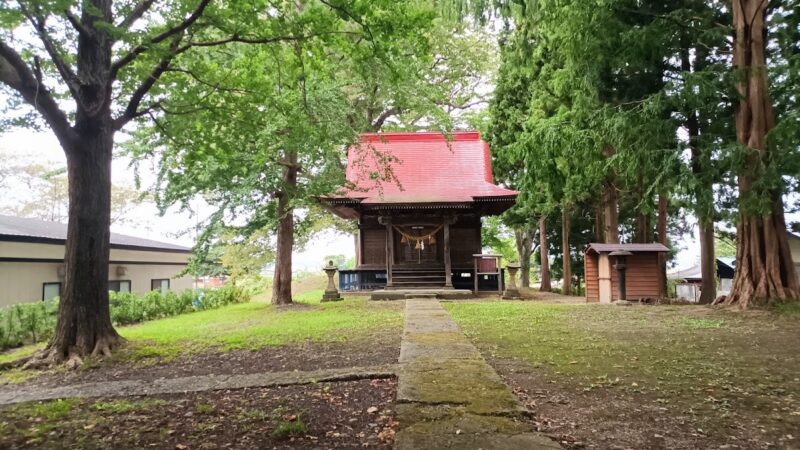
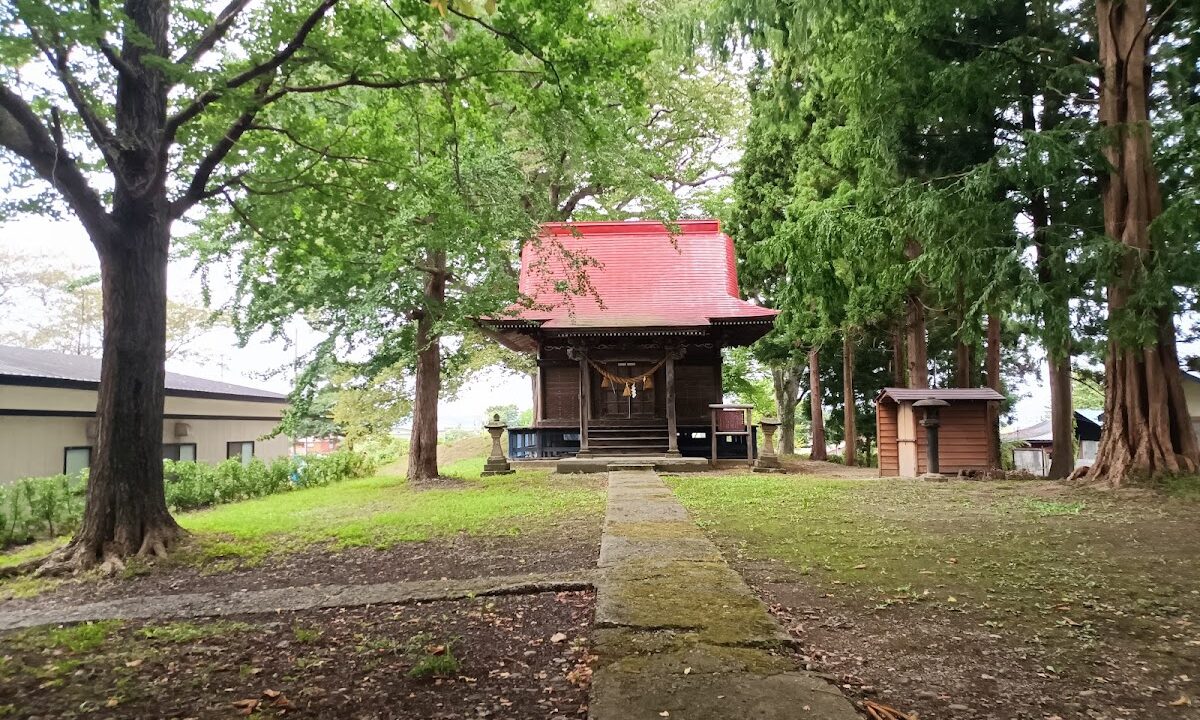
The shrine buildings of Hakusan Hachiman Shrine exhibit the characteristics of traditional shrine architecture in the Akita region. The main hall is built in the Nagare-zukuri or Shinmei-zukuri style, creating a simple yet solemn atmosphere. The worship hall is located in front of the main hall as a place for worshippers to offer prayers.
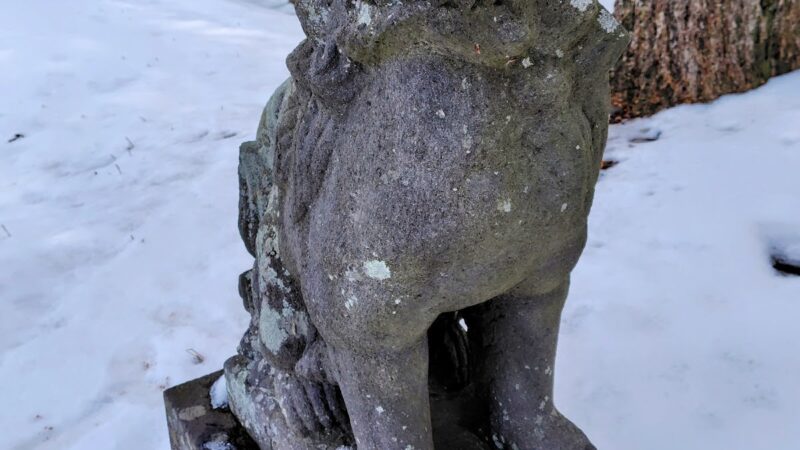
Around the shrine building, stone lanterns and guardian lion-dogs donated by local parishioners and devotees are placed, maintaining the dignity of a sacred area.
Torii Gate and Approach
A torii gate stands at the entrance to the shrine, and a path leads from there to the main hall. Walking along the path allows one to leave the hustle and bustle of everyday life behind, purify one’s mind, and prepare to face the gods. Trees grow on both sides of the path, allowing one to appreciate the beauty of nature throughout the seasons.
Subsidiary Shrines and Stone Monuments
Around the main hall, there may be several subsidiary shrines (sessha/massha). These enshrine local guardian deities or gods who preside over specific blessings, and it is believed that visiting them together with the main shrine will bring a wider range of blessings.
Furthermore, stone monuments recording historical events and the history of the shrine may be erected within the grounds, serving as valuable historical resources for understanding the shrine’s history.
How to Worship and Etiquette
Basic Worship Etiquette
There are traditional customs for visiting shrines. When visiting Hakusan Hachiman Shrine, please observe the following basic etiquette.
- Bow before passing through the torii gate: As a greeting before entering the sacred area, bow before the torii gate.
- Walk along the edge of the path: The center of the path is considered the path of the gods, so walk along the edge.
- Purify yourself at the water basin: If there is a water basin, purify your hands and mouth.
- Worship at the main hall: Worship using the two bows, two claps, and one bow ritual.
Water Basin Ritual
The method for purifying yourself at the water basin is as follows:
- Hold the ladle in your right hand, scoop up water, and purify your left hand.
- Switch the ladle to your left hand and purify your right hand.
- Hold the ladle in your right hand again, receive water in your left hand, and rinse your mouth.
- Purify your left hand once more.
- Stand the ladle upright and let water flow over the handle to purify it.
- Return the ladle to its original position.
Dress Code for Shrine Visits
While there is no strict dress code for shrine visits, it is important to dress in a clean and modest manner as a sign of respect for the deities. Especially when making a formal visit or receiving prayers, it is advisable to avoid overly casual or revealing clothing.
Annual Events and Festivals
Main Annual Events
At Hakusan Hachiman Shrine, various festivals and events are held throughout the year. The following events are common at local shrines:
New Year’s Day Festival (January 1st)
A festival to pray for happiness and peace in the new year. It is bustling with many first-time visitors.
Spring Grand Festival (Spring)
A festival to celebrate the arrival of spring and pray for a bountiful harvest. In some regions, it is held from April to May.
Summer Purification Ceremony (June 30th)
A Shinto ritual to purify oneself of the impurities accumulated over the past six months and pray for good health and protection from illness for the remaining half of the year. A ritual involving passing through a ring of reeds may also be performed.
Autumn Grand Festival (Autumn)
A festival to give thanks for the harvest and celebrate a bountiful harvest. A portable shrine procession and offering ceremonies may also be held.
Year-End Purification Ceremony (December 31st)
A Shinto ritual to purify oneself of the impurities of the past year and welcome the new year with a fresh start.
Local Traditional Events
In Akita Prefecture, shrines often preserve unique local traditional events. For example, events related to “Namahage,” a representative winter tradition of Akita, and rice-planting rituals praying for a bountiful harvest, are still carefully preserved and deeply intertwined with local culture.
Goshuin (Shrine Seal) Information
About the Issuance of Goshuin
Goshuin are valuable items given as proof of visiting a shrine. At Hakusan Hachiman Shrine, it may be possible to receive a goshuin during the hours the shrine office is open.
When receiving a Goshuin (temple/shrine stamp), please note the following:
- Complete your prayers before receiving the Goshuin.
- Bring your Goshuincho (stamp book) with you (if you don’t have one, you may be able to receive a pre-printed Goshuin).
- Prepare a donation (generally around 300-500 yen).
- You may not be able to receive a Goshuin if the priest or shrine maiden is absent.
- Remember to use polite language and express your gratitude.
Meaning of Goshuin
Goshuin are not merely stamps; they are important proof of your connection with the shrine. The Goshuin, stamped with the shrine’s name, date of visit, and seal, becomes a lifelong treasure, along with the memory of your visit. Treat your Goshuincho with care, as it is a sacred record of your connection with the deities.
Access Information
Location
Hakusan Hachiman Shrine
Akita City, Akita Prefecture (Specific addresses vary depending on the shrine)
*Since there are multiple Hakusan Shrines and Hachiman Shrines in Akita City, it is recommended to confirm the exact address before visiting.
Access by Public Transportation
Using JR
It is common to take a local bus or taxi from Akita Station. Bus routes to various destinations depart from Akita Station and reach shrines within Akita City.
Akita Station is a major station in the Tohoku area, served by the JR Ou Main Line, Uetsu Main Line, and Oga Line. The Akita Shinkansen “Komachi” offers direct service from Tokyo, providing access in approximately 4 hours.
Local Buses
Local buses operated by Akita Chuo Kotsu connect various parts of the city. Please select the appropriate route according to your destination.
Access by Car
Using Expressways
It is convenient to use the Akita Expressway and exit at Akita Chuo IC or Akita Minami IC. From the ICs, you can access various parts of the city via local roads.
Parking
The availability and number of parking spaces vary depending on the size of the shrine. Smaller shrines may not have dedicated parking, so please consider using nearby coin-operated parking lots or public transportation. ### Access from Major Spots in Akita City
From Senshu Park (Hachiman Akita Shrine)
Senshu Park, located in the heart of Akita City, is home to Hachiman Akita Shrine, known as a shrine associated with the Satake clan, the lords of the Akita domain. It’s a convenient starting point for visiting other shrines in the city.
Tourist Spots Around Hakusan Hachiman Shrine
Senshu Park and Kubota Castle Ruins
Senshu Park, located in the heart of Akita City, is an urban park developed on the site of Kubota Castle. Hachiman Akita Shrine is located within the park, enshrining successive lords of the Akita domain. In spring, it’s a popular spot for cherry blossom viewing, attracting many visitors, and in autumn, the autumn foliage is beautiful, allowing visitors to enjoy nature throughout the seasons.
Kubota Castle is a flatland castle built in 1602 by Satake Yoshinobu, the first lord of the Akita Domain. A reconstructed corner turret stands on the site of the main keep, offering panoramic views of Akita City.
Akita City Red Brick Local History Museum
This local history museum utilizes the former Akita Bank headquarters building, constructed in 1912. The red brick Renaissance-style architecture is designated a National Important Cultural Property. Visitors can appreciate its architectural beauty, and the museum also features extensive exhibits on Akita’s history and culture.
Akita Prefectural Museum of Art
Adjacent to Senshu Park, this museum houses numerous works by Akita-born Western-style painter, Fujita Tsuguharu. The large mural “Akita Events” is particularly breathtaking. The building itself, designed by Tadao Ando, is also a highlight, with a beautiful water feature called a “water garden.”
Akita Citizens’ Market
This market offers a chance to experience Akita’s food culture, featuring fresh local seafood and agricultural products. The market’s restaurants serve fresh seafood bowls and Akita’s local cuisine, making it a popular spot for tourists.
Port Tower Selion
This 143-meter-tall observation tower stands in Akita Port. From the observation deck 100 meters above ground, you can enjoy panoramic views of Akita city, the Sea of Japan, the Oga Peninsula, and Mount Chokai. Admission is free, and it’s a popular spot for night views.
Other Shrines in Akita City
Hachiman Akita Shrine
Located within Senshu Park, on the site of the former main keep of Kubota Castle, this shrine is associated with the Satake clan, the lords of the Akita domain. Although the shrine building was destroyed by arson in 2005, it was rebuilt, and a beautiful shrine now stands. The “pigeon fortune-telling slips,” featuring pigeons (the divine messengers of Hachiman), are popular.
Iyataka Shrine
Another important shrine located within Senshu Park, it enshrines Hirata Atsutane, a scholar of Japanese classics from the late Edo period. As the god of learning, it attracts many visitors, including students taking exams and those praying for academic success.
Taiheizan Miyoshi Shrine (Main Shrine)
Located at the foot of Mount Taihei in southeastern Akita City, this shrine is revered as the god of strength and victory. The Miyoshi Bonten Festival, held annually on January 17th, is a well-known winter tradition in Akita, attracting many visitors.
Akita’s Food Culture and Local Cuisine
When visiting Akita, be sure to enjoy the local food culture.
Kiritanpo
A representative local dish of Akita, made by wrapping freshly cooked rice around a cedar stick and grilling it. Kiritanpo Nabe, a hot pot dish simmered in Hinai chicken broth, is a nationally renowned winter delicacy of Akita.
Inaniwa Udon
Inaniwa Udon, considered one of Japan’s three great udon noodles, is a hand-stretched dried udon noodle made in the Inaniwa district of Yuzawa City, southern Akita Prefecture. It is characterized by its smooth texture and firm bite, and can be enjoyed both hot and cold.
Hatahata Sushi
Izushi, a type of fermented sushi made with hatahata (sandfish), a winter delicacy of Akita, is characterized by the unique flavor of fermented foods. Hatahata is also known as the “fish of the gods” and is designated as the prefectural fish of Akita Prefecture.
Yokote Yakisoba
This local specialty of Yokote City, Akita Prefecture, features thick, straight noodles, a sweet sauce, and is topped with a fried egg and fukujinzuke (pickled vegetables). It has won the B-1 Grand Prix and is served at restaurants in Akita City. ## Seasons and Sightseeing in Akita
Spring (March-May)
Spring in Akita is cherry blossom season. Cherry blossoms bloom throughout the city, including in Senshu Park, attracting many people enjoying the blossoms. The best time to see them is from mid-April to early May, and the illuminated cherry blossoms at night are truly magical.
Summer (June-August)
In early August, the Akita Kanto Festival is held. Designated as a National Important Intangible Folk Cultural Property, this festival is one of the three major festivals in Tohoku and attracts tourists from all over Japan. The skillful technique of balancing lanterns suspended from long bamboo poles called Kanto on the palms, foreheads, and shoulders is breathtaking.
Autumn (September-November)
Autumn is the season of autumn leaves. Beautiful autumn foliage can be enjoyed in Senshu Park and around Mt. Taihei. It’s also the season for new rice, making it the perfect time to savor Akita’s delicious rice and new sake.
Winter (December-February)
Akita’s winters are characterized by deep snow, fostering a unique culture. The “Namahage” ritual on New Year’s Eve, a traditional event centered on the Oga Peninsula, is registered as a UNESCO Intangible Cultural Heritage. February also sees events unique to snowy regions, such as the Yokote Kamakura Festival and the Inukko Festival.
History and Culture of Akita City
The Satake Clan and the Akita Domain
Indispensable to understanding the history of Akita City is the Satake clan, who ruled Akita during the Edo period. After the Battle of Sekigahara, Satake Yoshinobu, who was transferred from Hitachi Province (present-day Ibaraki Prefecture), built Kubota Castle in 1602 and ruled Akita as the lord of the Akita Domain until the Meiji Restoration.
The Satake clan also focused on promoting culture, and Noh theater, tea ceremony, and painting took root in Akita. Furthermore, they were also active in mining and land reclamation, contributing to the economic development of Akita.
Origin of Akita Beauty
The term “Akita beauty” is known nationwide, but there are several theories about its origin. One theory is that the short daylight hours result in many fair-skinned women. Another theory is that many beautiful women were brought with them when the Satake clan moved from Hitachi.
There is also a legend (with various theories) that Ono no Komachi was from Akita, and the region has long been known as a place of beautiful women.
Precautions When Visiting
Visiting Hours
While visiting the shrine itself is generally possible at any time during the day, the opening hours of the shrine office are limited. If you wish to receive a Goshuin (shrine stamp) or amulet, it is recommended to check in advance. Generally, the hours are from 9:00 AM to around 5:00 PM.
Photography
Photography is generally permitted within the shrine grounds, but it may be prohibited inside the main hall or in sacred areas. Furthermore, it is considered good manners to refrain from taking photos during special occasions such as festivals, and to avoid disturbing other worshippers.
Pets
Since shrines are sacred places, it is generally considered best to refrain from bringing pets. Especially when approaching the shrine buildings or during festivals, avoid bringing pets.
Clothing and Appearance
As mentioned above, in order to show respect to the gods, please dress in a clean and modest manner. Even in summer, it is advisable to avoid overly revealing clothing.
Nearby Accommodations
Akita City offers a variety of accommodations, from business hotels to luxury hotels and hot spring inns.
Hotels Around Akita Station
Many business hotels and city hotels are concentrated around Akita Station, making it a convenient base for sightseeing and business. The station building also has a wide range of restaurants and shopping facilities, making it a very convenient area for your stay.
Hot Spring Inns
A short trip from Akita City will take you to hot spring resorts such as Oga Onsenkyo and Akita Onsen. You can enjoy the bounty of the Sea of Japan while relaxing in a hot spring to soothe your travel fatigue.
Summary
Hakusan Hachiman Shrine is a historic shrine located in Akita City, Akita Prefecture, and possesses a unique form of worship that fuses Hakusan faith and Hachiman faith. As a guardian deity of the region, it has long attracted the faith of people and is a shrine that bestows various blessings, such as abundant harvests, family safety, and matchmaking.
When visiting Akita, in addition to visiting Hakusan Hachiman Shrine, be sure to explore nearby tourist spots such as Senshu Park and the Akita Prefectural Museum of Art, savor local cuisine such as kiritanpo and Inaniwa udon, and fully enjoy Akita’s rich nature and culture.
The scenery of Akita, which shows the beauty of the four seasons, the interactions with warm people, and the peaceful experience of worship at the shrine will surely become unforgettable memories. There are many other shrines in Akita City, each with its own unique history and charm. If time permits, a shrine pilgrimage to visit several shrines is also recommended.
Akita City, one of the central cities in the Tohoku region, boasts excellent accessibility and is an attractive tourist destination where you can enjoy history, culture, nature, and gourmet food. We highly recommend visiting Akita and experiencing its charm firsthand.