Complete Guide to Shinmei Shrine (Yotsugoya, Akita City, Akita Prefecture) | History, Deities, and Access Information
Shinmei Shrine, located in the Yotsugoya district in the southeastern part of Akita City, Akita Prefecture, is a shrine that has been cherished by the local people for centuries. This guide provides detailed information about Shinmei Shrine, which has watched over the region as a guardian forest amidst a rural landscape, including its history, enshrined deities, and information on visiting the shrine.
Basic Information about Shinmei Shrine
Shinmei Shrine is a religious corporation belonging to the Association of Shinto Shrines, located at 103-1 Yotsugoya, Akita City, Akita Prefecture. While situated in a transportation hub with the Akita Shinkansen (Ou Main Line) and roads to Akita Airport, it is blessed with a rich natural environment where the Omono River and its tributary, the Iwami River, converge.
Location and Contact Information
- Address: 103-1, Tateno, Yotsugoya, Akita City, Akita Prefecture 010-1417
- Affiliation: Association of Shinto Shrines
- Nearest Station: Yotsugoya Station (Akita Shinkansen/Ou Main Line)
The Yotsugoya area is situated between newly developed residential areas such as Onoba and Goshono New Town, but it is characterized by its tranquil environment with remnants of rural landscapes.
History and Origins of Shinmei Shrine
History of Founding
The founding of Shinmei Shrine dates back to March of Enryaku 20 (801 AD), during the reign of Emperor Kanmu, the 50th emperor. It is said that when Sakanoue no Tamuramaro descended to the Tohoku region to subdue the Emishi, he ordered the local people to build a small shrine and enshrined Amaterasu Omikami and Toyouke Hime Omikami, marking the beginning of the shrine’s establishment.
As the Local Guardian Deity
Since its founding, Shinmei Shrine has been revered as the local guardian deity of the former Tomaki Village (present-day Yotsugoya area). A guardian deity is the protector of a land, revered as a god who protects those born in the region throughout their lives. For over 1200 years, it has watched over the peace and development of this region.
Historical Background
Sakanoue no Tamuramaro was a military commander in the early Heian period, known for his campaign against the Emishi people at the command of Emperor Kanmu. Many shrines and legends associated with Tamuramaro remain throughout the Tohoku region, and Shinmei Shrine is one of them. The pacification of the Tohoku region was a crucial task for the imperial court at the time, and shrines were built in various locations as the punitive army advanced.
About the Enshrined Deities
Shinmei Shrine enshrines the following two deities:
Amaterasu Omikami
The supreme deity in Japanese mythology and the ancestral deity of the Imperial family, she is the sun goddess. She is the principal deity enshrined at the Inner Shrine of Ise Grand Shrine and is widely worshipped as the enshrined deity at Shinmei Shrines throughout Japan. She is believed to bestow divine blessings such as national peace and security, abundant harvests, and good fortune.
Toyouke-hime no Okami
The goddess who presides over food and grains, she is enshrined at the Outer Shrine of Ise Grand Shrine. Also known as Toyouke-no-Okami, she is revered as the guardian deity of clothing, food, and shelter, and as the god of industry. In the Yotsugoya district, where agriculture is thriving, she is a deity of great importance as an object of prayer for abundant harvests.
Highlights of the Shrine Grounds
Guardian Forest
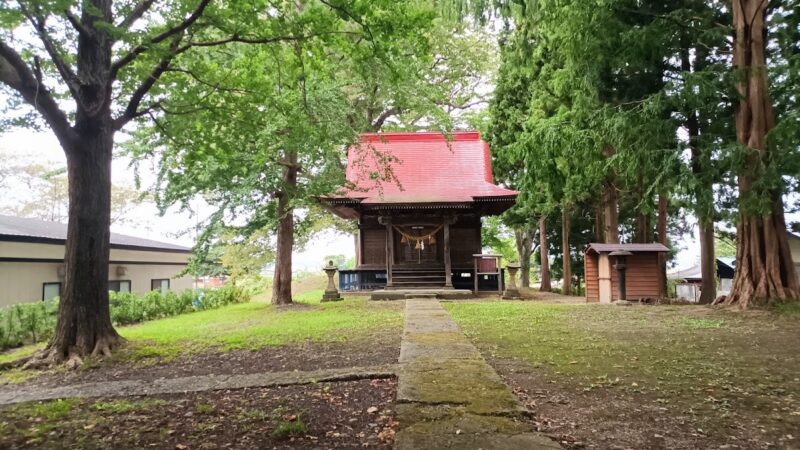
The most distinctive feature of Shinmei Shrine is its lush guardian forest. While the surrounding area has been developed into residential areas and farmlands, the shrine grounds remain a lush forest. This sacred forest plays a vital role in protecting the local natural environment and serves as a habitat for various plants and animals.
Torii Gate
A magnificent torii gate stands at the entrance to the approach to the shrine, welcoming worshippers. The torii gate serves as a boundary separating the sacred realm from the secular world, indicating that beyond this point is the realm of the gods.
Main Hall and Worship Hall
The main hall and worship hall are located at the back of the shrine grounds. The main hall is the most sacred place where the enshrined deity resides, while the worship hall is where worshippers offer their prayers. It preserves the traditional style of shrine architecture.
Komainu (Guardian Dogs)
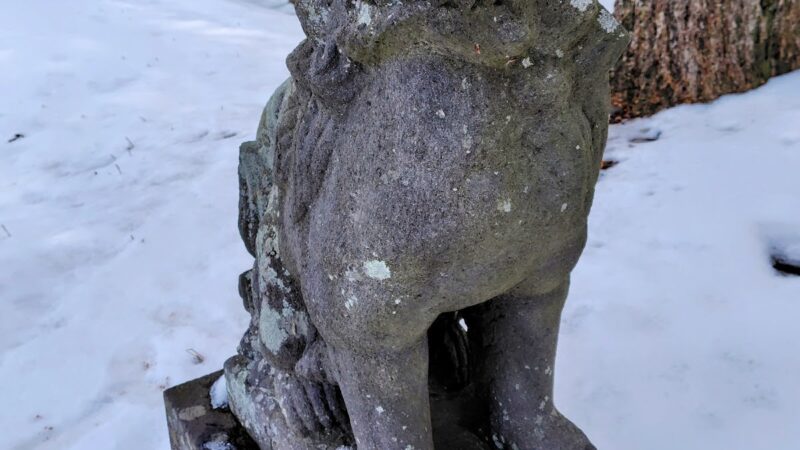
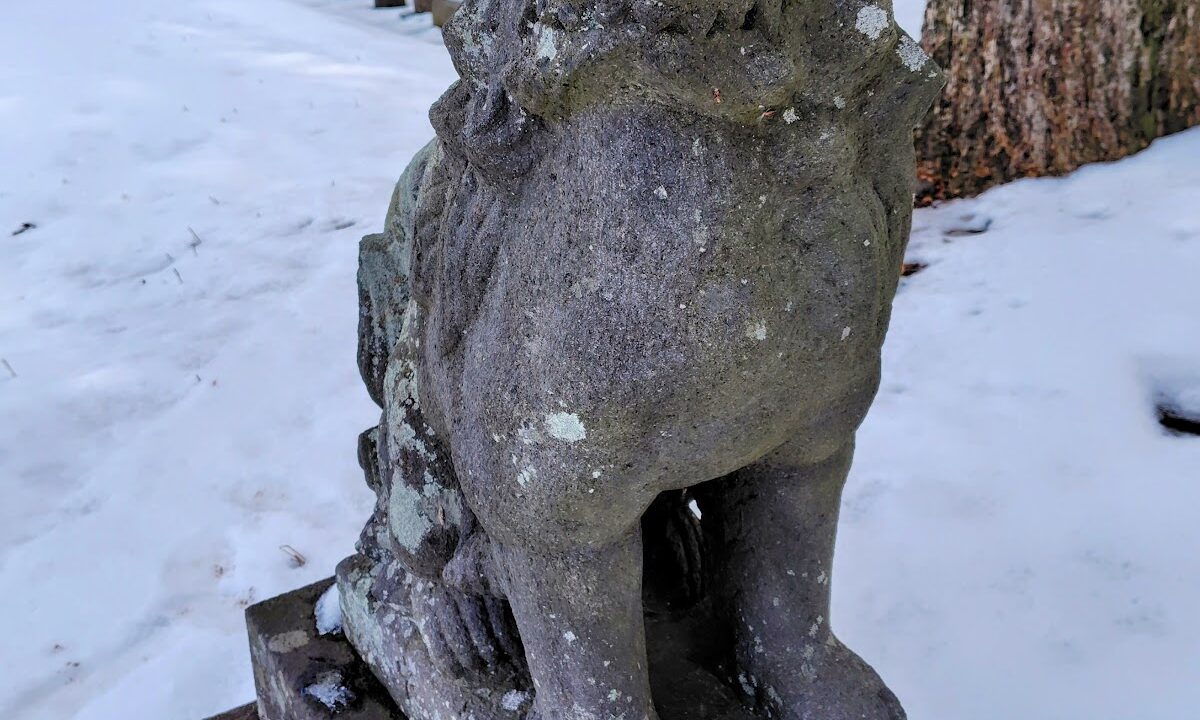
Komainu are placed throughout the shrine grounds, guarding the sacred area. As guardians of the shrine, the komainu are responsible for warding off evil spirits and maintaining the purity of the sacred area.
How to Access Shinmei Shrine
Access by Train
Nearest Station: Yotsugoya Station (Akita Shinkansen/Ou Main Line)
Shinmei Shrine is within walking distance from Yotsugoya Station. Head southeast from the station, passing through rural areas, and you will arrive in about 15-20 minutes. The area around the station is a relatively quiet residential area with farmland, allowing for a leisurely stroll to the shrine.
Access by Car
Approximately 20-25 minutes by car from central Akita City. Access is good as a road leading to Akita Airport passes nearby.
- From Akita Station: Head south on National Route 13 towards Yotsugoya
- From Akita Airport: Head north on the prefectural road to the Yotsugoya area
Regarding parking, it is recommended to check the situation around the shrine grounds when you visit.
Surrounding Geography
The Yotsugoya district, where Shinmei Shrine is located, is near the confluence of the Omonogawa and Iwamigawa rivers, and enjoys an environment blessed with water and greenery. Residential areas such as the Onoba district and Goshono New Town spread out around it, making it an important area in southeastern Akita City.
Points to Note When Visiting a Shrine
Etiquette for Visiting a Shrine
The basic etiquette for visiting a shrine is as follows:
- Bow before passing through the torii gate: Bow before entering the sacred area to show respect.
- Walk along the edge of the path: The center of the path is considered the path of the gods.
- Purify yourself at the water basin: Cleanse your hands and mouth to purify your mind and body.
- Worship in front of the main hall: Worship using the two bows, two claps, and one bow ritual.
- Bow again at the torii gate: Bow again as you leave the sacred area to express your gratitude.
Best Time to Visit
Shinmei Shrine is open for worship throughout the year, but you can enjoy the scenery of each season.
- Spring: The season of fresh greenery, a beautiful time when the sacred forest sprouts new leaves.
- Summer: The cool and refreshing shrine grounds enveloped in deep green.
- Autumn: The beautiful autumn foliage, a time to offer thanks for the harvest.
- Winter: A tranquil atmosphere for worship amidst a snowy landscape.
About Goshuin (Shrine Seals)
We recommend checking in advance regarding the issuance of Goshuin at Shinmei Shrine. While many shrines throughout Japan offer Goshuin, smaller shrines may not have a resident priest.
About the Yotsugoya Area
Regional Characteristics
The Yotsugoya area is located in the southeastern part of Akita City, where agriculture and residential areas coexist. With the opening of the Akita Shinkansen, transportation has improved, and the number of new residents has increased in recent years. However, the traditional rural landscape and local community are carefully preserved.
Nearby Attractions
The following are some of the attractions around the Yotsugoya area:
- Omono River: Akita Prefecture’s largest river, forming a rich natural environment.
- Goshono New Town: A planned residential area.
- Akita Airport: Akita Prefecture’s gateway to the sky.
- Rural Landscape: Beautiful rural scenery that changes with the seasons.
Shinmei Shrine’s Connection to the Community
Role as a Local Guardian Deity
Shinmei Shrine, as the local guardian deity of the Yotsugoya area, has been deeply involved in important life events for the people of the region. It has a history of functioning as a venue for various life rituals, such as first shrine visits for newborns, Shichi-Go-San (a traditional rite of passage for children), exorcisms, and weddings.
Center of the Community
The shrine has served not only as a place of worship but also as the center of the local community. Through annual festivals and seasonal events, it has become a place where people from the community gather and deepen their bonds.
Role in Environmental Conservation
Shrine forests play a vital role in preserving valuable natural environments in developing areas. They support diverse plant life, provide habitats for birds, insects, and other creatures, and contribute to maintaining the local ecosystem.
About Shinmei Shrines in Akita Prefecture
There are several Shinmei shrines in Akita Prefecture. Nationwide, Shinmei shrines (Shinmei Jinja) are a general term for shrines dedicated to Amaterasu Omikami, the deity enshrined at Ise Grand Shrine, and there are approximately 1,933 such shrines throughout Japan.
Major Shinto Shrines in Akita Prefecture
Besides the Shinto shrine in Yotsugoya, Akita Prefecture has the following Shinto shrines:
- Tsuchizaki Shinto Shrine (Tsuchizaki Port, Akita City): One of Akita City’s representative Shinto shrines
- Niida Shinto Shrine (Niida, Akita City): Located near Niida Elementary School
- Kawabe Tojima Shinto Shrine (Kawabe Tojima, Akita City): A Shinto shrine in the Kawabe area
Each Shinto shrine has its own history and characteristics, and attracts the faith of the local people.
Significance of Visiting Shinto Shrines
As a Place of Spiritual Support
In modern society, shrines play an important role as a place of spiritual support. Away from the hustle and bustle of daily life, one can find peace of mind in the quiet grounds and have time to reflect on oneself.
Inheritance of Traditional Culture
Through visiting shrines, one can experience traditional Japanese beliefs and culture. You can experience the culture cultivated over a long history, including worship etiquette, rituals, and architectural styles, and realize the importance of passing it on to future generations.
Deepening Understanding of the Region
Visiting local shrines allows you to deepen your understanding of the history, culture, and lives of the people of the area. The 1200-year history of Shinmei Shrine is the history of the Yotsugoya district itself.
Precautions When Visiting
Regarding Attire
There are no specific dress code requirements for visiting shrines, but clean and modest attire is desirable to show respect to the gods. Avoid overly revealing or sloppy clothing.
Regarding Manners
- Be quiet and avoid making loud noises on the shrine grounds.
- Take photographs only in designated areas.
- Always take your trash with you.
- Respect the natural environment and do not harm plants.
- Be considerate of other worshippers.
Regarding Visiting Hours
Shrines are generally recommended to be visited during the daytime. While the quiet hours of early morning and evening are also charming, for safety reasons, we recommend visiting during daylight hours.
The Legend of Shinmei Shrine and Sakanoue no Tamuramaro
The Tohoku Region and Tamuramaro
Sakanoue no Tamuramaro was appointed Seii Taishogun (Commander-in-Chief of the Expeditionary Force against the Barbarians) in 801 AD and carried out the subjugation of the Emishi people. Many legends related to Tamuramaro remain in the Tohoku region, and the founding legend of this shrine is one of them.
The Meaning of Shrine Founding
The construction of shrines by the conquering army in various locations had not only religious significance, but also political and social implications. The construction of shrines served to demonstrate the authority of the imperial court and to establish regional governance. Enshrining Amaterasu Omikami (the sun goddess) signified the authority of the imperial family and the legitimacy of the imperial court to the region.
The Value of Tradition
While it is difficult to verify the veracity of such traditions from a historical perspective, the fact that these traditions have been passed down for over 1200 years speaks volumes about the depth of the history of Shinmei Shrine and the surrounding region.
The Future of Shinmei Shrine and the Region
Inheritance of Tradition
Amidst declining birth rates, an aging population, and urbanization, maintaining local shrines and passing on traditions is a crucial challenge. Shinmei Shrine, with the cooperation of local residents, has preserved its long history to this day.
Interaction Between Old and New Residents
In the Yotsugoya district, long-time residents and newly arrived residents coexist. Local cultural assets like Shinmei Shrine are expected to promote interaction between old and new residents and serve as a hub for forming a local community.
Potential as a Tourism Resource
Historical shrines are also valuable tourism resources for the region. Taking advantage of its location within walking distance of Yotsugoya Station, a stop on the Akita Shinkansen, it has the potential to serve as a place to convey the region’s history and culture to visitors to Akita.
Summary
The Shinmei Shrine, located in Yotsugoya, Akita City, Akita Prefecture, is a historic shrine that has been revered as the local tutelary deity for over 1200 years since its founding in 801 AD. It enshrines Amaterasu Omikami and Toyouke Hime Omikami as its main deities and has a founding legend related to Sakanoue no Tamuramaro’s conquest of the Emishi people, making it a historically interesting shrine.
Near the rural landscape of the Yotsugoya area, the Shinmei Shrine, with its lush sacred forest, protects the local natural environment and serves as a spiritual haven for the people. Its convenient location, within walking distance of Yotsugoya Station on the Akita Shinkansen, is another attractive feature.
When visiting Akita City, be sure to visit the Shinmei Shrine and experience its long history and abundant nature. You’ll find peace of mind in its tranquil grounds and have a valuable experience of feeling the connection between traditional Japanese culture and local history.