
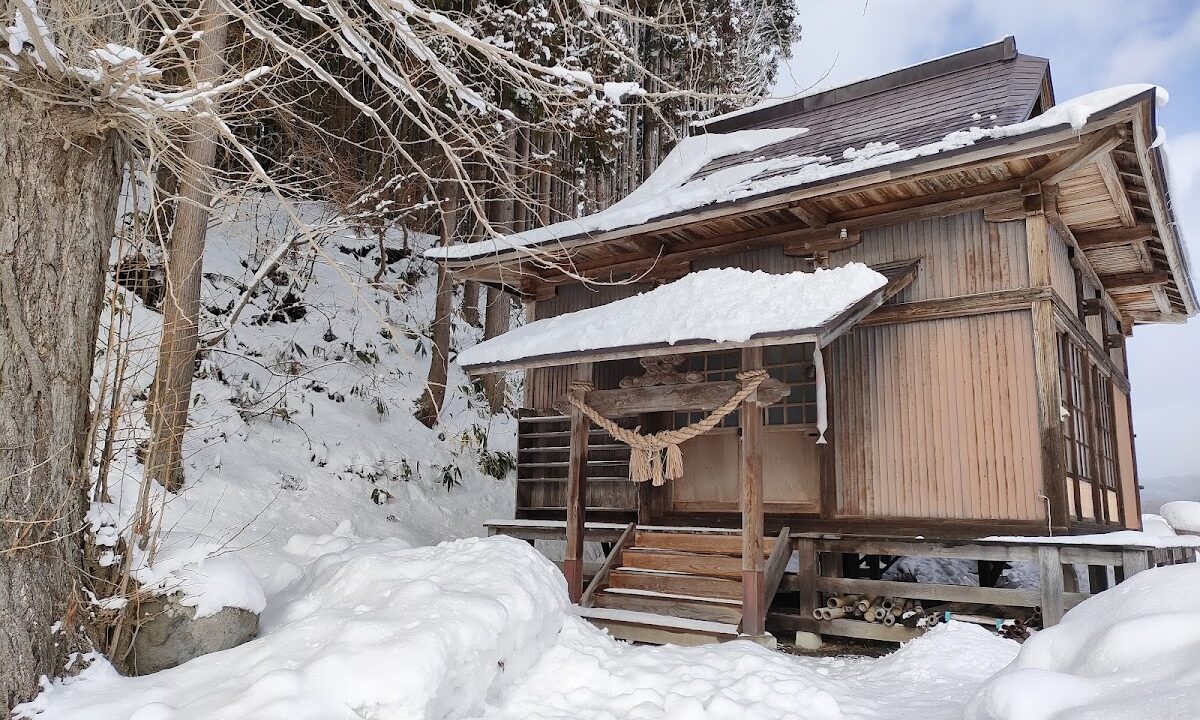
Hachiman Shrine (Shimo-Kosaka, Kosaka-machi, Akita Prefecture) | A Detailed Guide to an Ancient Shrine Inheriting the History of the 42 Castles of Kazuno
Hachiman Shrine, located in Shimo-Kosaka, Kosaka-machi, Kazuno-gun, Akita Prefecture, is a historical shrine said to have been founded before the Kamakura period. As one of the “42 Castles of Kazuno,” which were bases for samurai groups in the Kazuno region, it is revered by the local people as an important shrine that conveys the history and culture of the area to the present day. This article provides a detailed introduction to the history of Hachiman Shrine, its enshrined deities, information on visiting, and the historical background of Kosaka-machi.
History and Development of Hachiman Shrine
The Founding of the 42 Castles of Kazuno and Hachiman Shrine
According to ancient traditions, Hachiman Shrine was founded before the Kamakura period as one of the 42 castles of Kazuno. The 42 Castles of Kazuno are a collective term for the castles (fortified residences) of samurai groups that existed in the Kazuno region during the medieval period, serving as bases for the samurai who ruled this entire area.
The Kazuno region is located in the northeastern part of Akita Prefecture, near the border with Aomori Prefecture. In the Middle Ages, it held a strategically important position as a border zone between the territories of the Nanbu clan and the Ando/Akita clans. Many samurai resided in the various fortifications, and shrines dedicated to Hachiman, the god of war, were often built as their guardian deity.
Hachiman is known as a god of war and was also the tutelary deity of the Minamoto clan, so he was widely worshipped by the samurai class. It is believed that the Hachiman Shrine in Kosaka was founded under these circumstances.
Reconstruction in Bunroku 2
Records indicate that the Hachiman Shrine was rebuilt in Bunroku 2 (1593). The Bunroku era was the time when Toyotomi Hideyoshi held power, and it was also the period of the Bunroku War (the Japanese invasions of Korea).
The reconstruction at this time suggests that the shrine building was damaged or destroyed for some reason prior to that. Possible causes include war, fire, or natural disaster, but the specific reason remains unclear due to limited historical records. Since its reconstruction in 1593 (Bunroku 2), Hachiman Shrine has functioned as the local tutelary shrine and a spiritual pillar of the Kosaka region.
Ranked as a Village Shrine in 1873 (Meiji 6)
In 1873 (Meiji 6), Hachiman Shrine was ranked as a village shrine. With the establishment of the shrine system by the government in the early Meiji era, shrines throughout the country were classified according to their rank. A village shrine was recognized as the central shrine in a particular village, signifying that its importance to the local community was officially acknowledged.
In the Meiji-era shrine system, a hierarchy was established, with Kanpei-sha (government-supported shrines) and Kokuhei-sha (national-supported shrines) at the top, followed by prefectural shrines, local shrines, village shrines, and unranked shrines. Ranking as a village shrine indicates that Hachiman Shrine held a firm position in the Kosaka region.
Deity and Divine Virtues
Hachiman Okami (Emperor Ojin)
The deity enshrined at Hachiman Shrine is Hachiman Okami. Hachiman shrines generally enshrine Emperor Ōjin as the principal deity, often accompanied by Hime-Ōkami and Empress Jingū.
Emperor Ōjin is considered the 15th Emperor of Japan and is a legendary emperor mentioned in the Kojiki and Nihon Shoki. There is a legend that he was in the womb of his mother, Empress Jingū, during her conquest of the Three Kingdoms of Korea, and he has been revered as a god of martial prowess and national protection.
Spread of Hachiman Worship
Hachiman worship spread throughout Japan, with Usa Shrine in Ōita Prefecture as its head shrine. During the Heian period, Iwashimizu Hachiman Shrine (Kyoto) was founded, and as the Minamoto clan revered it as their tutelary deity, it became widely worshipped among the samurai class.
Minamoto no Yoritomo, who founded the Kamakura Shogunate, also deeply revered Hachiman and invited the deity to Kamakura to establish Tsurugaoka Hachiman Shrine. Against this backdrop, samurai throughout the country also founded Hachiman shrines in various locations, praying for military success and protection of their territories. The Hachiman Shrine in Kosaka is also thought to have been founded by samurai from the Kazuno region as part of this tradition of Hachiman worship.
Divine Virtues
The divine virtues of the Hachiman Shrine include the following:
- Long-lasting military fortune and victory: Due to its nature as a god of war, prayers are offered for success in competitions and contests.
- National peace and protection of the region: Faith in the shrine as a god protecting the country and region.
- Protection from misfortune and good fortune: Warding off disasters and inviting good fortune.
- Family safety: Protecting the health and safety of the family.
- Industrial development: Watching over the industrial development of the region.
History of Kosaka Town and the Hachiman Shrine
Geography and History of Kosaka Town
Kosaka Town is located in Kazuno District, in the northeastern part of Akita Prefecture. It borders Kazuno City to the southeast, Odate City to the west, and Aomori Prefecture to the north. Located west of Lake Towada, it is a region blessed with a rich natural environment.
During the Edo period, the Tsugaru Highway passed through Kosaka, and it was part of the Morioka Domain. The Tsugaru Highway was an important route connecting Morioka and Hirosaki, and Kosaka flourished as a post town along it.
The Kosaka Mine and the Town’s Development
The Kosaka Mine is indispensable to understanding the history of Kosaka Town. From the early 19th century onward, it developed as a metal mine producing gold, silver, copper, and zinc, and flourished as one of Japan’s leading mines from the Meiji to Showa periods.
Particularly during the Meiji era, modern management was implemented by the Fujita Group (later Dowa Mining, now DOWA Holdings), and the Kosaka Mine became one of Japan’s central copper production centers. With the development of the mine, Kosaka Town greatly prospered as a mining town, and its population increased.
Historical buildings such as the Korakukan (Japan’s oldest active theater) and the Kosaka Mine Office (built in 1905, a designated Important Cultural Property), constructed during the Meiji era, still remain, evoking the prosperity of that time.
Modern Kosaka Town and the Recycling Industry
Although the Kosaka Mine closed in the 1990s, it has now become one of Japan’s leading recycling bases, utilizing the ore refining technology cultivated over many years. Through urban mining recycling technology that recovers precious metals and rare metals from electronic devices and other sources, it is experiencing new development as a leading center for the environmental industry.
The Hachiman Shrine has watched over the long history of Kosaka Town, serving as a spiritual anchor for the people who worked at the mine and the local residents.
Visiting Information and Access
Basic Information
- Shrine Name: Hachiman Shrine
- Location: Shimo-Kosaka, Kosaka-machi, Kazuno-gun, Akita Prefecture
- Shrine Rank: Former Village Shrine
- Jurisdiction: Akita Prefectural Shrine Association
Access Methods
Access by Train/Bus
- Approximately 15 minutes by car from JR Hanawa Line “Towada-Minami Station”
- Approximately 10 minutes by car from Tohoku Expressway “Kosaka IC”
Access by Car
- Take National Route 282 after exiting Tohoku Expressway “Kosaka IC”
- Approximately 2 hours from Akita City
- Approximately 1 hour 30 minutes from Aomori City
Kosaka-machi is also known as a base for sightseeing around Lake Towada, and is approximately 30 minutes by car from Lake Towada.
Manners and Etiquette for Visiting a Shrine
When visiting a shrine, please observe the following basic etiquette:
- Bow before passing through the torii gate: This shows respect when entering the sacred area.
- Walk along the edge of the path: The center is considered the path of the gods.
- Purify yourself at the water basin: Purify your left hand, then your right hand, then your mouth, and finally the handle of the ladle.
- Worship at the main hall: The basic method is two bows, two claps, one bow (two bows, two claps, one bow).
- Bow again when leaving the torii gate: Express your gratitude when leaving the sacred area.
Tourist Attractions in Kosaka Town
When visiting Hachiman Shrine, we recommend also visiting other tourist attractions in Kosaka Town.
Korakukan
This is Japan’s oldest active theater, built in 1910 (Meiji 43). Designated as a National Important Cultural Property, it still regularly hosts plays and theatrical performances. The wooden building features a revolving stage and a hanamichi (runway), allowing visitors to experience the atmosphere of a Meiji-era theater.
Kosaka Mine Office
Built in 1905 (Meiji 38), this Renaissance-style Western building is a National Important Cultural Property. A magnificent building that speaks to the prosperity of the mine at the time, it is open for interior tours.
Kosaka Railway Rail Park
A theme park utilizing the abandoned Kosaka Railway line. It features exhibits of actual railway vehicles and offers railbike experiences. It’s a popular facility for learning about the history of the mine and railway.
Nanataki Waterfall
A representative natural landscape of Kosaka Town, it has been selected as one of Japan’s Top 100 Waterfalls. A beautiful waterfall cascading down in seven steps, it attracts many tourists, especially during the seasons of fresh greenery and autumn leaves.
Akita Prefecture Shrine Association and Shrines in the Prefecture
Hachiman Shrine belongs to the Akita Prefecture Shrine Association. The Akita Prefectural Shrine Association is an organization that oversees shrines throughout Akita Prefecture, and is responsible for promoting shrines, training Shinto priests, and spreading Shintoism.
Role of the Akita Prefectural Shrine Association
The Akita Prefectural Shrine Association performs the following duties:
- Support for Shrine Management and Operation: Supporting the proper management and operation of shrines within the prefecture
- Training of Shinto Priests: Training and education of Shinto priests
- Promotion of Shintoism: Activities to disseminate knowledge about shrines and Shintoism
- Guidance on Festivals: Guidance on the proper execution of festivals at each shrine
- Protection of Cultural Properties: Activities to protect cultural properties related to shrines
Searching for Shrines in the Prefecture
The Akita Prefectural Shrine Association website allows you to search for shrines within the prefecture by municipality or alphabetically. In addition to Hachiman Shrine, several other shrines are located within Kosaka Town, each with its own unique history and tradition.
Akita Prefecture has numerous shrines, each deeply connected to the history and culture of its region. Visiting shrines will allow you to gain a deeper understanding of Akita’s history and culture.
Shrines and Local Communities
Hachiman Shrine has played a central role in the local community as the tutelary shrine of the Shimo-Kosaka district in Kosaka Town.
Annual Events and Festivals
Shrines hold various festivals throughout the year. The main annual events at typical shrines include:
- Saitansai (January 1st): A festival celebrating the New Year
- Kinensai (February or March): A festival praying for a bountiful harvest
- Reitaisai (often in autumn): The most important festival at that shrine
- Niinamesai (November 23rd): A festival giving thanks for the harvest
- Oharai (June 30th, December 31st): A Shinto ritual to purify and cleanse away sins and impurities
During the Reitaisai, local residents gather, and events such as portable shrine processions and offering ceremonies may take place. These festivals are important opportunities to deepen community ties and pass on traditional culture to future generations.
Life Rituals and Shrines
Shrines are also places of ritual at important milestones in life:
- Hatsumiyamairi: Reporting the birth of a baby to the gods and praying for healthy growth
- Shichi-Go-San: Celebrating a child’s growth and praying for future health
- Yakuharai: Purifying oneself from misfortune during one’s unlucky year and praying for safety
- Wedding Ceremony: Exorcising vows before the gods
Through these rituals, shrines continue to be a part of people’s lives.
About Jingu Taima and Kamidana
What is Jingu Taima?
Jingu Taima are sacred amulets from Ise Grand Shrine. As Ise Grand Shrine enshrines Amaterasu Omikami, the tutelary deity of all Japanese people, it is recommended that households throughout Japan enshrine Jingu Taima.
It is customary to replace the Ise Grand Shrine amulet (Jingu Taima) with a new one every year, and these are distributed to each shrine through the Akita Prefectural Shrine Association.
How to Worship at a Shinto Altar
In a Shinto altar at home, it is common to place the Ise Grand Shrine amulet in the center, the amulet of the local guardian deity (local shrine) on the right, and the amulets of other revered shrines on the left.
The Shinto altar should be placed in a clean, bright location such as the living room where the family gathers. Offerings (rice, salt, and water) and prayers are made daily to pray for the safety of the household.
Summary
The Hachiman Shrine, located in Shimo-Kosaka, Kosaka-machi, Akita Prefecture, is a historical shrine said to have been founded before the Kamakura period. As one of the 42 Kazuno shrines, it is a valuable cultural heritage site that conveys the history of this region from the Middle Ages, and it has a history of being rebuilt in 1593 (Bunroku 2) and designated as a village shrine in 1873 (Meiji 6).
Hachiman Shrine enshrines Hachiman-Okami, the god of war, and is believed to bestow blessings such as lasting military fortune, national peace and security, and family safety. Kosaka Town has a history of flourishing as a mining town and continues to develop as a leading center for the recycling industry. Hachiman Shrine is a spiritual pillar of the community, having watched over the town’s transformations.
When visiting Kosaka Town, in addition to visiting Hachiman Shrine, you can also enjoy historical buildings such as the Korakukan Theater and the Kosaka Mine Office, as well as natural scenery such as Nanataki Waterfall. In Kosaka Town, where history, nature, and modern environmental technology harmonize, why not immerse yourself in the tranquil space of Hachiman Shrine and reflect on its long history?
The Akita Prefectural Shrine Association website allows you to search for information on Hachiman Shrine and other shrines in the prefecture. Enjoy a journey to experience Akita’s rich history and culture through shrine visits.


