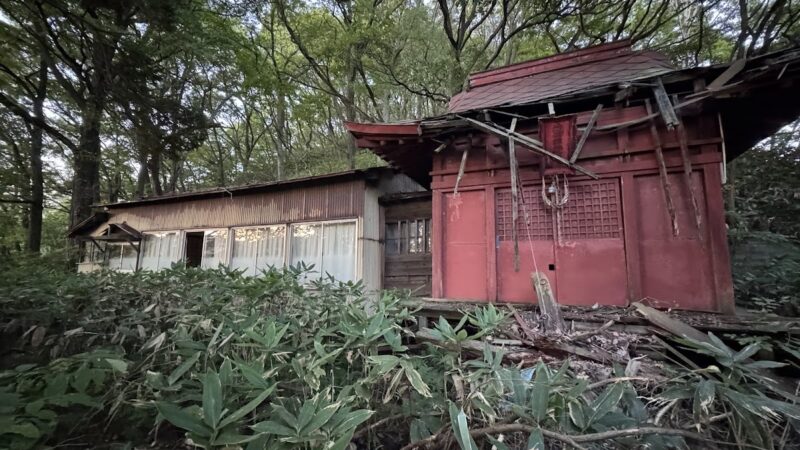
Dewa Shrine (Kosaka-machi, Kazuno-gun, Akita Prefecture): History and Highlights | Complete Guide to Deities and Access
Dewa Shrine, located in Kosaka-machi, Kazuno-gun, Akita Prefecture, is a shrine with a long history as a center of local faith. This article provides a detailed explanation of the history of Dewa Shrine, its enshrined deities, festivals, access methods, and other information you should know before visiting.
Basic Information about Dewa Shrine
Dewa Shrine is located at 21 Kami-Kosaka, Kosaka-machi, Kazuno-gun, Akita Prefecture, and is an important religious facility that conveys the history and culture of Kosaka-machi to the present day.
Location and Address
Address: 21 Kami-Kosaka, Kosaka, Kosaka-machi, Kazuno-gun, Akita Prefecture
Jurisdiction: Akita Prefectural Shrine Association
Nearest Station: Towada-Minami Station, JR Hanawa Line
Kosaka-machi is located in the northeastern part of Akita Prefecture, on the border with Aomori Prefecture, and is a naturally rich area with the western shore of Lake Towada. Spanning 21.1 km east to west and 14.4 km north to south, approximately 80% of the total area is covered by forests and wilderness. Dewa Shrine is located in the heart of Kosaka Town and has long been a center of faith for local residents.
History and Origins of Dewa Shrine
Founding and the Shinzando Legend
There are various theories regarding the founding of Dewa Shrine, and its origins are not entirely clear. According to the local history of Kosaka Town, there is a tradition that it was founded as “Shinzando” in the second year of the Konin era (811). This falls in the early Heian period, and if true, it would give the shrine a history of over 1200 years.
However, the shrine’s historical records state, “The founding date is unknown, but it was rebuilt in May of the 9th year of the Genna era (1623) by Korekawa Ukyo-no-shin,” officially stating that it was founded in May of the 9th year of the Genna era (1623). The expression “rebuilt” suggests the possibility that some kind of shrine building existed before that time. ### Reconstruction in Genna 9
Genna 9 (1623) falls within the early Edo period. In May of that year, the shrine was rebuilt by a man named Korekawa Ukyonoshin. While detailed records of Korekawa Ukyonoshin are scarce, he is believed to have been a prominent local figure at the time.
This period marked the establishment of the Tokugawa shogunate and a time of significant development of temples and shrines throughout Japan. The reconstruction of Dewa Shrine is presumably carried out within this historical context.
Reconstruction during the Genroku Era
Approximately 70 years after the Genna 9 reconstruction, during the Genroku era (1688-1704), the shrine was rebuilt again by the villagers. This reconstruction was likely due to the building’s deterioration and damage from natural disasters.
The Genroku era was a relatively peaceful and culturally prosperous period within the Edo era, during which the repair and reconstruction of temples and shrines flourished. The villagers’ collective effort in the reconstruction demonstrates the central role Dewa Shrine played in the local community.
Merger during the Meiji and Taisho Periods
In the modern era, Dewa Shrine underwent significant changes. In 1912 (Meiji 45), a plan was made to merge the unranked Yamajinja Shrine, located in Hosogoe, Kosaka, with the Dewa Shrine in Nakamaeda, Kosaka.
Yamajinja Shrine was founded in 1866 (Keio 2), became part of the Mining Bureau in 1871 (Meiji 4), and its shrine building was constructed in the same year by Takashima Takato, who contributed to the development of the Kosaka Mine.
This merger was officially approved in July 1913 (Taisho 2), unifying the history and beliefs of both shrines. This merger further deepened Dewa Shrine’s connection to the history of mining development.
Deities and Beliefs
Main Deities
Information regarding the deities enshrined at Dewa Shrine is limited, based on records from the Akita Prefectural Shrine Association. However, judging from the shrine’s name, it is believed to enshrine deities associated with the Dewa Sanzan (Mount Gassan, Mount Haguro, and Mount Yudono). Generally, the following deities are often enshrined at Dewa Shrine:
- Ukanomitama-no-Mikoto: God of abundant harvests
- Oyamatsumi-no-Mikoto: God of mountains
- Onamuchi-no-Mikoto: God of nation-building
It is presumed that the merger with the Yamajinja (mountain shrine) added beliefs related to mine safety and industrial development.
Position of Belief in the Region
Dewa Shrine has been an important center of faith in Kosaka Town, closely intertwined with the lives of local residents. In Kosaka Town, where agriculture and mining flourished, people have visited the shrine to pray for various wishes, such as a bountiful harvest, safety, and family well-being.
Festivals and Events
Dewa Shrine Gongen-mai
A notable cultural asset of Dewa Shrine is the “Dewa Shrine Gongen-mai.” This is a type of Kagura (sacred dance) that has been passed down as a traditional performing art of Kosaka Town, and is performed during the shrine’s festivals.
The Gongen-mai is a dance using a lion’s head, and it is meant to ward off evil spirits and pray for a bountiful harvest and good health. It is sometimes performed at events in Kosaka Town, playing an important role in the preservation of local culture.
Annual Events
Various festivals and events are held at Dewa Shrine throughout the year. Main events include:
- New Year’s Day Festival: Praying for peace and prosperity in the new year
- Spring Grand Festival: Praying for a bountiful spring harvest
- Autumn Grand Festival: Offering thanks for the harvest
- Year-End Purification Ceremony: Cleansing away the impurities of the year
These festivals are attended by local residents and provide an opportunity to deepen community bonds.
The History of Kosaka Town and Dewa Shrine
Connection to Kosaka Mine
The development of Kosaka Town is inseparable from the Kosaka Mine. Discovered during the Edo period, the Kosaka Mine developed dramatically after the Meiji era with the introduction of modern mining technology. In the early Taisho period, the population exceeded 20,000, making it the second largest city in Akita Prefecture after Akita City.
The merger of Dewa Shrine with Yamajinja Shrine is rooted in the development of this mine. As the number of mine workers and their families increased, the importance of the shrine as a place of worship also grew. The Yamajinja Shrine, whose construction was overseen by Takato Takashima, was a symbol of the intertwining of mining development and religious faith.
As a Center of Regional Culture
The prosperity of the mines led to a diverse influx of culture into Kosaka Town. During the Meiji and Taisho periods, theaters and playhouses were built, and the town became known for its rich cultural heritage. Within this cultural context, Dewa Shrine has functioned as the core of traditional faith and regional identity.
Access and Visiting Information
Access by Public Transportation
By Train:
- Get off at Towada-Minami Station on the JR Hanawa Line
- Approximately 10 minutes on foot or by taxi from the station
By Bus:
- Take the Akita Kita Bus and get off at the center of Kosaka Town
- A few minutes’ walk from the bus stop
Access by Car
From the Tohoku Expressway:
- Approximately 5 minutes by car from Kosaka IC
- Parking: Parking spaces are available on the shrine grounds or in the surrounding area
From Aomori:
- Approximately 30 minutes via National Route 103 (from the Lake Towada area)
Notes for Visiting
- Visiting Hours: Daytime with bright lighting is recommended
- Attire: Wear appropriate attire for visiting a shrine
- Photography: Photography is generally permitted on the shrine grounds, but consideration is needed during festivals
- Winter: Caution is needed during snowy seasons
Nearby Tourist Attractions
Lake Towada
Lake Towada, located about 30 minutes by car from Dewa Shrine, is one of Japan’s most representative scenic spots. Kosaka Town has the western shore of Lake Towada, making it a convenient place to visit in conjunction with a visit to the shrine.
Kosaka Mine Office (Important Cultural Property)
Constructed in 1905 (Meiji 38), the Kosaka Mine Office is a beautiful wooden building in the Renaissance style and is designated as a National Important Cultural Property. It is a valuable structure that conveys the history of the mines in Kosaka Town.
Korakukan
Constructed in 1910 (Meiji 43), it is the oldest active theater and is also a National Important Cultural Property. Kabuki and other performances are still held there, allowing visitors to experience the culture of the Meiji and Taisho periods.
Kosaka Town Museum of Local History
This museum allows visitors to learn about the history, nature, and culture of Kosaka Town. Exhibits also cover the history of the mines and local beliefs, including those related to Dewa Shrine.
Cultural Value of Dewa Shrine
Symbol of Regional Identity
Dewa Shrine is not merely a religious facility; it embodies the history and culture of Kosaka Town. From its origins in the second year of the Kōnin era (815 AD) to the present day, it has continuously watched over the faith and lives of the local people.
The shrine plays a crucial role in the transmission of regional culture, including the preservation of traditional performing arts such as the Gongen-mai dance and the maintenance of community through annual events.
Fusion with Mining Culture
The merger with Yamajinja Shrine is an interesting example of the fusion of traditional agricultural beliefs with beliefs related to the modern industry of mining. This symbolizes the history of Kosaka Town’s development, balancing tradition and modernization.
Kosaka Town Today and Dewa Shrine
Population Decline and Regional Revitalization
At its peak, Kosaka Town’s population exceeded 20,000, but after the closure of the mine, it declined significantly. Currently, the population is around 5,000, but the town is working on regional revitalization by leveraging its history and nature, including joining the “Most Beautiful Villages in Japan” association.
Dewa Shrine is also attracting attention as a historical and cultural resource as part of these regional development efforts.
Preservation and Utilization as a Cultural Property
Kosaka Town is focusing on the preservation of mining-related facilities, and several important cultural properties exist there. Dewa Shrine, as an important cultural resource that conveys the history of the region, requires appropriate preservation and utilization.
The transmission of intangible cultural properties such as the Gongen-mai dance is also a challenge, and activities are being undertaken to pass them on to younger generations.
Recommendation for Visiting
Seasonal Charms
Spring: With the snow melting, greenery returns to the shrine grounds, making it a beautiful season of fresh greenery. The Spring Grand Festival is also held.
Summer: The shrine grounds, enveloped in deep green, are cool and refreshing, making it a suitable season for visiting.
Autumn: The autumn leaves are beautiful, and it is the time to offer thanks for the harvest at the Autumn Grand Festival.
Winter: Visiting the shrine amidst the tranquil atmosphere covered in snow is a special experience.
Combine with Kosaka Town Sightseeing
A visit to Dewa Shrine can be made even more fulfilling by combining it with other sightseeing spots in Kosaka Town. We recommend visiting the mining office, Korakukan Theater, and the local history museum to experience Kosaka Town’s rich history and culture.
A route that includes a stop on the way to Lake Towada is also popular. It will be a luxurious itinerary where you can enjoy nature, history, and culture all at once.
Summary
Dewa Shrine is a historic shrine located in Kosaka Town, Kazuno District, Akita Prefecture. From its founding in 811 AD, to its reconstruction by Korekawa Ukyo-no-shin in 1623, its reconstruction by the villagers during the Genroku era, and its merger with Yamajinja Shrine during the Meiji and Taisho periods, it has walked hand in hand with the community throughout its long history.
It continues to play an important role as a place to deepen the bonds of the local community through traditional performing arts such as the Dewa Shrine Gongen Dance and annual events. It’s worth noting that the town of Kosaka witnessed the rise and fall of the Kosaka Mine, and that it possesses a unique history where traditional agricultural beliefs and modern industrial beliefs merge.
When visiting Kosaka Town, be sure to pay your respects at Dewa Shrine and experience the rich history and culture of the region. Combining a visit with a trip to Lake Towada will make for a fulfilling journey where you can enjoy nature, history, and culture.
Kosaka Town, where the shrine is located, is one of “Japan’s most beautiful villages,” a charming area where rich nature and historical buildings harmonize. At its heart is Dewa Shrine, which continues to protect the region’s identity and will undoubtedly continue to be a spiritual haven for many people.