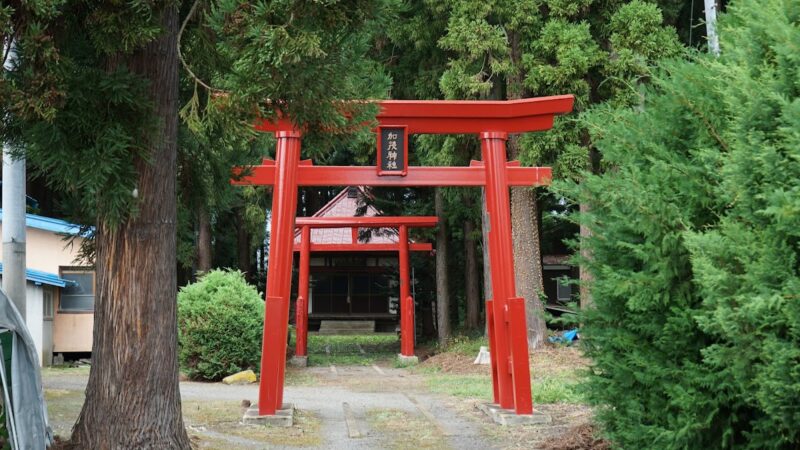
Katori Shrine (Tomie, Hirosaki City, Aomori Prefecture) | Complete Guide to History, Deities, and Access
Located in Tomie Hiraoka, Hirosaki City, Aomori Prefecture, Katori Shrine is a local guardian shrine situated east of the foot of Mount Iwaki, and has long been revered by local residents. This article provides a thorough explanation of Katori Shrine, including its detailed history, enshrined deities, highlights within the grounds, and practical information for visitors.
Table of Contents
- Overview and Basic Information of Katori Shrine
- History and Origins of Katori Shrine
- Deities Enshrined and Characteristics of the Faith
- Geography and Historical Background of the Tomie District
- Highlights and Features of the Shrine Grounds
- Annual Events and Festivals
- Access and Visiting Information
- Relationship with Surrounding Shrines and Temples
- Relationship between Katori Shrine and its Head Shrine, Katori Jingu
- Points to Note and Manners When Visiting
Overview and Basic Information of Katori Shrine
Katori Shrine is a shrine located in Hiraoka, Tomie, Hirosaki City, Aomori Prefecture. It is the tutelary shrine of the Tomie district, located northwest of Hirosaki city center at the eastern foot of Mt. Iwaki, and is cherished by the local residents.
Basic Information
- Location: Hiraoka, Tomie, Hirosaki City, Aomori Prefecture
- Deity Enshrined: Futsunushi-no-kami
- Shrine Rank: Village Shrine (Former Shrine Rank)
- Founding: Details unknown (Estimated to be before the Edo period)
- Annual Festival Date: September (Autumn Grand Festival)
In addition to Katori Shrine, the Tomie district of Hirosaki City also has Shinmei-gu Shrine in Sasazaki and Mimori Shrine in Asai-na, and these shrines are the center of local faith.
History and Origins of Katori Shrine
Background of Founding
The exact founding date of Katori Shrine is unclear due to a lack of historical records, but it is believed that Futsunushi-no-kami, known as a god of war and victory, was enshrined there in conjunction with the development of the region and the advancement of agriculture. The Katori faith, with Katori Jingu Shrine in Katori City, Chiba Prefecture as its head shrine, spread widely throughout the Tohoku region.
The Establishment of the Tomiei District and the Role of the Shrine
The name Tomiei originated in 1876 (Meiji 9), when four villages—Tsuruta, Mitsumori, Shinohezawa, and Kojima—merged to form the new village. The name was chosen with the hope that the new village would prosper in the future. Throughout this regional integration, Katori Shrine played a crucial role as the spiritual pillar of the Tomiei district.
Changes Since the Meiji Era
Due to the Meiji-era reforms to the shrine system, Katori Shrine was designated a village shrine. While shrine consolidation and closure progressed nationwide during this period, Katori Shrine survived as the local tutelary deity and continues to attract the faith of local residents to this day.
Before the war, it held official status as a village shrine and played a central role in local festivals and events. After becoming a religious corporation following the war, it is now managed and operated as a local religious corporation.
Characteristics of the Deity and Belief
Futsunushi-no-kami
The deity enshrined at Katori Shrine is Futsunushi-no-kami. Futsunushi-no-kami is known in Japanese mythology as a warrior god who successfully negotiated the transfer of the land, and is believed to possess the following divine virtues:
- Long-lasting Military Fortune: As the god of martial arts, he protects the improvement of martial skills.
- Victory: Brings victory in competitions and contests.
- Protection from Misfortune: Wards off calamities and protects the safety of the household.
- National Security: Protects the stability and peace of the land.
- Safe Navigation: Protects the safety of maritime traffic.
Characteristics of Katori Belief
Katori belief is a faith that has spread to approximately 400 shrines nationwide, with Katori Jingu Shrine in Chiba Prefecture as its head shrine. It is particularly prevalent in the Kanto and Tohoku regions, and is said to have often been established in newly developed areas and areas where new rice fields were being cultivated.
The Katori Shrine in Tomie, Hirosaki City, is also thought to have been established to pray for the protection of the land and a bountiful harvest, coinciding with the development of the region’s settlement and agricultural progress. Futsunushi-no-kami, a god of war but also possessing aspects of an agricultural deity, was a reassuring guardian deity for the settlers.
Geography and Historical Background of the Tomie Area
Geographical Characteristics
The Tomie area is located in the northwestern part of Hirosaki City, at the eastern foot of Mount Iwaki. It is relatively low in elevation, situated at the boundary between the plains and the foothills. Blessed with pure water from Mount Iwaki, it has long been known as a region where agriculture thrives.
Composition of Sub-districts
The following sub-districts are located in Tomie:
- Asaina
- Sasazaki
- Toba
- Nishida
- Noda
- Hiraoka
- Location of Katori Shrine
- Yamabe
Historical Background
The history of the Tomie district is closely related to the pioneering history of the Tsugaru region. During the Edo period, new land development was actively promoted within the Hirosaki domain, and many pioneers settled in this area.
When Tomie Village was formed in 1876 through the merger of four villages, there was a need to foster a sense of community, and shrines strengthened their role as the spiritual center. Three shrines—Katori Shrine, Shinmei-gu Shrine, and Mimori Shrine—functioned as the tutelary shrines of their respective sub-districts, supporting the faith of the entire Tomie district.
Agriculture and Local Culture
The Tomie district has developed as an agricultural area centered on rice cultivation. Blessed with abundant water resources from Mount Iwaki and fertile soil, it is known as a producer of high-quality rice. The autumn festival of Katori Shrine has been an important event to express gratitude for the harvest and has been integrated into the cycle of local agriculture.
Highlights and Features of the Shrine Grounds
Shrine Architecture
The shrine buildings of Katori Shrine exhibit a typical style of shrine architecture found in rural areas of the Tohoku region. Although not large in scale, it is carefully maintained as the center of local faith.
Main Hall
The main hall is protected by a protective structure and maintains the traditional style of shrine architecture. Maintenance activities are carried out by local residents to address deterioration due to age.
Worship Hall
The worship hall, where worshippers offer prayers, has a simple yet solemn atmosphere. During local festivals, many parishioners gather here for religious ceremonies.
Natural Environment of the Shrine Grounds
The grounds of Katori Shrine retain ancient trees and natural forests, allowing visitors to enjoy the beauty of each season. In particular:
- Spring: Beautiful fresh greenery and refreshing air
- Summer: Covered in deep green, creating a cool atmosphere
- Autumn: Autumn leaves adorn the grounds, and it’s the season for the annual festival
- Winter: A solemn atmosphere in the silence of a snow-covered landscape
Stone Sculptures and Offerings
Within the shrine grounds, you can see stone sculptures such as stone lanterns and guardian lion-dogs donated by successive generations of parishioners. These offerings embody the faith and respect of the local people for the shrine.
Annual Events and Festivals
Autumn Grand Festival
The most important festival at Katori Shrine is the Autumn Grand Festival, held in September. This festival is an important event expressing gratitude for the harvest and praying for a bountiful harvest the following year, and is celebrated with the participation of all local residents. Festival Contents
- Shinto Ritual: Recitation of prayers and offering of sacred branches by Shinto priests
- Naorai (Post-ritual feast): Communal meal and drink after the ritual
- Dedicatory Performances: Traditional performing arts and dances by local communities (varies by year)
Other Annual Events
- New Year’s Day Festival: Prayers for peace in the new year
- Spring Festival: A festival praying for a bountiful harvest
- Summer Purification Ceremony: A Shinto ritual to purify oneself of the impurities accumulated over the past six months (implementation varies by year)
These events are managed by local parishioner organizations and serve as a place for the transmission of faith across generations.
Access and Visiting Information
Location
Address: Hiraoka, Tomie, Hirosaki City, Aomori Prefecture
Postal Code: 036-8382
Access by Car
- From Hirosaki City Center: Approximately 15-20 minutes
- From Tohoku Expressway, Owani-Hirosaki IC: Approximately 25 minutes
- From Aomori Airport: Approximately 50 minutes
From Hirosaki city center, head north on National Route 7 towards the Tomie area. If using a car navigation system, search for “Hiraoka, Tomie, Hirosaki City”.
Access by Public Transportation
Route buses operating within Hirosaki City are available, but the number of services is limited, so it is recommended to check the timetable in advance.
- Konan Bus: Take a bus bound for Tomie from Hirosaki Station.
- Walking is required from the nearest bus stop.
Parking
There is parking space for visitors on the shrine grounds or nearby, but congestion is expected during festivals such as the annual grand festival.
Visiting Hours
The shrine grounds are generally open all day, but the shrine office has limited hours. If you wish to receive a Goshuin (shrine stamp) or prayers, it is recommended to contact them in advance.
Relationship with Surrounding Shrines and Temples
Three Shrines in the Tomie District
The Tomie district has three major shrines, including Katori Shrine:
Shinmei-gu (Sasazaki)
This shrine enshrines Amaterasu Omikami and is the tutelary shrine of the Sasazaki area in the Tomie district. Shinmei faith is a faith with Ise Grand Shrine as its head shrine and is widely distributed throughout Japan.
Mimori Shrine (Asai-na)
This shrine is worshipped as the tutelary shrine of the Asai-na area. It is a shrine closely connected to the history of the region. These three shrines function as the tutelary deities of different sub-districts in the Tomie district, forming a faith network for the entire region. During festival seasons, they cooperate with each other, playing a role in fostering a sense of community.
Relationship with Major Shrines in Hirosaki City
Many shrines and temples exist in Hirosaki City, each supporting local faith:
- Iwaki-yama Shrine: The largest shrine in the Tsugaru region, with Mt. Iwaki as its sacred mountain.
- Hirosaki Hachimangu Shrine: The guardian shrine of Hirosaki Castle town.
- Saishoin Five-Storied Pagoda: A representative example of Buddhist architecture in the Tohoku region.
Unlike these large religious institutions, Katori Shrine plays a unique role as a community-oriented tutelary deity.
Relationship between Katori Shrine and its Head Shrine, Katori Jingu
About Katori Jingu
Katori Jingu Shrine, located in Katori City, Chiba Prefecture, is the head shrine of approximately 400 Katori Shrines nationwide. As the Ichinomiya (first-ranked shrine) of Shimōsa Province, it has long been revered by the imperial court, and from the medieval period onward, it was also deeply worshipped by the samurai class.
Characteristics of Katori Shrine
- Deity Enshrined: Futsunushi-no-Ōkami
- Shrine Rank: Shikinaisha (Myōjin Taisha), Ichinomiya of Shimōsa Province, Former Kanpei Taisha (Imperial Grand Shrine)
- Founding: 18th year of Emperor Jimmu’s reign (tradition)
- Important Cultural Properties: Main hall, gate tower, etc.
Katori Shrine as a Branch Shrine
Katori Shrine in Tomie, Hirosaki City, is a branch shrine (bunreisha) established by inviting the deity from Katori Shrine. Inviting the deity means dividing the spirit of the main shrine and enshrining it in another location.
Background of the Enshrinement
The spread of Katori faith to the Tohoku region is thought to have had the following background:
- Settler Migration: Migrants from the Kanto region to the Tohoku region invited the deity of their homeland.
- Samurai Faith: The samurai class revered Futsunushi-no-kami as a god of war.
- New Land Development: Enshrined as the guardian deity of newly developed land.
- Safe Navigation: Prayers for safe navigation at key points in maritime traffic.
The Katori Shrine in Tomie, Hirosaki City, is also presumed to have been established to pray for the protection of the land and the peace of the residents, in line with the development and settlement of this region.
Nationwide Katori Shrine Network
There are approximately 400 Katori Shrines throughout Japan, particularly concentrated in the Kanto and Tohoku regions. Several Katori Shrines also exist within Aomori Prefecture, each functioning as a center of local faith.
Major Katori Shrines in Aomori Prefecture
- Katori Shrine (Oyazawa, Aomori City)
- Katori Shrine (Tomiei, Hirosaki City)
- Other shrines scattered throughout the region
These Katori shrines have maintained a spiritual connection with the head shrine, Katori Jingu, while developing unique forms of worship in each region.
Points to Note and Manners When Visiting
Basic Worship Etiquette
By observing basic worship etiquette, you can have a more heartfelt visit.
How to Pass Through a Torii Gate
- Bow before passing through the torii gate.
- Walk along the edge of the path, as the center is considered the path of the gods.
How to Wash Your Hands
- Take the ladle with your right hand and wash your left hand.
- Switch the ladle to your left hand and wash your right hand.
- Switch the ladle back to your right hand, receive water in your left hand, and rinse your mouth.
- Finally, stand the ladle upright and wash the handle.
How to Worship
- Gently place your offering in the offering box.
- If there is a bell, ring it.
- Perform two bows, two claps, and one bow (two deep bows, two claps, one deep bow).
Regarding Photography
Photography is generally permitted on the shrine grounds, but please note the following:
- Do not take photographs in areas where photography is prohibited, such as inside the main hall.
- Do not photograph religious ceremonies during festivals without permission.
- Be considerate of other worshippers.
- Please refrain from using flash photography.
Regarding Attire
While casual attire is acceptable for visiting the shrine, the following considerations are recommended:
- Please dress neatly and cleanly.
- If receiving prayers, please wear formal attire or something similar.
- Please avoid overly revealing clothing.
Seasonal Precautions
Winter (December to March)
- Be aware of snow and ice, and wear non-slip shoes.
- Take sufficient precautions against the cold.
- Check the snow removal status of the approach to the shrine.
Summer (June to August)
- Take precautions against insects.
- Stay hydrated to prevent heatstroke.
- Use a hat or parasol.
The Modern Significance and Role of Katori Shrine in the Community
Center of the Local Community
Even today, Katori Shrine functions as an important community center in the Tomie district. Events such as the annual festival provide valuable opportunities for local residents to gather, fostering intergenerational exchange and the transmission of traditional culture.
Value as a Cultural Asset
Katori Shrine is a valuable cultural heritage site that conveys the history of the region to the present day. Its buildings, stone structures, and festival rituals possess value that should be preserved and passed down as important materials that tell the history and culture of the Tomie district.
Potential as a Tourism Resource
Hirosaki City is a tourist city known for Hirosaki Castle and cherry blossoms, but shrines in areas slightly outside the city center can also be important tourism resources for understanding the region’s history and culture. The group of shrines in the Tomie district, including Katori Shrine, is attracting attention as an element that conveys the diverse charms of Hirosaki.
Inheritance of Faith and Challenges
Amidst population decline and aging, the maintenance and management of local shrines is a major challenge. However, at Katori Shrine, the parishioners’ organization, in particular, continues its activities to pass on faith to younger generations and preserve the shrine grounds.
The Position of Katori Shrine in Hirosaki City’s Temple and Shrine Culture
Characteristics of Temples and Shrines in Hirosaki City
Hirosaki City escaped the ravages of World War II, and as a result, many historical buildings remain. Hirosaki City has a particularly large number of temples, with 33 temples concentrated in the area known as “Teramachi” (Temple Town).
Major Temples and Shrines in Hirosaki City
- Zenrin-gai Temple Group (33 Soto Zen temples)
- Saishoin Five-Storied Pagoda (National Important Cultural Property)
- Iwaki-yama Shrine (General Guardian Shrine of the Tsugaru Region)
- Hirosaki Hachimangu Shrine (General Guardian Shrine of Hirosaki Castle Town)
Characteristics as a Community-Based Shrine
Unlike these large temples and shrines, Katori Shrine has functioned as the tutelary shrine of a specific region. While not widely known as a tourist attraction, it is a more familiar presence as an object of daily faith for local residents.
Such small, community-based shrines are an important element demonstrating the diversity of Hirosaki City’s religious culture and play a role in supporting the spiritual foundation of the local community.
A Part of the Tsugaru Region’s Religious Culture
The Tsugaru region has developed a unique religious culture centered on the worship of Mount Iwaki. Katori Shrine exemplifies the multifaceted nature of Tsugaru’s religious culture as an example of the fusion of unique local beliefs and the nationwide Katori faith.
Summary
Katori Shrine, located in Hiraoka, Tomie, Hirosaki City, Aomori Prefecture, is not large in scale, but it is an important shrine that conveys the history and culture of the region to the present day. The Katori faith, with Katori Jingu in Chiba Prefecture as its head shrine, spread to the Tohoku region and took root here.
Katori Shrine, which enshrines Futsunushi-no-kami, the god of war and victory, functioned as a spiritual pillar in the Tomie district during the pioneering era, praying for the protection of the land and the peace of the residents. In Tomie Village, formed by the merger of four villages in 1876, Katori Shrine played an important role in fostering a sense of community.
Even today, annual events, including the Autumn Grand Festival, continue as central events for the local community, ensuring the transmission of faith across generations. Unlike Hirosaki Castle and the temples known as tourist attractions in Hirosaki City, Katori Shrine remains a deeply rooted place of worship, serving as the spiritual foundation of the Tomie district.
When visiting Hirosaki City, visiting not only the main tourist spots but also these small local shrines will allow you to gain a deeper understanding of the region’s history and culture. Katori Shrine is a quiet and charming shrine where you can feel the faith and love for the region held by the people of Tsugaru.
When visiting, please observe basic shrine etiquette and show respect for this place of worship that has been carefully preserved by the local people. The time spent quietly praying in the shrine grounds, surrounded by nature that changes with the seasons, will be a precious experience away from the hustle and bustle of everyday life.