Ensho-ji Temple (Obanazawa City, Yamagata Prefecture) Complete Guide | History and Highlights of the 23rd Temple of the Mogami Thirty-Three Kannon Pilgrimage
Kōzan Ensho-ji Temple, located in the Rokuzawa district of Obanazawa City, Yamagata Prefecture, is a Soto Zen Buddhist temple that has long attracted worshippers as the 23rd temple of the Mogami Thirty-Three Kannon Pilgrimage, “Rokuzawa Kannon.” This ancient temple, believed to have been founded during the Nanboku-chō period (Northern and Southern Courts period), is attracting attention as a tourist spot with numerous points of interest, including valuable votive paintings designated as cultural properties of Yamagata Prefecture and burial grounds that tell the story of the region’s history.
History and Origins of Ensho-ji Temple
History from the Nanboku-chō Period
The founding of Kōzan Ensho-ji Temple is said to date back to the Nanboku-chō period (Northern and Southern Courts period). This was a turbulent time in 14th-century Japan, when the Southern and Northern Courts were in conflict, and many temples were built in the Tohoku region. Ensho-ji Temple was also founded during this period and has functioned as a center of local faith for over 600 years.
As a Soto Zen temple, it has a history of cultivating a unique religious culture that incorporates Kannon worship while being based on Zen teachings. In particular, its designation as the 23rd temple of the Mogami Thirty-Three Kannon Pilgrimage has given it a significant role as a sacred site visited by pilgrims.
Mogami Thirty-Three Kannon Pilgrimage, Temple No. 23: “Rokuzawa Kannon”
Ensho-ji Temple is counted as “Rokuzawa Kannon,” the 23rd temple of the Mogami Thirty-Three Kannon Pilgrimage. The Mogami Thirty-Three Kannon is a Kannon pilgrimage route spread throughout the Mogami region of Yamagata Prefecture, and has long attracted many believers on pilgrimage.
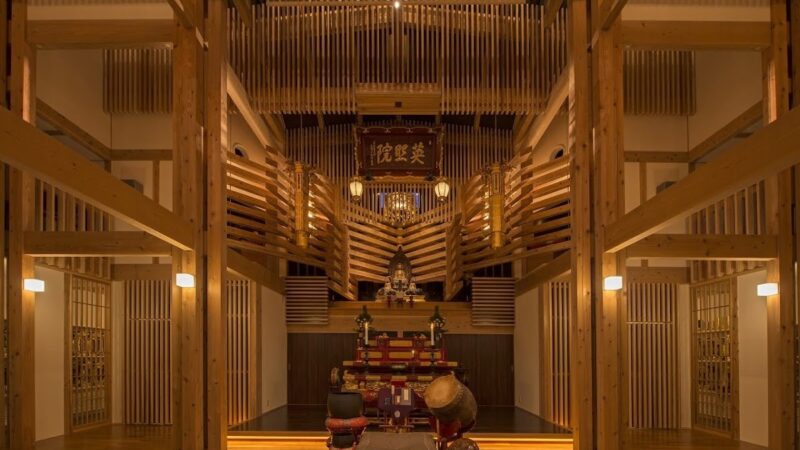
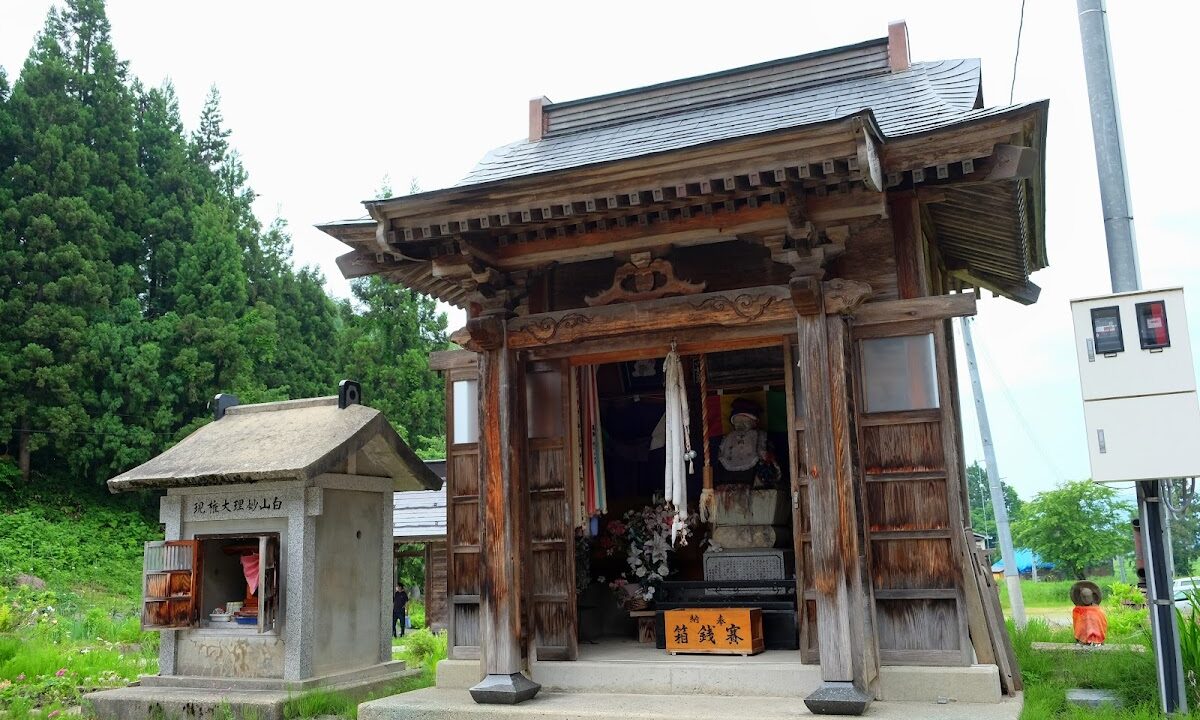
The principal image of Rokuzawa Kannon is the Holy Kannon Bodhisattva, worshipped as a Kannon who relieves people’s suffering and grants their wishes. There is a Kannon Hall on the temple grounds, where pilgrims can receive a temple stamp. Many visitors come to the temple, seeking peace of mind by praying in the tranquil atmosphere.
Cultural Assets and Highlights of Ensho-ji Temple
Votive Tablet Donated by Nobusawa Yasumitsu (Yamagata Prefecture Designated Cultural Property)
One of the greatest highlights of Ensho-ji Temple is the votive tablet donated by the Sengoku period warlord Nobusawa Yasumitsu. This tablet is designated as a cultural property of Yamagata Prefecture and possesses high historical value as a precious work of art from the Sengoku period.
Nobusawa Yasumitsu was a Sengoku period warlord who wielded considerable power in the Mogami region, and his base was Nobusawa Castle (present-day Obanazawa City). While the custom of warlords donating votive tablets to temples to pray for victory in battle and the peace of their territories was widespread at the time, few examples remain. The votive tablet at Ensho-ji Temple is therefore an important resource for understanding the religious practices and samurai culture of the period.
The tablet depicts warriors and horses, and is characterized by the powerful brushwork of the Sengoku period. It is in excellent condition, preserving the colors from several hundred years ago.
The Tomb of Nobezawa Satsuma-no-kami Mitsushige
Within the grounds of Ensho-ji Temple lies the tomb of Nobezawa Satsuma-no-kami Mitsushige. The Nobezawa family greatly contributed to the development of the Rokusawa region, and their tomb is carefully maintained as an important historical site that tells the story of the region’s history.
Nobezawa Satsuma-no-kami Mitsushige was a samurai who ruled this region from the medieval to the early modern period, and is said to have dedicated himself to improving the lives of his people and developing industry. The tomb is in the form of a stone pagoda, surrounded by a quiet forest, and exudes a solemn atmosphere that conveys the weight of history.
The local people still hold the Nobezawa family in high esteem, and the tomb is cherished as an integral part of the region’s identity. It is also a valuable place to visit for history enthusiasts and local history researchers.
Highlights of the Main Hall and Temple Grounds
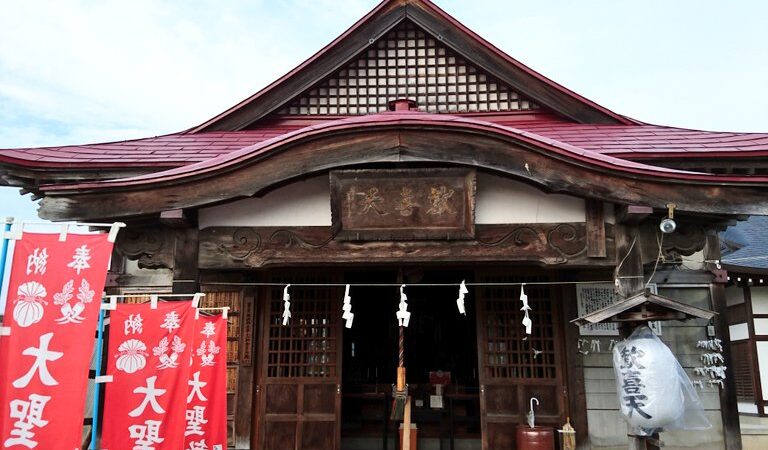
The main hall of Ensho-ji Temple displays a tranquil atmosphere typical of a Soto Zen temple. The main hall, a wooden structure, is characterized by its deep eaves and sturdy construction, typical of snowy regions, designed to withstand the harsh winters of Obanazawa, a heavy snowfall area.
The temple grounds are meticulously maintained, allowing visitors to enjoy the beauty of nature throughout the seasons. Cherry blossoms and fresh greenery in spring, deep green in summer, vibrant autumn leaves, and snowscapes in winter—each season presents a different face. The temple grounds, especially when covered in snow during winter, are fantastical, possessing a dignified beauty amidst the silence.
Besides the Kannon Hall, the grounds also contain buildings such as a bell tower and a priest’s quarters, maintaining the traditional layout of temple architecture. Visitors can stroll leisurely through the grounds and feel the breath of history.
Access and Basic Information to Ensho-ji Temple
Basic Information
Official Name: Kosan Ensho-ji Temple
Sect: Soto Zen
Pilgrimage Site: 23rd Temple of the Mogami Thirty-Three Kannon Pilgrimage (Rokuzawa Kannon)
Address: 741-3 Rokuzawa, Obanazawa City, Yamagata Prefecture
Phone Number: 0237-28-2319
Visiting Hours: Grounds are freely accessible (advance contact recommended for Goshuin stamps)
Admission Fee: Free
Parking: Available (parking spaces for both large and small vehicles)
Goshuin Stamp: Available at the Ensho-ji Temple grounds
Access Method
Access by Public Transportation:
- Approximately 10 minutes by bus from JR Oishida Station, transfer at Obanazawa Waiting Area
- Take the Obanazawa-Tsuruko bus and get off at “Rokuzawa-ji-mae” or “Rokuzawa” bus stop, then walk for about 7 minutes.
Access by Car:
- Approximately 15 minutes from the Tohoku Chuo Expressway “Obanazawa IC”
- Accessible via National Route 13 and a prefectural road
- For car navigation, search for “Ensho-ji Obanazawa City” or the phone number.
Public transportation is limited, so it is recommended to check the timetable in advance. While access by car is convenient, snow tires are essential during winter due to heavy snowfall.
MAP (Location)
Ensho-ji Temple is located in the Rokuzawa district of Obanazawa City. The Rokuzawa district is approximately 10km northeast of Obanazawa city center and is a quiet area with sprawling rural scenery. Farmland stretches out around the temple, which stands amidst a peaceful rural landscape.
It is approximately 30 minutes by car from Ginzan Onsen, a major nearby tourist destination, making it possible to combine a visit with a hot spring trip. Many people also visit this temple as part of a pilgrimage route visiting other temples of the Mogami Thirty-Three Kannon Pilgrimage.
Nearby Spots and Tourist Information
Ginzan Onsen (approx. 30 minutes by car)
Ginzan Onsen, a representative tourist spot in Obanazawa City, is a hot spring town overflowing with Taisho-era romance, attracting many tourists from both Japan and abroad. The scenery of three- and four-story wooden inns lining the river creates an atmosphere as if you’ve traveled back in time to the Taisho era.
A plan to visit Ensho-ji Temple and then stay at Ginzan Onsen makes for a fulfilling trip combining historical sightseeing and hot springs. Especially in winter, the snowy landscape illuminated by gas lamps is fantastic, attracting many photography enthusiasts.
Obanazawa City Center (approx. 10 minutes by car)
In the center of Obanazawa City, you’ll find restaurants and direct sales shops where you can enjoy local specialties such as Obanazawa watermelon and Obanazawa beef. In summer, the sweet and large Obanazawa watermelon is famous and highly regarded nationwide.
Furthermore, it is known as one of the birthplaces of the Hanagasa Festival, and a Hanagasa dance event is held every summer. There is also a tourist information center in the city where you can obtain information about local attractions.
Other Temples of the Mogami Thirty-Three Kannon Pilgrimage
Ensho-ji Temple is the 23rd temple of the Mogami Thirty-Three Kannon Pilgrimage, so those undertaking the pilgrimage are advised to visit the temples before and after it. Each temple has its own unique history and characteristics, allowing you to experience the deep religious culture of the Mogami region through the pilgrimage.
A pilgrimage journey offers a spiritual fulfillment that goes beyond mere sightseeing. Bringing a goshuincho (stamp book) and collecting stamps at each temple will create special travel memories.
Tokura Lake (approximately 15 minutes by car)
Tokura Lake, a representative natural spot in Obanazawa City, is an artificial lake created as an irrigation reservoir, but it is known for its beautiful scenery and rich natural environment. A promenade is maintained along the lakeside, allowing you to enjoy walks and jogging.
Enshoji Temple boasts beauty in every season: cherry blossoms in spring, lush greenery in summer, and vibrant autumn leaves. It’s especially popular during cherry blossom season, attracting many visitors. The lakeside also features a park and campground, making it ideal for family outings.
Points to Note When Visiting Enshoji Temple
Manners and Attire for Visitors
Enshoji Temple is an active temple and a place of worship. Please observe the following manners when visiting:
- Be quiet within the temple grounds and refrain from loud conversations.
- Remove your hat when entering the main hall or Kannon hall.
- Photography is permitted, but please check beforehand regarding photography of the principal image and other Buddhist statues.
- Request a Goshuin (temple stamp) politely.
- Offer your donation sincerely.
There are no specific dress code requirements, but it’s best to avoid overly casual attire (shorts, tank tops, etc.). Especially in winter, it can be very cold, so be sure to dress warmly.
About Goshuin (Temple Seals)
At Ensho-ji Temple, you can receive a Goshuin as the 23rd temple on the Mogami Thirty-Three Kannon Pilgrimage. Goshuin are available on the temple grounds, but since the head priest may be absent, it is recommended to call ahead to confirm availability.
Bring your Goshuincho (stamp book) and have the Goshuin fee (usually around 300 yen) ready. A Goshuin is not merely a commemorative stamp, but proof of your visit and a symbol of your connection with the temple. Please request it respectfully and with gratitude.
Best Seasons for Visiting
Ensho-ji Temple has different charms in each of the four seasons:
Spring (April-May): Cherry blossoms and fresh greenery are beautiful, and the weather is pleasant. Visiting in the refreshing air after the snow melts is especially wonderful.
Summer (June-August): The temple grounds, surrounded by deep greenery, are cool, offering a respite from the heat. However, rain gear is necessary during the rainy season.
Autumn (September-November): The autumn foliage is beautiful, making this the most popular season. The best time to visit is especially from mid-October to early November.
Winter (December-March): Enjoy the magical scenery covered in snow. However, snow depths can reach 2 meters, so caution is necessary when accessing the area. Winter equipment and driving skills are required.
Estimated Time Required
For visiting Ensho-ji Temple and strolling through the grounds, allow 30 minutes to an hour at a leisurely pace. If you wish to receive a temple stamp (Goshuin) or carefully appreciate cultural artifacts such as the votive ema (votive tablets) donated by Nobusawa Yasumitsu, you may need more time.
If combining with other nearby tourist attractions, we recommend planning a half-day to full-day schedule. Especially when combining with a visit to Ginzan Onsen, a plan including an overnight stay is ideal.
The Charms of Obanazawa City and Ensho-ji Temple
The Town of Snow, Watermelons, and Hanagasa Hats
Obanazawa City is known as the “town of snow, watermelons, and hanagasa hats.” It is one of Japan’s three heaviest snowfall areas, with snow accumulation reaching approximately 2 meters in winter. This abundant snowmelt water nourishes the sweet, large Obanazawa watermelons in the summer.
Furthermore, as one of the birthplaces of the Hanagasa Festival, the traditional Hanagasa dance culture is deeply rooted here. In Obanazawa City, where nature and culture are intertwined, Ensho-ji Temple has played an important role in terms of history and faith.
A Temple that Tells the History of the Region
Ensho-ji Temple is not merely a tourist spot, but a valuable place that conveys the history and culture of Obanazawa City to the present day. The votive tablets of Nobezawa Yasumitsu and the tomb of Nobezawa Satsuma-no-kami tell the story of the history this region experienced from the Sengoku period to the Edo period.
For the local people, Ensho-ji Temple is a spiritual anchor, a place of worship passed down through generations, and a central hub of the community. When visiting, it’s important to show respect for the region’s history and culture.
Summary: Experiencing History and Faith at Ensho-ji Temple
Ensho-ji Temple, located in Obanazawa City, Yamagata Prefecture, is an ancient Soto Zen temple with a history of over 600 years, serving as the 23rd temple on the Mogami Thirty-Three Kannon Pilgrimage. It preserves valuable cultural assets and historical sites, including a votive picture (ema) designated as a prefectural cultural property, donated by the Sengoku period warlord Nobusawa Yasumitsu, and the tomb of Nobesawa Satsuma-no-kami Mitsushige, making it an unmissable tourist spot for history enthusiasts.
As you pray in the tranquil temple grounds, you can feel the weight of the faith that has been offered by countless people throughout its long history. You can also enjoy the beauty of nature in each season, and the snow-covered winter scenery is particularly enchanting.
By combining your visit with other nearby tourist attractions, such as Ginzan Onsen, you can fully experience the charm of Obanazawa City. Be sure to visit Enshoji Temple as part of your pilgrimage to the 33 Kannon temples of Mogami, or as part of your historical exploration of Yamagata Prefecture. It will be a memorable experience, allowing you to feel the breath of history and faith.