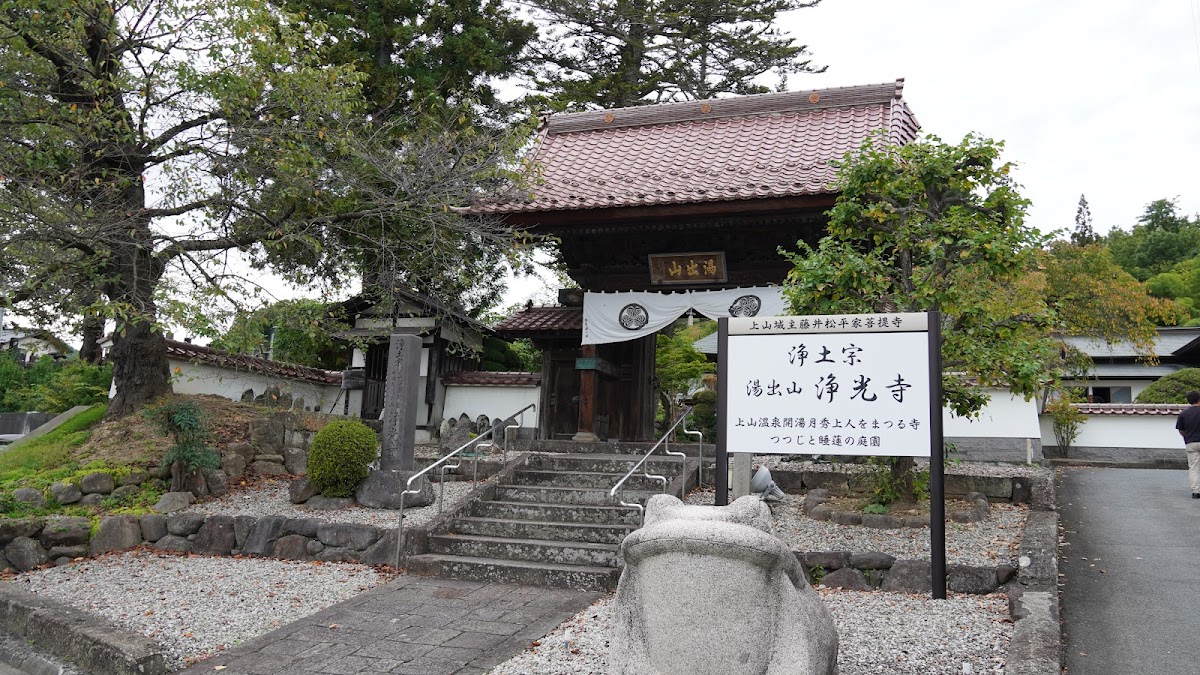
Jokoji Temple (Kaminoyama City, Yamagata Prefecture) Complete Guide | The Famous Garden Designed by Zen Master Takuan and the History of the Kaminoyama Domain Lord’s Family Temple
Jokoji Temple, located in Kaminoyama City, Yamagata Prefecture, is an ancient Jodo sect temple with a history of approximately 600 years. It has a deep connection to the discovery of Kaminoyama Onsen (hot spring) and flourished as the family temple of the Matsudaira family, the lords of the Kaminoyama Domain, during the Edo period. This guide provides a detailed introduction to this temple, which possesses diverse attractions, from its history and highlights to access information, including its magnificent garden designed by Zen Master Takuan, the legend of the toads that gather there in spring, and its role as a pilgrimage site for the Yamagata 108 Jizo Pilgrimage.
History and Origin of Jokoji Temple
Discovery of Kaminoyama Onsen and Founding by Abbot Gesshu
The history of Jokoji Temple is closely linked to the discovery of Kaminoyama Onsen. In 1458 (Chōroku 2) during the Muromachi period, the monk Gesshū Shōnin, originally from Kishima District in Hizen Province (present-day Saga Prefecture), discovered a hot spring in this area. Legend says he learned of the hot spring’s existence after seeing an injured crane healing its wounds by bathing in the water.
The following year, in 1459, Jōkōji Temple (later renamed Jōkōji Temple) was founded by Gesshū Shōnin. The temple’s mountain name, “Yudeyama,” literally derives from the fact that the hot spring gushed forth, reflecting the history of the temple and Kaminoyama Onsen developing together.
As the Family Temple of the Matsudaira Family, Lords of Kaminoyama Domain
In the Edo period, Jōkōji Temple became the family temple of the Fujii Matsudaira family, lords of the Kaminoyama Domain, and experienced significant growth. The Fujii Matsudaira family was a prestigious family descended from Matsudaira Sadakatsu, the half-brother of Tokugawa Ieyasu, and ruled the Kaminoyama Domain.
As a family temple, Jōkōji Temple housed many temple treasures, and its grounds were also well-maintained. Even today, cultural artifacts related to the Matsudaira family are preserved there, making it an indispensable resource for understanding the history of Kaminoyama.
Deep Connection with Takuan Osho
An essential aspect of discussing Jōkōji Temple is its connection to Takuan Sōhō, a high-ranking priest of the early Edo period. Takuan Osho incurred the wrath of the shogunate due to the Purple Robe Incident and was exiled to Kaminoyama in Dewa Province (present-day Kaminoyama City, Yamagata Prefecture) for approximately three years starting in 1629 (Kanei 6).
During this exile, Takuan Osho left many cultural footprints in Kaminoyama. It is said that he created a magnificent garden at Jōkōji Temple. This garden still remains today, a valuable cultural heritage that conveys Takuan Osho’s aesthetic sense and high level of landscaping skill.
Highlights of Jokoji Temple
A Masterpiece Garden Designed by Zen Master Takuan
The greatest highlight of Jokoji Temple is the garden designed by Zen Master Takuan. This garden has a unique composition with different styles on the left and right sides, allowing visitors to fully appreciate the beauty of Japanese gardens.
The garden on the left is said to be modeled after the back garden of Ryoanji Temple in Kyoto. It is a dry landscape garden using stone arrangements and white sand, creating a tranquil space that expresses the spirituality of Zen. The beauty of the stone arrangement and sand patterns reflects the deep Zen state of mind of Zen Master Takuan.
The garden on the right is said to be modeled after the garden of Katsura Imperial Villa in Kyoto. It is an elegant design incorporating elements of a pond-centered strolling garden, with a composition that allows visitors to enjoy the plantings of each season.
It is extremely rare to see these two different styles in one temple, and it is evidence of Zen Master Takuan’s broad aesthetic sense and high level of gardening skill. The garden is especially beautiful in the spring with its fresh greenery and in the autumn with its vibrant foliage, attracting many worshippers and tourists.
Amida Buddha Statue, a Kaminoyama City Designated Tangible Cultural Property
The Amida Buddha statue, the principal image of Jokoji Temple, is a valuable Buddhist statue designated as a Kaminoyama City Designated Tangible Cultural Property. This statue, enshrined at the time of the temple’s founding, has a history of approximately 600 years and has been the center of faith for Jokoji Temple, a Jodo sect temple.
Amida Buddha is the principal deity of the Western Pure Land, believed to guide those who chant the Nembutsu (invocation of Amida Buddha) to the Pure Land. The Amida Buddha statue at Jokoji Temple retains characteristics of Buddhist sculpture from the Muromachi period and is protected as a cultural property of high art historical value.
Twelfth Temple of the Yamagata 108 Jizo Pilgrimage
Jokoji Temple is designated as the twelfth temple of the Yamagata 108 Jizo Pilgrimage. The Yamagata 108 Jizo Pilgrimage is a pilgrimage route visiting 108 Jizo statues scattered throughout Yamagata Prefecture, attracting many believers.
Jokoji Temple, one of the pilgrimage sites, houses a Jizo Bodhisattva, and visitors can receive a Goshuin (temple stamp). Because the pilgrimage allows visitors to experience Yamagata Prefecture’s history, culture, and faith, the number of pilgrims combining sightseeing with the pilgrimage has increased in recent years.
The Temple’s Other Name, “Toad Temple,” and a Springtime Tradition
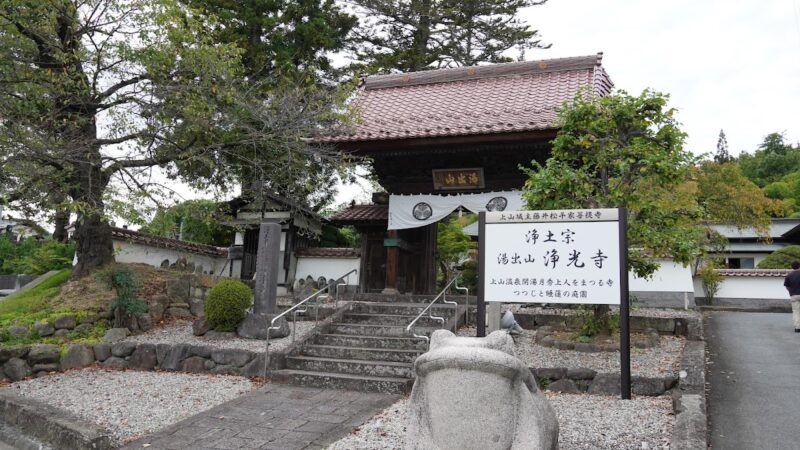
Jokoji Temple has an intriguing nickname, “Toad Temple.” This comes from the phenomenon of numerous toads gathering on the temple grounds every spring.
This phenomenon has been known locally for a long time and is cherished as a springtime tradition. While the exact reason why toads gather at Jokoji Temple is not fully understood, it is believed that the temple grounds provide a suitable environment for toad breeding.
The friendly nickname “Gama-dera” (Toad Temple) indicates that Jokoji Temple is a familiar presence to local residents, demonstrating its character as a temple deeply rooted in the community despite its long history.
Jokoji Temple Grounds and Facilities
Main Hall and Other Buildings
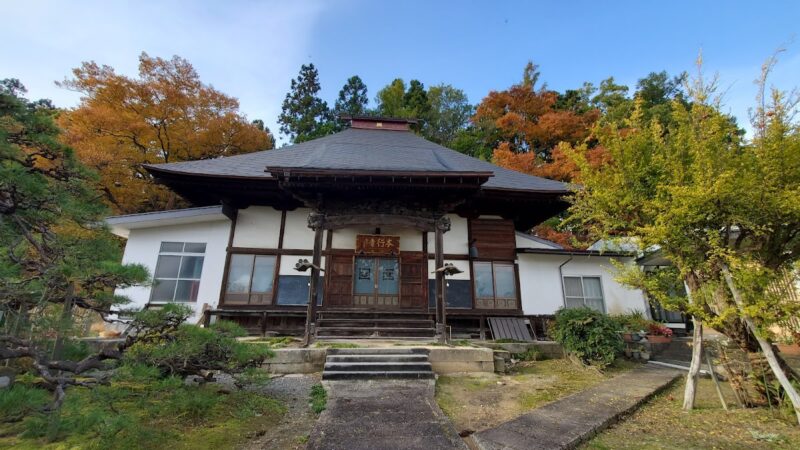
The main hall of Jokoji Temple boasts a magnificent structure typical of Jodo sect temples. The principal image, a statue of Amida Buddha, is enshrined within, and daily services and religious ceremonies are held there.
In addition to the main hall, several other buildings are located within the temple grounds, each supporting the temple’s functions. These buildings were constructed or renovated from the Edo period to the modern era, making them valuable resources for understanding the history of temple architecture in Kaminoyama.
Cemetery and Perpetual Memorial Services
Jokoji Temple has an attached cemetery, which is also used as a burial ground for the general public. In recent years, cemeteries with perpetual memorial services have been established, meeting the needs of those without successors or those concerned about future grave management.
Jokoji Cemetery is conveniently located within walking distance of Kaminoyama Onsen Station, at 2-1-1 Karuizawa, Kaminoyama City, Yamagata Prefecture, making it easily accessible. For inquiries regarding cemetery visits and perpetual memorial services, please contact the temple directly.
Relationship between Kaminoyama City and Jokoji Temple
Location in relation to Kaminoyama Onsen
Jokoji Temple is located in the heart of Kaminoyama Onsen. Kaminoyama Onsen has developed as a hot spring resort with a history of approximately 600 years since its discovery by the monk Gesshu Shonin. As indicated by the temple’s mountain name, “Yudeyama,” the temple and the hot springs are inextricably linked.
Many tourists strolling through the hot spring town visit Jokoji Temple. Visiting Jokoji Temple as part of a morning stroll while staying at a hot spring inn, and admiring the garden designed by Takuan Osho, is a classic Kaminoyama Onsen sightseeing route.
Historical Connections to Kaminoyama Castle
Kaminoyama Castle (Tsukioka Castle), a symbol of Kaminoyama City, and Jokoji Temple have deep historical ties. Kaminoyama Castle was the political center of the Kaminoyama Domain and the residence of the Matsudaira family, the domain’s lords. Since Jokoji Temple was the Matsudaira family’s ancestral temple, the castle and temple functioned as two wheels of the domain’s political and religious institutions.
While the current Kaminoyama Castle is a restored local history museum, visiting it together with Jokoji Temple allows for a deeper understanding of the Kaminoyama Domain’s history.
Access Information to Jokoji Temple
Location and Basic Information
Location: 2-1-1 Karuizawa, Kaminoyama City, Yamagata Prefecture
Sect: Jodo-shu (Pure Land Buddhism)
Mountain Name: Yudeyama
Principal Image: Amida Buddha
Pilgrimage Site: 12th Temple of the Yamagata 108 Jizo Pilgrimage
Access by Train
The nearest station is Kaminoyama Onsen Station on the JR Ou Main Line. Jokoji Temple is approximately a 20-minute walk from the station.
Kaminoyama Onsen Station is approximately 30 minutes from Yamagata Station by local train and approximately 1 hour from Sendai Station by express train. From Tokyo, the most convenient route is to take the Yamagata Shinkansen to Yamagata Station and then transfer to a local train.
From the station, the most common route is through the hot spring town to Jokoji Temple. Along the way, you’ll find footbaths and hot spring inns, allowing you to enjoy the atmosphere of the hot springs.
Access by Car
If traveling by car, the nearest interchange is Kaminoyama IC on the Tohoku Chuo Expressway. It’s about a 10-minute drive from Kaminoyama IC to Jokoji Temple.
From central Yamagata City, take National Route 13 south; it’s about a 30-minute drive. While the temple has parking for visitors, it’s recommended to check with the temple in advance if arriving by large bus.
Nearby Tourist Attractions
When visiting Jokoji Temple, we recommend also visiting the nearby tourist attractions.
- Kaminoyama Castle (Tsukioka Castle): Approximately a 15-minute walk. You can learn about the history of Kaminoyama at the local history museum.
- Samurai Residence Street: Approximately a 10-minute walk. A charming street with samurai residences from the Edo period.
- Kaminoyama Onsen Footbath: Several footbaths within walking distance, perfect for a break during your stroll.
- Harusame-an: A hermitage associated with Zen master Takuan. A spot you’ll want to visit in conjunction with Jokoji Temple.
- Zao Mountain Range: Approximately 30 minutes by car. A mountain resort where you can enjoy nature in all four seasons.
Visiting Jokoji Temple and Obtaining a Goshuin (Temple Stamp)
Etiquette for Visiting
Jokoji Temple is a Jodo sect temple, so it is advisable to follow Jodo sect etiquette when visiting. Bow when passing through the temple gate, and clasp your hands together and chant “Namu Amida Butsu” in front of the main hall.
When viewing the garden, please appreciate it quietly and be careful not to enter the garden area. Photography is permitted, but there are areas where photography is restricted, such as inside the main hall, so please follow the signs.
About Goshuin (Temple Seals)
At Jokoji Temple, you can receive a Goshuin as the twelfth temple on the Yamagata 108 Jizo Pilgrimage. A Goshuin is given by the temple as proof of your visit; please bring your Goshuincho (stamp book) to receive it.
When receiving a Goshuin, it is customary to first complete your prayers at the main hall, and then request the Goshuin at the temple office. The donation for a Goshuin is generally around 300 yen, but this may vary depending on the temple, so please check.
Annual Events at Jokoji Temple
Main Ceremonies and Events
As a Jodo sect temple, Jokoji Temple holds various ceremonies and events throughout the year.
- Spring Equinox Service: An ancestral memorial service held around the spring equinox.
- Flower Festival (Buddha’s Birthday): A memorial service held on April 8th to celebrate the birth of Buddha.
- Obon Memorial Service: August 13th-16th, the Obon festival to welcome the spirits of ancestors.
- Autumn Equinox Service: An ancestral memorial service held around the autumn equinox.
- New Year’s Eve Bell Ringing: December 31st, the ringing of the bell to welcome the new year.
These events bring together parishioners and local residents, serving as a community gathering place.
Special Viewing and Best Time to See the Garden
The garden, designed by Zen Master Takuan, displays different expressions throughout the seasons. It is particularly beautiful during the following times:
- Spring (late April to May): The fresh greenery is beautiful, and it’s also a time when toads gather.
- Early Summer (June): The moss is a vibrant green during the rainy season.
- Autumn (late October to early November): The autumn leaves are magnificent, and it’s the time when the most visitors come.
- Winter (December to February): The snow-covered garden is enveloped in silence, allowing you to experience a state of Zen.
We recommend checking with the temple before your visit regarding garden visiting hours and admission fees.
Jokoji Temple and the Legacy of Takuan Soho
About Takuan Soho
Takuan Soho (1573-1646) was a prominent Rinzai Zen Buddhist priest of the early Edo period. Born in Tajima Province (present-day Hyogo Prefecture), he served as the head priest of Daitokuji Temple in Kyoto before being exiled to Kaminoyama in Dewa Province due to the Purple Robe Incident.
Zen master Takuan was not only a Zen monk but also a cultured man who displayed talent in many fields, including calligraphy, painting, tea ceremony, and landscape gardening. He also played a politically important role, receiving the patronage of Shogun Tokugawa Iemitsu and later founding Shinagawa Tokai-ji Temple in Edo.
He is also known as the person after whom the name “takuan-zuke” (pickled daikon radish) originates, but there is no concrete evidence that Takuan actually invented it, and it remains in the realm of legend.
Takuan’s Footprints in Kaminoyama
Takuan was exiled to Kaminoyama for approximately three years, from 1629 to 1632, but during this short period, he had a significant impact on Kaminoyama’s culture.
Besides the garden of Jokoji Temple, there is a hermitage in Kaminoyama called Shun’uan, where Takuan is said to have lived. Shun’uan is still preserved today and attracts many tourists as a place associated with Takuan.
Furthermore, during his stay in Kaminoyama, Takuan left behind many calligraphic works and paintings and preached Zen teachings to the local people. Even today, calligraphy by Zen Master Takuan is carefully preserved in temples and private homes within Kaminoyama City.
Zen Philosophy Embodied in the Garden
The garden of Jokoji Temple embodies the profound Zen philosophy of Zen Master Takuan. The dry landscape garden, modeled after the back garden of Ryoanji Temple, expresses the state of “nothingness,” condensing the Zen aesthetic of attempting to express the truth of the universe using only stones and sand.
On the other hand, the pond garden, modeled after the Katsura Imperial Villa, expresses the beauty of “existence,” reflecting the philosophy of finding eternal truth in the changing seasons of nature.
By arranging “nothingness” and “existence,” “stillness” and “movement” in a single space, Zen Master Takuan is believed to have expressed “non-duality” (not being two, that is, the unity of opposing forces), a fundamental Zen concept.
The Position of Jokoji Temple in the History and Culture of Kaminoyama City
Religious Policy of the Kaminoyama Domain and Jokoji Temple
During the Edo period, temples played an important role in the Kaminoyama Domain. The fact that Jōkōji Temple became the family temple of the Matsudaira clan, the feudal lords, had not only religious significance but also political significance.
A family temple was a place where funerals and memorial services for the feudal lord’s family were held, and at the same time, it was a symbol of the legitimacy of the domain. With the establishment of the Matsudaira family’s burial ground at Jōkōji Temple, the temple became an embodiment of the history of the Kaminoyama domain itself.
Jōkōji Temple in the Modern Era
After the Meiji Restoration, the Kaminoyama domain ceased to exist due to the abolition of the feudal system and the establishment of prefectures, but Jōkōji Temple continued to exist as a center of local faith. Despite being affected by the anti-Buddhist movement of the Meiji era, the temple was preserved with the support of local residents.
Throughout the Showa and Heisei eras, Jōkōji Temple underwent cultural property protection and development as a tourist resource, and today it welcomes many tourists as one of the representative historical buildings of Kaminoyama City.
As a Center of the Local Community
Even in modern times, Jōkōji Temple is not merely a tourist spot, but plays a role as a center of faith and life for the local residents. The temple maintains the traditional parishioner system, conducting funerals and memorial services, and actively participates in local cultural events.
In particular, as a pilgrimage site for the Yamagata 108 Jizo statues, it warmly welcomes pilgrims from both within and outside the region, contributing to the revitalization of the area.
Practical Information for Visiting Jokoji Temple
Visiting Hours and Admission Fees
While the grounds of Jokoji Temple are generally open to the public, there may be set times and fees for viewing the gardens and the interior of the main hall. It is recommended to inquire with the temple or the Kaminoyama City Tourism Association before your visit.
General temple visiting hours are around 9:00 AM to 5:00 PM, but these may vary depending on the season and events.
Photography
Photography is generally permitted within the temple grounds and gardens, but there are areas where photography is prohibited, such as the interior of the main hall and around Buddhist statues. Please always follow the temple’s instructions when taking photographs.
It is also important to be considerate of the privacy of other visitors and avoid including people in your photos. For commercial photography, prior permission from the temple is required.
Accessibility Information
Jokoji Temple is a historical building, and therefore has steps and stairs within its grounds. Those wishing to visit in a wheelchair are advised to consult with the temple in advance.
While some parts of the garden are wheelchair accessible, not all areas are accessible. Those requiring assistance are advised to visit with a companion.
Nearby Accommodations
When visiting Jokoji Temple, staying at a ryokan or hotel in Kaminoyama Onsen is recommended. The hot spring town offers a variety of accommodations to suit your budget and preferences.
- Luxury Ryokan: Traditional Japanese inns where you can enjoy high-quality hot springs and cuisine.
- Business Hotels: Many facilities offer hot springs at reasonable prices.
- Minshuku: Enjoy a homey atmosphere and interact with locals.
Many accommodations are within walking distance of Jokoji Temple, making it ideal for a morning stroll.
Summary: The Charm and Worth of Visiting Jokoji Temple
Jokoji Temple in Kaminoyama City, Yamagata Prefecture, is a Jodo sect temple with a history of approximately 600 years, possessing a multifaceted appeal. Its history, including its founding around the same time as the discovery of Kaminoyama Onsen (hot springs), its status as the family temple of the Matsudaira family, the lords of the Kaminoyama domain, and above all, the magnificent garden created by Zen Master Takuan, make it a cultural heritage site well worth visiting.
As its friendly nickname, “Gama-dera” (Toad Temple), suggests, it is a temple deeply rooted in the local community, yet it also welcomes visitors from a wide area as a pilgrimage site for the Yamagata 108 Jizo statues. Jokoji Temple, where history, culture, nature, and faith are intertwined, is a must-visit spot when visiting Kaminoyama City.
Why not combine a relaxing soak in the hot springs or sightseeing at Kaminoyama Onsen with a quiet visit to Jokoji Temple and experience the beauty of Zen left behind by Zen Master Takuan? The garden, which displays different expressions in each of the four seasons, is a profound place where you can discover something new with every visit.