Hongyoji Temple (Kaminoyama City, Yamagata Prefecture) | Complete Guide to the History, Access, and Memorial Services of a Nichiren Buddhist Temple
Located in Kaminoyama City, Yamagata Prefecture, Hongyoji Temple is a historic temple belonging to the Nichiren sect. This article provides detailed information on Hongyoji Temple, from its basic information and the characteristics of its sect to access methods and information on memorial services and rituals. This comprehensive guide is useful for those considering visiting graves or holding memorial services, or those who want to learn more about Nichiren Buddhist temples.
Basic Information on Hongyoji Temple
Location and Contact Information
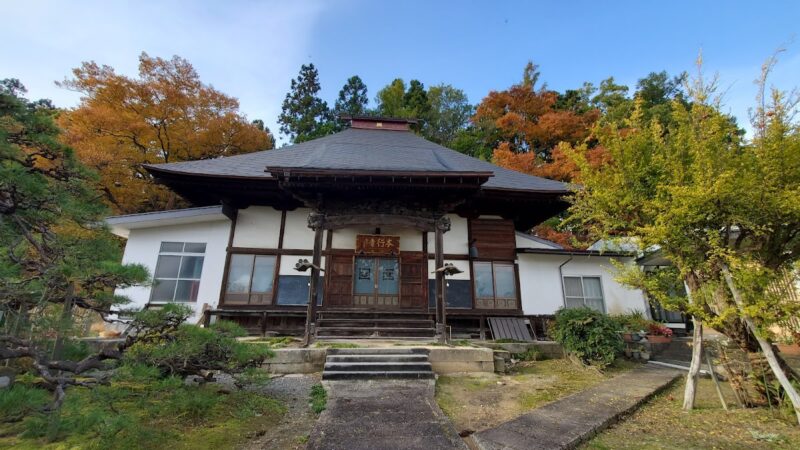
Hongyoji Temple is located at 161 Takamatsu, Kaminoyama City, Yamagata Prefecture. The postal code is 〒999-3243. This area is a quiet environment slightly away from the center of Kaminoyama City, offering a peaceful atmosphere for worship.
Sect and Head Temple
Hongyoji Temple is a Nichiren sect temple. The Nichiren sect is a Buddhist sect founded by the Kamakura period monk Nichiren Shonin, and its fundamental scripture is the Lotus Sutra. This sect is known for its emphasis on chanting the mantra “Namu Myoho Renge Kyo.”
Information about the Chief Priest
The current chief priest is Reverend Koshu Suzuki. Based on the teachings of the Nichiren sect, he performs memorial services and prayers for parishioners and local residents.
How to Access Honkoji Temple
Access by Car
Takamatsu, Kaminoyama City, Yamagata Prefecture, is easily accessible by car. It is approximately 10 minutes from Kaminoyama city center via the prefectural road. It is approximately 15 minutes from the Kaminoyama Interchange on the Tohoku Chuo Expressway. Parking is available around the temple, so you can visit by car.
Access by Public Transportation
The nearest station is Kaminoyama Onsen Station on the JR Ou Main Line. It is approximately 15 minutes by car from the station. If using public transportation, a taxi is convenient. Also, Kaminoyama City may operate a community bus, so it is recommended to check in advance.
Surrounding Environment and Landmarks
Hongyo-ji Temple is located in the Takamatsu district of Kaminoyama City, a quiet environment surrounded by rural landscapes. Houses and farmlands are scattered throughout the area, creating a peaceful atmosphere. First-time visitors are advised to check the location beforehand using a map app.
Learn More About Nichiren Buddhism
History and Teachings of Nichiren Buddhism
Nichiren Buddhism was founded in 1253 during the Kamakura period by Nichiren Shonin. Nichiren Shonin was convinced that the Lotus Sutra was the true teaching of Shakyamuni Buddha, and he taught that anyone can attain Buddhahood by chanting the title “Namu Myoho Renge Kyo.”
The characteristics of the Nichiren sect are as follows:
- Considering the Lotus Sutra as the fundamental scripture: The sect takes the position that the Lotus Sutra is the highest teaching among the teachings of Shakyamuni Buddha.
- Emphasis on the title: Chanting “Nam Myoho Renge Kyo” is central to the practice.
- Worldly benefits: A teaching that emphasizes happiness and peace in this world.
- Spirit of propagation: An attitude of actively spreading the teachings.
Head Temples and Temple Ranks of the Nichiren Sect
The head temple of the Nichiren sect is Minobu-san Kuonji Temple in Minobu-cho, Yamanashi Prefecture. There are approximately 5,000 temples nationwide, and many Nichiren sect temples exist within Yamagata Prefecture. Hongyo-ji Temple is one of them, serving as a center of faith in the region.
Annual Events of the Nichiren Sect
Nichiren sect temples hold various events throughout the year:
- Rikkyo Kaishū-e (April 28th): A memorial service commemorating the day Nichiren Shonin founded the sect.
- Sōso Gokotan-e (February 16th): A memorial service celebrating the birthday of Nichiren Shonin.
- Sōso Goeshiki (October 13th): The most important memorial service held on the anniversary of Nichiren Shonin’s death.
- Obon (August): An important time for ancestor worship.
Memorial Services and Ceremonies at Hongyoji Temple
Funerals and Memorial Services
Hongyoji Temple can conduct funerals according to Nichiren sect customs. In Nichiren sect funerals, the mantra “Namu Myōhō Renge Kyō” is chanted, praying for the deceased’s enlightenment. Funeral formats range from traditional general funerals to family funerals and direct cremations, according to the family’s wishes.
Buddhist Memorial Services
In Buddhism, memorial services are held regularly to honor the deceased. The main services include the following:
From the 7th to the 49th Day
- 7th Day (7th day)
- 27th Day (14th day)
- 21st Day (21st day)
- 28th Day (28th day)
- 35th Day (35th day)
- 42nd Day (42nd day)
- 49th Day (49th day)
Annual Memorial Services
- 1st Anniversary (1st year)
- 3rd Anniversary (2nd year)
- 7th Anniversary (6th year)
- 13th Anniversary (12th year)
- 17th Anniversary (16th year)
- 23rd Anniversary (22nd year)
- 27th Anniversary (26th year)
- 33rd Anniversary (32nd year)
- 50th Anniversary (49th year)
Regarding Perpetual Memorial Services and Cemeteries
For details regarding cemeteries and perpetual memorial services at Hongyo-ji Temple, we recommend contacting the temple directly. In recent years, due to the declining birthrate, aging population, and the rise of nuclear families, the difficulty of inheriting graves has increased, leading to a growing interest in perpetual memorial services.
Temples and Religious Culture in Kaminoyama City
List of Temples in Kaminoyama City
In addition to Hongyo-ji Temple, several other temples exist in Kaminoyama City, Yamagata Prefecture:
- Myosho-ji Temple (Nichiren Buddhism): A Nichiren Buddhist temple located at 2-4-1 Karuizawa, Kaminoyama City
- Harusame-an Temple (Soto Zen Buddhism): A Soto Zen temple located in Tsuruhagi-cho, Kaminoyama City
- Other temples of Shingon Buddhism, Jodo Buddhism, etc., are also scattered throughout the area.
While Kaminoyama City is known as a hot spring resort, it also boasts many historical temples and shrines, making it a region with a deeply rooted religious culture.
Buddhist Culture in Yamagata Prefecture
Yamagata Prefecture is home to many historical temples, including the famous Risshaku-ji Temple (Tendai sect), also known as “Yamadera” (mountain temple). Risshaku-ji is also known as the place where Matsuo Basho composed the haiku, “Silence—the cicada’s cry penetrates the rocks.”
Furthermore, the Shugendo culture of the Dewa Sanzan (Mt. Haguro, Mt. Gassan, and Mt. Yudono) is an important part of Yamagata Prefecture’s religious culture. Thus, Yamagata Prefecture is a region where diverse Buddhist cultures coexist.
Tourist Attractions Around Hongyo-ji Temple
Kaminoyama Onsen
Kaminoyama City, where Hongyo-ji Temple is located, is a hot spring resort known as “Kaminoyama Onsen.” Its opening dates back to the Muromachi period, giving it a history of over 560 years. The hot spring town has many inns and hotels and is bustling with tourists. Enjoying the hot springs during your visit to the temple is highly recommended.
Kaminoyama Castle (Tsukioka Castle)
Kaminoyama Castle, a symbol of Kaminoyama City, is also known as “Tsukioka Castle.” The current castle grounds were restored in 1982, and the interior is open to the public as a local history museum. From the castle, you can enjoy a panoramic view of Kaminoyama city and the Zao mountain range.
Samurai Residences
Kaminoyama City has preserved samurai residences from the Edo period, offering a glimpse into life at that time. This is a particularly recommended spot for history buffs.
Zao Mountain Range
The Zao mountain range, close to Kaminoyama City, offers beautiful nature throughout the seasons. In winter, it is a popular ski resort famous for its frost-covered trees, and in summer, it is a popular spot for hiking and trekking.
Manners and Etiquette for Visiting Graves
Nichiren Buddhism Grave Visiting Etiquette
When visiting a grave in the Nichiren sect, please pay attention to the following points:
- Cleaning the Grave: First, clean the gravestone and surrounding area.
- Offerings: Offer flowers, incense, water, etc.
- Praying and Bowing: Pray with your hands clasped together while chanting the title “Namu Myoho Renge Kyo.”
- Cleanup: Take the offerings home or follow the temple’s instructions.
Items to Bring to a Grave Visit
- Prayer beads (In Nichiren Buddhism, chrysanthemum-tassel prayer beads are common)
- Incense sticks and a lighter
- Flowers
- Offerings
- Cleaning tools (broom, rag, etc.)
- Water
Timing for Visiting Graves
There is no specific time for visiting graves, but many people visit during the following periods:
- O-higan (Spring and Autumn)
- Obon (August)
- Anniversary of Death
- Year-End and New Year Holidays
- During Memorial Services
Calculating Memorial Service Dates
Calculating Intermediate Period Memorial Services
In Buddhism, the period from death to forty-nine days is called “intermediate period,” and memorial services are held every seven days. The anniversary of death is counted as day one. For example, if someone dies on January 1st:
- First seven days: January 7th
- Second seven days: January 14th
- Third seven days: January 21st
- Fourth seven days: January 28th
- Fifth seven days: February 4th
- Sixth seven days: February 11th
- Seventh seven days (forty-ninth day): February 18th
Calculating Annual Memorial Services
Annual memorial services are counted starting from the year of death (traditional Japanese age counting system). For example, if someone passed away on January 1, 2020:
- First anniversary of death: January 1, 2021 (1 full year)
- Third anniversary of death: January 1, 2022 (2 full years)
- Seventh anniversary of death: January 1, 2026 (6 full years)
Note: The first anniversary is calculated using the full age, but subsequent anniversaries are calculated using the traditional Japanese age system (counting age from birth).
The relationship between the Danka system and temples
What is a Danka?
A Danka is a family that belongs to a specific temple and provides economic and spiritual support to that temple. Originating from the temple registration system of the Edo period, the Danka system continues in many temples today.
Role of Temple Members
- Cooperation in the maintenance and management of the temple
- Payment of annual temple maintenance fees
- Participation in temple events
- Holding funerals and memorial services at the temple
Benefits of Becoming a Temple Member
- Peace of mind regarding funerals and memorial services
- Ability to secure a burial plot
- Access to consultations on Buddhist rituals
- Connections with the community through temple events
The Environment Surrounding Temples in Recent Years
Declining Birthrate, Aging Population, and Temples
As Japan as a whole experiences a declining birthrate and aging population, temples are also being significantly affected. Challenges include a decrease in the number of temple members, a lack of successors, and the neglect of burial plots.
New Forms of Memorial Service
In recent years, the following new forms of memorial service have become more common:
- Perpetual Memorial Service: A temple performs memorial services for eternity.
- Tree Burial: A tree is used as a grave marker instead of a tombstone.
- Columbarium: Cremated remains are placed indoors.
- Scattering of Ashes: Cremated remains are scattered in the sea or mountains.
These are chosen by those who have difficulty inheriting a grave or who wish to return to nature.
Frequently Asked Questions about Hongyo-ji Temple
Q1: Where is Hongyo-ji Temple located?
A1: Hongyo-ji Temple is located at 161 Takamatsu, Kaminoyama City, Yamagata Prefecture. The postal code is 〒999-3243. It is about a 10-minute drive from the center of Kaminoyama City.
Q2: What is the sect of Hongyo-ji Temple?
A2: Hongyo-ji Temple is a Nichiren Buddhist temple. The Nichiren sect is a Buddhist sect founded by Nichiren Shonin during the Kamakura period. It considers the Lotus Sutra as its fundamental scripture and emphasizes the chanting of the mantra “Namu Myoho Renge Kyo.”
Q3: Can I hold a funeral at Hongyo-ji Temple?
A3: Yes, Hongyo-ji Temple can conduct funerals according to the customs of the Nichiren sect. We can accommodate various formats, from traditional funerals to family funerals and direct cremations, according to the wishes of the family. Please contact the temple directly for details.
Q4: How do I get to Hongyo-ji Temple?
A4: Access by car is convenient. It’s about 10 minutes from the center of Kaminoyama city and about 15 minutes from the Kaminoyama Interchange on the Tohoku Chuo Expressway. If using public transportation, it’s about a 15-minute taxi ride from Kaminoyama Onsen Station on the JR Ou Main Line.
Q5: Is there parking at Hongyo-ji Temple?
A5: There is parking available around the temple. However, it may be crowded during memorial services and events, so we recommend checking in advance. ### Q6: Can I request a memorial service even if I’m not a temple parishioner?
A6: Many temples accept requests for memorial services from non-parishioners. However, policies vary by temple, so we recommend contacting Hongyo-ji Temple directly.
Q7: Can I build a grave here?
A7: Please contact the temple directly regarding cemetery plot availability and conditions. Recently, options such as perpetual memorial graves have become available, so we recommend discussing your preferences.
Q8: How do I make a reservation for a memorial service?
A8: Reservations for memorial services are generally made by contacting the temple directly by phone or visiting in person. You can discuss the date of the service, the number of attendees, and the offering.
Summary
Located in Takamatsu, Kaminoyama City, Yamagata Prefecture, Hongyo-ji Temple upholds the teachings of the Nichiren sect and plays an important role as a center of faith in the region. It is conveniently located near Kaminoyama Onsen (hot springs).
The Nichiren sect’s faith, centered on the mantra “Namu Myoho Renge Kyo,” has been passed down through generations for over 700 years. At Hongyo-ji Temple, this tradition is carried on through funerals, memorial services, and daily visits.
While the role of temples is changing in today’s society marked by a declining birthrate and aging population, the importance of temples as places of ancestral worship and spiritual solace remains unchanged. Those considering visiting Hongyo-ji Temple or attending a memorial service are advised to contact the temple in advance to confirm details.
When visiting Kaminoyama City, we hope you will enjoy not only a visit to Hongyo-ji Temple but also sightseeing spots such as Kaminoyama Onsen (hot springs) and Kaminoyama Castle. Enjoy a peaceful time in Kaminoyama City, where history, nature, and hot springs harmonize.