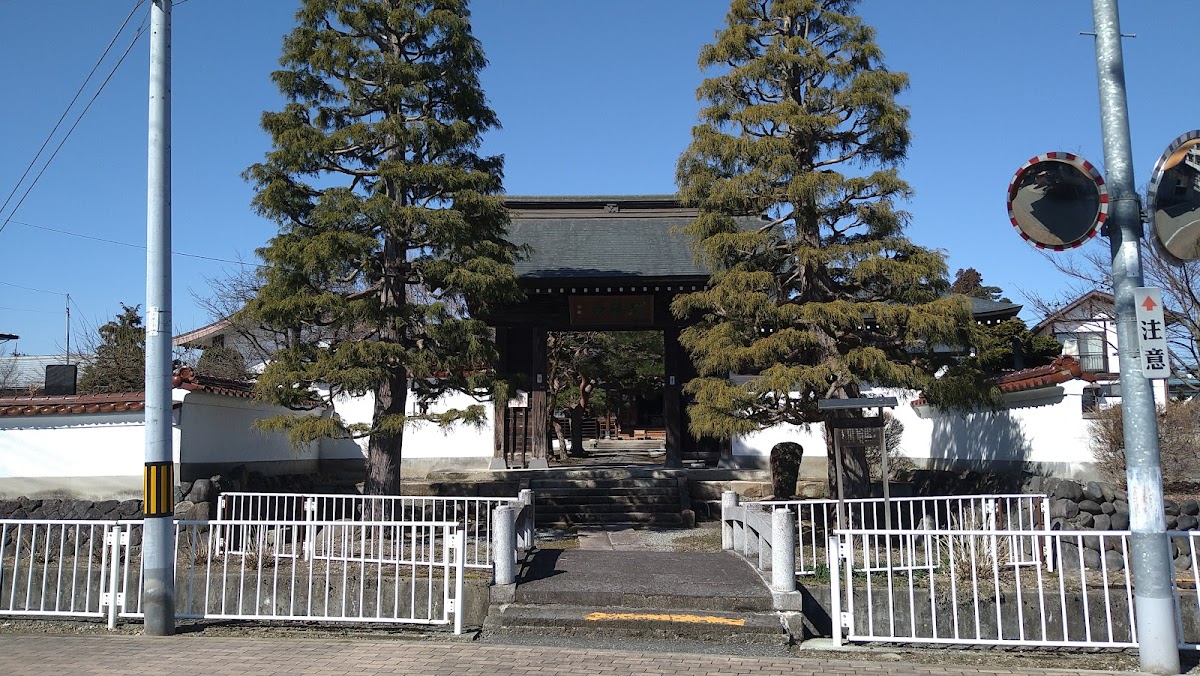
Complete Guide to Chokoji Temple (Sagae City, Yamagata Prefecture): History, Highlights, Access, and Goshuin Information
Located in the heart of Sagae City, Yamagata Prefecture, Chokoji Temple is a historic Soto Zen temple dating back to the Muromachi period. It has deep ties to the Sagae clan, a powerful local samurai family, and remains a beloved temple among local residents. This article provides a detailed explanation of Chokoji Temple’s history, highlights within its grounds, access information, goshuin (temple stamp) information, and perpetual memorial services.
Basic Information on Chokoji Temple
Chokoji Temple is a Soto Zen temple located in Honmachi 3-chome, Sagae City, Yamagata Prefecture. Its official name is written as “澄江寺” but pronounced “Chokoji.” It is conveniently located in the center of Sagae city, approximately a 10-minute walk from JR Sagae Station.
Temple Overview
- Sect: Soto Zen
- Location: 3-12-3 Honmachi, Sagae City, Yamagata Prefecture 991-0031
- Founded: 1489 (Chokyo 3)
- Founder: Sagae Tomohiro, 13th head of the Sagae clan
- Head Temple: Eihei-ji Temple and Soji-ji Temple (Soto Zen Head Temples)
The Soto Zen sect is a branch of Japanese Buddhism that places particular emphasis on Zen meditation practice, and is a school of Zen Buddhism founded by Zen Master Dogen. Sumieji Temple has inherited this tradition and played a central role in the Buddhist culture of the region.
History of Sumieji Temple
Circumstances of Founding and Relationship with the Sagae Clan
Sumieji Temple was founded in 1489 (Chokyo 3). The origins of Sumie-in Temple lie in the fact that Sagae Tomohiro, the 13th head of the Sagae clan and lord of Sagae Manor at the time, donated land to Dainei-ji Temple, a renowned Soto Zen temple in Nagato City, Yamaguchi Prefecture, and established Sumie-in Temple as its sub-temple.
It is said that the purpose of its establishment was for the memorial service of Lord Tomohiro’s parents. For samurai warriors of that era, mourning the souls of ancestors and parents was an important duty, and the establishment of a temple was considered the most reliable way to do so.
The History of the Sagae Clan and Sumie-ji Temple
The Sagae clan was a powerful samurai family that ruled the Sagae region of Yamagata Prefecture from the Heian period to the Sengoku period. They governed the fertile land of the Mogami River basin and had Sagae Castle as their base. Sumie-ji Temple served as the Sagae clan’s family temple and was the spiritual pillar of the family.
However, in 1584, the Sagae clan was destroyed by an attack from the neighboring Mogami clan. Sagae Castle was also abandoned between 1623 and the following year. Even after this turbulent period, Sumieji Temple continued to exist as a place of worship for the region.
Relocation of Sagae Castle Remains
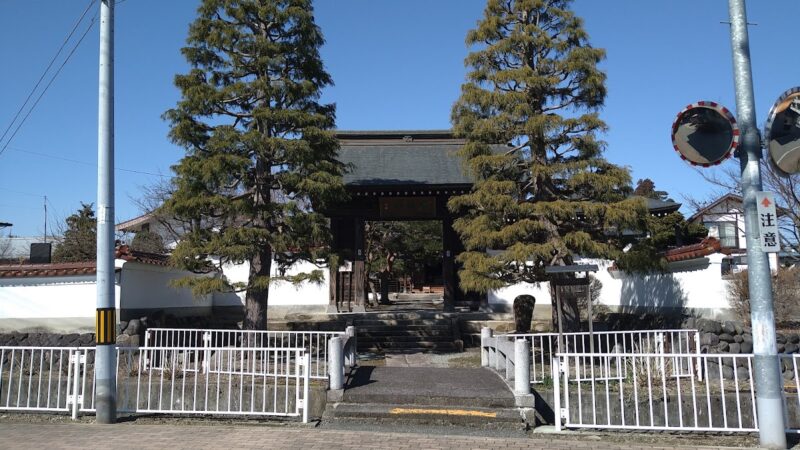
When Sagae Castle was abandoned, the castle’s Tatsumi Gate of the Third Bailey was relocated to Sumieji Temple. This is a valuable example of a part of the castle architecture still existing, and it is an important historical site that conveys the deep connection between the Sagae clan and Sumieji Temple. This gate occupies an important position in local history research as a cultural asset that tells the history of Sagae.
Sumieji Temple from the Edo Period Onward
In the Edo period, Sumieji Temple continued to develop as a Soto Zen temple in the region. Even after the fall of the Sagae clan, it continued to attract the faith of local residents and functioned as a place for funerals, memorial services, and ancestral worship. It survived the storm of anti-Buddhist movement after the Meiji Restoration and continues to exist as an important religious facility in Sagae City to this day.
Grounds and Highlights of Sumieji Temple
Main Hall
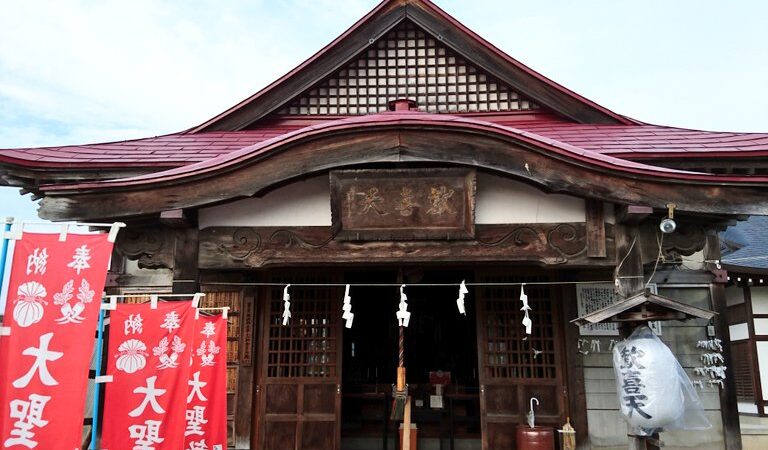
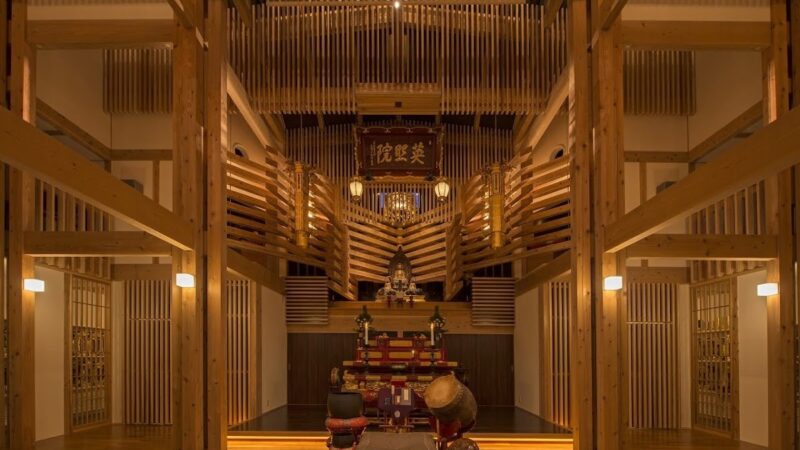
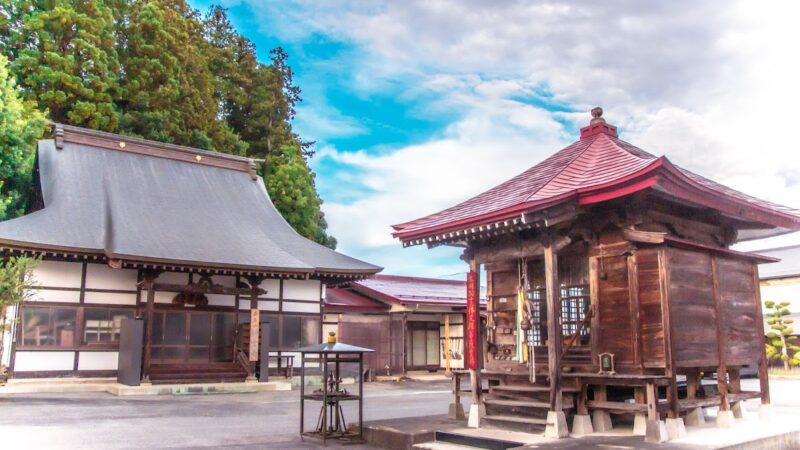
The main hall of Sumieji Temple exhibits a solemn appearance typical of a Soto Zen temple. The principal image is enshrined inside, and daily services and memorial services are held there. It also functions as a place for Zen meditation practice, a characteristic of the Soto Zen sect, and Zen meditation sessions open to local residents are sometimes held.
Grave of Sagae Tomohiro and His Wife (Five-Ring Pagoda)
Within the temple grounds is a five-ring pagoda believed to be the grave of Sagae Tomohiro, the 13th head of the Sagae clan, and his wife. The Gorinto (five-ring pagoda) is a memorial tower symbolizing the five elements of the universe (earth, water, fire, wind, and void) in Buddhism, and was widely used as a tombstone for samurai and nobles from the medieval to the early modern period.
This Gorinto is a valuable historical site that conveys the history of the Sagae clan to the present day, and is an important cultural asset for understanding the history of Sagae City. It is a must-see spot for history enthusiasts and local history researchers.
Relocated Tatsumi Gate
As mentioned above, the Tatsumi Gate, which is said to have been relocated from the third bailey of Sagae Castle, is a valuable relic of castle architecture. From the structure and style of the gate, we can learn about the architectural techniques from the Sengoku period to the early Edo period. Although Sagae Castle itself no longer exists, we can imagine the scale and structure of the castle at that time through this gate.
Natural Environment of the Temple Grounds
Despite being located in the middle of Sagae city, the grounds of Sumieji Temple maintain a tranquil space. The trees and flowers that change with the seasons welcome visitors, allowing them to enjoy the scenery of each season: cherry blossoms in spring, lush greenery in summer, and vibrant autumn leaves. Despite being in an urban area, it offers a peaceful space and serves as a place of relaxation for local residents.
How to Access Sumieji Temple
Access by Train
Nearest Station: JR Sagae Line “Sagae Station”
Sumieji Temple is approximately a 10-minute walk from Sagae Station. Exit the station and head towards the Sagae city center, aiming for Honmachi 3-chome. Its convenient location within walking distance of the station makes it easily accessible by train.
From Tokyo:
- Take the Tohoku Shinkansen to the Yamagata Shinkansen, either to Sakuranbo-Higashine Station or Yamagata Station.
- Transfer to the JR Aterazawa Line and get off at Sagae Station.
- Approximately 10 minutes on foot.
Access by Car
If using the Yamagata Expressway:
- Approximately 5 minutes from the Sagae Interchange
- Approximately 3 minutes from the Sagae Service Area (Smart Interchange)
Located in the heart of Sagae city, you can easily arrive by entering “Sumieji Temple” or the address “3-12-3 Honmachi, Sagae City, Yamagata Prefecture” into your car navigation system.
Parking Information
The temple has parking spaces for visitors. However, it may be crowded during memorial services and events, so it is recommended to check with the temple in advance. There are also public parking lots in the surrounding area operated by Sagae City, which you can use if needed.
Information on Goshuin (Temple Seals) at Sumieji Temple
About Goshuin
You can receive a Goshuin at Sumieji Temple. Goshuin are popular among many visitors as proof of worship and as a way to forge a connection with the temple.
Features of the Goshuin:
- Calligraphy of the temple name “Sumieji”
- Red seal as a Soto Zen temple
- Date inscription
Points to Note When Receiving a Goshuin
- Worship First: As the Goshuin is proof of worship, be sure to worship at the main hall before receiving it.
- Time: The temple staff may be absent due to temple circumstances, so if you want to be sure to receive a Goshuin, it is recommended to call in advance.
- Prepare Your Goshuincho (Stamp Book): Bring your Goshuincho with you. If you don’t have one, you may be able to receive a pre-written Goshuin (temple stamp).
- Donation: The donation for a Goshuin is generally around 300 to 500 yen.
Points for a Goshuin Pilgrimage
There are many other historical temples and shrines scattered throughout Sagae City and the surrounding area. Starting from Sumieji Temple, it’s recommended to enjoy a pilgrimage to the temples and shrines of Sagae City. Many people also visit as part of a “Soto Zen Temple Pilgrimage” to visit Soto Zen temples in Yamagata Prefecture.
Information on Sumieji Temple’s Perpetual Memorial Service, Columbarium, and Graves
About Perpetual Memorial Services
In modern times, due to the declining birthrate, aging population, and nuclear families, the inheritance of graves is becoming increasingly difficult. Against this backdrop, the need for perpetual memorial services is growing.
Sumieji Temple also accepts consultations regarding perpetual memorial services. Perpetual memorial service is a system where the temple takes responsibility for providing perpetual memorial services and management. It is chosen by those who have no successors or who do not want to burden their descendants.
Types of Columbariums and Graves
Sumieji Temple may offer the following types of memorial services:
- Perpetual Memorial Grave: A communal or individual perpetual memorial grave
- Columbarium: An indoor columbarium facility
- Traditional Cemetery: A cemetery with a traditional tombstone
- Tree Burial: A popular memorial service for those who prefer nature, using a tree as a grave marker
Costs
The cost of perpetual memorial services and graves varies greatly depending on the type of memorial service and the contract details. As a general guideline:
- Perpetual Memorial Grave (Communal Type): Approximately 100,000 to 500,000 yen
- Perpetual Memorial Grave (Individual Type): Approximately 300,000 to 1,000,000 yen
- Columbarium: Approximately 200,000 to 800,000 yen
- General Cemetery: Approximately 1,000,000 to 3,000,000 yen (including gravestone cost)
For specific costs and contract details, we recommend contacting the temple directly to confirm the details.
Flow of Visit and Consultation
- Reservation by Phone or Email: Contact us in advance to schedule a visit.
- On-site Visit: Visit the temple grounds and facilities to get a feel for the atmosphere.
- Consultation and Explanation: Receive a detailed explanation from the head priest or staff member.
- Estimate: Receive a cost estimate for your desired memorial service.
- Consideration and Contract: Discuss with your family and decide whether or not to enter into a contract.
Support for Grave Closure
If you already own a grave elsewhere and are finding it difficult to manage, you may be able to consult with Sumieji Temple regarding “grave closure.” Grave closure refers to the removal of an existing grave and the relocation of the remains to another location. If you are considering relocating your grave to Sumieji Temple, please consult with us in advance.
Annual Events and Memorial Services at Sumieji Temple
Main Annual Events
As a Soto Zen temple, Sumieji Temple holds the following annual events:
- Shushōe: January 1st-3rd, a memorial service celebrating the New Year
- Spring Equinox: One week centered around the Spring Equinox in March
- Hanamatsuri (Buddha’s Birthday): April 8th, celebrating the birth of Buddha
- Obon (Buddha’s Festival): August 13th-16th, a memorial service for ancestors
- Autumn Equinox: One week centered around the Autumn Equinox in September
- Founder’s Memorial: A memorial service commemorating the temple’s founder
Individual Memorial Services
We also accept individual memorial services such as:
- Funeral and memorial service
- Memorial services such as the 7th day and 49th day after death
- Memorial services such as the first, third, and seventh anniversaries of death
- Ancestor worship and memorial services for stillborn babies
- Prayers and blessings
If you wish to hold a memorial service, please contact the temple in advance to arrange a date.
History and Culture of Sagae City
About Sagae City
Sagae City is a city with a population of approximately 40,000, located almost in the center of Yamagata Prefecture, on the west bank of the Mogami River. It has flourished since ancient times as a key point for Mogami River shipping and was also known as a center for the collection and distribution of safflower. Currently, it is nationally famous as a cherry-producing area and is affectionately known as the “Village of Cherries.”
The Sagae Clan and Sagae Castle
The Sagae clan, who have deep ties to Sumieji Temple, were a samurai family that ruled this area for approximately 400 years, from the late Heian period to the Sengoku period. They were based at Sagae Castle and controlled the fertile land of the Mogami River basin.
Sagae Castle was built on a hill overlooking the Mogami River, north of the present-day Sagae city center. It fell to an attack by the Mogami clan in 1584 and was completely abandoned in 1623. However, remnants of earthworks and moats still remain at the castle site.
Sagae City Tourist Attractions
When visiting Sumieji Temple, why not explore other tourist attractions in Sagae City?
- Sagae Hachimangu Shrine: A shrine revered as the tutelary deity of the Sagae clan.
- Jionji Temple: An ancient Tendai sect temple housing numerous nationally designated important cultural properties.
- Sagae Park (Azalea Park): A famous spot with 43,000 azalea bushes in bloom.
- Cherryland: A roadside station themed around cherries.
- Sagae Onsen: A hot spring resort overlooking the Mogami River.
About the Soto Zen School
Teachings of the Soto Zen School
The Soto Zen school, to which Sumieji Temple belongs, is a branch of Zen Buddhism introduced to Japan by Zen Master Dogen during the Kamakura period. Its teachings are characterized by the principle of “Shikantaza,” or “simply sitting in meditation,” viewing daily life itself as a form of spiritual practice.
The Soto Zen School’s Head Temples
The Soto Zen school has two head temples:
- Eihei-ji Temple (Fukui Prefecture): The head temple founded by Zen Master Dogen
- Soji-ji Temple (Yokohama City): The head temple associated with Zen Master Keizan
With approximately 14,000 temples nationwide, it is one of the largest Buddhist sects in Japan.
Zen Meditation Experience
Many Soto Zen temples hold Zen meditation sessions open to the public. Sumie-ji Temple may also hold Zen meditation sessions or sutra copying sessions, so those interested should inquire with the temple. Zen meditation is a valuable opportunity to calm the mind and reflect on oneself.
Manners and Points for Visiting a Temple
Basic Manners for Visiting a Temple
- Attire: Please wear clean, understated clothing.
- Greeting: Bow when passing through the temple gate.
- Watering: If there is a watering basin, cleanse your hands and mouth.
- Visiting the Main Hall: Join your hands in prayer in front of the main hall and offer your prayers quietly.
- Photography: Photography is generally permitted within the temple grounds, but please refrain from taking photos inside the main hall or during religious ceremonies.
- Quietness: Please remain quiet within the temple grounds and refrain from loud conversations.
Best Time to Visit
While Sumieji Temple is open for visits throughout the year, the following times are particularly recommended:
- Spring (April-May): A beautiful season for cherry blossoms and azaleas.
- Autumn (October-November): A season to enjoy the autumn foliage.
- Ohigan/Obon: A time for honoring ancestors, during which memorial services are held.
Visiting Hours and Admission Fees
Like most temples, entry to the temple grounds is free during the daytime. However, if you wish to view the interior of the main hall or participate in a memorial service, please check with the temple in advance. Normally, there is no admission fee for visiting the temple grounds, but a donation may be required for special viewings or participation in memorial services.
Nearby Temples, Shrines, and Facilities
Temples and Shrines in Sagae City
There are other historical temples and shrines around Sumie-ji Temple:
- Sagae Hachimangu Shrine: A shrine revered as the tutelary deity of the Sagae clan, with a magnificent shrine building remaining.
- Honzan Jion-ji Temple: An ancient Tendai sect temple, a renowned temple said to have been founded in the Heian period.
- Jizo-in Temple: A Soto Zen temple.
Food and Rest Facilities
Sagae city center has plenty of restaurants and rest facilities:
- Soba Restaurant: A restaurant where you can enjoy Yamagata’s specialty, Itasoba (buckwheat noodles served on a wooden board).
- Cherry Blossom Sweets Shop: Sweets made with locally grown cherries.
- Cafe: Perfect for a rest after visiting the temple.
Accommodation
If you are visiting from afar, you can stay in Sagae city or a nearby hot spring resort:
- Sagae Onsen: A hot spring inn in the city.
- Tendo Onsen: A hot spring resort approximately 20 minutes by car.
- Hotels in Yamagata City: Approximately 30 minutes by car.
Summary
Sumieji Temple, located in Sagae City, Yamagata Prefecture, is an ancient Soto Zen temple with a history of over 500 years since its founding in the Muromachi period. It has deep ties to the Sagae clan, a powerful local warlord family, and the temple grounds retain cultural assets of high historical value, including a gate relocated from Sagae Castle and a five-tiered pagoda believed to be the tomb of Sagae Tomohiro and his wife.
Its convenient location, just a 10-minute walk from JR Sagae Station, is also a major attraction. It can be visited for various purposes, including those interested in Yamagata Prefecture’s history and culture, those collecting temple stamps, and those considering perpetual memorial services or burial plots.
When visiting Sagae City, be sure to visit Sumieji Temple along with cherry picking and hot springs. You can find peace of mind in the tranquil temple grounds and spend a precious time reflecting on the history of Sagae.
If you would like to learn more about visiting, touring, or perpetual memorial services, we recommend contacting the temple directly. The head priest or other temple staff should be happy to assist you.