Motoyama Jionji Temple (Yamagata Prefecture) Complete Guide: A Thorough Explanation of the History and Highlights of Tohoku’s Foremost Ancient Temple
Located in Sagae City, Yamagata Prefecture, Motoyama Jionji Temple is a representative ancient temple of the Tohoku region, founded during the Nara period. With a history of over 1200 years, it houses numerous valuable Buddhist statues from the Heian and Kamakura periods, including the main hall, three-story pagoda, and Yakushi-do hall, all designated as Important Cultural Properties. This article provides a detailed explanation of everything you need to know before visiting Motoyama Jionji Temple, from its history and highlights to access information and surrounding tourist attractions.
What is Motoyama Jionji Temple?: An Overview of Tohoku’s Foremost Grand Temple
Motoyama Jionji Temple, whose mountain name is Zuihozan, is a Buddhist temple known as the head temple of the Jion sect. It is said to have been founded in 746 AD (Tenpyo 18) by a Brahmin monk at the command of Emperor Shomu.
Characteristics of Jionji Temple
The most distinctive feature of Honzan Jionji Temple is that it is an imperial temple without a congregation. As a temple praying for “national protection” and “national peace,” it has received patronage from powerful figures throughout history. The Fujiwara clan (regent family), the Oshu Fujiwara clan, the Oe clan of Sagae Manor, the Mogami clan (lords of Yamagata Castle), and the Edo Shogunate—all prominent figures have supported Honzan Jionji Temple throughout history.
During the Edo period, it received over 2,800 koku of temple land from the shogunate and flourished as the largest temple in Tohoku. At its peak, it boasted vast temple lands spanning 18 villages and approximately 2,800 koku, forming a major religious city where many monks practiced their training.
The History of Honzan Jionji Temple: Over 1200 Years of History
Nara Period: Founding and Early Development
According to tradition, the founding of Honzan Jionji Temple began when the monk Gyoki presented the scenic beauty of this area to Emperor Shomu. In 746 (Tenpyo 18), a Brahmin monk, acting on the imperial order of Emperor Shomu, founded the temple, and it began to develop as a center for Buddhist propagation in the Tohoku region.
Heian Period: The Protection of the Fujiwara Clan
During the Heian period, the temple came under the protection of the Fujiwara clan, the regent family, and the Oshu Fujiwara clan. Reconstruction was carried out by imperial order of Emperor Toba, and the mountain name “Zuihozan” was bestowed upon it by Emperor Go-Shirakawa and Minamoto no Yoritomo. Many of the Buddhist statues created during this period still remain today, making them extremely important cultural assets in the history of Japanese Buddhist art.
Kamakura and Muromachi Periods: The Era of the Sagae Oe Clan
From the Kamakura to the Muromachi period, the temple came under the protection of the Oe clan (Sagae clan), who ruled the Sagae estate. The Sagae Oe clan protected Honzan Jionji Temple as their family temple and built many temple buildings. Existing buildings and Buddhist statues from this period attest to its prosperity.
Sengoku and Edo Periods: Protection by the Mogami Clan and the Shogunate
After the fall of the Sagae Oe clan, the temple received protection from the Mogami clan, lords of Yamagata Castle. In the Edo period, the temple’s territory was officially recognized by the Edo Shogunate, establishing its position as one of the largest temples in the Tohoku region. The layout of the temple grounds, developed during this period, forms the foundation of the present-day Honzan Jionji Temple.
Modern Era and Beyond: Preservation as Cultural Property
Despite the impact of the anti-Buddhist movement after the Meiji Restoration, Honzan Jionji Temple has continued to protect its valuable cultural assets. Since the Showa era, the main hall and the collection of Buddhist statues have been successively designated as Important Cultural Properties, and the “Former Jionji Temple Grounds” have been designated as a National Historic Site. Although its scale has shrunk, it still welcomes many worshippers and tourists as a representative ancient temple of the Tohoku region.
Highlights of Honzan Jionji Temple: Exploring National Treasure-Class Cultural Properties
Main Hall (Important Cultural Property)
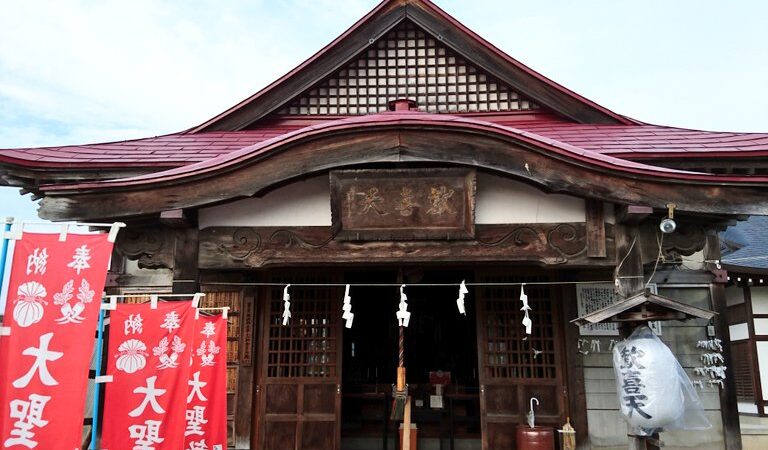
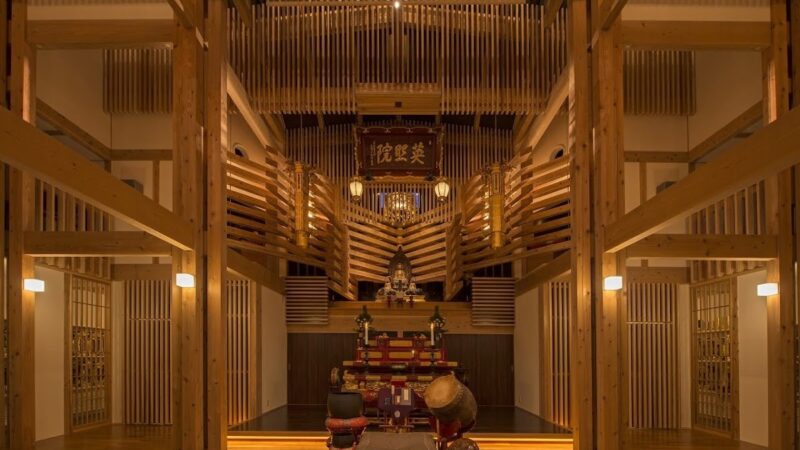
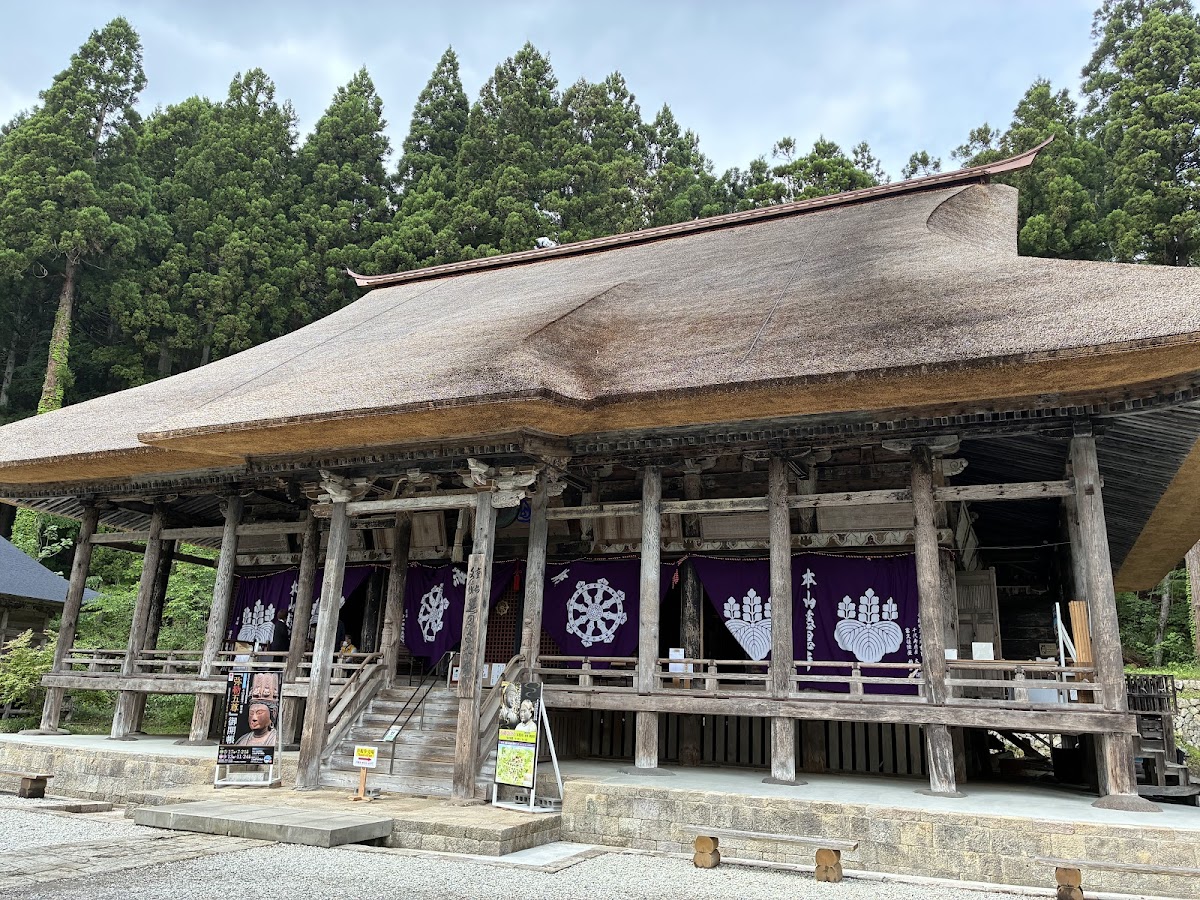
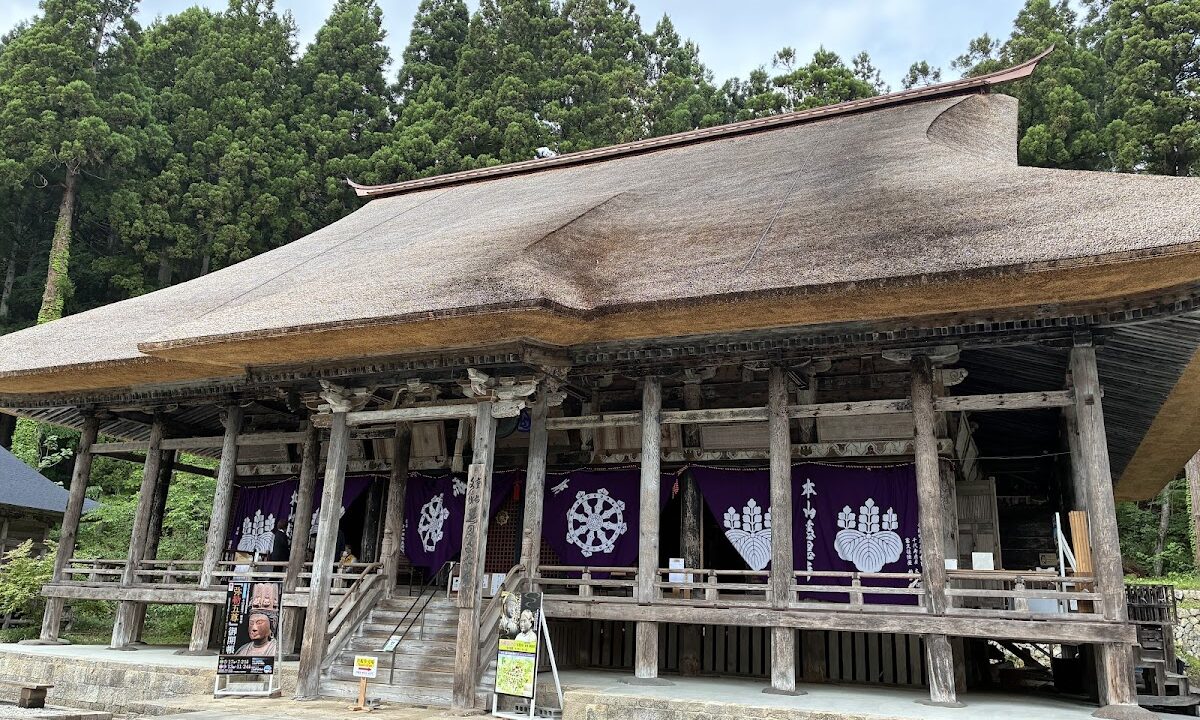
The main hall, the heart of Honzan Jionji Temple, is an Important Cultural Property that preserves the architectural style of the Momoyama period. It is a magnificent building with a hipped roof, and the facade is adorned with intricate carvings and paintings. Inside, many Buddhist statues, including the principal image, are enshrined, creating a solemn atmosphere.
The architectural techniques of the main hall clearly demonstrate the characteristics of the Momoyama period, and the design, which combines strength and splendor, is magnificent. The decorative carvings on the transoms and pillars are particularly noteworthy, allowing visitors to appreciate the high level of craftsmanship of the time.
Three-Storied Pagoda (Important Cultural Property)
The three-storied pagoda, towering within the temple grounds, is a symbolic landmark of Honzan Jionji Temple. Its beautifully balanced form harmonizes with the changing seasons, captivating visitors. Each story of the pagoda is adorned with intricate decorations, making it highly regarded as a work of architectural art.
Especially during the cherry blossom season in spring and the autumn foliage season, visitors can enjoy the breathtaking scenery created by the pagoda and nature. It’s a popular photography spot, attracting many photographers.
Yakushido Hall (Important Cultural Property)
The Yakushido Hall enshrines Yakushi Nyorai (Medicine Buddha) as its principal image. This hall, also an Important Cultural Property, retains the architectural style of the Momoyama period and, like the main hall, features intricate decorations. Yakushi Nyorai is revered as a Buddha of healing and longevity, attracting many worshippers.
Buddhist Statues (Important Cultural Property)
The greatest treasure of Honzan Jionji Temple is its collection of over 30 Buddhist statues created from the Heian to Kamakura periods. All of these are designated as Important Cultural Properties of Japan and are highly regarded as masterpieces of Japanese Buddhist art.
Yakushi Triad
The Yakushi Triad, enshrined in the Yakushi Hall, is a Heian period work characterized by its elegant form and serene expression. The central seated statue of Yakushi Nyorai is flanked by the attendant bodhisattvas Nikko and Gekko, representing the highest level of Buddhist sculpture of the time.
Twelve Divine Generals
The Twelve Divine Generals, guardians of Yakushi Nyorai, are masterpieces showcasing the powerful style of the Kamakura period. Each statue has a different expression and posture, and their dynamic forms are overwhelming to the viewer. Their armed and valiant figures perfectly express the dignity of the divine generals who protect Buddhist teachings.
Other Buddhist Statues
A wide variety of Buddhist statues, including Amida Buddha, Kannon Bodhisattva, and Jizo Bodhisattva, are enshrined in each hall. Reflecting the styles of their respective eras, you can see the evolution of Japanese Buddhist art, from the elegance of the Heian period to the realism of the Kamakura period, all in one place.
Temple Gate
Passing through the temple gate, the entrance to the grounds, you are enveloped in a solemn atmosphere, as if stepping into another world. The gate itself is a historically valuable structure, demonstrating the prestige of Jionji Temple.
Former Jionji Temple Grounds (National Historic Site)
A vast area including the current temple grounds is designated as a national historic site, known as the “Former Jionji Temple Grounds.” Remains of structures and topography that evoke the temple’s former prosperity can be found, making it a great place for a historical stroll.
Jionji Bugaku: A Traditional Performing Art Designated as an Intangible Cultural Property
Every year on May 5th, the “Issaikyo-e” (Sutra Recitation Ceremony) features a performance of “Jionji Bugaku.” This traditional dance and music, which has continued since the Heian period, is designated as an Intangible Folk Cultural Property of Yamagata Prefecture.
Performed to the sounds of Gagaku (ancient Japanese court music), the dance is a valuable cultural asset that conveys the ancient court culture to the present day. The vibrant costumes and elegant dances have the charm of transporting viewers back to the Heian period. This day is bustling with many worshippers and tourists, and is a particularly important day among the annual events of Jionji Temple.
Basic Information and Access to Honzan Jionji Temple
Location and Contact Information
Address: Jionji, Sagae City, Yamagata Prefecture
Phone Number: Please check the official website.
Opening Hours and Visiting Hours
Visiting Hours: 8:30 AM – 4:00 PM
Closed: Open year-round (Open every day)
*Hours may change due to weather or events. It is recommended to check in advance.
Admission Fee
Admission Fee: Strolling around the temple grounds is free. However, there may be a separate fee for viewing the interior of the main hall or the treasure hall. Please check on-site for details.
Access Methods
Access by Train
- From JR Uzen-Takamatsu Station: Approximately 20 minutes on foot
- From JR Sagae Station: Approximately 12 minutes by taxi or bus
Access by Car
- From Yamagata Expressway Sagae IC: Approximately 15 minutes by car
- From Yamagata Airport: Approximately 20 minutes by car
Parking
Parking is available around the temple grounds. It is free to use, but may be crowded during events and tourist seasons.
Points to Note When Visiting
- Estimated Time Required: Approximately 1 hour 30 minutes to 2 hours for a thorough visit
- Photography: Photography is permitted on the temple grounds, but there may be restrictions inside the main halls.
- Attire: Comfortable walking shoes are recommended.
- Best Season: Spring cherry blossoms, early summer greenery, and autumn foliage are recommended. The Bugaku (court dance and music) performance on May 5th is a must-see.
Tourist Spots Around Honzan Jionji Temple
Cherry Blossom Hall
Sagae City is famous as a cherry-producing area. The Cherry Blossom Hall features exhibits on cherries and sells local products, making it a perfect place to visit in conjunction with Honzan Jionji Temple. It’s bustling with tourists during the cherry-picking season (mid-June to early July).
Roadside Station Sagae Cherryland
This roadside station serves as a tourist hub in Sagae City. You can purchase fresh local produce and specialty products, and it also boasts a restaurant and rest facilities. Enjoy the flavors of Yamagata, including cherries, and it’s a great place to buy souvenirs.
Historical Spots in Sagae City
Besides Honzan Jionji Temple, Sagae City has many other historical sites. Sagae Hachimangu Shrine and the scenery along the Mogami River offer a blend of history and nature.
Gourmet Information Around Motoyama Jionji Temple
Cherry Cafe Chou Chou
This cafe, themed around cherries, is popular for its sweets made with locally sourced fruits. It’s perfect for a break after visiting Motoyama Jionji Temple, and their seasonal cherry parfait is exquisite.
Sweets & Cafe Bon Coeur
A popular local confectionery shop and cafe. Enjoy handmade cakes and sweets made with ingredients from Yamagata Prefecture. The calm atmosphere makes for a relaxing tea time.
Local Cuisine of Sagae City
Yamagata Prefecture, including Sagae City, boasts a rich variety of local cuisine, such as soba noodles and imoni (taro stew). Many restaurants in the surrounding area serve dishes made with local ingredients, allowing you to fully enjoy Yamagata’s culinary scene.
Accommodation Around Motoyama Jionji Temple
Hotels in Sagae City
Sagae City offers business hotels and hot spring inns, making it an ideal base for sightseeing around Motoyama Jionji Temple. For those who wish to stroll through the temple grounds in the early morning, staying in the city is recommended.
Hotels in Yamagata City
Yamagata City offers a variety of accommodations. A popular sightseeing plan involves using hotels around Yamagata Station as a base to explore Sagae City and the surrounding areas.
Tendo Onsen and Kaminoyama Onsen
Within a 30-40 minute drive from Honzan Jionji Temple, there are hot spring resorts such as Tendo Onsen and Kaminoyama Onsen. A travel plan combining sightseeing and hot springs is also recommended.
Honzan Jionji Temple in Every Season
Spring: Cherry Blossoms and Fresh Greenery
From late April to early May, the cherry blossoms on the temple grounds are in full bloom. The collaboration of the three-story pagoda and cherry blossoms is a spectacular sight, attracting many photography enthusiasts. During the Jionji Bugaku performance on May 5th, the fresh greenery is also beautiful, making it the most vibrant season.
Summer: The Silence of Deep Green
In summer, you can spend a peaceful time in the temple grounds enveloped in deep greenery. The trees are a deep green, creating a cool and refreshing atmosphere for your visit.
Autumn: A Famous Spot for Autumn Foliage
From late October to early November, the temple grounds are adorned with autumn leaves. Maple and ginkgo trees change color, creating a magnificent contrast between the ancient temple buildings and the foliage. In autumn, Honzan Jionji Temple is known as one of the best spots for viewing autumn leaves in Yamagata Prefecture.
Winter: The Mysterious Beauty of a Snowscape
The temple grounds, covered in snow, exude a mystical beauty. Enveloped in silence, the snow-covered Honzan Jionji Temple has a solemn atmosphere unlike any other season, offering a unique winter charm.
Points to Note When Visiting Honzan Jionji Temple
Visitor Etiquette
- Please pray quietly and be considerate of other visitors.
- Please obtain permission before taking photographs inside the temple halls.
- Please be careful not to touch the Buddha statues or buildings.
- Please take all your trash with you.
Clothing and Items to Bring
- The temple grounds are large, so we recommend wearing comfortable shoes.
- In summer, the sun is strong, so a hat or parasol is useful.
- In winter, please dress warmly.
- Bring a camera to capture the beautiful scenery of the temple grounds.
Estimated Time Required
- Strolling the temple grounds only: 30 minutes to 1 hour
- Thorough sightseeing: 1 hour 30 minutes to 2 hours
- Including sightseeing in the surrounding area: Half a day to 1 day
Summary: Honzan Jionji Temple: A Place to Experience Tohoku’s History and Culture
Honzan Jionji Temple, with its history spanning over 1200 years, is one of Tohoku’s most ancient temples, preserving valuable cultural assets and beautiful grounds. The main hall, three-story pagoda, Yakushi-do hall, and over 30 Buddhist statues, all designated as Important Cultural Properties, are treasures of Japanese Buddhist art and well worth a visit.
Its location in Sagae City, Yamagata Prefecture, is also appealing, allowing for travel plans that combine a visit with local cuisine, including cherries, and surrounding tourist attractions. Honzan Jionji Temple showcases beauty in every season—cherry blossoms in spring, lush greenery in summer, vibrant autumn leaves, and snowy winter landscapes—offering new discoveries with each visit.
For those who want to deeply experience the history and culture of the Tohoku region, those interested in Japanese Buddhist art, or those seeking tranquility in a peaceful ancient temple, Honzan Jionji Temple is an ideal destination. When visiting Yamagata Prefecture, be sure to stop by Honzan Jionji Temple.