Kenshoji Temple (Ogaki City, Gifu Prefecture) Complete Guide | History, Access, and Perpetual Memorial Service Information
Kenshoji Temple, located in Hayashi-cho, Ogaki City, Gifu Prefecture, is a historic temple belonging to the Shinshu Otani sect. It boasts excellent access from Ogaki Station and is a beloved center of faith for local residents. This article comprehensively introduces information useful for those considering a visit, from basic information and history to access methods, perpetual memorial services, and cemetery information.
Basic Information on Kenshoji Temple
Kenshoji Temple is a Shinshu Otani sect temple located at 4-34 Hayashi-cho, Ogaki City, Gifu Prefecture. While there are 246 temples in Ogaki City and 2,302 temples throughout Gifu Prefecture, Kenshoji Temple plays a vital role as a community-based place of worship.
Basic Data
- Official Name: Kenshoji Temple
- Reading: Kenshoji
- Sect: Shinshu Otani School (Jodo Shinshu)
- Address: 4-34 Hayashi-cho, Ogaki City, Gifu Prefecture
- Phone Number: 0584-81-1209
- Chief Priest: Kenshu Hayashi
The Shinshu Otani School is a branch of Jodo Shinshu Buddhism, founded by Shinran Shonin, with its head temple being Higashi Honganji Temple in Kyoto. It teaches that salvation is attained by believing in the original vow of Amida Buddha and chanting the Nembutsu.
How to Access Kenshoji Temple
Kenshoji Temple is located in the center of Ogaki City and is accessible by multiple means of transportation.
Access by Train
The nearest station to Kenshoji Temple is Ogaki Station. Ogaki Station is served by the following lines, making access very convenient.
- JR Tokaido Main Line (Gifu to Mino-Akasaka/Maibara direction)
- Tarumi Railway Tarumi Line
- Kintetsu Yoro Line
Kenshoji Temple is within walking distance from Ogaki Station, and the route from the station is relatively easy to follow. The area around the station is the commercial and administrative center of Ogaki City, and surrounding facilities are also abundant.
Access by Car
If you are visiting by car, Ogaki City is easily accessible from the Tokai-Kanjo Expressway and Meishin Expressway. You can confirm the exact location by entering the address (4-34 Hayashi-cho, Ogaki City, Gifu Prefecture) or phone number (0584-81-1209) into your car navigation system.
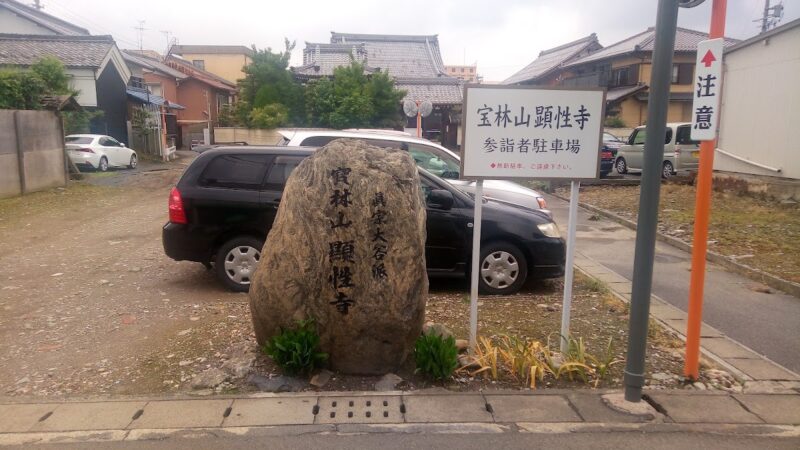
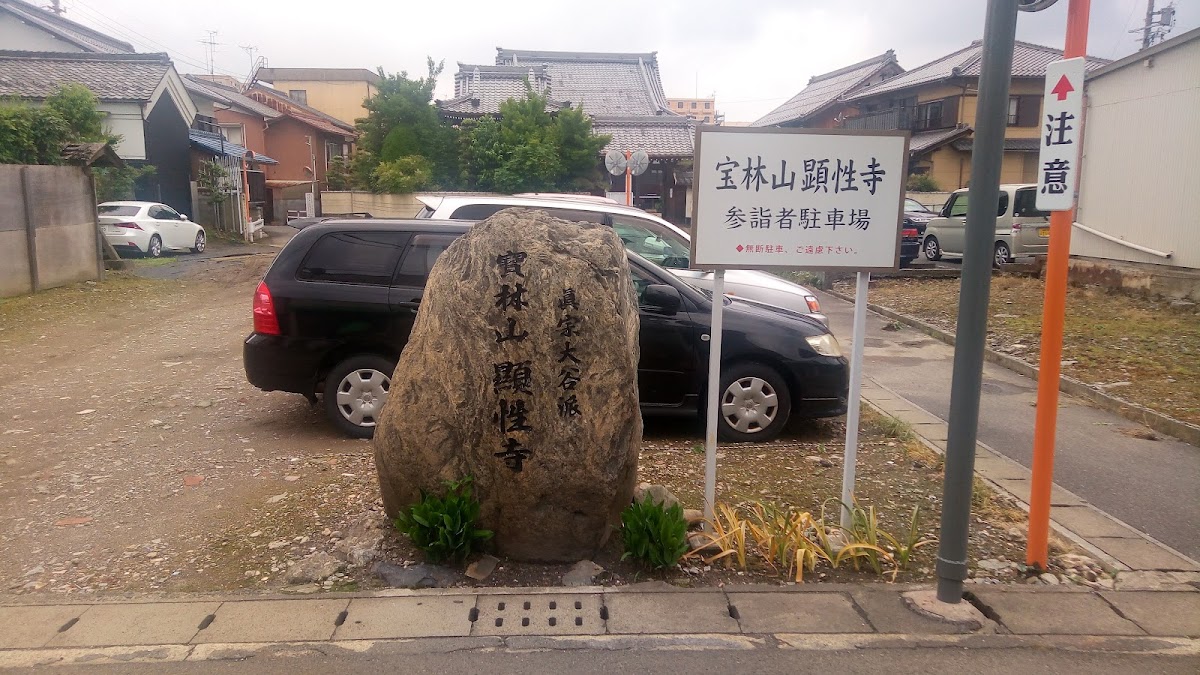
We recommend contacting the temple directly in advance regarding the availability and number of parking spaces. Especially during memorial services and events, congestion is expected, so you may want to consider using public transportation.
Landmarks in the Surrounding Area
Hayashi-cho in Ogaki City is located in the urban area around Ogaki Station, surrounded by shops and residences. Ogaki Castle and Ogaki Park, some of Ogaki City’s most famous tourist spots, are also nearby, making it possible to enjoy sightseeing in conjunction with your visit to the temple.
About the Shinshu Otani School
Understanding the Shinshu Otani School, to which Kenshoji Temple belongs, will clarify the proper way to worship and the appropriate mindset when visiting the temple.
Teachings of the Shinshu Otani School
The Shinshu Otani School is a branch of Jodo Shinshu Buddhism, founded by Shinran Shonin (1173-1263), a monk from the Kamakura period. It is based on the teaching of “other-power vow,” which states that all people are equally saved by the power of Amida Buddha’s original vow.
Chanting the Nembutsu is considered an expression of gratitude to Amida Buddha, and not a means of ascetic practice or accumulating merit. This idea, also known as the “theory of salvation for the wicked,” contains a revolutionary concept that states that ordinary people burdened with worldly desires are precisely the recipients of Amida Buddha’s salvation.
Etiquette for Visiting a Temple
The basic etiquette for visiting a Shinshu Otani sect temple is as follows:
- Joining Hands and Bowing: Before entering the main hall, bow once and join your hands in prayer towards the principal image, Amida Buddha.
- Nembutsu: Recite “Namu Amida Butsu” sincerely.
- Incense Offering: During memorial services, pinch the incense once and place it in the incense burner (once is the standard in the Shinshu Otani sect).
- Offering Money: Offer a donation as a token of support for the maintenance and management of the temple.
In the Shinshu Otani sect, clapping is not practiced. Furthermore, amulets and talismans are generally not given out. This is based on the teaching of believing solely in the power of Amida Buddha’s original vow.
History and Origins of Kenshoji Temple
While detailed information regarding the founding date and founder of Kenshoji Temple requires on-site verification or direct inquiry to the temple, understanding the historical background of Shinshu Otani-ha temples in Ogaki City reveals its importance.
Relationship between Ogaki City and Shinshu Buddhism
Ogaki City has flourished since ancient times as a post town on the Tokaido road and developed as a commercial city. During the Sengoku period, a castle town centered around Ogaki Castle was formed, and during the Edo period, it was the seat of the Ogaki Domain.
Shinshu Buddhism was a sect widely accepted by merchants, artisans, and farmers from the medieval to early modern periods. In Ogaki City, due to its active commercial activity, many Shinshu temples were built. Kenshoji Temple is thought to have functioned as a temple supporting the faith of local residents within this historical context.
History of Hayashi-cho
Hayashi-cho, where Kenshoji Temple is located, is an area in the central part of Ogaki City. The place name “Hayashi” may originate from the fact that forests once spread throughout this area. Even in today’s increasingly urbanized area, temples and shrines are scattered throughout, preserving a historical atmosphere.
About Perpetual Memorial Services and Cemeteries
In recent years, due to the declining birthrate, aging population, and the rise of nuclear families, interest in perpetual memorial services has increased. Kenshoji Temple may also accept consultations regarding perpetual memorial services and cemeteries.
What is a Perpetual Memorial Service?
A perpetual memorial service is a burial method in which the temple performs memorial services and management on behalf of the bereaved family for perpetual periods. It is chosen by those who have no successors to maintain their graves or who do not want to burden their descendants with grave maintenance.
Types of Perpetual Memorial Services
There are mainly the following types of perpetual memorial services:
- Individual Grave: The remains are individually placed for a certain period (usually until the 13th or 33rd anniversary of death), after which they are interred together.
- Communal Grave: The remains are buried together with the remains of others from the beginning. One advantage is that it can reduce costs.
- Tree Burial: A nature-oriented burial method where a tree is used as a grave marker instead of a tombstone.
- Columbarium: A method of placing cremated remains in an indoor facility.
Regarding Costs
The cost of perpetual memorial services varies greatly depending on the burial method and the period of interment. The general market rates are as follows:
- Communal Grave: Approximately 100,000 to 300,000 yen
- Individual Grave: Approximately 300,000 to 1,000,000 yen (varies depending on the period of interment)
- Tree Burial: Approximately 200,000 to 800,000 yen
- Columbarium: Approximately 300,000 to 1,500,000 yen
For specific costs and services offered at Kenshoji Temple, we recommend contacting the temple directly.
Consultation and Visit Regarding Cemeteries
When considering perpetual memorial services and cemeteries, it is advisable to check the following points:
- Duration and content of perpetual memorial services
- Whether or not there are annual maintenance fees
- Restrictions on religious sects (e.g., whether sects other than Shinshu Otani-ha are accepted)
- Method and frequency of memorial services
- Whether changes or cancellations are possible after contract signing
- Whether or not reburial after grave closure is accepted
If you wish to visit, we recommend making a reservation in advance by phone (0584-81-1209). Visiting the site in person allows you to check the atmosphere and environment of the temple, leading to a more satisfying choice.
Temple Culture of Ogaki City
Ogaki City in Gifu Prefecture boasts 246 temples, and a rich Buddhist culture is deeply rooted there. When visiting Kenshoji Temple, visiting the surrounding temples as well will allow you to gain a deeper understanding of Ogaki City’s history and culture.
Major Temples in Ogaki City
In addition to the Shinshu Otani sect, Ogaki City has temples of various other sects:
- Shinshu Otani sect temples: Many temples, including Kenshoji, Funamachi temples, and Junnenji.
- Temples of other sects: Temples of diverse sects, such as Soto Zen, Rinzai Zen, and Jodo, coexist.
Tips for Temple Visiting
When visiting temples in Ogaki City, you can enjoy the following:
- Comparing Architectural Styles: By observing the architectural styles of the main halls and gates of each temple, you can discover differences based on era and sect.
- Viewing Buddhist Statues: The Buddhist statues enshrined in each temple have their own unique characteristics, and many possess high artistic value.
- Appreciating Gardens: Temple gardens embody traditional Japanese aesthetics, allowing you to enjoy the scenery of each season.
- Collecting Goshuin (temple stamps): Some temples offer Goshuin (temple stamps) (however, the Shinshu Otani sect generally does not offer them).
Tourist Spots Around Kenshoji Temple
You can enjoy sightseeing in Ogaki City in conjunction with your visit to Kenshoji Temple.
Ogaki Castle
Ogaki Castle, located within walking distance of Ogaki Station, is a historically important castle that served as the base of Ishida Mitsunari’s forces during the Battle of Sekigahara. The current keep was rebuilt in 1959, but the castle houses exhibits related to the Battle of Sekigahara, making it a must-see spot for history buffs.
Ogaki City Local History Museum
This facility allows you to learn about the history and culture of Ogaki City. It features diverse exhibits, including the history of the Ogaki Domain and the connection between the haiku poet Matsuo Basho and Ogaki.
Oku no Hosomichi Musubi no Chi Memorial Hall
Ogaki City is known as the “Musubi no Chi” (land of connection) as the place where Matsuo Basho’s journey along the “Oku no Hosomichi” (Narrow Road to the Deep North) ended. At the memorial hall, you can learn about Basho’s footsteps and haiku culture.
Suimon River and the Four Seasons Path
Ogaki City is known as the “City of Water,” and many waterways flow through the city. The “Four Seasons Path,” a promenade along the Suimon River, is famous as a cherry blossom viewing spot and is bustling with many flower viewers in spring.
Ogaki City’s Local Products
When you visit Ogaki City, please enjoy the following local products:
- Mizu Manju: A summer tradition made with Ogaki’s famous water
- Kaki Yokan: A Japanese confection made with Fuyu persimmons, a specialty of Gifu Prefecture
- Ogaki Senbei: A traditional rice cracker that has been loved by locals for many years
Buddhist Services and Events at Kenshoji Temple
At temples of the Shinshu Otani sect, various Buddhist services and events are held throughout the year. While you will need to contact Kenshoji Temple directly for specific annual events, here is a general overview of major events in the Shinshu Otani sect.
Main Annual Events
- Shushōe: January 1st, a memorial service to welcome the New Year
- Nehane: February 15th, a memorial service to commemorate the passing of Buddha
- Spring Equinox: One week centered around the spring equinox in March
- Hanamatsuri (Buddha’s Birthday): April 8th, a memorial service to celebrate the birth of Buddha
- Founder’s Birthday: May 21st, a memorial service to celebrate the birth of Shinran Shonin
- Obon (Buddhist Festival): August 13th-16th, a memorial service for ancestors
- Autumn Equinox: One week centered around the autumn equinox in September
- Hōonkō: November, a memorial service for Shinran Shonin’s death anniversary (the most important event in Shin Buddhism)
- New Year’s Eve Service: December 31st, year-end memorial service
Participation in Memorial Services
Even if you are not a temple member, you may be able to participate in memorial services. The Hoonko service, in particular, is the most important event at Shinshu temples and attracts many visitors. Please contact the temple in advance regarding the date of the service and how to participate.
How to Contact Kenshoji Temple
For detailed information about Kenshoji Temple, and for inquiries regarding perpetual memorial services, memorial services, and other matters, please contact us using the methods below.
Telephone Inquiries
- Phone Number: 0584-81-1209
- Inquiry Hours: Generally, 9:00 AM to 5:00 PM is appropriate, but please consider the time of day as staff may be unavailable or during memorial services.
- Examples of Inquiry Topics:
- Consultations regarding perpetual memorial services and cemeteries
- Confirmation of memorial service dates
- Inquiries about visiting hours and parking availability
- Questions about the temple’s history and origins
- Reservations for temple visits
Points to Note When Visiting
When visiting the temple, please note the following:
- Attire: Especially when attending a memorial service, please dress appropriately and respectfully.
- Manners: Please be quiet on the temple grounds and be considerate of other visitors.
- Photography: If you wish to take photographs, it is recommended that you obtain permission in advance.
- Time: Avoid visiting early in the morning or late at night; please visit during appropriate daytime hours.
Transportation and Living Environment in Ogaki City
Ogaki City, where Kenshoji Temple is located, is a city with a population of approximately 160,000, situated in the western part of Gifu Prefecture. It boasts convenient transportation and is easily accessible from Nagoya City.
Transportation Network in Ogaki City
- Railways: Served by the JR Tokaido Main Line, Tarumi Railway, and Kintetsu Yoro Line
- Expressways: Good access to the Meishin Expressway and Tokai Loop Expressway
- General Roads: Major roads such as National Route 21 and National Route 258 pass through the city.
Characteristics of Ogaki City
Ogaki City is known as the “City of Water” and is blessed with abundant groundwater. This high-quality water is utilized in the Japanese confectionery industry, including the production of water-filled dumplings, and in manufacturing industries. It is also known as the final destination of Matsuo Basho’s “Oku no Hosomichi” (The Narrow Road to the Deep North), making it a city rich in cultural appeal.
Summary
Located in Hayashi-cho, Ogaki City, Gifu Prefecture, Kenshoji Temple, a Shinshu Otani sect temple, plays a vital role in supporting local faith. It is easily accessible from Ogaki Station, and consultations regarding perpetual memorial services and cemeteries are available.
When visiting Kenshoji Temple, understanding the teachings and etiquette of the Shinshu Otani sect will make your visit more meaningful. Furthermore, Ogaki City boasts numerous attractive tourist spots, such as Ogaki Castle and the Oku no Hosomichi Musubi no Chi Memorial Museum, so combining your temple visit with sightseeing is highly recommended.
For specific information regarding perpetual memorial services, cemeteries, and memorial services, please contact Kenshoji Temple directly (Tel: 0584-81-1209). They will provide courteous service and address your questions and concerns.
When visiting Ogaki City, Gifu Prefecture, we highly recommend visiting Kenshoji Temple and spending some peaceful time in its tranquil grounds.