Shin-Zenkoji Temple (Gifu Prefecture, Ogaki City) Complete Guide | History, Main Image, and Access Information
Shin-Zenkoji Temple, located in Midorigaoka, Ogaki City, Gifu Prefecture, is a Tendai sect temple founded during the Meiji era. As the 17th temple of the 33 sacred sites of Western Mino, it attracts many pilgrims and houses a precious main image received from Zenkoji Temple in Shinshu. This article provides a detailed introduction to Shin-Zenkoji Temple, including its history, main image, visiting information, and access methods.
Basic Information on Shin-Zenkoji Temple
Shin-Zenkoji Temple is a Tendai sect temple located at 31 Midorigaoka, Ogaki City, Gifu Prefecture. Its official name is “Saigakuzan Shin-Zenkoji,” and it is known as the 17th temple of the 33 sacred sites of Western Mino.
Basic Data
- Location: 31 Midorigaoka, Ogaki City, Gifu Prefecture 503-0806
- Sect: Tendai Buddhism
- Mountain Name: Saigakuzan
- Temple Name: Shin-Zenkoji
- Pilgrimage Site: 17th temple of the Thirty-Three Sacred Sites of Nishimino
- Principal Image: Ikko Sanzon Amida Nyorai (believed to be the work of Eshin Sozu)
- Corporate Number: 4200005004534
There are 17 temples named Shin-Zenkoji throughout Japan, but the Shin-Zenkoji in Ogaki City, Gifu Prefecture, is a special temple with deep ties to Shinshu Zenkoji.
History of Shin-Zenkoji
Founding and Establishment in the Meiji Era
The history of Shin-Zenkoji dates back to the Meiji era. The temple was founded in 1878 (Meiji 11) and officially opened on November 9, 1881 (Meiji 14) by Shinoyama Yoshimoto. Initially, it was built in Kuruwa-machi, Ogaki City.
The following year, on May 15, 1882 (Meiji 15), the title “Seiganzan Shin-Zenkoji” was officially recognized. This year was extremely important for Shin-Zenkoji.
Deep Connection with Shinshu Zenkoji
The most distinctive feature of Shin-Zenkoji is its deep connection with Shinshu Zenkoji in Nagano Prefecture. In 1882 (Meiji 15), Shinshu Zenkoji, in cooperation with volunteers from one city and five counties in the Seino region, completed the main hall in Kuruwa-machi, Ogaki City.
Then, on June 1st of the same year, the Ikkō Sanzon Amida Nyorai statue, attributed to Eshin Sōzu, was moved from Shinshū Zenkōji Temple to Shin-Zenkōji Temple and enshrined as the principal image. With the transfer of this principal image, Shin-Zenkōji Temple acquired the character of a branch temple of Shinshū Zenkōji Temple.
Relocation and Reconstruction in the Showa Era
Shin-Zenkōji Temple has undergone several changes since its founding. In the Showa era, the temple moved from Kuruwa-machi, Ōgaki City to its current location at 31 Midori-en. The main hall was also relocated during this move.
After the post-war period of rapid economic growth, the current Shin-Zenkōji Temple is located in a residential area of Ōgaki City, playing an important role as a center of faith for the local people and as a pilgrimage site of the 33 sacred sites of Nishi-Mino.
Shin-Zenkōji Temple in Modern Times
Currently, Shin-Zenkōji Temple, as a Tendai sect temple and the 17th pilgrimage site of the 33 sacred sites of Nishi-Mino, welcomes many visitors and pilgrims. With a history spanning over 140 years since the Meiji era, it has contributed to the preservation of regional Buddhist culture.
Principal Image and Buddhist Statues
Ikkō Sanzon Amida Nyorai Statue
The principal image of Shin-Zenkoji Temple is the Ikkō Sanzon Amida Nyorai (One-Light Three-Bodied Amida Buddha). This statue is attributed to Eshin Sōzu and is an extremely valuable statue acquired from Shinshu Zenkoji Temple.
The Ikkō Sanzon Amida Nyorai is a three-figure Buddhist statue with Amida Buddha at the center within a single halo, flanked by Kannon Bodhisattva and Seishi Bodhisattva on either side. This is a unique style known as the Zenkoji-style Amida Triad, and it shares the same form as the principal image of Shinshu Zenkoji Temple.
About Eshin Sōzu
Eshin Sōzu was a Tendai Buddhist monk during the mid-Heian period, whose real name was Genshin. He is a highly respected Buddhist monk known as the author of the *Ojo Yoshu* (Essentials of Rebirth in the Pure Land), and who greatly influenced the development of Pure Land Buddhism. Buddhist statues attributed to Eshin Sozu are found throughout Japan and are cherished as objects of worship.
Nature as a Hidden Buddha
The principal image of Shin-Zenkoji Temple is enshrined as a hidden Buddha and is not normally accessible for direct viewing. A hidden Buddha is a Buddhist statue that is only unveiled on special occasions, a traditional custom to maintain its sacredness. The principal image of Shinshu Zenkoji Temple is also known as an absolutely hidden Buddha, and the principal image of Shin-Zenkoji Temple inherits this tradition.
17th Temple of the Thirty-Three Sacred Sites of Nishi-Mino
What are the Thirty-Three Sacred Sites of Nishi-Mino?
The Thirty-Three Sacred Sites of Nishi-Mino are a pilgrimage route visiting 33 Kannon temples scattered throughout the Nishi-Mino region of Gifu Prefecture. Based on faith in Kannon Bodhisattva, the number 33 originates from the 33 forms that Kannon Bodhisattva displays to save sentient beings.
Shin-Zenkoji Temple, as the 17th temple on the pilgrimage route, is located at the midpoint of this sacred site and is visited by many pilgrims.
Role as a Pilgrimage Temple
A pilgrimage temple is a temple visited along the pilgrimage route, where pilgrims can receive sutra copying (nokyo) and temple seals (shuin). Shin-Zenkoji Temple provides temple seals and accepts worshippers of the 33 sacred sites of West Mino.
Pilgrims can pay homage to Amida Buddha at Shin-Zenkoji Temple and experience the history of Kannon worship in West Mino.
Characteristics as a Tendai Sect Temple
What is the Tendai Sect?
The Tendai sect is a Japanese Buddhist sect founded in the early Heian period by Saicho (Dengyo Daishi). Its head temple is Enryaku-ji Temple on Mount Hiei, and its fundamental scripture is the Lotus Sutra.
The teachings of the Tendai sect are based on the “One Vehicle” doctrine, which preaches the principle of equality, stating that all people can attain Buddhahood. It also possesses the characteristics of a comprehensive form of Buddhism, integrating various practices such as Nembutsu (recitation of Amida Buddha’s name), Zen, and Esoteric Buddhism.
Tendai Practice at Shin-Zenkoji Temple
Shin-Zenkoji Temple, as a Tendai sect temple, practices a faith that fuses the teachings of the Lotus Sutra with Amida worship. Because the principal image is Amida Buddha, it also has strong elements of Pure Land Buddhism, and the practice of Nembutsu is highly valued.
The Tendai sect is characterized by the “fusion of four sects” (Tendai, Shingon, Zen, and Pure Land), allowing for diverse Buddhist practices at Shin-Zenkoji Temple.
Highlights of the Temple Grounds
Main Hall
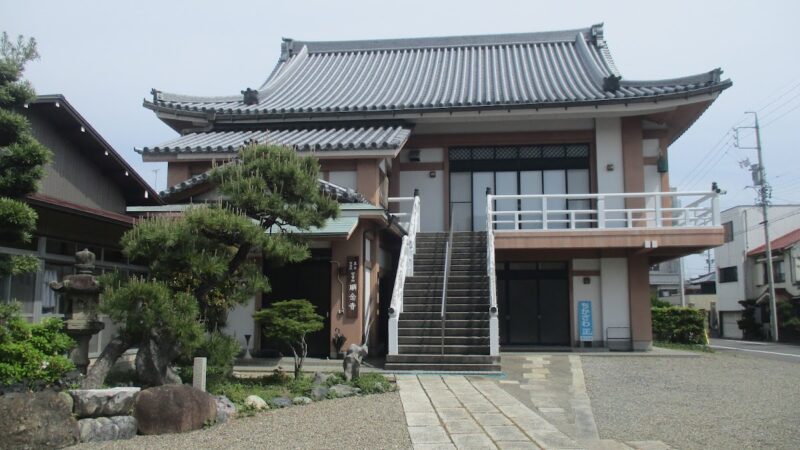
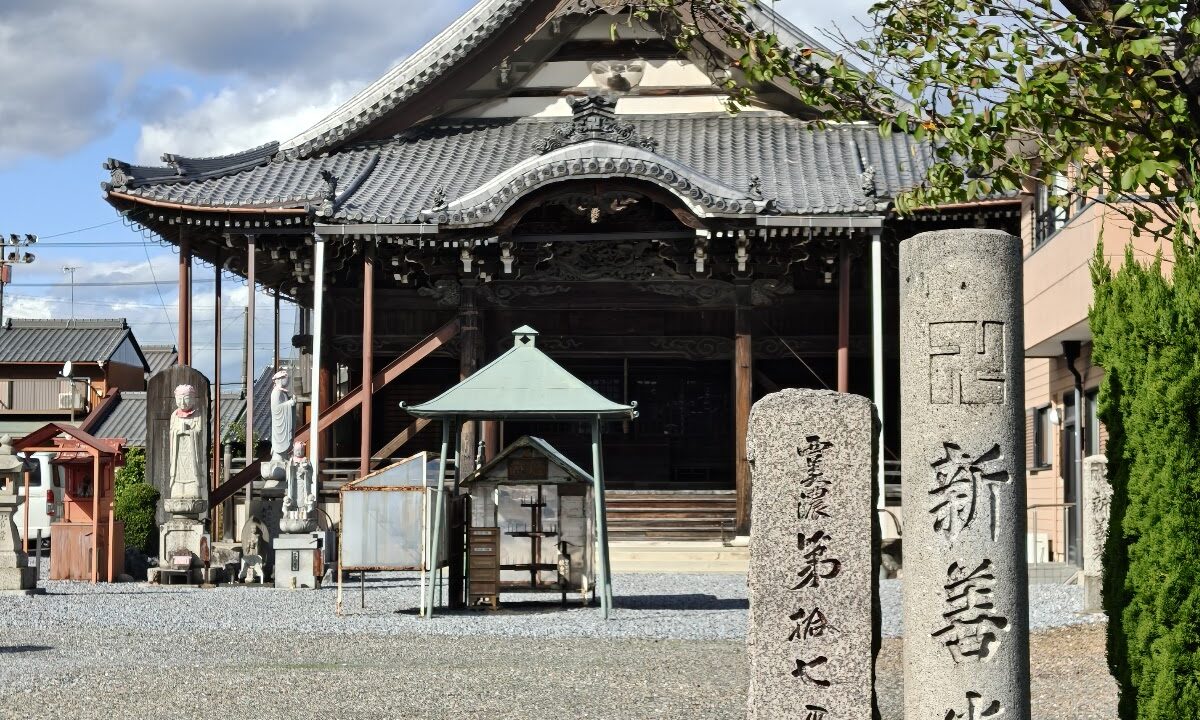
The main hall of Shin-Zenkoji Temple was relocated from Kuruwa-machi to its current location during the Showa era. The principal image, the Ichiko Sanzon Amida Nyorai (One Light Three Attendants Amida Buddha), is enshrined inside the main hall, and worshippers perform their prayers here.
The main hall’s architectural style follows that of traditional Buddhist temples, providing a tranquil atmosphere for worship.
Atmosphere of the Temple Grounds
Shin-Zenkoji Temple is located in a residential area of Midorigaoka, Ogaki City, but the temple grounds maintain a peaceful atmosphere. Despite being in an urban area, it offers a space where worshippers can offer prayers in quiet contemplation.
Visiting Information
Visiting Hours and Admission Fees
Shin-Zenkoji Temple is generally open for daytime visits. However, there may be times when visits are not possible due to temple events or ceremonies, so it is recommended to check in advance.
Regarding admission fees, regular visits are free, but special viewings and the issuance of Goshuin (temple stamps) may require a separate fee.
About Goshuin
As the 17th temple of the Nishimino Thirty-Three Sacred Sites pilgrimage, Shin-Zenkoji Temple offers Goshuin. Pilgrims and Goshuin collectors can receive a Goshuin as proof of their visit.
Goshuin (temple stamps) are valuable records that show the history of the temple and its principal deity, and are cherished as mementos of visits.
Annual Events
Shin-Zenkoji Temple holds various Buddhist events throughout the year. Particularly important are the ceremonies related to Amida Buddha and those related to the Thirty-Three Sacred Sites of Western Mino.
For specific event schedules, it is recommended to inquire with the temple in advance.
Access
Location
31 Midorien, Ogaki City, Gifu Prefecture 503-0806
Access by Train
The nearest station is Ogaki Station on the JR Tokaido Main Line and Tarumi Railway. Shin-Zenkoji Temple can be accessed from Ogaki Station using the following methods.
Access from Ogaki Station
- Walking: Approximately 20-25 minutes
- Taxi: Approximately 5-10 minutes
- Local Bus: Local buses operating within Ogaki City are available (a few minutes’ walk from the nearest bus stop)
Ogaki Station is easily accessible, located approximately 30 minutes from Nagoya Station and 15 minutes from Gifu Station on the Tokaido Main Line.
Access by Car
Using Expressways
- Meishin Expressway: Approximately 10 minutes from Ogaki Interchange
- Tokai Loop Expressway: Approximately 15 minutes from Ogaki-Nishi Interchange
It is recommended to check with the temple in advance regarding parking.
Nearby Tourist Attractions
Ogaki City has many other attractions besides Shin-Zenkoji Temple.
- Ogaki Castle: Known for the “Oamu Story,” Ogaki Castle is a symbol of Ogaki City.
- The Ending Place of the Oku no Hosomichi: Known as the final destination of Matsuo Basho’s “Oku no Hosomichi” (The Narrow Road to the Deep North).
- Suimon River: Experience the atmosphere of Ogaki as a city of water.
- Other Temples of the Thirty-Three Sacred Sites of Western Mino: It is also possible to visit surrounding temples as part of the pilgrimage route.
History of Ogaki City and Shin-Zenkoji Temple
Overview of Ogaki City
Ogaki City is the central city of the Seino region of Gifu Prefecture and has flourished as a transportation hub since ancient times. Blessed with abundant groundwater, it is known as the “City of Water.”
During the Edo period, it developed as a castle town of the Ogaki Domain, and even today it plays an important role as the economic and cultural center of the Seino region.
Ogaki in the Meiji Era and the Founding of Shin-Zenkoji Temple
During the Meiji era, when Shin-Zenkoji Temple was founded, Ogaki City was undergoing significant changes amidst the wave of modernization. After the Meiji Restoration, the Ogaki Domain was abolished due to the abolition of the feudal system and the establishment of prefectures, and Ogaki became part of Gifu Prefecture.
During this period, the Buddhist world also underwent a major transformation, affected by the separation of Shinto and Buddhism and the anti-Buddhist movement. In this context, the founding of Shin-Zenkoji Temple by Shinoyama Gihon was an important movement aimed at the continuation and development of Buddhist faith.
Buddhist Culture in the Seino Region
The Seino region has long been a thriving area for Buddhist culture. Pilgrimage routes, including the Thirty-Three Sacred Sites of Nishimino, were established, and many temples functioned as centers of faith.
Shin-Zenkoji Temple played a part in this Buddhist culture of the Seino region and contributed to the development of the region’s religious culture since the Meiji era.
Relationship with Shinshu Zenkoji Temple
What is Zenkoji Faith?
Zenkoji faith is the worship of Amida Buddha centered around Zenkoji Temple in Nagano City, Nagano Prefecture. The principal image of Zenkoji Temple is the “Ikko Sanzon Amida Nyorai,” considered one of the oldest Buddhist statues in Japan.
As symbolized by the phrase “being led to Zenkoji Temple by an ox,” Zenkoji faith spread throughout Japan as a popular belief transcending sectarian boundaries.
Shin-Zenkoji Temples Across Japan
Along with the spread of Zenkoji faith, temples named “Shin-Zenkoji” (New Zenkoji) were built throughout Japan. These temples received copies or replicas of the principal image from Shinshu Zenkoji Temple and became centers of Zenkoji faith in their respective regions.
Shin-Zenkoji Temple in Ogaki City, Gifu Prefecture, is one such example, boasting a history of directly receiving the principal image from Shinshu Zenkoji Temple in 1882 (Meiji 15).
The Seino Region and Zenkoji Faith
The Seino region is geographically close to Shinshu (Nagano Prefecture) and has long been a region where Zenkoji faith flourished. The fact that volunteers from the one city and five counties of Seino, including Ogaki City, cooperated to construct the main hall of Shin-Zenkoji Temple demonstrates the depth of Zenkoji faith in this region.
About Shinoyama Gihon
Shinoyama Gihon as the Founder
Shinoyama Gihon, the founder of Shin-Zenkoji Temple, was a monk of the Meiji era. He founded Shin-Zenkoji Temple on November 9, 1881 (Meiji 14), and dedicated himself to spreading Zenkoji faith in the Seino region.
While historical records regarding Shinoyama Gihon’s detailed biography are limited, his successful negotiations with Shinshu Zenkoji Temple and acquisition of a valuable principal image suggest that he possessed considerable influence and connections.
Buddhist Revival in the Meiji Era
Amidst the destruction of many temples during the anti-Buddhist movement in the early Meiji period, monks like Shinoyama Gihon strived for the revival and development of Buddhism. The founding of Shin-Zenkoji Temple can be positioned as one of the important Buddhist revival movements within this historical context.
Manners and Etiquette for Visiting Temples
Basic Manners for Visiting Temples
When visiting Shin-Zenkoji Temple, please observe the following basic manners:
- Bow at the Temple Gate: Bow at the temple gate before entering the temple grounds.
- Proper Hand-Washing Procedure: Cleanse your hands and mouth at the hand-washing station.
- Worship at the Main Hall: Join your hands in prayer in front of the main hall and offer your prayers quietly.
- Refrain from Talking: Remain quiet on the temple grounds and avoid disturbing other visitors.
- Photography: Refrain from taking photographs in areas where photography is prohibited.
Manners for Visiting Tendai Buddhist Temples
The following are common manners for visiting Tendai Buddhist temples.
- Gassho (prayer with hands clasped together): Bring both hands together in front of your chest and pray with sincerity.
- Nembutsu (Buddhist chanting): You can also chant “Namu Amida Butsu.”
- Chanting of sutras: You may also chant “Namu Myoho Renge Kyo” (the title of the Lotus Sutra).
Guidelines for Pilgrims
When visiting Shin-Zenkoji Temple as a pilgrim of the 33 sacred sites of Nishi-Mino, please note the following:
- Preparation of the pilgrimage notebook: Bring your pilgrimage notebook if you wish to receive a Goshuin (temple stamp).
- White robes and straw hat: You may wear formal pilgrimage attire.
- The spirit of pilgrimage: Approach the pilgrimage not as sightseeing, but as an act of faith.
Frequently Asked Questions (FAQ)
Is there an entrance fee to Shin-Zenkoji Temple?
Regular visits are free. However, there may be separate fees for receiving Goshuin or special viewings. Please contact the temple directly for details.
Can I get a Goshuin at any time? The time for receiving Goshuin (temple stamps) varies depending on the temple’s schedule. If you want to be sure to receive a Goshuin, we recommend calling ahead to confirm. Also, Goshuin may not be available during religious services or events.
Is there parking?
We recommend checking with the temple in advance regarding the availability and number of parking spaces. There may be coin-operated parking lots nearby, but please also consider using public transportation.
Can I view the main image of Buddha?
The main image of Buddha at Shin-Zenkoji Temple is enshrined as a hidden Buddha and is not usually viewable directly. Please inquire with the temple about opportunities for special viewings.
I am interested in the pilgrimage of the 33 temples of Nishi-Mino. Where should I start?
You can start the pilgrimage of the 33 temples of Nishi-Mino from any temple. Shin-Zenkoji Temple is the 17th temple, so you can start from there. For details about the pilgrimage, please refer to the official information of the 33 temples of Nishi-Mino.
Is group pilgrimage possible?
If you wish to visit as a group, it is recommended that you contact the temple in advance to arrange a date and time. Advance reservations are preferable to avoid conflicts with memorial services or other events.
Summary
Shin-Zenkoji Temple (Ogaki City, Gifu Prefecture) is a Tendai sect temple founded in the Meiji era by Sasayama Gihon. Its principal image is a statue of Amida Buddha with three attendants, received from Shinshu Zenkoji Temple. As the 17th temple of the 33 sacred sites of West Mino, and as a center of Zenkoji faith in the Seino region, it has supported local faith for over 140 years.
Located in Midorigaoka, Ogaki City, Shin-Zenkoji Temple offers a tranquil space for worship despite being in an urban area, attracting pilgrims of West Mino, local believers, and those interested in Buddhist culture. The historical value of the principal image, said to be the work of Eshin Sozu, its tradition as a Tendai sect temple, and its deep connection with Shinshu Zenkoji Temple make Shin-Zenkoji Temple a special place.
When you visit Ogaki City, why not take the opportunity to visit Shin-Zenkoji Temple and experience the history of Zenkoji faith, which has continued since the Meiji era, as well as the Buddhist culture of the Seino region? By calming your mind in the tranquil temple grounds and offering prayers to Amida Buddha, you can find spiritual fulfillment away from the hustle and bustle of everyday life.