Tamai-gu Toshogu Shrine (Okayama Prefecture) Complete Guide | History, Goshuin (Seal), Access, and Benefits Explained in Detail
Located on the Higashiyama Hills in Naka Ward, Okayama City, Tamai-gu Toshogu Shrine is a rare shrine nationwide, formed during the Meiji era by the merger of “Tamai-gu,” a shrine with over 1300 years of history, and “Toshogu,” a shrine dedicated to Tokugawa Ieyasu. It is known as a famous shrine for prayers for safe childbirth and also as a “motorcycle shrine,” attracting many visitors. This article provides a detailed explanation of Tamai-gu Toshogu Shrine, from its history to its goshuin (seal), benefits, and access methods.
What is Tamai-gu Toshogu Shrine?
Tamai-gu Toshogu Shrine is a shrine located in Naka Ward, Okayama City, Okayama Prefecture, and its former shrine rank was Prefectural Shrine. It enshrines two shrines: “Tamai-gu,” one of the five special shrines in Bizen Province, and “Bizen Toshogu,” the first shrine to be established locally from Nikko Toshogu.
Currently, it is revered as the guardian shrine of the central part of Okayama City, and as the general guardian shrine of Okayama Castle and the castle town, receiving deep faith from the local people.
Main Deities
The following deities are enshrined at Tamai-gu Toshogu Shrine:
- Toyotama-hime no Mikoto: Daughter of the sea god, revered as the goddess of safe childbirth
- Hikohodemi no Mikoto: A god known as Yamasachihiko
- Tamayori-hime no Mikoto: The younger sister of Toyotama-hime no Mikoto
- Tokugawa Ieyasu: The first shogun of the Edo shogunate, also known as Tosho Daigongen
These deities are believed to bestow various blessings, including prayers for safe childbirth, maritime safety, traffic safety, and national protection.
The History and Origins of Tamai Shrine
From Founding to Relocation
The history of Tamai Shrine is ancient, said to have been founded in 703 AD (Taiho 3). Originally, it was located at Komyozaki, Ogushi Village, Kojima District, on the eastern tip of the Kojima Peninsula (present-day Ogushi, Minami Ward, Okayama City), commonly known as “Yonezaki.” This area was also called “Komyozaki” and was revered as the god of the sea by shipping merchants and fishermen.
Legend and Origin of Relocation
An interesting legend surrounds the relocation of Tamai Shrine. From a certain point in time, a mysterious light shone on the sea surface every night from the mountaintop of Yonezaki. When people investigated the area in front of the shrine, they discovered that a sacred offering (gohei) had flown to the mountains of Kadota, Kamimichi District. This was interpreted as a divine will, and the decision was made to relocate the shrine to its current location.
Legend and Origin of Relocation
An intriguing legend remains regarding the relocation of Tamai Shrine. ### Reverence from High Priests
When Tamai-gu Shrine was located in Yonezaki, it attracted the reverence of renowned high priests such as Kukai (Kobo Daishi) and Enchin (Chisho Daishi). The visits of these high priests further spread the miraculous powers of Tamai-gu Shrine.
Relocation to the Current Location
After relocating to its current location, it received deep reverence and protection from successive lords of Okayama Castle, including the Ukita family (the first lords of Okayama Castle), as well as samurai and farmers. In particular, it played a crucial role as the guardian shrine of Okayama Castle and maintained a high status as one of the five exceptional shrines in Bizen Province.
Enshrinement and Joint Dedication of Toshogu Shrine
Founding of Bizen Toshogu Shrine
Toshogu Shrine was established in 1643 by Ikeda Mitsumasa, the lord of Okayama Domain. This is historically significant as the first Toshogu Shrine to be established in a regional area from Nikko Toshogu Shrine.
Toshogu Shrine was founded as a guardian shrine for Okayama Castle, the castle town, and the government, and served as the principal guardian shrine for the parish area of Okayama Shrine, Imamura Shrine, and Tamai Shrine (the former 72 towns of Okayama). By enshrining Tokugawa Ieyasu, it became a place to pray for the prestige of the shogunate and the peace of the region.
Merger in the Meiji Era
In 1881 (Meiji 14), Tamai Shrine and Toshogu Shrine were merged, and the shrine’s name became “Tamai-gu Toshogu Shrine.” This merger elevated it to the rank of a prefectural shrine.
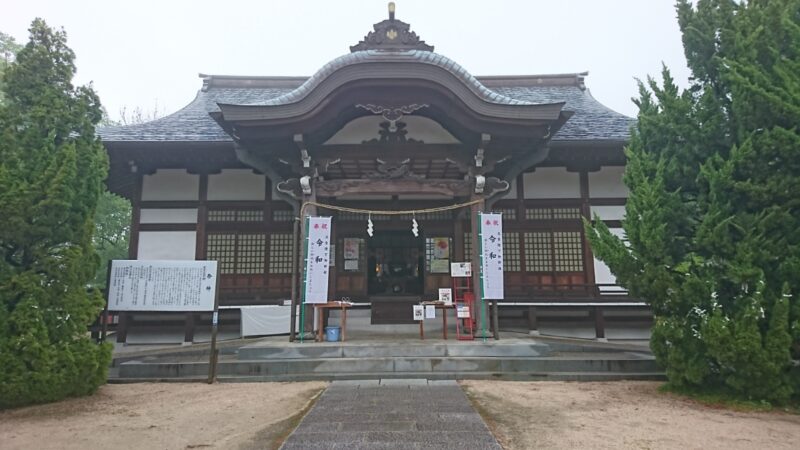
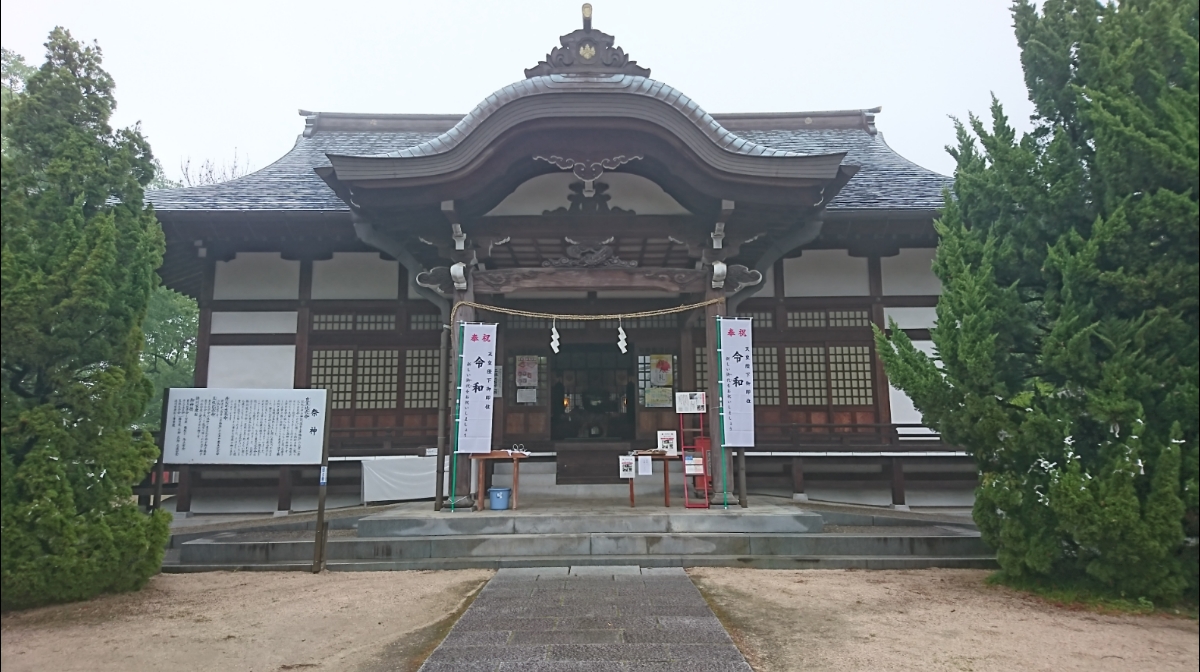
Later, in 1900 (Meiji 33), the buildings of the former Tamai Shrine were relocated, and large-scale construction was carried out, including the construction of a grand worship hall, one of the largest in western Japan. The grounds, which were renovated at that time, remain a solemn space welcoming visitors today.
Benefits of Tamai-no-miya Toshogu Shrine
A Famous Shrine for Safe Childbirth Prayers
Tamai-no-miya Toshogu Shrine is known as one of the leading shrines in Okayama Prefecture for prayers for safe childbirth. The main deity, Toyotama-hime no Mikoto, is revered as the great goddess of safe childbirth, and there is a history of prayers for safe childbirth being offered at the request of the Empress.
The custom of visiting the shrine on the Day of the Dog in the fifth month of pregnancy to pray for safe childbirth continues to this day, and many pregnant women and their families visit.
Traffic and Maritime Safety
Tamai-no-miya’s original location was a very important point for sea routes in Okayama, and it is also worshipped as the great god of maritime and traffic safety. In recent years, it has become particularly known as the “Motorcycle Shrine” and is popular among touring enthusiasts.
The shrine offers a special seal (a sticker-type amulet that can be attached to motorcycles and helmets), and a unique worship culture has been formed where motorcyclists pray for safety.
Other Benefits
- National Protection: As a Toshogu shrine, it protects Bizen Province.
- Family Safety: As the guardian deity of the region, it protects the peace of families.
- Business Prosperity: As the guardian deity of shipping and commerce.
- Exorcism: It protects against various calamities.
About Goshuin (Shrine Seals) and Go-Kinsho (Stamps)
Goshuin (Shrine Seals)
At Tamai-gu Toshogu Shrine, goshuin are given as proof of worship. The goshuin features the calligraphy of “Tamai-gu Toshogu Shrine,” the shrine’s seal, and the date of visit. The calligraphy and layout reflect the shrine’s prestige, making it a beautiful goshuin.
Goshuin are available at the shrine office, and the offering fee is usually around 300-500 yen. Goshuin notebooks are also available, including original designs.
Go-Kinsho (A Feature of the Motorcycle Shrine)
A major feature of Tamai-gu Toshogu Shrine is its “Go-Kinsho” (stamps). This is a sticker-type amulet that can be attached to motorcycles or helmets. It’s very popular among touring enthusiasts, and people from all over Japan visit the shrine by motorcycle.
The inscription prays for traffic safety, and several designs are available. It’s a popular souvenir for touring and a safe-praying amulet among many riders.
Highlights of the Shrine Grounds
Main Worship Hall
Built in 1900 (Meiji 33), the Main Worship Hall boasts one of the largest scales in Western Japan. Its majestic appearance speaks to the high status of Tamai-no-miya Toshogu Shrine. The plaza in front of the hall is also spacious and bustles with many worshippers during festivals.
Main Hall
The Main Hall retains the characteristics of Toshogu architecture, featuring intricate carvings and decorations. As a building that embodies the pinnacle of Edo period architectural technology, it is a structure of high cultural value.
Subsidiary Shrines
Several subsidiary shrines are enshrined within the grounds, each offering unique blessings. When visiting the shrine, paying your respects not only to the main hall but also to the smaller shrines within the grounds will allow you to receive a wider range of blessings.
Stone Steps and Approach
Located on the slopes of the Higashiyama hills, the shrine grounds are accessed by climbing stone steps. These steps and the approach serve as a place to escape the hustle and bustle of everyday life and purify the mind. Surrounded by greenery, the approach is a healing space where you can feel the changing seasons.
Annual Events and Festivals
Tamai-gu Toshogu Shrine holds various festivals and events throughout the year.
Main Annual Events
- Hatsumode (January 1st onwards): Many people visit for New Year’s prayers.
- Setsubun Festival (February): Events such as bean-throwing.
- Spring Grand Festival: The grand spring festival.
- Summer Purification Ceremony (June 30th): A Shinto ritual to purify oneself of the impurities accumulated over the past six months.
- Autumn Grand Festival: The grandest and most elaborate autumn festival.
- Shichi-Go-San Pilgrimage (November): Celebrating the growth of children.
- Year-End Purification Ceremony (December 31st): Purifying oneself of the impurities accumulated over the year.
Please check the official website or the shrine office for festival dates and details.
Access and Basic Information
Location
3-21 Okuichi, Naka-ku, Okayama City, Okayama Prefecture 703-8272
Access Methods
By Public Transportation
- Approximately 7 minutes on foot from Higashiyama Tram Stop on the Okayama Electric Railway
- Approximately 15 minutes by tram from JR Okayama Station, alight at Higashiyama Tram Stop
By Car
- Approximately 20 minutes from Okayama IC on the Sanyo Expressway
- Approximately 10 minutes from the center of Okayama City
- Parking: There is a parking lot for visitors on the shrine grounds (spaces are limited, so using public transportation is recommended during festivals)
By Motorcycle
Known as a “motorcycle shrine,” dedicated motorcycle parking spaces are available. You can visit with peace of mind even when touring.
Visiting Hours
- Grounds Visiting: Generally free (during reasonable hours)
- Shrine Office: Approximately 9:00 AM to 5:00 PM (may vary depending on the season)
- Prayers/Blessings: Advance telephone reservations are recommended
Admission Fee
- Grounds Visiting: Free
- Prayers/Blessings: Varies depending on the prayer (from 5,000 yen)
Contact Information
Please contact the official website or the shrine office directly. For prayers such as prayers for safe childbirth or traffic safety, contacting them in advance will ensure a smoother experience.
Recommended Nearby Spots
There are many sightseeing spots in Okayama surrounding Tamai-gu Toshogu Shrine.
Okayama Castle
Okayama Castle, located about 10 minutes by car from Tamai-gu Toshogu Shrine, is a famous castle also known as “Ujo” (Crow Castle) due to its black exterior. Built by Ukita Hideie, it has a deep historical connection to Tamai-gu Toshogu Shrine.
Korakuen Garden
Korakuen Garden, considered one of Japan’s three most beautiful gardens, is a daimyo garden adjacent to Okayama Castle. It offers beautiful scenery throughout the seasons and is a must-see spot for Okayama sightseeing.
Okayama City Center
Okayama city center boasts a wealth of shopping streets and gourmet spots. Enjoying Okayama’s local specialties, such as demi-glace pork cutlet rice bowl (demi-katsu-don) or bara-zushi (scattered sushi), after visiting the shrine is highly recommended.
Nature of the Higashiyama Area
The Higashiyama area, where Tamai-no-miya Toshogu Shrine is located, is blessed with lush greenery. Well-maintained walking paths allow you to relax and enjoy nature.
Manners and Points for Visiting a Shrine
Basic Worship Etiquette
- Bow before passing through the torii gate: Prepare your mind before entering the sacred area.
- Purify yourself at the water basin: Purify your left hand, right hand, and mouth in that order.
- Walk along the edge of the path: The center is considered the path of the gods.
- Worship at the main hall: Two bows, two claps, and one bow is the basic form.
- Visit the subsidiary shrines: If you have time, visit the subsidiary shrines as well.
Receiving Prayers
If you wish to receive prayers such as prayers for safe childbirth or traffic safety, it is best to make a reservation in advance. On the day of your visit, arrive with plenty of time to spare and complete the registration at the shrine office.
Regarding Photography
Photography is generally permitted on the shrine grounds, but please refrain from taking pictures inside the main hall or during prayers. Remember to be considerate of other worshippers.
Visiting by Motorcycle
While known as a “motorcycle shrine,” please be quiet while on the grounds. Please be considerate of other visitors and avoid disturbing them with engine noise.
Summary of Tamai-no-miya Toshogu Shrine’s Charms
Tamai-no-miya Toshogu Shrine is a rare shrine nationwide, combining the Tamai-no-miya shrine with over 1300 years of history and the first Toshogu shrine to be established outside of Nikko Toshogu Shrine.
It is a popular shrine for prayers for safe childbirth and is also known as a “motorcycle shrine,” attracting a diverse range of visitors. The grand main hall, one of the largest in western Japan, built during the Meiji era, and the grounds surrounded by abundant nature offer visitors a sense of peace and sacredness.
Despite its convenient location near the center of Okayama City, Tamai-no-miya Toshogu Shrine maintains a tranquil atmosphere. It is a fascinating shrine where history, tradition, and modern worship culture blend seamlessly.
When visiting Okayama, be sure to visit Tamai-no-miya Toshogu Shrine. Whether you’re praying for a safe delivery, traffic safety, or simply seeking peace of mind, this historic shrine will warmly welcome you.
For those collecting Goshuin (shrine stamps) and Goin-inscribed seals, Tamai-gu Toshogu Shrine is a must-see. Especially for motorcycle enthusiasts, it’s well worth a visit as a touring destination.
At Tamai-gu Toshogu Shrine, experience the history and culture of Okayama, and feel the blessings of the gods.