Ichioji Shrine (Kurashiki City, Okayama Prefecture) Complete Guide | Goshuin (Shrine Seal), Access, History, and Highlights
Ichioji Shrine, located in Hamamachi, Kurashiki City, Okayama Prefecture, is a historic shrine dedicated to Isotakeru-no-Mikoto, a son of Susanoo-no-Mikoto. Located approximately 2.7km from Kurashiki Station, the tranquil grounds reached by climbing stone steps, and the beautiful views from there, captivate visitors. This article provides detailed information you should know before visiting Ichioji Shrine, including its history, goshuin (shrine seal) information, highlights within the grounds, and access methods.
Basic Information about Ichioji Shrine
Location: 1-4-1 Hamamachi, Kurashiki City, Okayama Prefecture
Deity Enshrined: Isotakeru-no-Mikoto
Nearest Station: Approximately 2.7km from JR Sanyo Main Line Kurashiki Station
Parking: Available (around the shrine grounds)
Visiting Hours: Grounds are freely accessible (please check the shrine office’s reception hours)
Ichioji Shrine is located in the Hamamachi district of Kurashiki City and has long been revered as the local guardian deity. It is about a 30-minute walk or a 10-minute drive from Kurashiki Station, nestled in a quiet residential area distinct from the Kurashiki Bikan Historical Quarter.
History and Origins of Ichioji Shrine
About the Enshrined Deity, Isotakeru-no-Mikoto
Isotakeru-no-Mikoto, the enshrined deity of Ichioji Shrine, is considered a child deity of Susanoo-no-Mikoto in Japanese mythology. Isotakeru-no-Mikoto is known as the “God of Trees” and is revered as the god who sowed tree seeds throughout Japan, making the land lush and green.
Isotakeru-no-Mikoto is also worshipped as a god of safe voyages, industrial development, and protection against misfortune, and has been particularly revered by people involved in forestry and timber-related work. Furthermore, as a child of Susanoo-no-Mikoto, he is believed to have inherited his divine power and possess strong abilities to ward off calamities.
Founding and History of Ichioji Shrine
While there are no clear records of the founding date of Ichioji Shrine, according to local elders’ traditions, it has a long history of being worshipped as the tutelary deity of the Hamamachi area.
The name “Ichioji” (First Prince) is said to originate from the fact that Isotakeru-no-Mikoto is the firstborn child of Susanoo-no-Mikoto. While there are several Oji Shrines in the Kurashiki area, this Ichioji Shrine, in particular, has been deeply intertwined with the lives of local residents as the guardian deity of the Hamamachi district.
During the Edo period, it functioned as a center of local faith as part of Kurashiki Village, and it was positioned as an important local shrine even under the Meiji era’s shrine system.
Ichioji Shrine Grounds and Highlights
Stone Steps and Approach
The first thing you’ll notice when visiting Ichioji Shrine is the stone steps leading to the grounds. These steps have a moderate incline, and you might get a little out of breath by the time you reach the top, but this only helps you prepare yourself for worship.
As you climb the steps, step by step, you’ll feel a sense of leaving the hustle and bustle of everyday life behind and entering a sacred area. Lush greenery lines both sides of the steps, offering different scenery depending on the season.
The Charm of the Zuishinmon Gate
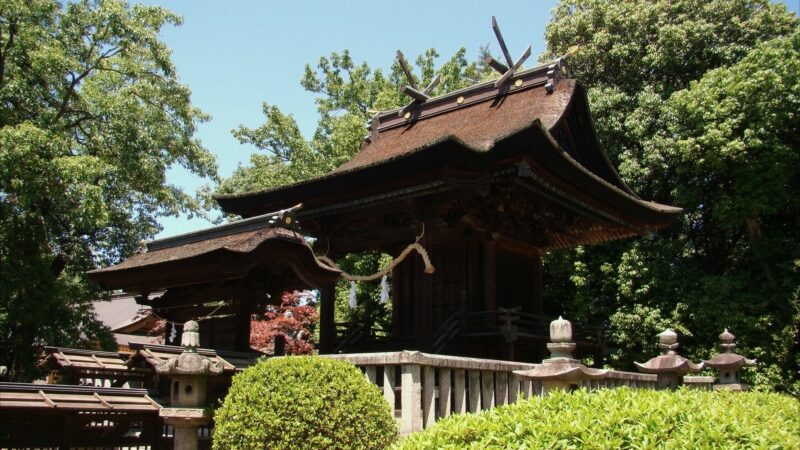
After climbing the stone steps, you’ll be greeted by the Zuishinmon Gate. The Zuishinmon Gate of Ichioji Shrine possesses a tranquil atmosphere, and its presence exudes a sense of historical weight.
The Zuishinmon Gate is an important structure marking the boundary of the shrine; passing through it signifies a transition from the secular world to the sacred realm. The gate’s construction and carvings showcase the skill of craftsmen, delighting the eyes of visitors.
Worship Hall and Main Shrine
Passing through the Zuishinmon Gate, a shrine grounds covered with tall trees unfolds. The beauty of the sunlight filtering through these trees is one of Ichioji Shrine’s greatest charms. The interplay of light and shadow, which changes with the seasons and time of day, reveals a different face each time you visit.
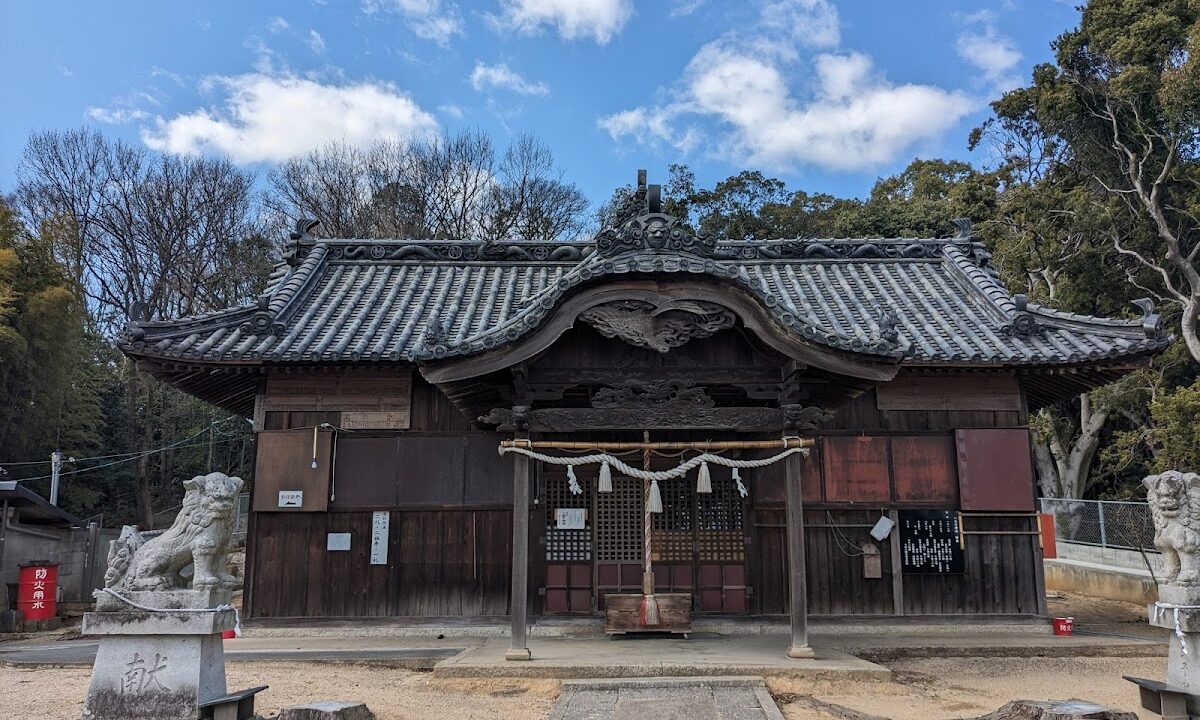
The Worship Hall, while simple, is built with dignity and is enveloped in a sacred atmosphere befitting the enshrinement of Isotakeru-no-Mikoto. The Main Shrine is located behind the Worship Hall and is carefully preserved.
When praying, please offer your prayers with sincerity using the two bows, two claps, and one bow ritual.
View from the Shrine Grounds
One of the hidden charms of Ichioji Shrine is the view from the shrine grounds, reached by climbing the stone steps. From the elevated location, you can overlook the city of Kurashiki, and on clear days, you can even see the distant mountains.
This view offers a sense of liberation that allows you to forget the worries and anxieties of everyday life, making it perfect for purifying the mind. The scenery is particularly beautiful at sunset, and many visitors stop to enjoy the view.
Trees and Nature on the Shrine Grounds
As if symbolizing that Isotakeru-no-Mikoto is the “God of Trees,” many magnificent trees flourish on the grounds of Ichioji Shrine. These trees have grown over many years and now provide abundant shade to the shrine grounds.
In spring, the fresh greenery is beautiful; in summer, they provide cool shade; in autumn, the leaves color the grounds; and in winter, they exude a serene stillness. Experiencing the changing seasons is another charm of Ichioji Shrine.
Information on Goshuin (Shrine Seals) and Goshuincho (Shrine Seal Books) at Ichioji Shrine
About Goshuin
At Ichioji Shrine, you can receive a Goshuin. A Goshuin is proof of your visit and an important symbol of your connection with the shrine.
Features of the Goshuin:
- The shrine’s name, “Ichioji Shrine,” is written in ink.
- The shrine’s seal is stamped in the center.
- It features a simple yet powerful calligraphy style.
Offering Fee: Generally around 300-500 yen (This may change, so please confirm when you visit.)
Reception Location: Shrine office (It is recommended to check in advance as staff may be absent.)
Manners When Receiving a Goshuin
When receiving a Goshuin, please observe the following manners:
- Always pray first: A Goshuin is proof of your visit. First, pray sincerely at the main hall before receiving your Goshuin.
- Prepare your Goshuincho (stamp book): It’s customary to receive Goshuin (temple/shrine stamps) in a Goshuincho. Please prepare a dedicated Goshuincho, not a notepad or scrap of paper.
- Use polite language: Request politely, saying, “May I have a Goshuin?”
- Prepare small change: Having small change ready for the offering will ensure a smooth process.
- Express gratitude: After receiving your Goshuin, express your gratitude by saying, “Thank you.”
Original Goshuincho
Please check with the shrine office during your visit to see if Ichioji Shrine offers original Goshuincho. Other shrines in Kurashiki City, such as Achi Shrine, offer beautifully designed Goshuincho.
How to Access Ichioji Shrine
Access by Train and Bus
From JR Kurashiki Station:
- Walking: Approximately 30-35 minutes (approx. 2.7 km)
- Taxi: Approximately 10 minutes
- Local Bus: Take a bus bound for Hamamachi from Kurashiki Station and walk from the nearest bus stop.
While it’s within walking distance from Kurashiki Station, it’s a bit of a distance, so we recommend allowing ample time for your visit. It’s also a good idea to extend your trip to visit the shrine after exploring the Kurashiki Bikan Historical Quarter.
Access by Car
From Sanyo Expressway:
- Kurashiki IC: Approximately 15 minutes
- Hayashima IC: Approximately 20 minutes
Parking:
There are parking spaces around the shrine grounds, but the number is limited, so please consider using nearby coin-operated parking lots during busy times.
Car Navigation Settings:
Search for “1-4-1 Hamamachi, Kurashiki City, Okayama Prefecture” or “Ichioji Shrine”.
Access from Major Nearby Spots
From Kurashiki Bikan Historical Quarter:
Approximately 10 minutes by car, approximately 25 minutes on foot
From Achi Shrine:
Approximately 10 minutes by car, approximately 20-25 minutes on foot
When sightseeing in Kurashiki, we recommend visiting Achi Shrine in the Bikan Historical Quarter as well.
Annual Events and Festivals of Ichioji Shrine
Ichioji Shrine holds various Shinto rituals and festivals throughout the year. As the local guardian shrine, the events are closely tied to the lives of the residents.
Main Annual Events
Saitansai (January 1st):
A festival to celebrate the New Year and pray for peace throughout the year.
Spring Grand Festival:
A grand festival held in spring to honor the divine virtues of Isotakeru-no-Mikoto and pray for the prosperity of the region.
Summer Purification Ceremony (around June 30th):
This is a Shinto ritual to purify oneself of the impurities accumulated over the past six months and pray for good health and protection from illness for the remaining half of the year.
Autumn Grand Festival:
This is a festival to give thanks for the autumn harvest and celebrate a bountiful harvest.
Year-End Purification Ceremony (December 31st):
This is a Shinto ritual to purify oneself of the impurities accumulated over the past year and welcome the new year with a refreshed spirit.
For detailed dates and times, it is recommended to check with the shrine before visiting.
Attractions and Tourist Spots Around Ichioji Shrine
Kurashiki Bikan Historical Quarter
Located about 10 minutes by car from Ichioji Shrine, the Kurashiki Bikan Historical Quarter is a highlight of Kurashiki sightseeing, boasting beautiful white-walled streets. You can stroll through the streets that retain the atmosphere of the Edo period and visit cultural facilities such as the Ohara Museum of Art and the Kurashiki Folk Art Museum.
Achi Shrine
Achi Shrine, known as the guardian deity of the Kurashiki Bikan Historical Quarter, is an ancient shrine located in Honmachi, Kurashiki City. Situated on a small hill in the Bikan Historical Quarter, the shrine grounds offer panoramic views of Kurashiki. It is also known for its beautiful wisteria blossoms.
Around Kurashiki Station
The area around Kurashiki Station boasts numerous shopping facilities and restaurants, making it convenient to stop by before or after visiting the shrine. Enjoying Kurashiki’s local cuisine is highly recommended.
Kojima District and Oji-ga-take
In the Kojima district of Kurashiki City lies Oji-ga-take, offering stunning views of the Seto Inland Sea. The name “Oji” (meaning “prince”) is shared with Ichioji Shrine, and the area is steeped in ancient legends. Recommended for those who enjoy hiking and breathtaking scenery.
Benefits of Visiting Ichioji Shrine
Divine Virtues of Isotakeru-no-Mikoto
Isotakeru-no-Mikoto, the enshrined deity of Ichioji Shrine, is believed to bestow the following benefits:
Industrial Development and Business Prosperity:
As the god of trees, he presides over the development of industry and is considered the guardian deity of those involved in forestry, construction, and timber-related industries.
Safe Navigation and Traffic Safety:
Isotakeru-no-Mikoto is also worshipped as the god of navigation when he crossed from the Korean Peninsula to Japan with his father, Susanoo-no-Mikoto, and is believed to grant blessings for safe navigation and traffic safety.
Protection from Misfortune and Disaster:
As the son of Susanoo-no-Mikoto, he is believed to possess the power to ward off misfortune and disaster through his strong divine power.
Nature Conservation and Environmental Protection:
As the god who planted trees throughout Japan, he also grants blessings related to harmony with nature and environmental conservation.
Etiquette for Visiting the Shrine
When visiting Ichioji Shrine, please observe the following etiquette:
- Bow before the Torii Gate: Before entering the shrine grounds, bow before the torii gate.
- Purify yourself at the Water Basin: If there is a water basin, purify your left hand, then your right hand, then your mouth.
- Walk along the edge of the path: The center of the path is considered the path of the gods, so walk along the edge.
- Worship at the Main Hall: Worship using the two bows, two claps, and one bow ritual.
- Bow when leaving: When leaving the shrine grounds, turn around and bow after passing through the torii gate.
Best Time of Year to Visit Ichioji Shrine
Seasonal Attractions
Spring (March-May):
The fresh greenery is beautiful, and the trees on the shrine grounds look vibrant. The pleasant weather makes it ideal for visiting.
Summer (June-August):
The trees on the temple grounds provide ample shade, creating a cool and refreshing atmosphere. The temple has a special ambiance during the Summer Purification Ceremony.
Autumn (September-November):
The autumn foliage is beautiful, painting the temple grounds in autumn colors. The temple becomes lively during the Autumn Grand Festival.
Winter (December-February):
You can pray in peace and tranquility. The temple is bustling with many visitors during the New Year period.
Recommended Times to Visit
Early Morning:
There are fewer people, allowing for a peaceful visit. Visiting in the refreshing morning air is exceptional.
Late Morning:
On sunny days, the sunlight filtering through the trees on the temple grounds is beautiful, making it ideal for photography.
Evening:
The view from the temple grounds is beautiful, allowing you to enjoy the Kurashiki townscape illuminated by the setting sun.
Points to Note and Manners When Visiting Ichioji Shrine
Regarding Attire
There are no specific dress code requirements for visiting the shrine, but please dress in a clean and understated manner, keeping in mind that you are going to meet the gods. Comfortable shoes are recommended as you will be climbing stone steps.
Regarding Photography
Photography is generally permitted on the shrine grounds, but please note the following:
- Refrain from photographing sacred areas such as the main hall.
- Be considerate and avoid including other worshippers in your photos.
- Refrain from using flash.
- Refrain from taking photos during religious ceremonies.
Other Points to Note
- Please be quiet on the shrine grounds and refrain from loud conversations.
- Please take all your trash with you.
- Do not touch or damage the plants or buildings on the shrine grounds.
- Check in advance whether pets are allowed.
Comparison with Other Shrines in Kurashiki City
Differences from Achi Shrine
Achi Shrine, located in the Kurashiki Bikan Historical Quarter, is one of the most famous shrines in Kurashiki City. Located in the heart of a tourist area, it is bustling with many worshippers. On the other hand, Ichioji Shrine is situated in a residential area, offering a quieter and more peaceful atmosphere for worship.
Another difference is that Achi Shrine enshrines Emperor Ojin and the Munakata Three Goddesses, while Ichioji Shrine enshrines Isotakeru-no-Mikoto. Visiting both shrines will allow you to gain a deeper understanding of Kurashiki’s shrine culture.
Differences from Yuga Shrine Honmiya
Yuga Shrine Honmiya, located in Kojima, Kurashiki City, is a grand shrine known nationwide as the head shrine for warding off evil. While Yuga Shrine Honmiya surpasses it in scale and number of worshippers, Ichioji Shrine has a warmer, more community-oriented atmosphere.
Reviews and Reputation of Ichioji Shrine
Visitor Feedback
Visitors to Ichioji Shrine have shared the following comments:
“The view from the top of the stone steps was magnificent; it felt like my soul was being cleansed.”
“I was soothed by the tranquil atmosphere of the Zuishinmon gate and the beauty of the sunlight filtering through the trees in the shrine grounds.”
“Although it’s a bit of a distance from Kurashiki Station, it’s a quiet and peaceful shrine where you can worship with a calm heart.”
“Shrines dedicated to Isotakeru-no-Mikoto are rare, and it was a place where I could feel the power of the tree god.”
Ratings on Hotokami and Omairi
You can check information and the latest visitor records for Ichioji Shrine on the shrine visit record apps “Hotokami” and “Omairi.” Referring to photos and impressions from other visitors can help you visualize your visit.
Creating an account allows you to record your own visits and share information with other visitors.
Enjoy Kurashiki sightseeing in conjunction with a visit to Ichioji Shrine
Model Course (Half-Day Plan)
Morning:
- 9:00 Arrive at Kurashiki Station
- 9:30 Visit Ichioji Shrine (Enjoy the view from the stone steps)
- 10:30 Move to Kurashiki Bikan Historical Quarter
- 11:00 Visit Achi Shrine
- 11:30 Stroll through the Bikan Historical Quarter
Afternoon:
- 12:30 Lunch in the Bikan Historical Quarter
- 14:00 Visit the Ohara Museum of Art
- 16:00 Purchase souvenirs around Kurashiki Station
- 17:00 Depart from Kurashiki Station
Model Course (Full-Day Plan)
In addition to the above half-day plan:
- Visit the Kurashiki Folk Art Museum
- Stroll through the townscape along the Kurashiki River
- Relax at a cafe
- Visit Ichioji Shrine again at dusk to enjoy the evening view
Summary: The Charm and Significance of Visiting Ichioji Shrine
Ichioji Shrine is a historic shrine located in Hamamachi, Kurashiki City, dedicated to Isotakeru-no-Mikoto. In stark contrast to the bustling Kurashiki Bikan Historical Quarter, its greatest charm lies in its quiet and peaceful atmosphere, allowing for a serene and peaceful visit.
The grounds, reached by climbing stone steps, the dignified appearance of the Zuishinmon gate, the sunlight filtering through the tall trees, and the views from the grounds—all these elements contribute to a calming and peaceful experience for visitors.
As it enshrines Isotakeru-no-Mikoto, the “god of trees,” it also serves as a place to reflect on harmony with nature and gratitude for the environment. It is a valuable shrine that reminds us of the reverence for nature that is often forgotten in modern society.
When sightseeing in Kurashiki, why not extend your trip a little beyond the Bikan Historical Quarter and visit Ichioji Shrine? Calming your mind in the tranquil grounds and experiencing the divine virtues of Isotakeru-no-Mikoto will surely deepen your travel memories.
Frequently Asked Questions (FAQ)
Q1: Can I get a Goshuin (temple/shrine stamp) at Ichioji Shrine anytime?
A1: You can get a Goshuin at the Ichioji Shrine office, but it’s not always possible. If you want to be sure to get a Goshuin, we recommend contacting the shrine in advance to check the reception hours. Please be aware that staff may be absent, especially if you are visiting from far away.
Q2: How long does it take to visit Ichioji Shrine?
A2: The visit itself takes about 15-20 minutes, but if you want to stroll around the grounds and enjoy the view, it’s best to allow 30 minutes to an hour. Considering the time needed for taking photos and getting a Goshuin, we recommend planning for 45 minutes to an hour to be on the safe side.
Q3: Is there parking at Ichioji Shrine?
A3: There is parking space around the shrine grounds, but the number of spaces is limited. It may be particularly crowded on festival days and holidays, so please consider using nearby coin-operated parking lots. You can also park your car near Kurashiki Station and visit on foot or by taxi.
Q4: Is Ichioji Shrine accessible by wheelchair?
A4: Ichioji Shrine requires climbing stone steps, making wheelchair access difficult. Those with mobility issues should exercise caution when ascending and descending the steps. If handrails are available, please use them and visit within your limits.
Q5: Which should I visit first, Ichioji Shrine or Achi Shrine?
A5: There are no specific rules regarding the order of visits. If you prioritize proximity to Kurashiki Station, the order would be Ichioji Shrine → Achi Shrine. However, if you prioritize sightseeing in the Bikan Historical Quarter, the order Achi Shrine → Ichioji Shrine is also acceptable. Both are wonderful shrines, so if you have the time and energy, we recommend visiting both.
Q6: Can I have a wedding ceremony or prayer at Ichioji Shrine?
A6: For inquiries regarding wedding ceremonies and various prayers at Ichioji Shrine, please contact the shrine directly. As the local guardian shrine, they may accept prayers for occasions such as the first shrine visit for a newborn, Shichi-Go-San (a traditional rite of passage for children), and exorcism, but it is necessary to confirm the details in advance.
Q7: When is the annual festival at Ichioji Shrine?
A7: Ichioji Shrine holds annual festivals in spring and autumn, but the specific dates may vary from year to year. If you wish to visit during the festival, we recommend contacting the shrine in advance to confirm the dates. You can enjoy a lively atmosphere different from the usual on the day of the festival.
Q8: Please tell me the directions from Kurashiki Station to Ichioji Shrine on foot.
A8: The distance from Kurashiki Station to Ichioji Shrine is approximately 2.7 km. Exit the south exit of Kurashiki Station, head towards National Route 2, and proceed towards Hamamachi. For detailed directions, we recommend using a map app on your smartphone. It takes about 30-35 minutes on foot, so please prepare by taking precautions such as staying hydrated depending on the weather and temperature. If you are concerned about the time or your physical condition, consider taking a taxi or bus.